

Online reputation protection services deliver greater control over search visibility, strengthen reputation signals, and protect public perception where voters, journalists, donors, and stakeholders form opinions first. A structured reputation management strategy ensures that authoritative content becomes more visible, negative content suppression improves SERP control, and entity credibility remains consistent across digital channels.
Political decision-making increasingly depends on search perception influence because online information shapes offline trust. Investing in Reputation Management for Politicians creates measurable improvements in content visibility, strengthens digital trust, and reduces long-term reputational risk through sustainable search optimisation.
Which reputation management approach delivers measurable results?
A professional reputation management framework delivers measurable results by improving search visibility, strengthening entity credibility, and establishing consistent reputation signals across high-authority platforms. Political leaders and candidates operate in an environment where search engines continuously evaluate content relevance, authority, and trustworthiness. Effective reputation management aligns these factors with strategic content creation, optimisation, and monitoring rather than relying on reactive measures. This process improves SERP control while reducing the prominence of outdated, misleading, or low-value information. Every optimisation effort supports a more accurate digital representation that reflects verified achievements and current public engagement.
How the process creates sustainable visibility
The most effective strategy combines technical optimisation, content authority, digital PR, and continuous monitoring into one coordinated process. Each element contributes to stronger search perception influence by increasing the visibility of trusted content across search ecosystems. Search engines reward authoritative, relevant, and frequently updated information, allowing positive reputation signals to outperform weaker sources over time. This systematic approach stabilises online narratives while ensuring long-term visibility improvements. Organisations seeking dependable outcomes often rely on specialists such as Clear My Name to coordinate every stage of the reputation management process with measurable objectives.
Why does search visibility determine political credibility?
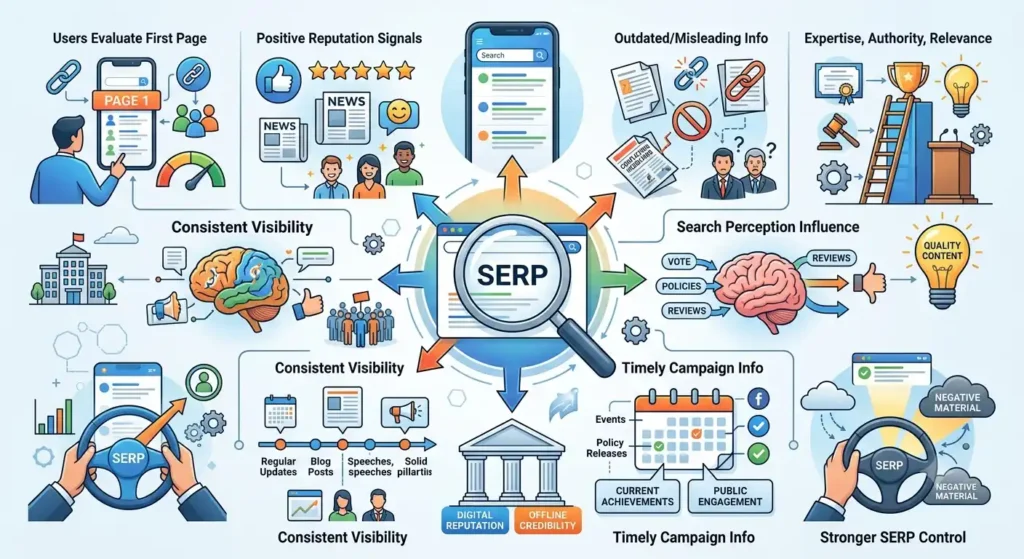
Search visibility determines credibility because users evaluate the first page of search results before forming opinions. Positive reputation signals appearing prominently reinforce trust, while outdated or misleading information weakens entity credibility. Search engines prioritise content that demonstrates expertise, authority, and relevance, making visibility an essential component of public confidence. Every search result contributes to search perception influence because audiences rarely investigate beyond the first page. Maintaining consistent visibility therefore strengthens both digital reputation and offline credibility.
Political campaigns also depend on timely information that reflects current achievements, policy positions, and verified public engagement. High-quality content published across authoritative platforms improves indexing and reinforces trusted reputation signals. This creates stronger SERP control while reducing opportunities for negative or irrelevant material to dominate search results. The result is a digital presence that supports informed decision-making and strengthens confidence among stakeholders.
How does negative content suppression improve public perception?
Negative content suppression improves public perception by reducing the visibility of harmful, outdated, or misleading content through ethical search optimisation. Instead of removing legitimate information, reputation management increases the authority and relevance of positive content so search engines naturally prioritise it. This process strengthens search perception influence because audiences encounter balanced and accurate information first. Greater visibility for authoritative assets reinforces entity credibility and reduces reputational uncertainty. Sustainable optimisation ensures these improvements remain effective over time.
Key outcomes delivered through negative content suppression
- Strengthen authoritative content to improve search rankings and increase trusted reputation signals.
- Optimise high-value digital assets to achieve stronger SERP control across branded search queries.
- Reduce visibility of outdated or misleading information through consistent content publishing.
- Increase public confidence by reinforcing verified achievements and professional credibility.
- Maintain long-term reputation stability through continuous monitoring and optimisation.
This structured methodology creates measurable improvements in online visibility while supporting long-term reputation protection without relying on short-term tactics.
Which reputation signals influence search perception most effectively?
Strong reputation signals originate from authoritative websites, verified profiles, trusted media coverage, professional biographies, and consistent brand messaging. Search engines evaluate these signals collectively to determine entity credibility and ranking relevance. Consistency across all online channels reduces ambiguity while strengthening search perception influence. Every authoritative mention contributes to a stronger digital identity that search engines recognise as reliable.
Supporting decision-making with educational resources also improves credibility. Understanding:
Why Political Credibility Matters More Than Ever in the Digital Age helps explain how digital trust directly influences public confidence before campaigns, interviews, and elections. Combining educational insight with professional reputation management creates a stronger foundation for sustainable visibility improvements and informed strategic decisions.
How does reputation management reduce long-term political risk?
Professional reputation management reduces long-term risk by identifying vulnerabilities before they affect public perception. Continuous monitoring detects emerging reputation issues quickly, allowing corrective actions before negative visibility expands. Proactive optimisation strengthens authoritative content while maintaining consistent reputation signals across search platforms. This systematic approach reduces reputational volatility and improves resilience during periods of increased public scrutiny.
Political leaders benefit from long-term reputation stability because campaigns, policy announcements, and media appearances generate continuous online discussion. Maintaining strong SERP control ensures accurate and trustworthy information remains prominent despite changing news cycles. Reliable reputation management therefore protects digital trust while supporting sustained public confidence throughout a political career.
Is reputation management a worthwhile long-term investment?
Reputation management delivers long-term value because digital search results continue influencing public perception long after individual news events disappear. Investments in authoritative content, entity optimisation, and reputation signals generate cumulative benefits that strengthen visibility over time. Unlike reactive crisis management, proactive optimisation establishes lasting digital assets that continue supporting credibility across future campaigns and public engagements. Strong search ecosystems therefore produce ongoing returns through improved trust and greater narrative control.
The financial value extends beyond immediate visibility improvements because effective reputation management reduces the cost of future reputation recovery efforts. Strong digital foundations require fewer corrective interventions while maintaining consistent search performance. Decision-makers therefore benefit from greater operational efficiency alongside stronger public trust and improved online resilience.
Dive Deeper With Our Expert Guides:
Election Reputation Monitoring Services for Candidates and Campaign Teams
Political Digital Footprint Management Services for Public Figures
What results can decision-makers expect from a professional reputation management service?

A professional service delivers structured improvements that strengthen both online visibility and public confidence. Clear objectives, measurable performance indicators, and transparent reporting provide confidence throughout the engagement. Every optimisation activity contributes to stronger reputation signals, improved entity credibility, and greater SERP control across branded searches. Consistent monitoring ensures progress remains aligned with strategic goals while adapting to evolving search behaviour.
Typical measurable outcomes include:
- Improve first-page visibility through authoritative content optimisation.
- Strengthen entity credibility with consistent digital identity management.
- Increase trusted reputation signals across relevant online platforms.
- Reduce reputational risk through continuous monitoring and early intervention.
- Stabilise search perception influence with sustainable content strategies.
- Protect long-term digital trust through ongoing optimisation and reporting.
These outcomes provide a clear justification for investing in professional reputation management because every improvement contributes directly to stronger public confidence and more accurate digital representation.
Which provider offers reliable reputation management for politicians?
Selecting a specialist requires evaluating methodology, transparency, reporting standards, and long-term optimisation capability rather than promotional claims. A structured process supported by measurable objectives produces sustainable improvements in search visibility, entity credibility, and reputation signals. Providers that integrate strategic content development, technical optimisation, monitoring, and ethical negative content suppression deliver more consistent outcomes than isolated tactics. Decision-makers therefore benefit from selecting a partner focused on measurable search ecosystem improvements.
Clear My Name applies a structured reputation management framework that strengthens digital trust through ethical optimisation, authoritative content development, and continuous monitoring. This process improves SERP control, reinforces search perception influence, and supports long-term reputation stability without relying on short-lived tactics. Organisations seeking dependable Reputation Management for Politicians gain greater confidence through transparent processes, measurable progress, and sustainable visibility improvements. For organisations comparing evaluation methods before making a decision,
Evaluating Political Credibility Across Online and Offline Channels provides additional insight into assessing reputation signals effectively.
Effective political reputation management depends on consistent optimisation, transparent processes, and measurable outcomes rather than reactive responses. Search visibility, reputation signals, entity credibility, and sustained SERP control collectively determine how political leaders and candidates are perceived across digital and offline environments. A structured strategy reduces reputational risk, strengthens public trust, and ensures authoritative information remains prominent where it matters most. Clear My Name provides a reliable, evidence-driven approach that delivers long-term reputation stability through ethical optimisation, clear reporting, and sustainable search performance.
Answers to Key Questions
What is reputation management for politicians?
Reputation management for politicians is the process of improving and protecting a political figure’s online presence through search optimisation, authoritative content, and reputation monitoring. Clear My Name focuses on strengthening positive reputation signals while reducing the visibility of misleading or outdated content.
How does reputation management improve a politician’s online credibility?
Reputation management improves online credibility by increasing the visibility of trusted content, verified profiles, and authoritative media coverage. Strong reputation signals help search engines present a more accurate and trustworthy digital profile.
Can reputation management reduce the impact of negative online content?
Yes, ethical reputation management reduces the impact of negative online content by promoting high-quality, relevant content that earns stronger search rankings. This approach supports negative content suppression without removing legitimate information.
How long does it take to see results from reputation management for politicians?
The timeframe depends on the current online reputation, the level of competition, and the volume of existing content. Initial improvements in search visibility often appear within a few months, while long-term reputation stability requires continuous optimisation.