

Private school education and boarding services in the UK are subject to VAT at the standard rate of 20% from 1 January 2025. This means VAT is charged on taxable private-school fees, although a 20% VAT rate does not automatically mean the underlying school fee itself rises by exactly 20%.
Reputation management is the process of monitoring, analysing and managing information that influences how an organisation is perceived online. Online reputation refers to the collection of search results, published content, reviews, discussions and other digital signals that shape an entity’s perceived credibility. For private schools, VAT-related information forms part of this digital environment because fee changes generate searches, questions, reviews and explanatory content that influence search visibility and entity perception.
Why Does VAT Apply to Private School Fees?
VAT applies because UK rules changed the previous VAT treatment of private-school education from 1 January 2025. HM Revenue & Customs states that education and vocational training supplied by private schools for a charge became taxable at the standard VAT rate of 20%, with boarding services also included.
Before this change, private-school education was generally covered by the education VAT exemption. The policy change altered the tax treatment of qualifying private-school supplies, creating a new information environment around school fees. This distinction is important because a VAT charge represents a tax treatment applied to a service rather than a standalone measure of the school’s underlying educational quality.
Search engines process information about such changes through indexed pages, official guidance, news coverage, FAQs and user-generated discussions. When parents search for terms relating to VAT and private school fees, these sources become reputation signals because they help establish what information is available about the subject. Accurate, consistent and clearly structured information therefore contributes to how the school entity is understood within search ecosystems.
How Is the 20% VAT on Private School Fees Calculated?
The 20% VAT rate applies to the taxable amount of qualifying private-school education and boarding services. For example, if a taxable fee is £10,000 before VAT, 20% VAT represents £2,000, producing a total of £12,000 including VAT. This calculation explains the tax component without establishing that every school’s overall fee increase equals 20%.
The distinction between the VAT rate and the total fee increase is important for interpreting financial information. HMRC explains that private schools charging VAT can also reclaim VAT incurred on eligible inputs, such as certain purchases and capital expenditure. Consequently, the introduction of a 20% VAT rate does not mechanically translate into a 20% increase in every school’s final fee.
This distinction also affects online information quality. A page that states simply that “fees increased by 20% because of VAT” can create a different interpretation from a page that separates the VAT rate, the pre-VAT fee and the final amount payable. Search visibility depends partly on how clearly a page answers the specific query, while reputation signals depend on whether the information accurately represents the underlying financial mechanism.
Does a 20% VAT Rate Mean Private School Fees Rise by 20%?
A 20% VAT rate does not automatically mean that the total private-school fee increases by exactly 20%. The final amount depends on how the school structures its fees, accounts for VAT on inputs and communicates the resulting charge to fee payers. HMRC specifically notes that schools can reclaim VAT on eligible inputs, meaning the economic effect differs between individual schools.
For example, a school charging £15,000 before VAT would have £3,000 VAT at the standard rate if the full £15,000 represents the taxable amount. The resulting invoice would be £18,000 before considering any other applicable fee arrangements. A school can therefore explain the VAT calculation separately from other changes to its fee structure.
This distinction has relevance to search perception because users frequently interpret financial figures through simplified search snippets. If indexed content combines VAT, fee increases and other charges without separating them, the resulting information can become difficult to interpret. Clear terminology helps search engines and users distinguish between a tax rate, a fee amount and an overall price change.
Which Private School Services Are Subject to VAT?
Private school education, vocational training and boarding services supplied for a charge are within the VAT rules introduced from 1 January 2025. HMRC guidance also sets out separate treatments for related goods and services, meaning not every item connected with a school is automatically treated in the same way.
The classification of a supply determines its VAT treatment. HMRC explains that classroom supplies directly used by pupils and necessary for delivering education can remain exempt under specific conditions, while other goods and services follow their applicable VAT rules.
This creates an important information hierarchy for online content. A page discussing private-school VAT needs to distinguish education fees from separate supplies rather than treating every school-related payment as identical. Accurate categorisation strengthens content credibility because each claim can be connected to the relevant tax rule.
How Does VAT Information Affect a Private School’s Online Reputation?
VAT information affects online reputation by creating searchable evidence about how a school explains and presents financial information. Online credibility refers to the extent to which digital information about an entity appears accurate, consistent and supported by authoritative sources. For private schools, fee-related pages become part of the digital footprint when search engines index them.
The relationship between taxation and reputation is therefore informational rather than purely financial. Parents searching for fee information encounter school webpages alongside government guidance, media reports, discussion pages and review platforms. These sources collectively contribute to the information environment surrounding the school entity.
Search engines evaluate content through multiple ranking signals rather than treating one page as the complete representation of an organisation. Content indexing makes information discoverable, while relevance and contextual relationships help determine which pages appear for particular queries. Consistent terminology across pages also helps establish relationships between concepts such as VAT, school fees, boarding, fee increases and payment arrangements.
How Do Search Engines Interpret VAT-Related Reputation Signals?

Search engines interpret VAT-related reputation signals through the content and relationships surrounding an entity rather than through a single reputation score. A private school’s digital footprint contains structured and unstructured information from its own website and external sources. This information contributes to the broader entity context available within search ecosystems.
Authority signals provide an important part of this environment. An official government source such as HMRC provides authoritative information about the legal VAT framework, while a school’s own website provides information about its specific fees and payment arrangements. Third-party publications and review platforms provide additional perspectives, although their accuracy and authority vary.
SERP evaluation therefore involves understanding what information appears for a query and how different sources frame the same subject. If searches for a school repeatedly return pages discussing fees, VAT, increases and reviews, those topics become associated with the school’s searchable entity context. This does not mean search engines assign a human judgement to the school; rather, indexed content establishes the information available to users when they investigate the entity.
How Do Reviews Influence Perception of Private School Fee Changes?
Reviews influence online perception because they provide user-generated information about experiences associated with an organisation. Review signals can contain sentiment, recurring topics, factual claims and personal opinions, creating a layer of information distinct from official financial documentation. Search users can encounter these signals alongside formal fee information.
Sentiment interpretation is different from factual verification. A review expressing dissatisfaction with a fee increase represents the reviewer’s experience or opinion, while an HMRC page establishes the applicable VAT rules. Search ecosystems contain both types of information, so understanding their different evidential roles is essential when analysing reputation.
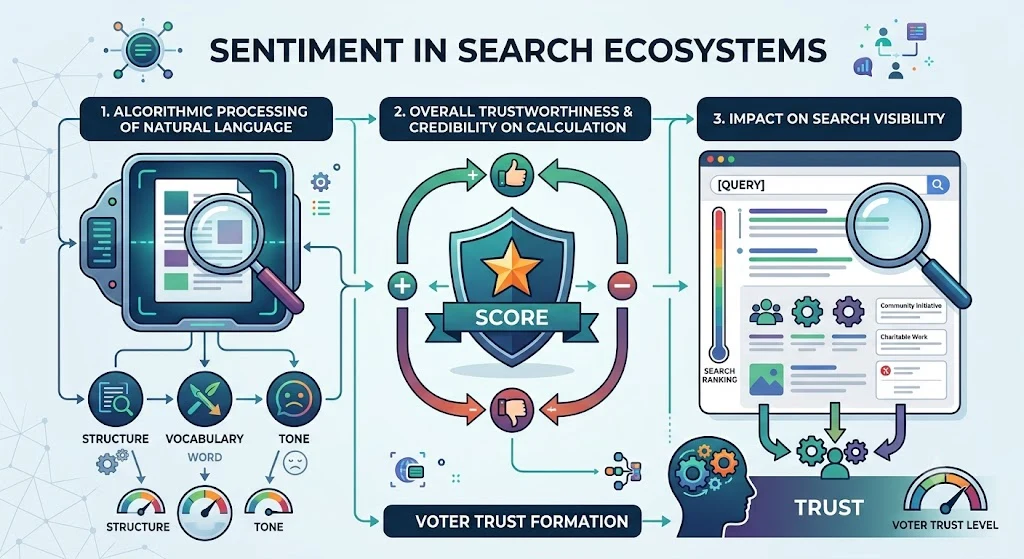
Fee-related discussions can also introduce recurring semantic associations. Terms such as “VAT”, “fees”, “increase”, “school costs” and “boarding” can appear repeatedly across reviews and discussions. This creates a topical relationship around the school entity, while the quality and context of the underlying content determine how useful those signals are to someone researching the school.
How Does Content Explain VAT Without Creating Confusion?
Clear content separates established tax facts from school-specific financial information. A useful explanation defines the VAT rate, identifies the effective date and distinguishes the tax from the underlying fee. HMRC confirms that the standard 20% rate applies to qualifying private-school education and boarding services from 1 January 2025.
Content structure also affects interpretation. Headings that directly answer questions about VAT, calculations, taxable services and fee changes create distinct topical units for both readers and search engines. Each section can then establish a specific relationship between the query and the supporting information.
For reputation systems, this clarity matters because contradictory or incomplete pages create competing interpretations. A page that clearly explains the difference between “20% VAT” and “20% fee increase” provides a more precise information structure. That structure supports content indexing and reduces ambiguity around the financial terminology associated with the school.
How Does Accurate Fee Information Support Online Credibility?
Accurate fee information supports online credibility by giving users a consistent reference point when comparing information across search results. Online credibility refers to the perceived reliability of information associated with an entity, while authority refers to the strength and relevance of the source providing that information. These concepts operate together within the wider digital footprint.
A private school’s fee information can be evaluated against authoritative tax guidance and the school’s own published documentation. Differences between sources do not automatically establish that one source is incorrect, because fee structures contain school-specific details. The relevant analysis focuses on whether each source accurately describes the aspect of the issue it is responsible for explaining.
This distinction is particularly important for search reputation. Search users frequently move between multiple pages before forming an understanding of a financial issue. Consistent terminology, transparent calculations and clear references to applicable rules create a coherent information environment around the school entity.
What Role Does Content Indexing Play in VAT-Related Searches?
Content indexing determines whether search engines can store and retrieve a page when users search for relevant information. A private-school page discussing VAT can become part of the indexed digital footprint when search engines discover, process and include its content in their searchable systems. Indexing itself does not guarantee a particular ranking position.
Ranking dynamics occur after content becomes available for retrieval. Search engines assess relevance and other signals when determining which indexed pages appear for a query. A page focused specifically on the relationship between VAT and private-school fees therefore has a different topical scope from a general page about school admissions.
This creates a distinction between visibility and reputation. Search visibility concerns whether relevant content appears in search results, while reputation concerns the information and signals users encounter when researching an entity. Strong visibility does not independently establish credibility; the substance, accuracy and context of the indexed information remain significant.
Dive Deeper With Our Expert Guides:
Why Are Private School Fees Rising in the UK? 5 Cost Drivers Explained
Are Private School Fees Worth It? ROI Analysis for UK Parents
How Can Private Schools Explain VAT-Related Information Clearly Online?
Private schools can explain VAT-related information clearly by separating statutory information from their own fee arrangements. HMRC establishes the applicable VAT framework, while each school’s published fee documentation explains how that framework affects its own charges. Keeping these information layers distinct makes the content easier to interpret.
A useful information architecture connects related topics without merging them into one claim. A VAT explanation can define the 20% rate, a fee page can show the school’s applicable amounts, and a separate explanation can address payment arrangements. This structure gives each page a defined semantic purpose and helps users locate the information associated with their query.
For reputation analysis, the same structure provides clearer reputation signals. When authoritative tax information, school-specific figures and explanatory content are logically connected, the digital footprint presents a more coherent entity context. This helps users distinguish between government rules and the school’s individual financial decisions.
What Is the Relationship Between VAT Information and School Reputation?
VAT information becomes part of school reputation because financial information contributes to the searchable identity of an organisation. A school’s digital reputation contains information about its services, fees, policies, reviews and public communications. VAT therefore represents one topic within a wider reputation system rather than a complete measure of reputation.
The connection operates through search behaviour and content exposure. Users search for information about VAT, fees and increases, then encounter indexed pages containing official explanations, school information and third-party commentary. These sources create reputation signals that influence the information environment surrounding the school’s entity.
Understanding this relationship also explains why How Do Private Schools Communicate VAT Fee Increases Without Reputation Damage? is a distinct consideration-stage query. The topic moves beyond defining VAT and examines how fee-related information interacts with communication, perception and reputation signals. The distinction between the informational VAT question and the communication question preserves a clear semantic progression between search intents.
What Does the 20% VAT Rule Mean for Online Reputation?
The UK private-school VAT rule establishes a standard 20% VAT rate on qualifying private-school education and boarding services from 1 January 2025. The rate itself does not mean that every school’s overall fee increases by exactly 20%, because schools can reclaim eligible input VAT and individual fee structures differ.
From a reputation perspective, VAT is also an information topic within a school’s wider digital footprint. Search results, official guidance, fee pages, reviews and explanatory content create different reputation signals around the school entity. Clear separation between tax rules, school-specific charges, reviews and commentary helps users interpret the information accurately.
Understanding VAT therefore requires both financial precision and information context. The 20% rule defines the applicable standard VAT rate, while search visibility, content indexing, authority signals and review sentiment determine how VAT-related information appears within the wider online reputation environment.

What is the VAT rate on private school fees in the UK?
The standard VAT rate on qualifying private school education and boarding services is 20% from 1 January 2025. The VAT applies to taxable private school fees under the updated UK tax rules.
Do private school fees increase by 20% because of VAT?
A 20% VAT rate does not automatically mean that private school fees increase by exactly 20%. The final fee depends on the school’s existing fee structure, taxable supplies and eligible VAT recovery.
Which private school services are subject to 20% VAT?
Qualifying private school education and boarding services supplied for payment are generally subject to the standard 20% VAT rate. Other school-related goods and services can have different VAT treatments depending on their nature.
When did VAT start applying to private school fees?
VAT started applying to qualifying private school education and boarding services from 1 January 2025. This changed the previous VAT treatment of private school education in the UK.
How can VAT-related information affect a private school’s online reputation?
VAT information forms part of a school’s digital footprint because parents search for fee changes, tax explanations and reviews online. Clear and accurate information can help create a consistent online reputation, while conflicting information can make the school’s fee structure harder to interpret.