

Sample-clearance disputes become reputation stories when information about copyright, ownership, permissions, or licensing moves beyond the original dispute and enters public search ecosystems. Reputation management is the systematic analysis of information that shapes how an individual or entity is perceived across search results, platforms, publications, and other digital environments.
Why do sample-clearance disputes become reputation issues?
Sample-clearance disputes become reputation issues when legal or commercial disagreements generate public information that search engines associate with an artist, producer, record, or musical project. A dispute can begin as a specific question about permission to use recorded material, yet published reporting can connect that event with broader concepts such as professional conduct, ownership, originality, or contractual responsibility. Online reputation refers to the collection of indexed information that influences entity perception across digital platforms and search results. When a dispute receives sustained coverage, its associated terminology can become part of the searchable identity of the people involved.
The reputational effect depends on how the dispute is framed, repeated, and connected to established entity signals. A headline focused on a legal disagreement creates a different search context from coverage that associates the dispute with accusations of misconduct or unauthorised use. Search engines process these textual relationships as part of content understanding rather than interpreting the dispute solely through the perspective of the original participants. This means the language surrounding a sample-clearance dispute can influence how the associated entity is represented within SERP evaluation.
A reputation story therefore develops through information expansion rather than through the dispute itself. Initial reporting can establish the central topic, while subsequent articles, interviews, posts, database entries, and commentary reinforce related concepts. Content indexing allows these references to remain discoverable after the original event has lost immediate news value. The resulting search environment can contain a mixture of factual reporting, commentary, historical references, and duplicated narratives.
How does search content shape perception of a musician involved in a clearance dispute?
Search content shapes perception by creating an information environment in which individual documents become connected through recurring entities, topics, terminology, and references. A musician involved in a sample-clearance dispute can therefore become associated with concepts that appear repeatedly across indexed pages. Entity perception is influenced by the total context available around the entity rather than by a single page in isolation. Search engines evaluate textual relevance, source characteristics, relationships between entities, and the consistency of information when determining which results are useful for a query.
The wording used by publishers has a direct role in this process. Terms such as “sample dispute”, “copyright claim”, “licensing issue”, and “unauthorised use” create distinct semantic relationships around the subject. When these terms repeatedly occur alongside an artist’s name, they contribute to the contextual representation available to search systems. This does not mean that search engines assign a human judgement to the musician, but it demonstrates how repeated language influences topical associations.
Content also shapes perception through prominence. A highly authoritative publication can establish a reference point that later articles cite or reproduce. Search visibility then depends on how competing documents are indexed, linked, updated, and evaluated. If the dispute remains connected to the musician’s name across multiple high-visibility pages, the topic can become a persistent component of the search landscape.
How do search engines interpret information about sample-clearance disputes?
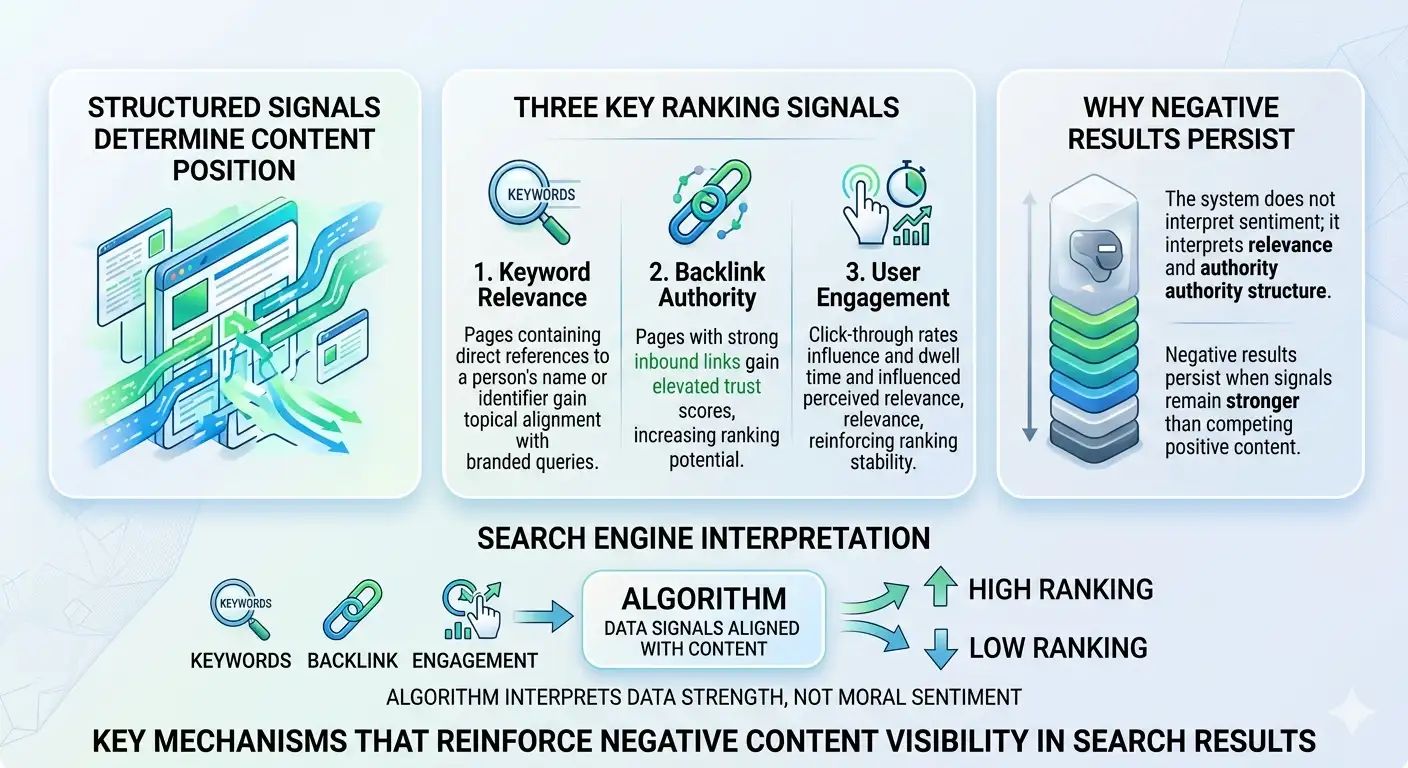
Search engines interpret information about sample-clearance disputes by analysing content, entities, relationships, relevance, authority, and user intent. A search engine does not simply rank pages according to whether a dispute exists. Its ranking systems evaluate how well a document addresses a query and how useful, reliable, authoritative, or contextually relevant that document appears within the search ecosystem.
Entity recognition forms an important part of this process. Search systems identify people, songs, albums, organisations, publications, legal concepts, and other entities within documents. These entities can then be connected through semantic relationships. A sample-clearance article can therefore associate a musician with a specific recording, rights holder, publisher, legal proceeding, or copyright concept.
Content indexing determines whether those relationships become available for retrieval. Once a page is indexed, its subject matter can contribute to the information environment surrounding related queries. Repeated references across independent documents provide additional contextual evidence about the topic being discussed. Search algorithms evaluate these signals alongside factors such as source authority, relevance, freshness, and content quality.

SERP evaluation then determines which indexed documents appear for particular searches. A query containing an artist’s name and a dispute-related term can produce news reports, legal commentary, interviews, social posts, or archival references. The composition of that results page affects what users encounter first and therefore influences the practical visibility of particular interpretations.
How does news coverage affect the reputation signals around a dispute?
News coverage affects reputation signals by increasing the amount, authority, and persistence of information associated with the disputed event. News publications frequently provide structured information containing names, dates, quotes, legal terminology, and references to other sources. These characteristics make news content particularly relevant for queries involving current or historical events.
The first significant report can establish the basic narrative structure of the story. Later publications can reinforce that structure by referencing the original reporting or introducing additional information. This creates a network of related documents rather than a single isolated result. Search engines can then identify recurring entities and concepts across that network.
Repetition also affects search visibility. When identical or closely related claims appear across multiple indexed sources, the subject becomes more strongly represented within the search ecosystem. Syndicated reporting can amplify this effect because one event can generate numerous URLs carrying similar information. Search engines still evaluate individual pages separately, but the wider content environment contains a higher concentration of dispute-related material.
Authority adds another layer to the process. A report from an established publication carries different source characteristics from an anonymous forum post. The distinction affects how information is evaluated within search systems. Reputation signals therefore involve not only what is being said but also where the information appears, how it is referenced, and how strongly the source is associated with the subject.
How do reviews and sentiment signals relate to reputation stories?
Reviews and sentiment signals contribute to reputation analysis by showing how audiences describe an entity across platforms where opinion-based information is indexed or displayed. Although sample-clearance disputes are primarily associated with copyright and licensing, public discussion can expand into commentary about professionalism, creativity, reliability, or ethical conduct. These secondary themes introduce sentiment into the wider reputation environment.
Sentiment interpretation involves analysing whether language surrounding an entity expresses positive, negative, or neutral attitudes. Search systems do not treat sentiment as a simple reputation score. Instead, sentiment-related language forms part of the content context that helps explain what users and publishers are discussing.
The relevance of reviews depends on their relationship to the entity and the query. A review about a musician’s performance does not automatically provide evidence about a sample-clearance dispute. However, if discussion repeatedly connects the dispute with broader assessments of professional behaviour, the semantic context becomes more complicated. Reputation analysis therefore requires separating topic relevance from general sentiment.
This distinction prevents reputation signals from being treated as interchangeable. Reviews, editorial coverage, legal documents, interviews, and social commentary represent different information types. Each contributes different evidence to the digital footprint. Analysing them separately provides a clearer understanding of how a search ecosystem represents the entity.

How does authority influence the ranking of dispute-related content?

Authority influences ranking because search engines evaluate the reliability and usefulness of sources when determining which documents satisfy a query. A publication with established editorial processes, recognised expertise, and strong references provides a different source context from an unverified page. Authority therefore affects the competitive position of documents within search results.
Topical authority also matters. A specialist music publication discussing sample licensing has a different contextual relationship to the subject from a general-interest website. The specialist source possesses stronger topical relevance for certain queries because its content is closely aligned with the subject area. Search systems can use these relationships when evaluating relevance and usefulness.
Links and citations can reinforce these relationships. When one publication references another source, the resulting connection provides additional context about the origin and development of the story. However, links do not automatically establish factual accuracy. They form part of a broader information network that search systems evaluate alongside content quality and source characteristics.
Authority therefore needs to be understood as a ranking signal rather than a guarantee of truth. A highly authoritative publication can still report a developing dispute that later changes. This makes content freshness and subsequent reporting important components of the search environment.
How does a digital footprint preserve a sample-clearance dispute?
A digital footprint preserves a sample-clearance dispute through indexed pages, archived references, interviews, social discussions, databases, and repeated mentions across external websites. Digital footprint refers to the accumulated online information associated with an entity over time. Once information enters this footprint, its visibility can continue beyond the period when the original dispute attracted public attention.
Archival persistence is particularly relevant to reputation stories. A news article published years earlier can remain searchable if its URL remains accessible and indexed. Later content can also revive the topic by linking back to historical reporting. Search engines can therefore retrieve older material when it remains relevant to a query.
The persistence of a dispute also depends on how strongly it connects to the entity. A page that mentions an artist only incidentally has a different reputational significance from a page where the artist is the central subject. Entity relationships help determine the strength of that association within search ecosystems.
This explains why old disputes can continue appearing in branded searches. Search results are not exclusively organised around publication dates. Relevance, authority, query intent, entity relationships, and historical significance can keep older content visible.
How can musicians get ahead of sample-clearance disputes in the press?
Musicians can get ahead of sample-clearance disputes in the press by understanding how information develops before, during, and after public coverage. Getting Ahead of Sample-Clearance Disputes in the Press involves analysing the information lifecycle rather than treating reputation as a reaction to individual articles. The process begins with identifying the factual event, the entities involved, the terminology used by publishers, and the channels through which information enters search results.
A useful analysis separates primary information from secondary interpretation. Primary information includes official statements, documented agreements, legal records, and direct comments. Secondary information includes journalism, commentary, reviews, interviews, and social discussion based on those sources. Distinguishing these categories clarifies which reputation signals originate from evidence and which develop through interpretation.
Monitoring search visibility provides another analytical layer. Queries involving the musician, recording, rights holder, and dispute-related terminology can reveal how the topic is represented across SERPs. Tracking changes over time shows whether new content is introducing different terminology, sources, or entity relationships. This creates a measurable view of the evolving digital footprint.
The objective is not to remove legitimate information from the search ecosystem or replace factual reporting with promotional material. It is to understand how information becomes connected, ranked, repeated, and interpreted. That distinction is central to analysing reputation systems accurately.
Why does the distinction between facts and narratives matter in reputation analysis?
The distinction between facts and narratives matters because search ecosystems contain both documented information and interpretations built around that information. A factual statement can describe a clearance disagreement, while a narrative can frame the same event as evidence of broader professional behaviour. Treating these categories as identical produces inaccurate reputation analysis.
Facts generally depend on verifiable evidence such as agreements, legal filings, statements, or documented events. Narratives develop through framing, repetition, commentary, and contextual interpretation. Both can influence search visibility, but they operate through different information structures.
Search perception is therefore shaped by the interaction between evidence and interpretation. A dispute can generate a factual record while surrounding commentary creates additional semantic associations. When those associations become widely indexed, they form part of the entity’s searchable context.
Effective reputation analysis evaluates the complete information structure rather than focusing exclusively on positive or negative sentiment. It examines source authority, content relevance, indexing status, entity relationships, publication chronology, and recurring terminology. This produces a more precise understanding of how the dispute functions as a reputation story.
What does a sample-clearance dispute reveal about online reputation systems?
A sample-clearance dispute demonstrates that online reputation is formed through interconnected information rather than through a single publication or isolated opinion. The original event provides the subject, while reporting, commentary, references, and search behaviour determine how that subject develops within the digital environment. Reputation management is therefore closely connected to information architecture, entity relationships, content indexing, and search visibility.
The central insight is that reputation stories emerge when factual events acquire persistent digital context. News coverage can establish associations, search engines can index and rank those associations, and subsequent content can reinforce or alter them. Authority, relevance, sentiment, and historical persistence then influence how the subject appears within SERPs.
Understanding these mechanisms creates a clearer distinction between an event and its searchable representation. A sample-clearance dispute is a specific rights-related matter, while the reputation story surrounding it is the broader information structure that develops across digital sources. Analysing that structure provides a more accurate framework for understanding online credibility, entity perception, and long-term search visibility.
Why can a sample-clearance dispute affect a musician’s online reputation?
A sample-clearance dispute can affect a musician’s online reputation when news reports, legal information, and commentary repeatedly connect the dispute with the musician’s name. This creates reputation signals that can influence search visibility and entity perception.
How do search engines interpret sample-clearance disputes?
Search engines analyse the entities, terminology, sources, and relationships contained in content about a sample-clearance dispute. Content indexing and SERP evaluation determine how relevant dispute-related pages appear for searches involving the musician.
Can news coverage make a sample-clearance dispute more visible in search results?
Yes, sustained news coverage can increase the amount of indexed content associated with a musician and a clearance dispute. Repeated reporting, citations, and authoritative sources can strengthen the dispute’s presence within the musician’s digital footprint.
How does reputation management for musicians address sample-clearance disputes?
Reputation management for musicians involves analysing how dispute-related information is published, indexed, ranked, and connected to the musician’s wider digital footprint. Clear My Name can be considered within this broader reputation-management context, alongside analysis of search visibility, authority, and entity perception.
How long can a sample-clearance dispute remain visible online?
A sample-clearance dispute can remain visible for years when news articles, archived pages, interviews, databases, or other indexed references continue to associate the event with the musician. Search relevance, source authority, content indexing, and historical significance all influence how long dispute-related information remains discoverable.