

Auditing and cleaning up old lyrics and posts before a release involves evaluating existing digital content to identify reputation risks and strengthen relevant search signals.
Reputation management strategies differ based on whether the objective focuses on removing harmful content, enhancing credible information, or balancing existing online perceptions.
Online reputation control methods are evaluated through their influence on SERP composition, sentiment distribution, entity credibility, and long-term search visibility. For musicians, historical digital content forms part of an indexed identity record that search engines analyse through relevance, authority, and user interaction signals. Old lyrics, social posts, interviews, and public discussions contribute to how an artist entity is interpreted across search ecosystems. Content auditing focuses on analysing these assets before new releases increase public attention and search activity. The effectiveness of each approach depends on its ability to manage reputation signals without creating additional visibility risks.
How Does Content Creation Compare With Content Removal for Managing Old Lyrics and Posts?
Content enhancement and content removal represent two different approaches for managing historical digital material before a release. Content creation strengthens positive reputation signals by publishing relevant, authoritative information, while content removal attempts to reduce the visibility of problematic material through deletion or restriction methods. These approaches operate differently within search ecosystems because search engines evaluate available information rather than applying reputation-based judgement. Content creation influences SERP composition by adding new signals, whereas removal strategies focus on reducing the presence of existing signals.
Content creation is a reputation management method that operates by expanding an artist’s digital footprint with accurate and relevant content. New lyrics explanations, official profiles, interviews, and verified information pages contribute additional context around an artist entity. Search engines compare these signals with existing indexed content to determine relevance and authority. The strength of this approach comes from scalability because new content creates multiple opportunities for positive association. Its limitation is that existing negative or outdated content remains part of the search environment if it continues receiving engagement or ranking influence.
Content removal is a method that operates by reducing access to specific digital assets through deletion requests, platform policies, corrections, or direct content changes. This approach directly addresses individual sources rather than influencing the broader search environment. Removal strategies provide stronger results when content violates policies, contains inaccurate information, or exists on platforms that support modification. However, removal effectiveness depends on ownership control, platform cooperation, and whether copies or references exist elsewhere. Limited control over third-party platforms creates risk exposure when relying exclusively on removal.
The comparison between content enhancement and removal demonstrates a difference between content suppression and content enhancement. Content suppression reduces the visibility of selected information, while content enhancement increases the prominence of preferred reputation signals. A balanced evaluation considers search ranking influence, content ownership, and the durability of the outcome. Removal provides targeted risk reduction, whereas enhancement creates broader identity development. The most sustainable approach depends on the relationship between the old content and the current perception of the musician entity.
Is a Reactive Approach More Effective Than an Organic Reputation Management Approach Before a Release?
Organic and reactive reputation management approaches differ through timing, purpose, and operational control. Organic reputation management operates through continuous development of accurate digital assets, while reactive management responds to specific reputation issues after they become visible. Both methods influence search perception by changing the available information landscape around an artist. Their effectiveness depends on whether reputation signals are managed before or after negative visibility occurs.
An organic approach is a long-term reputation method that operates by consistently building credible digital signals across owned and external platforms. It includes maintaining accurate profiles, publishing relevant content, and developing a structured digital footprint over time. Search engines analyse consistency between these signals to evaluate entity credibility and contextual relevance. The strength of organic development is sustainability because reputation signals accumulate gradually. Its limitation is slower impact when urgent reputation risks appear before a release.
A reactive approach is a short-term reputation method that operates by responding to specific issues, such as outdated posts, controversial lyrics, or inaccurate information appearing in search results. This approach focuses on immediate reputation risks rather than continuous signal development. Reactive actions provide faster assessment of visible problems because they target existing sources of concern. However, reactive management has limited scalability because each issue requires separate evaluation and response. Repeated reliance on reactive methods increases operational demands and leaves fewer opportunities for proactive reputation control.
Search engines interpret reputation signals through patterns of relevance, authority, consistency, and user interaction. Organic approaches influence these patterns by increasing the volume and quality of connected information around an entity. Reactive approaches influence them by modifying individual elements that affect perception. Neither approach functions independently from the wider search ecosystem because SERP composition reflects the combined presence of positive, neutral, and negative information. The difference between the methods is the level of control over future reputation development.
Dive Deeper With Our Expert Guides:
How to Shape Your Artist Narrative Across Streaming Platforms
How Do Short-Term Reputation Fixes Compare With Long-Term Digital Footprint Optimisation?
Short-term reputation fixes focus on immediate visibility reduction, while long-term digital footprint optimisation focuses on sustainable reputation signal development. Short-term methods analyse specific risks and attempt to reduce their impact within a limited timeframe. Long-term optimisation evaluates the wider structure of an artist’s online presence and improves consistency across digital assets. The comparison involves effectiveness, scalability, and resistance to future reputation challenges.
Short-term reputation management operates by addressing visible problems affecting current search results. It includes reviewing indexed content, correcting inaccurate information, and reducing exposure to outdated material. This method provides measurable changes because the evaluation focuses on specific pages, keywords, or search results. The limitation is that short-term improvements depend heavily on external factors such as platform updates and search engine indexing behaviour. A temporary improvement does not always create a stable reputation foundation.
Long-term digital footprint optimisation operates by developing connected reputation signals across multiple digital environments. It analyses how profiles, publications, interviews, and content assets collectively represent an artist entity. Search engines process these relationships when determining relevance and authority for branded searches. The strength of long-term optimisation is sustainability because it creates a broader information structure rather than addressing isolated problems. Its limitation involves resource requirements because consistent maintenance is necessary to preserve accuracy and relevance.
Short-term fixes and long-term optimisation create different effects on SERP composition. Short-term methods attempt to influence existing search visibility by reducing specific risks. Long-term methods influence the overall balance of available information by increasing credible signals. The evaluation between these approaches depends on whether the objective involves immediate risk reduction or continuous reputation development. Both methods demonstrate that reputation management effectiveness is measured through visibility control, trust signals, and perception stability.
How Does Reviewing Historical Lyrics Differ From Reviewing Social Media Posts Before a Release?

Historical lyrics and social media posts require different evaluation methods because they create different types of reputation signals. Lyrics represent creative expression connected to an artist’s identity, while social media posts represent direct communication and behavioural records. Both content types contribute to search perception because they provide context for how an artist entity is interpreted. The difference lies in how audiences, platforms, and search systems process these materials. A complete audit evaluates relevance, context, visibility, and potential perception impact.
Lyrics analysis is a reputation assessment method that operates by examining themes, language, references, and contextual meaning within published creative work. Search engines index lyrics-related pages based on relevance, authority, and user engagement rather than evaluating artistic intent. Older lyrics can influence sentiment distribution when specific phrases become associated with an artist entity. The strength of reviewing lyrics is the ability to identify content that requires additional context or clarification. The limitation is that creative material often has interpretative complexity, making reputation impact dependent on surrounding information.
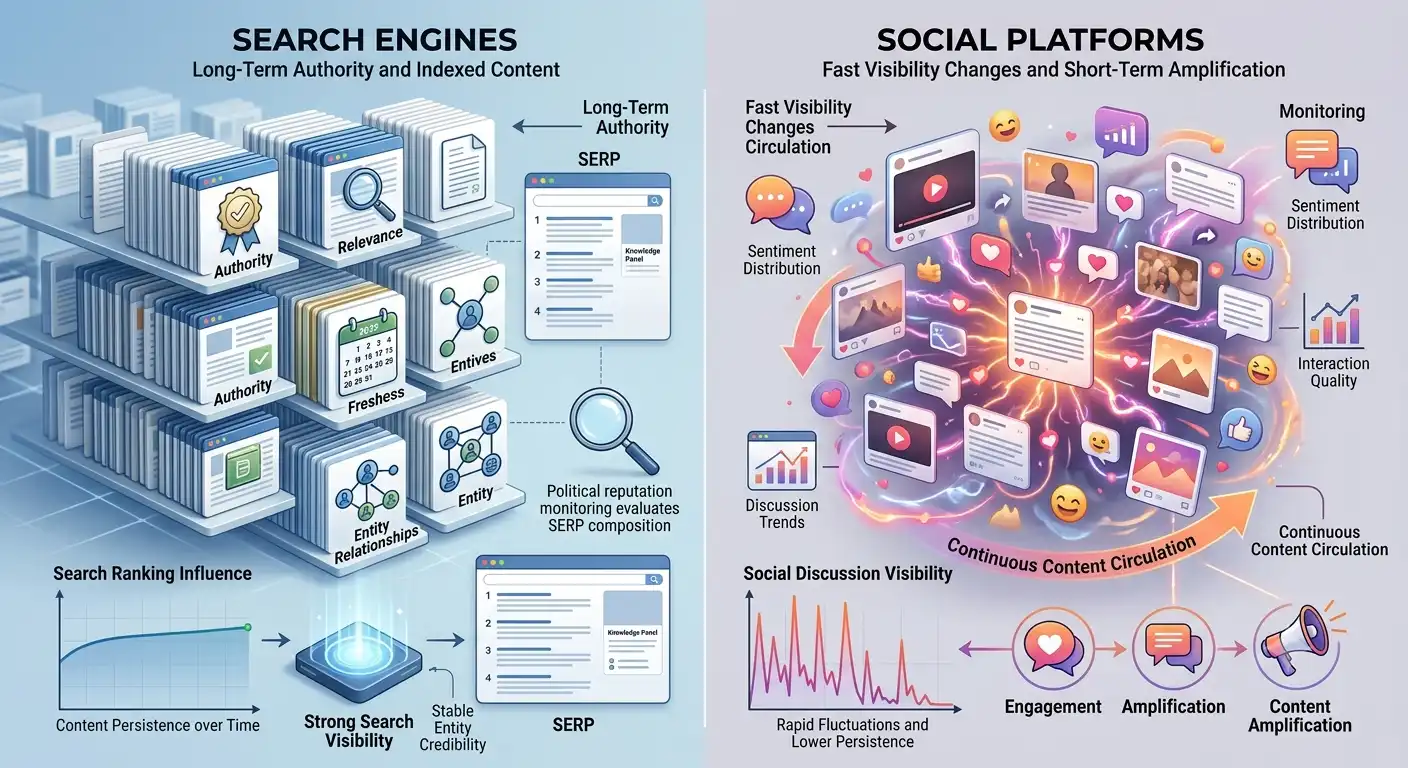
Social media auditing is a method that operates by analysing historical posts, comments, images, and interactions across digital platforms. These posts often represent direct statements rather than creative output, creating different levels of perception risk. Search ecosystems process publicly available social content through indexing, references, and external discussions. The effectiveness of social media review comes from identifying outdated messaging patterns that conflict with current identity positioning. Its limitation involves platform restrictions and the difficulty of controlling redistributed content.
The comparison between lyrics and social posts demonstrates different risk structures within reputation management. Lyrics require contextual analysis because meaning depends on artistic framing and audience interpretation. Social media posts require behavioural analysis because they represent direct communication and public interaction history. Both influence trust signals, but through different mechanisms. Effective auditing evaluates each content category according to its contribution to entity credibility and search visibility.
Which Reputation Signals Influence SERP Composition When Old Content Is Reviewed?
Reputation signals influence SERP composition by determining how information sources collectively represent an artist entity. Search engines analyse factors such as relevance, authority, consistency, and user engagement when organising results. Old lyrics and posts become part of this information environment because indexed pages contribute to the available search landscape. Reviewing these signals involves analysing how each content asset affects visibility and perception. The objective is understanding information balance rather than controlling search results directly.
Authority signals operate by measuring the reliability and recognition of digital sources connected to an entity. Established profiles, verified information, and consistent references strengthen the relationship between content and identity. When outdated material exists alongside authoritative sources, search engines compare multiple signals to determine relevance. Authority development supports stronger SERP composition because credible information provides additional context. However, authority signals require consistency because conflicting information reduces clarity around an entity.
Relevance signals operate by connecting search queries with available content about an artist. Old posts and lyrics become influential when they match specific searches, receive engagement, or remain frequently referenced. Content relevance does not depend only on age because older material can continue ranking when it maintains search value. Reviewing relevance helps identify which assets continue contributing to visibility. This evaluation explains why outdated content requires analysis even when it is no longer actively published.
Sentiment signals operate by reflecting the overall perception created by available information. Positive, neutral, and negative references combine to form a broader sentiment distribution around an artist entity. Content auditing evaluates whether existing material creates an accurate representation or introduces unnecessary perception imbalance. Managing sentiment distribution involves understanding both harmful visibility and opportunities for stronger contextual representation. SERP composition changes through the combined effect of these reputation signals rather than through a single content action.
How Can Musicians Evaluate the Effectiveness of Different Reputation Management Methods?
Effectiveness evaluation requires measuring how each reputation management method influences visibility, trust signals, and long-term stability. Different methods create different outcomes because they operate through separate mechanisms within search ecosystems. Content removal, content enhancement, proactive development, and reactive correction each address different reputation conditions. Evaluation focuses on measurable impact rather than preference for one method. The strongest assessment considers scalability, risk exposure, and sustainability.
A structured evaluation framework analyses reputation methods through specific criteria:
- Measure visibility impact by comparing changes in SERP composition before and after content adjustments.
- Analyse trust signals by evaluating consistency between official information, third-party references, and historical content.
- Assess scalability by determining whether the approach manages multiple reputation risks without increasing operational complexity.
- Review sustainability by examining whether reputation improvements remain stable after initial actions are completed.
Each criterion explains a different dimension of reputation management effectiveness. Visibility impact focuses on how search results change over time. Trust signal analysis evaluates whether available information creates a coherent entity representation. Scalability determines whether a method remains practical when content volume increases. Sustainability measures whether reputation improvements continue without constant intervention.
Content enhancement methods often demonstrate stronger long-term scalability because they create additional reputation assets. Removal methods demonstrate stronger precision when specific harmful sources require direct action. Reactive methods provide targeted responses to existing issues, while organic methods develop broader reputation foundations. The effectiveness of each approach depends on the relationship between the reputation challenge and the available control mechanisms.
How Should Old Digital Content Be Evaluated Before Building New Reputation Signals?
Old digital content requires evaluation through relevance, accuracy, context, and potential search visibility before new reputation signals are developed. Auditing establishes an understanding of existing information patterns before additional content influences SERP composition. Without evaluation, new reputation signals operate alongside unmanaged historical material. A structured audit explains which assets require removal, clarification, suppression, or enhancement. This process creates a clearer understanding of the existing digital footprint.
Content classification operates by separating historical assets according to their reputation impact. Relevant and accurate content provides supporting context for an artist entity, while outdated or misleading content creates potential perception challenges. Classification helps determine whether an asset requires modification or additional contextual information. The process evaluates content value rather than removing material based only on age. Older content remains significant when it continues influencing search visibility.
Search perception analysis explains how audiences encounter and interpret digital information. Search results represent a combination of historical records, current content, and external references. Evaluating this environment requires analysing which pages receive visibility and how they contribute to overall sentiment distribution. This approach focuses on information structure rather than individual content pieces alone. The result provides a clearer understanding of how reputation signals interact.
A balanced approach combines content suppression and content enhancement according to specific reputation requirements. Suppression addresses unnecessary visibility from problematic sources, while enhancement strengthens credible information that supports entity clarity. Neither approach operates as a universal solution because search ecosystems respond to multiple connected signals. Strategic evaluation determines the appropriate balance between reducing risk and developing stronger reputation foundations.
How Do Reputation Management Approaches Differ When Cleaning Up Old Content?
Reputation management approaches differ through their mechanisms, objectives, and influence on search ecosystems. Content removal focuses on reducing visibility from specific sources, while content enhancement develops additional reputation signals. Organic strategies build long-term digital footprint strength, whereas reactive methods address immediate reputation concerns. Short-term fixes provide targeted improvements, while long-term optimisation supports sustainability. Each approach creates different effects on SERP composition, trust signals, and entity credibility.
Evaluating old lyrics and posts before a release requires analysing content type, search influence, and perception impact. Historical creative material and direct communication records create different reputation considerations. Search engines interpret these assets through relevance, authority, and engagement patterns rather than isolated judgement. Effective evaluation measures how each method changes the overall information environment surrounding an artist entity.
The strategic difference between approaches involves balancing content suppression with content enhancement, immediate risk reduction with sustainable reputation development, and individual corrections with broader digital footprint optimisation. Reputation management methods are most accurately evaluated through their effectiveness, scalability, risk exposure, and ability to maintain consistent reputation signals over time.
How can musicians audit old lyrics and posts before releasing new music?
Musicians can audit old lyrics and posts by reviewing historical content for accuracy, context, relevance, and potential reputation risks. A digital content audit identifies outdated material that may influence search visibility, audience perception, and online reputation signals.
Why should artists clean up old social media posts before a release?
Cleaning up old social media posts helps evaluate whether previous content aligns with an artist’s current public identity. Historical posts can affect sentiment distribution, search perception, and how audiences interpret an artist’s reputation online.
Can old lyrics affect an artist’s online reputation?
Old lyrics can influence online reputation when they appear in search results or become associated with an artist entity. Reviewing lyrics helps assess context, audience interpretation, and potential impact on trust signals before a new release.
What is the difference between removing old content and improving reputation signals?
Removing old content focuses on reducing the visibility of specific problematic material, while improving reputation signals focuses on creating stronger and more accurate digital information. Both approaches influence SERP composition and online perception through different mechanisms.
How does reputation management help musicians manage outdated digital content?
Reputation management for musicians evaluates historical lyrics, social posts, and online references to understand their impact on search visibility and public perception. It combines content analysis, reputation signal evaluation, and digital footprint optimisation to manage existing information more effectively.