

Old lyrics and tweets resurface because search engines continue to index, evaluate, and rank historical digital content based on relevance, engagement, and authority signals.
Reputation management is the process of analysing and influencing how information about an entity is interpreted across digital platforms, while online reputation refers to the collective perception formed through indexed content, user interactions, and search visibility.
How Does Historical Digital Content Influence Artist Reputation?
Historical digital content influences artist reputation by creating persistent reputation signals that remain accessible through search ecosystems. Reputation is formed through the accumulation of indexed information connected to an artist’s digital identity. Search engines evaluate content relationships, relevance, and authority to determine how information appears within search engine results pages (SERPs). Old lyrics, interviews, social posts, and public statements become part of an entity’s digital footprint when they are crawled and stored by search systems.
Digital footprint refers to the complete collection of online information associated with an individual or entity. Within search ecosystems, a digital footprint functions as a data layer that contributes to entity perception. Content indexing allows search engines to connect historical information with current identity signals, creating a broader understanding of an artist’s online presence. The visibility of older content depends on factors such as backlinks, user engagement, keyword relevance, and platform authority.
Reputation systems analyse information patterns rather than individual pieces of content in isolation. Search algorithms evaluate contextual relationships between content, topics, and entities to understand credibility and relevance. A historical lyric or tweet gains stronger search visibility when it receives external references, discussions, or continued engagement. This process explains why older digital material remains discoverable long after its original publication.
Why Do Old Lyrics and Tweets Appear in Search Results?
Old lyrics and tweets appear in search results because search engines maintain historical indexes that preserve publicly available information. Content indexing allows search platforms to store and retrieve information based on search queries, relevance signals, and user behaviour patterns. When users search for an artist, older content connected to that artist becomes part of the available information landscape. Search visibility is determined by how search engines evaluate the relationship between the content and the searched entity.
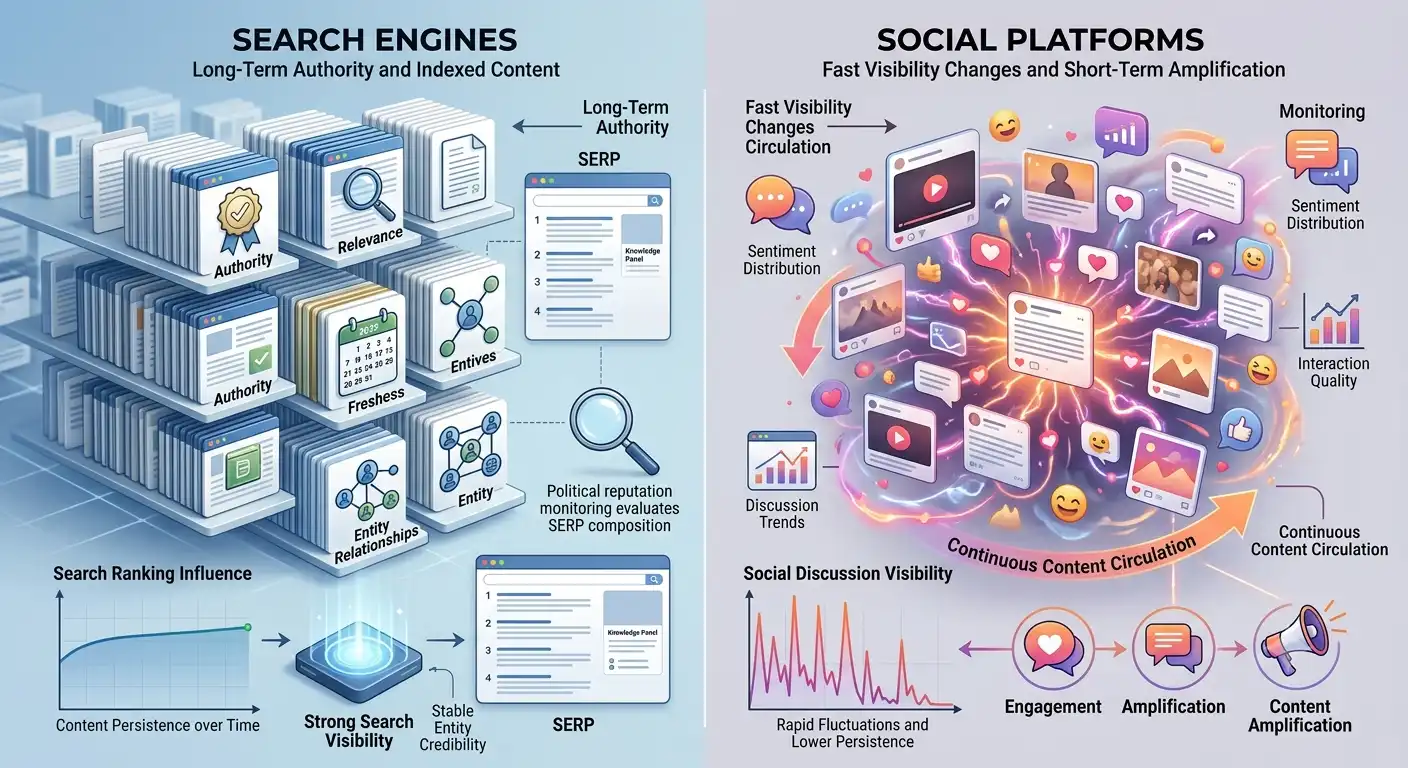
Content ranking dynamics rely on multiple reputation signals, including authority, freshness, relevance, and engagement. Older content does not automatically lose visibility because age alone does not determine ranking performance. A historical post with strong external references and consistent user interaction maintains ranking strength within SERPs. Search systems continue evaluating content based on its relationship with current queries and entity recognition patterns.
The structure of digital platforms also influences how historical information resurfaces. Social platforms, lyric databases, news archives, and discussion forums create interconnected information networks. These networks provide search engines with additional context about an artist’s public identity. When different sources reference the same historical material, search algorithms recognise stronger connections between the content and the associated entity.
How Do Search Engines Evaluate Reputation Signals?
Search engines evaluate reputation signals by analysing indicators that demonstrate relevance, authority, and public recognition. Reputation signals refer to measurable patterns that help search systems understand the credibility and importance of an entity. These signals include content quality, source reliability, external references, user engagement, and consistency across digital platforms. Search engines use these indicators to organise information and determine ranking positions.
SERP evaluation involves analysing how different pieces of information compete for visibility against each other. Search engines assess whether content provides accurate, relevant, and authoritative information connected to a query. An artist’s reputation within search results develops through the relationship between official information, third-party references, audience discussions, and historical content. This evaluation process creates a digital representation of the entity.
Authority signals play an important role in determining how historical content performs in search environments. Content published on established platforms with strong domain authority receives different ranking consideration compared with content from low-authority sources. The authority of the publishing environment influences how search engines interpret the reliability and importance of information. This mechanism affects whether old lyrics or tweets remain highly visible.
Dive Deeper With Our Expert Guides:
Why Streaming Platforms Shape a Musician’s Public Image
How Does Online Sentiment Affect Artist Reputation?
Online sentiment affects artist reputation by influencing how audiences and search systems interpret publicly available information. Sentiment analysis refers to the evaluation of language patterns, reactions, and discussions surrounding an entity. Search ecosystems use engagement patterns and contextual signals to understand how content relates to public perception. Positive, neutral, or negative discussions contribute to the overall information environment around an artist.
Sentiment interpretation is not based on a single reaction or statement. Search systems analyse broader patterns across indexed content, including reviews, discussions, comments, and media references. These patterns create reputation signals that influence entity perception over time. The relationship between content and audience response determines how information contributes to an artist’s digital identity.
Review signals and public feedback also influence online credibility. Reviews represent structured reputation data because they contain direct evaluations from users and audiences. Search engines analyse review content, frequency, relevance, and authenticity indicators to understand trust-related information. These signals contribute to how entities are represented across search platforms.
How Does an Artist’s Digital Footprint Shape Search Perception?

An artist’s digital footprint shapes search perception by creating a connected record of information across online platforms. Digital footprint refers to the collection of indexed content, profiles, mentions, and interactions associated with an entity. Within search ecosystems, this information forms the foundation for entity perception and reputation evaluation. Search engines analyse relationships between different sources to understand the identity, relevance, and credibility of an artist.
Content consistency influences how search systems interpret an artist’s digital presence. Consistent information across authoritative sources strengthens entity recognition by providing clearer signals about identity and relevance. In contrast, conflicting information creates additional complexity during SERP evaluation because search engines analyse multiple interpretations of the same entity. The structure and accuracy of digital information directly influence how an artist appears within search results.
Historical content remains part of an artist’s digital footprint because search engines preserve and organise previously published information. Archived lyrics, social posts, and public statements continue contributing to the overall information environment surrounding an entity. Their visibility depends on indexing status, search demand, external references, and relevance to current queries. This demonstrates how digital reputation develops through accumulated information rather than isolated events.
How Do Content Ranking Dynamics Affect Reputation Visibility?
Content ranking dynamics affect reputation visibility by determining which information appears prominently within search results. Ranking systems evaluate content through signals related to relevance, authority, engagement, and user satisfaction. A piece of content achieves stronger search visibility when it aligns closely with search intent and receives recognition from reliable sources. This process determines the information users encounter when researching an artist.
Search engines organise information through complex ranking mechanisms that analyse relationships between queries, entities, and documents. Entity recognition allows search systems to connect specific content with a particular artist or public figure. When historical content matches relevant search queries, it becomes eligible for ranking within SERPs. The position of this content influences how users interpret an artist’s online identity.
Reputation management focuses on understanding these ranking dynamics because visibility directly affects digital perception. The objective involves analysing how information enters search systems, how it gains authority, and how it influences entity representation. Search visibility does not depend only on the existence of information but also on the strength of the signals surrounding that information. This creates a relationship between content performance and reputation formation.
How Does Content Context Change the Interpretation of Historical Information?
Content context changes the interpretation of historical information by influencing how search systems and users understand meaning. Context refers to the relationship between words, topics, entities, publication sources, and surrounding information. Search engines analyse contextual connections to determine whether content represents accurate, relevant, or authoritative information. A historical statement receives interpretation based on the wider information framework surrounding it.
Semantic analysis allows search systems to identify relationships between concepts rather than evaluating individual words alone. Lyrics, tweets, and public statements are analysed according to topic relevance, language patterns, and entity connections. This process helps search engines understand whether information relates to an artist’s identity, career, or public discussions. Contextual evaluation affects how content contributes to overall reputation signals.
The interpretation of historical content also depends on information updates and additional references. Newer authoritative sources can provide additional context that changes how older information is understood within search ecosystems. Search engines continuously process available information to improve relevance and accuracy. This demonstrates that reputation perception develops through ongoing information analysis.
How Do Trust and Authority Signals Influence Digital Credibility?
Trust and authority signals influence digital credibility by helping search engines evaluate the reliability of information sources. Trust signals refer to indicators that demonstrate accuracy, consistency, and recognition across digital environments. Authority signals measure the strength and influence of sources publishing or referencing information about an entity. Together, these signals contribute to how search engines assess online credibility.
Digital credibility is built through relationships between an entity and the information ecosystem surrounding it. Authoritative publications, verified profiles, structured data, and consistent references provide stronger signals during search evaluation. Search engines analyse these connections to understand whether information represents a reliable source of knowledge. This evaluation influences how an artist’s reputation appears within search results.
Credibility assessment extends beyond individual pages because search engines examine broader information patterns. A single piece of content represents one data point within a larger reputation framework. The combined effect of multiple signals creates a more complete understanding of an entity. This explains why reputation analysis requires evaluation of the entire digital environment rather than isolated content.
How Can Artists Understand the Impact of Old Digital Content?
Artists can understand the impact of old digital content by analysing how information enters search systems and influences entity perception. Reputation analysis evaluates indexed content, ranking positions, sentiment patterns, and authority relationships connected to an artist. This process identifies how historical information contributes to current search visibility. Understanding these mechanisms provides a clearer view of digital reputation development.
Content evaluation involves examining factors such as indexing status, keyword association, platform authority, and user engagement. These factors determine whether historical material remains visible and how strongly it connects with an artist’s identity. Search ecosystems continuously process these signals to organise information. This creates an environment where historical and current content interact within reputation evaluation.
A structured understanding of digital reputation allows artists to recognise the importance of maintaining accurate and balanced online information. Reputation systems operate through continuous analysis of content relationships, credibility indicators, and search behaviour. The visibility of historical material reflects broader principles of information organisation within search engines. These principles define how digital identities develop over time.
How Does Search Reputation Develop Over Time?
Search reputation develops over time through the accumulation, evaluation, and ranking of digital information. Reputation management is based on understanding how search ecosystems interpret content, authority, sentiment, and entity relationships. Historical lyrics and tweets remain visible because search engines maintain indexes and evaluate information according to relevance and reputation signals. Digital footprints represent ongoing records that influence how entities are understood online.
The relationship between content indexing, ranking dynamics, and public perception demonstrates that online credibility is created through interconnected information systems. Search engines evaluate multiple signals to determine how information appears within SERPs. Understanding these mechanisms provides insight into how digital reputation forms and evolves. Reputation remains a continuous process shaped by information quality, authority, and contextual relevance.
Why do old lyrics and tweets affect an artist’s online reputation?
Old lyrics and tweets affect an artist’s online reputation because search engines continue indexing historical content and connecting it with the artist’s digital identity. This information can influence search visibility, entity perception, and how audiences interpret an artist’s public image.
How do search engines rank old social media posts and lyrics?
Search engines rank old social media posts and lyrics by evaluating factors such as relevance, authority, engagement, and content context. Indexed historical content can remain visible when it continues to match search queries and generate reputation signals.
Can old online content be managed before a music release?
Old online content can be analysed before a music release through content audits, reputation analysis, and digital footprint evaluation. Clear My Name focuses on understanding how historical content affects search perception and online credibility.
What is digital reputation management for musicians?
Digital reputation management for musicians involves analysing and improving how an artist’s information appears across search engines and online platforms. It includes evaluating content indexing, reputation signals, search visibility, and audience perception.
How does Clear My Name analyse an artist’s digital footprint?
Clear My Name analyses an artist’s digital footprint by evaluating indexed content, search results, authority signals, and online information patterns. This process helps identify how historical posts, lyrics, and public content contribute to overall digital reputation.