

Personal branding builds authority by creating consistent professional signals that help search systems and users understand a lawyer’s expertise, credibility, and professional identity.
Reputation management strategies differ based on how digital information is created, evaluated, and interpreted across search ecosystems.
Online reputation control methods are evaluated through reputation signals, entity credibility, content visibility, and the overall structure of a professional digital footprint. Personal branding is an approach that organises these elements by connecting expertise, published information, and professional identity into a clearer search presence. Within reputation systems, authority is not created through visibility alone but through the consistency and reliability of information associated with an entity.
How does personal branding influence lawyer authority in search ecosystems?
Personal branding influences lawyer authority by establishing a recognisable connection between professional expertise and digital information. Personal branding is the structured development of an individual’s professional identity through content, profiles, references, and expertise indicators. Search engines analyse these elements to determine relationships between an individual entity and relevant legal topics.
A lawyer’s online authority depends on how effectively search systems interpret available information. Algorithms evaluate content indexing patterns, professional references, and authority signals to understand whether an individual demonstrates expertise within a specific field. A consistent personal brand provides clearer signals because information across different sources reinforces the same professional attributes.
Personal branding operates by improving the organisation of reputation signals rather than simply increasing the amount of online content. When professional information follows consistent patterns, search engines can establish stronger entity connections. This improves search ranking influence because algorithms gain more confidence when associating content with a specific professional identity.
The effectiveness of personal branding depends on information quality, relevance, and consistency. A strong personal brand supports long-term reputation stability because it creates a structured framework for how expertise appears within search results. However, inconsistent information reduces clarity and creates challenges during SERP evaluation because search systems must interpret conflicting signals.
Which reputation approach creates stronger credibility: content creation or information management?
Content creation and information management influence credibility through different mechanisms. Content creation is an approach that develops new information assets designed to demonstrate expertise, while information management focuses on maintaining accuracy, consistency, and control over existing digital information. Both methods contribute to reputation formation but operate through different reputation signals.
Content creation strengthens authority by providing search engines with additional evidence of professional knowledge. Legal articles, professional insights, and educational resources create topical connections between a lawyer and specific areas of expertise. This approach supports content enhancement because it adds valuable information that improves the overall digital footprint.
Information management operates by improving the accuracy of existing signals across indexed sources. It evaluates professional profiles, online references, and publicly available information to identify inconsistencies affecting entity perception. This approach focuses on reducing uncertainty within search ecosystems rather than producing new content.
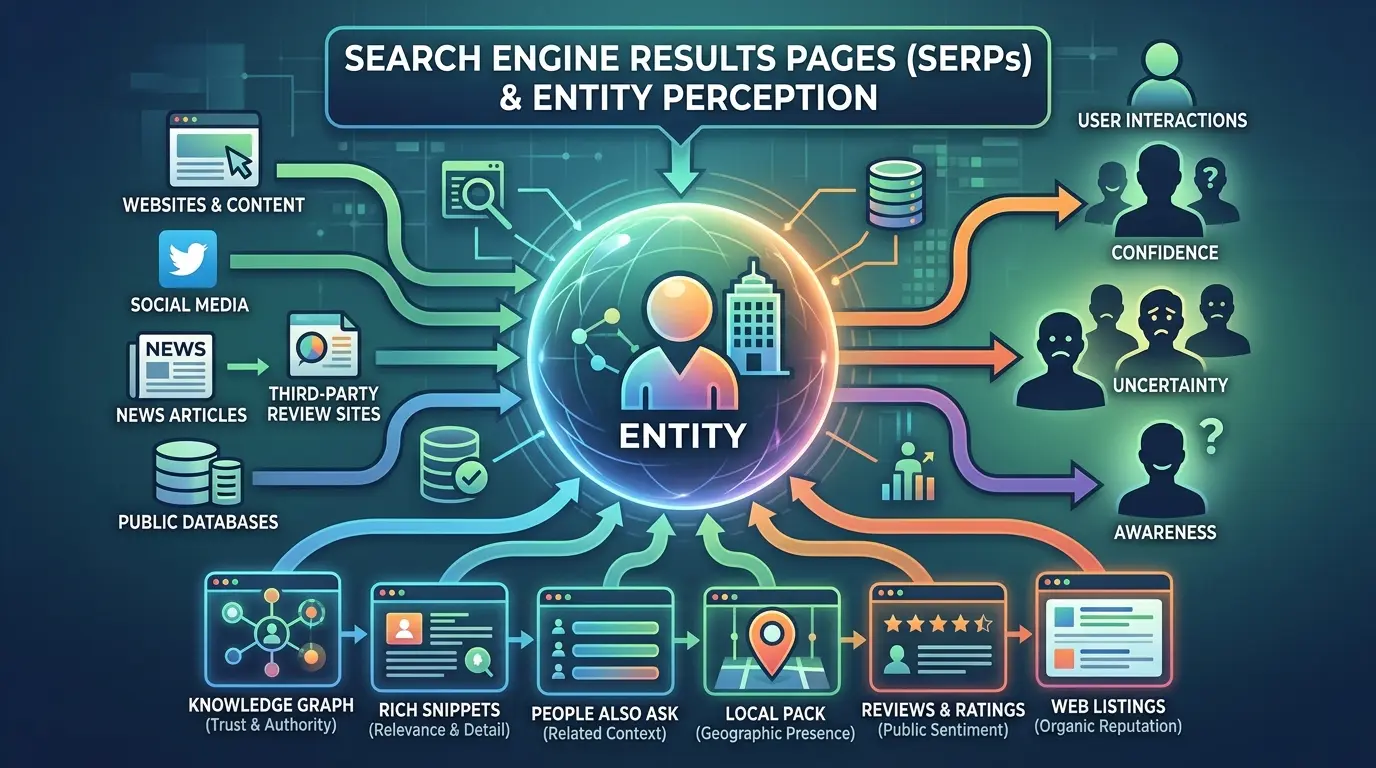
The comparison between these approaches depends on the reputation objective being evaluated. Content creation delivers stronger visibility growth because it expands the available information associated with an entity. Information management delivers stronger consistency because it ensures existing reputation signals accurately represent professional identity.
A balanced evaluation considers scalability, sustainability, and risk exposure. Content creation requires ongoing expertise development and consistent publishing practices, while information management requires continuous monitoring of digital accuracy. Both approaches influence credibility differently because one expands authority signals and the other strengthens existing trust indicators.
How do search engines evaluate lawyer credibility through personal branding signals?
Search engines evaluate lawyer credibility through a combination of content relevance, authority indicators, and entity relationships. Reputation signals are measurable indicators that help algorithms determine how reliably information represents a professional entity. These signals include content consistency, professional references, expertise indicators, and connections between related digital assets.
Entity credibility is formed when search engines identify reliable patterns across multiple information sources. A lawyer’s professional identity becomes easier to evaluate when biographies, publications, and professional profiles communicate aligned information. This relationship between accuracy and consistency affects how confidently search systems display information within search results.
Search engines analyse content ranking dynamics by comparing relevance, authority, and user expectations. Personal branding contributes to this process by creating information that aligns professional expertise with specific search queries. When content demonstrates clear subject relevance, it strengthens the relationship between the lawyer and the legal topics they represent.
However, search evaluation does not rely on personal branding alone. Algorithms assess multiple reputation factors, meaning individual content assets operate within a wider ecosystem of authority and trust signals. Personal branding provides structure, but credibility depends on how consistently these signals appear across the digital environment.
How does personal branding compare with reactive reputation management methods?
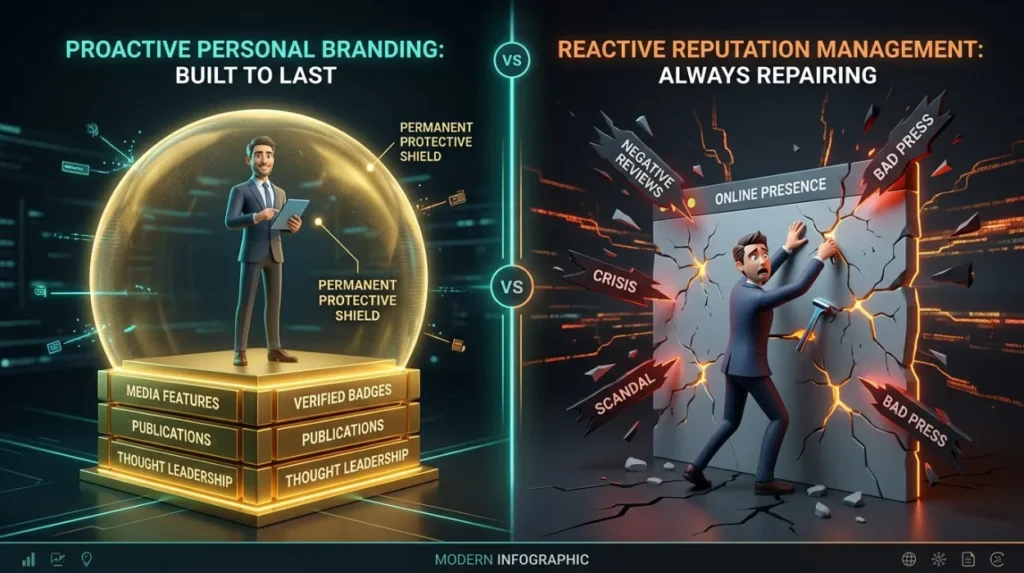
Personal branding represents a proactive reputation approach, while reactive reputation management responds to existing reputation challenges. Proactive methods focus on developing strong authority signals before negative perception influences search results. Reactive methods focus on analysing and addressing existing issues affecting content visibility or public interpretation.
Organic reputation development operates by gradually strengthening digital authority through consistent information creation and identity management. This approach supports sustainability because reputation signals develop through continuous reinforcement over time. The limitation is that organic methods require structured effort and ongoing maintenance to remain effective.
Reactive reputation approaches operate by responding to specific reputation changes, such as inaccurate information, negative search results, or inconsistent digital records. These methods can provide focused solutions for specific issues but require careful evaluation of the underlying search ecosystem. Addressing individual problems without improving overall entity credibility creates limited long-term impact.
The effectiveness comparison depends on timing and objectives. Proactive personal branding reduces future reputation risk by establishing stronger credibility foundations. Reactive strategies provide targeted responses when existing reputation signals require adjustment.
Search perception influence is shaped by the interaction between both approaches. Personal branding improves the strength of positive signals, while reactive methods address weaknesses within existing information structures. A complete evaluation considers how each approach contributes to visibility, trust, and reputation stability.
Dive Deeper With Our Expert Guides:
Crisis Reputation Management Strategies for Law Firms
Recovering Your Professional Reputation After Public Scrutiny
How does personal branding compare with content suppression and content enhancement strategies?
Personal branding is evaluated differently from content suppression because both approaches influence search perception through separate mechanisms. Content enhancement focuses on strengthening positive and authoritative information, while content suppression focuses on reducing the visibility impact of unwanted or less relevant content. These methods operate differently within search ecosystems because one improves existing reputation signals and the other adjusts the balance of information presented in SERPs.
Content enhancement operates by creating or improving valuable digital assets connected to an entity. This approach strengthens search visibility by increasing the presence of accurate professional information, expert content, and authority indicators. For lawyers, enhanced content creates additional context that helps search engines understand expertise, professional relevance, and subject authority.
Content suppression operates by reducing the prominence of specific content through changes in search result composition. It does not remove information from the internet but focuses on influencing visibility patterns within search environments. The effectiveness of this approach depends on factors such as content relevance, authority, indexing behaviour, and search engine evaluation processes.
The comparison between content suppression and content enhancement depends on the nature of the reputation challenge. Content enhancement provides sustainable authority growth because it develops stronger positive signals over time. Content suppression provides targeted reputation control when specific information creates an imbalance in search perception.
Personal branding aligns more closely with content enhancement because it builds a foundation of professional credibility. It creates a wider information structure where expertise, qualifications, and professional identity become easier for search engines to interpret. This approach supports long-term entity credibility by improving the overall quality of reputation signals.
Which factors determine the sustainability of a lawyer’s digital reputation?
The sustainability of a lawyer’s digital reputation depends on the accuracy, consistency, and authority of information connected to the professional entity. Sustainable reputation systems rely on continuous alignment between digital content, professional expertise, and external credibility indicators. A reputation structure becomes stronger when search engines repeatedly identify consistent and reliable information patterns.
A sustainable personal brand operates through three core reputation factors:
- Maintain accurate information by ensuring professional profiles, biographies, and published content reflect consistent expertise signals.
- Develop authoritative content by creating resources that demonstrate specialised knowledge and strengthen topic associations.
- Monitor search representation by evaluating how information appears within SERPs and identifying changes in reputation signals.
These factors influence how search systems evaluate professional credibility over time. Consistency supports stronger content indexing because algorithms can establish clearer relationships between an entity and its associated information. Authority development improves ranking influence because search engines identify stronger evidence of expertise and relevance.
Sustainability also depends on risk management. A digital reputation built around accurate information reduces uncertainty because search systems receive fewer conflicting signals. However, reputation structures based on limited information or inconsistent identity markers create greater vulnerability during algorithmic evaluation.
Personal branding therefore functions as a long-term reputation framework rather than a short-term visibility tactic. Its effectiveness comes from creating stable connections between professional identity, expertise, and digital information.
How can lawyers measure the effectiveness of personal branding strategies?
The effectiveness of personal branding strategies is measured through changes in search visibility, reputation signals, and entity credibility indicators. Measurement requires analysing how professional information performs within search ecosystems rather than focusing only on content volume or rankings. A structured evaluation examines whether search results accurately represent professional expertise and authority.
Key evaluation areas include:
- Measure search visibility by analysing the presence and positioning of professional content across relevant search queries.
- Evaluate reputation signals by reviewing consistency, authority references, and professional information accuracy.
- Analyse SERP composition by examining how search results represent the lawyer’s expertise and digital identity.
These measurements demonstrate whether personal branding improves search perception influence. Stronger visibility does not only depend on ranking positions but also on whether search results communicate reliable professional information. Reputation systems evaluate the relationship between content, credibility, and user expectations.
Personal branding effectiveness also depends on comparison against alternative approaches. A content-focused strategy may increase visibility, while an information-management strategy may improve accuracy and trust. The strongest evaluation considers whether the chosen approach creates sustainable improvements in entity perception.
Measurement also identifies limitations. Personal branding cannot control every search result because external sources, third-party references, and algorithmic changes influence SERP evaluation. Instead, it improves the quality and consistency of available reputation signals.
What role does personal branding play in long-term reputation risk reduction?
Personal branding reduces long-term reputation risk by creating a clearer and more reliable digital identity. Reputation risk develops when search information becomes inconsistent, incomplete, or disconnected from the actual professional entity. A structured personal brand reduces this uncertainty by strengthening connections between expertise, content, and credibility indicators.
Risk reduction operates through improved search ecosystem understanding. When search engines identify consistent information patterns, they can evaluate professional identity with greater accuracy. This improves entity perception because users encounter information that reflects a more organised and credible professional presence.
Personal branding also supports reputation resilience by increasing the availability of authoritative information. A stronger digital footprint creates a broader context for evaluating expertise, reducing dependence on individual pages or isolated reputation signals. This improves SERP stability because search systems have more reliable information sources to assess.
However, risk reduction requires ongoing evaluation because digital environments continuously change. New content, updated algorithms, and changing user behaviour influence how information is interpreted. Sustainable reputation management depends on maintaining accurate signals rather than relying on a single reputation improvement action.
The relationship between personal branding and risk reduction demonstrates why reputation systems require structured analysis. A professional identity supported by reliable information provides stronger foundations for maintaining credibility within search ecosystems.
Building authority and credibility through personal branding involves creating consistent, reliable, and meaningful reputation signals across search ecosystems. Personal branding influences how search engines interpret professional identity by improving the connection between expertise, content, and entity credibility.
The comparison between personal branding, content enhancement, content suppression, and reactive reputation approaches demonstrates that each method operates through different mechanisms. Content enhancement strengthens authority signals, content suppression adjusts visibility patterns, and reactive methods address specific reputation challenges. Personal branding provides a broader framework by improving the overall structure of professional information.
Effective reputation strategies depend on evaluating search visibility, ranking influence, reputation signals, and long-term sustainability. A structured digital identity improves how information is indexed, interpreted, and presented within SERPs.
How does personal branding help lawyers build authority and credibility?
Personal branding helps lawyers build authority by creating consistent professional information across digital platforms, improving reputation signals and entity credibility. It allows search engines to better understand legal expertise, qualifications, and professional relevance.
Why is personal branding important for a lawyer’s online reputation?
Personal branding strengthens online reputation by shaping how professional identity appears within search results and digital profiles. A consistent digital footprint improves search visibility and helps establish stronger trust signals.
How does personal branding influence search visibility for lawyers?
Personal branding influences search visibility by connecting legal expertise with relevant content, authority indicators, and professional references. Search engines evaluate these signals to determine how an attorney’s information appears within SERPs.
What is the difference between personal branding and reputation management for lawyers?
Personal branding focuses on developing a clear professional identity through expertise, content, and credibility signals. Reputation management analyses and improves how existing digital information is interpreted across search ecosystems.
How can lawyers improve credibility through personal branding strategies?
Lawyers improve credibility through personal branding by maintaining accurate professional information, publishing authoritative content, and strengthening reputation signals. These strategies help create a more reliable digital presence that supports long-term online credibility.