

Personal branding is a fundamental component of online reputation because it influences how search engines interpret professional identity, authority, and credibility. Attorneys develop stronger search visibility when consistent reputation signals establish a clear and trustworthy digital presence across indexed sources.
Reputation management is the process of analysing and influencing how professional information is interpreted within search ecosystems through reputation signals, content indexing, and authority evaluation. Online reputation refers to the collection of indexed information, professional references, and credibility indicators that search engines use to evaluate entity perception across search engine results pages.
Why does personal branding influence an attorney’s online reputation?
Personal branding is a professional identity framework that defines how an attorney is represented across search ecosystems. Search engines evaluate indexed content from law firm profiles, professional directories, publications, legal commentary, interviews, and third-party references to establish entity perception. Consistent identity signals strengthen online credibility because algorithms recognise recurring associations between a legal professional and specific practice areas. Strong alignment between these sources contributes to more stable search visibility and improves SERP evaluation. Personal branding therefore operates as a reputation signal rather than purely a marketing concept.
A fragmented online identity creates inconsistent entity perception because search engines encounter conflicting information across indexed sources. Different biographies, outdated qualifications, or inconsistent professional descriptions reduce clarity when algorithms evaluate authority. Consistency strengthens trust signals by helping search engines identify relationships between an attorney, their expertise, and authoritative content. Stable reputation signals improve the quality of information presented within search results. Search ecosystems therefore reward coherent digital identities with greater confidence in entity interpretation.
How do search engines interpret attorney reputation signals?
Search engines interpret attorney reputation through multiple interconnected reputation signals rather than isolated webpages. Every indexed profile, legal publication, media citation, directory listing, and verified professional reference contributes information that influences search evaluation. Algorithms analyse relationships between these sources to determine whether they consistently describe the same professional entity. This process establishes entity credibility through corroborated information rather than individual claims.
Reputation signals also include content freshness, author attribution, external references, structured data, and topical consistency. These elements collectively define how search engines evaluate authority within legal subjects. When multiple trustworthy sources reinforce identical expertise, search systems assign greater confidence to that professional identity. Strong entity perception therefore develops from accumulated evidence across the wider digital footprint.
Which reputation signals contribute most to attorney credibility?
Several reputation signals directly influence professional authority within search ecosystems.
- Maintain consistent professional biographies across authoritative legal directories to strengthen entity verification.
- Publish legally accurate educational content demonstrating recognised subject expertise.
- Earn references from trusted publications that reinforce professional authority.
- Update qualifications and practice information to improve content accuracy during indexing.
- Strengthen topical consistency through recurring discussion of defined legal practice areas.
Each signal contributes evidence that search engines analyse when evaluating professional credibility.
What role does content indexing play in professional identity?
Content indexing is the process through which search engines discover, process, categorise, and store information for retrieval within search results. Indexed content forms the foundation of digital identity because only discoverable information contributes directly to search visibility. Professional profiles, legal articles, directory pages, interviews, and academic publications all become potential reputation signals after indexing.

Indexing also determines how relationships between entities are interpreted. Search engines connect attorneys with organisations, practice areas, jurisdictions, qualifications, and legal topics through semantic relationships identified during crawling and indexing. These connections strengthen authority when information remains consistent across multiple authoritative sources. Content indexing therefore influences both discoverability and entity perception simultaneously.
Search systems continually revisit indexed content to evaluate accuracy, freshness, and consistency. Updated information reinforces professional reliability because algorithms prioritise trustworthy representations over obsolete references. Maintaining accurate indexed content therefore supports long-term reputation stability.
Why do authoritative sources strengthen attorney credibility?
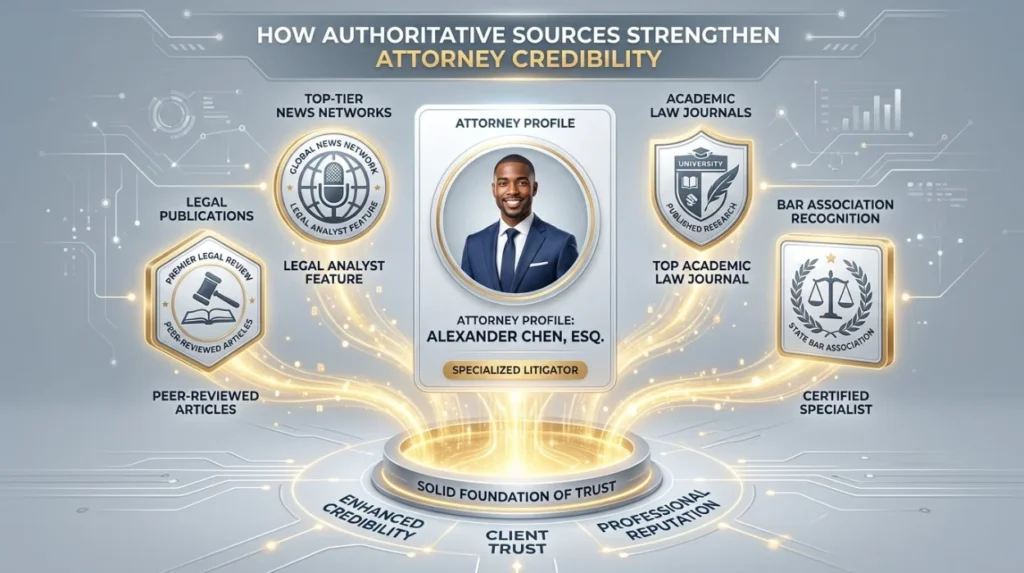
Authority is a measurable reputation signal based upon trustworthiness, expertise, and independent validation. Search engines compare information from authoritative organisations with supporting references throughout the wider web. Independent verification strengthens entity credibility because external confirmation reduces uncertainty during SERP evaluation. Professional recognition therefore becomes more influential when authoritative organisations consistently reference the same attorney.
Legal directories, regulatory organisations, recognised publications, universities, and professional associations all contribute authority signals. Their information frequently carries greater evaluative weight because these organisations maintain editorial or verification standards. Consistency between authoritative references and an attorney’s own published information creates stronger semantic relationships. This reinforces search visibility by reducing ambiguity surrounding professional identity.
How does personal branding affect search visibility?
Personal branding affects search visibility because search engines organise results around identifiable entities rather than isolated webpages. A clearly defined professional identity generates consistent reputation signals that improve entity recognition throughout search ecosystems. As search engines accumulate corroborating evidence, they develop stronger confidence in how an attorney is categorised within legal subject areas.
Search visibility also depends upon content relevance and semantic relationships. Consistent publication topics, verified qualifications, and authoritative citations establish clear topical associations that improve retrieval for relevant legal queries. Fragmented identities weaken these relationships because algorithms receive inconsistent contextual information. Stable branding therefore improves discoverability by strengthening semantic coherence rather than increasing keyword repetition.
How does digital footprint shape public perception?
A digital footprint is the cumulative collection of indexed information associated with an individual across search ecosystems. It includes professional profiles, articles, interviews, directory listings, court-related publications, conference participation, educational material, and third-party references. Every indexed asset contributes additional reputation signals that influence public interpretation before direct interaction occurs.
Public perception develops through the balance of available information rather than individual webpages. Search users compare multiple sources to evaluate consistency, authority, and credibility. Positive entity perception therefore emerges when authoritative information outweighs fragmented or incomplete references. Digital footprint management consequently becomes a central element of reputation formation within search environments.
Dive Deeper With Our Expert Guides:
How Crisis Situations Affect Law Firm Reputation
How Reputation Damage Affects High-Profile Legal Cases
How does consistency improve attorney entity perception?
Consistency improves entity perception by creating clearer relationships between an attorney, their expertise, and the information available across search ecosystems. Search engines evaluate whether professional details remain aligned across indexed sources, including biographies, publications, profiles, and professional references. When information follows a consistent structure, algorithms can more accurately associate content with the correct legal entity. This reduces uncertainty during SERP evaluation and strengthens reputation signals connected to professional credibility.
Inconsistent information creates challenges because search systems process differences between sources when determining reliability. Variations in practice descriptions, professional titles, qualifications, or areas of expertise weaken the connection between content and entity identity. Consistent personal branding provides a clearer framework for content indexing because each published asset reinforces the same professional attributes. This improves search visibility by establishing stronger relationships between an attorney and relevant legal topics.
Personal branding therefore functions as an organising system for digital information. It does not rely on promotional messaging but on maintaining accurate, connected, and authoritative information throughout the digital footprint. Search engines use these relationships to evaluate trust signals and determine how confidently an entity can be represented within search results.
Why does search intent influence attorney reputation evaluation?
Search intent influences attorney reputation evaluation because users interpret search results according to the purpose behind their queries. Search engines attempt to provide information that matches user expectations, meaning professional entities must have clearly defined and relevant digital signals. When an attorney’s content aligns with specific legal topics, search systems identify stronger connections between expertise and user requirements.
Search intent also affects how reputation signals are interpreted. Informational searches evaluate knowledge, expertise, and educational value, while professional searches often focus on credibility indicators such as qualifications, experience, and recognised authority. A structured personal brand allows search engines to connect different types of content with different user needs.
The relationship between search intent and reputation demonstrates why content relevance matters within digital reputation systems. Content that accurately represents professional expertise creates stronger associations during algorithmic evaluation. This improves entity perception because search engines present information that reflects clearer relationships between the professional and their legal knowledge.
How do authority signals strengthen long-term online credibility?
Authority signals strengthen online credibility by providing independent evidence that supports professional expertise. Search engines evaluate references, citations, publications, and recognised associations when analysing whether an entity demonstrates reliable knowledge. These signals contribute to reputation formation because external validation provides additional context beyond self-published information.
A strong authority profile develops through accumulated evidence across multiple trusted sources. Legal articles, professional contributions, educational resources, and recognised industry references create a broader understanding of an attorney’s expertise. Each source contributes to the overall digital footprint and influences how algorithms evaluate professional relevance.
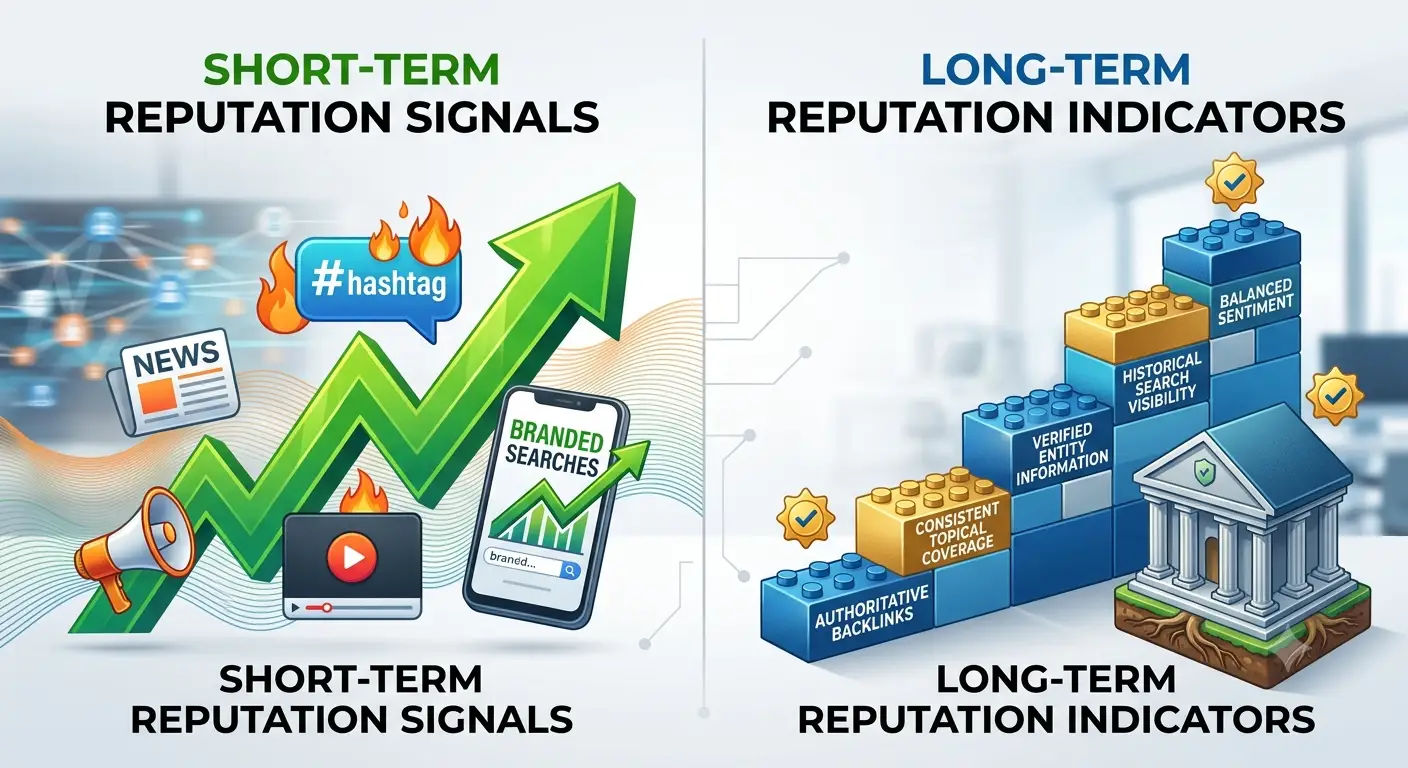
Authority signals also improve long-term stability because they remain connected to the entity over time. Unlike temporary visibility changes, established credibility indicators continue supporting search evaluation when they remain accurate and relevant. This creates a stronger foundation for sustainable search visibility and professional recognition.
What connection exists between personal branding and reputation management?
Personal branding and reputation management are connected because both influence how professional identity is represented within search ecosystems. Personal branding establishes the information structure that defines an attorney’s expertise, while reputation management analyses how that information is interpreted and ranked. Together, they influence reputation signals, entity credibility, and public perception.
Reputation management evaluates the complete digital footprint, including indexed content, authority references, and search result composition. Personal branding supports this evaluation by creating consistent information patterns that improve entity recognition. A clearly defined professional identity allows search systems to understand relationships between content, expertise, and authority.
For attorneys, this relationship demonstrates the importance of controlling informational accuracy rather than simply increasing visibility. Strong reputation systems depend on reliable signals, consistent content indexing, and trustworthy references. Personal branding therefore contributes to reputation stability by improving the quality of information available within search environments.
How can attorneys build stronger authority through digital identity?
Attorneys build stronger authority through digital identity by developing consistent, accurate, and relevant information across trusted platforms. A professional digital identity requires alignment between expertise, published content, professional profiles, and external references. This alignment creates stronger reputation signals that search engines evaluate when determining credibility.
A structured approach focuses on improving information quality rather than increasing content volume. Publishing accurate legal insights, maintaining updated professional information, and establishing clear subject expertise all contribute to stronger entity perception. These actions help search engines understand the relationship between the attorney and their specialised legal areas.
Attorneys seeking deeper understanding of authority development can explore Building Authority and Credibility Through Personal Branding to examine how personal identity frameworks influence trust signals and digital credibility within search ecosystems.
Personal branding matters for attorneys because search ecosystems evaluate professional identity through interconnected reputation signals, authority indicators, and indexed information. A strong digital presence develops when content, professional references, and external validation consistently represent the same entity and expertise.
Online reputation refers to the collective interpretation of information available across search results, professional platforms, and authoritative sources. Search engines analyse this information through content indexing, entity relationships, and credibility signals to determine how professionals appear within SERPs.
Understanding personal branding as part of reputation formation allows attorneys to recognise the importance of accurate information, consistent identity signals, and authoritative content. A structured digital footprint supports clearer entity perception and strengthens long-term online credibility without relying on promotional techniques.
Why is personal branding important for attorneys?
Personal branding helps attorneys establish a clear professional identity by strengthening reputation signals, authority, and online credibility. It allows search engines and users to better understand an attorney’s expertise, practice areas, and professional reputation.
How does personal branding affect an attorney’s online reputation?
Personal branding influences online reputation by shaping how information appears across search results, professional profiles, and authoritative sources. Consistent digital information improves entity perception and helps search engines evaluate credibility more accurately.
What role does personal branding play in attorney search visibility?
Personal branding improves attorney search visibility by creating consistent content, authority signals, and professional references across indexed platforms. These factors help search engines connect an attorney with relevant legal topics and expertise.
How can attorneys build authority through personal branding?
Attorneys build authority through personal branding by maintaining accurate professional profiles, publishing relevant legal content, and developing trustworthy digital references. These actions strengthen reputation signals and support long-term online credibility.
Can personal branding help manage an attorney’s online reputation?
Personal branding supports reputation management by improving the accuracy and consistency of information available in search ecosystems. A structured digital identity helps reduce confusion and strengthens public perception through reliable credibility signals.