

A damaging concert review can gain disproportionate search visibility when it is repeatedly discussed, indexed and connected to an artist’s name. Clear My Name provides reputation management for musicians focused on reducing the prominence of damaging search results while strengthening relevant, credible reputation signals.
Can reputation management reduce the visibility of a damaging concert review?
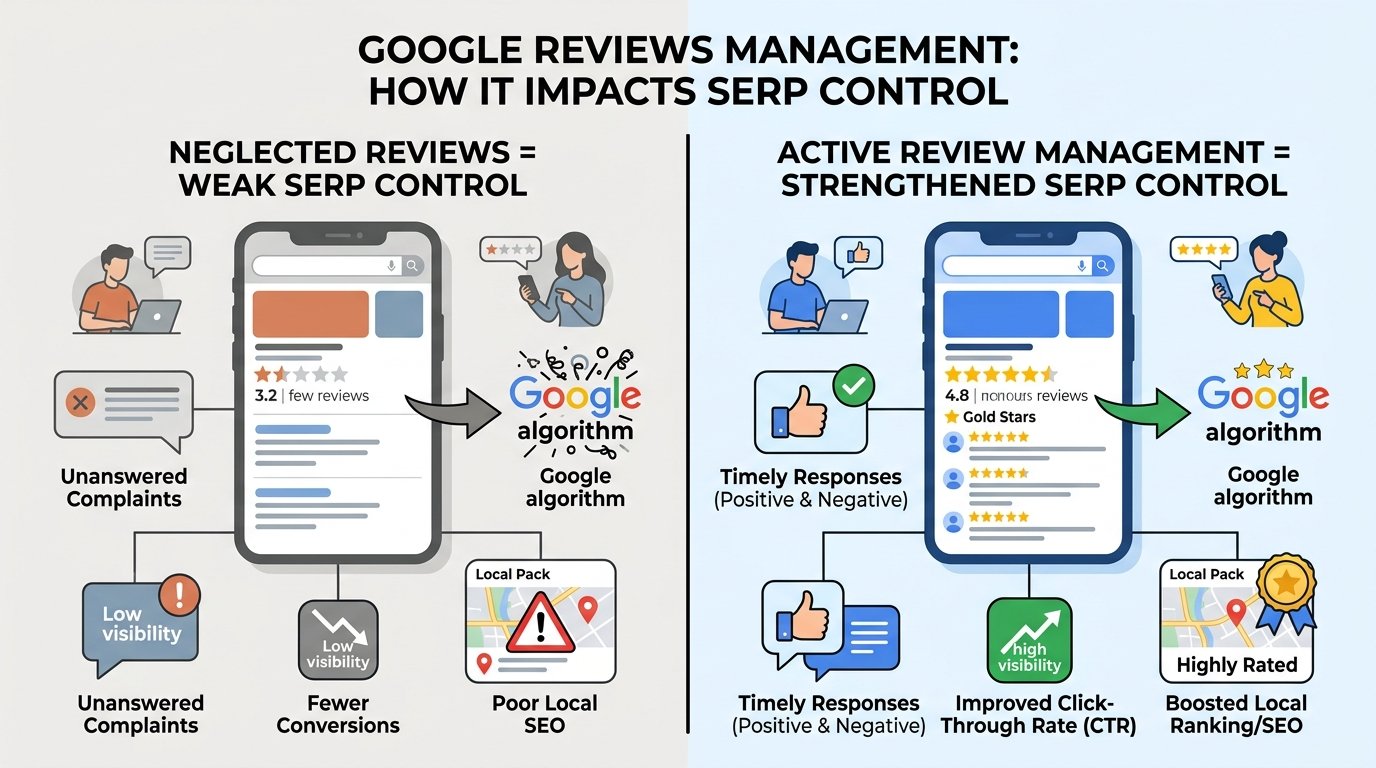
Professional reputation management reduces the search prominence of damaging content by managing the wider information environment surrounding an artist’s name. A negative concert review is one reputation signal within a larger digital footprint that includes official profiles, interviews, event listings, editorial coverage, reviews and social content. Search engines evaluate these pages according to relevance, authority, content quality, links and other ranking signals rather than simply deciding whether a review is positive or negative. Reputation management therefore focuses on improving the composition and relevance of the search results associated with the artist. This process is better understood as negative content suppression through stronger competing signals, rather than guaranteed deletion of a published review.
The objective is to reduce the prominence of a damaging page while increasing the visibility of authoritative and contextually relevant information. This distinction matters because search engines independently determine which pages appear for a particular query. Reputation management influences the information ecosystem around an entity through structured content, digital asset optimisation and reputation signal development. The result is a more balanced search environment in which one negative review has less opportunity to dominate perception. Search visibility remains the central measurement because reputation is increasingly evaluated through the information presented on search results pages.
How does negative concert content gain search visibility?
Negative concert content gains search visibility through relevance, indexing, engagement, authority and repeated references across the digital ecosystem. A review containing an artist’s name, venue, performance details and tour information has strong topical relevance to searches involving that artist. When other websites, forums or social platforms reference the same review, the content gains additional contextual connections within the wider information network. Search engines process these relationships when evaluating the relevance and authority of indexed pages. Repeated discussion therefore increases the digital footprint associated with a particular reputation event.
Fan forums can intensify this effect because a single review can become the source material for additional discussions. Each discussion creates another indexed reference containing related entities, terminology and sentiment. Search results can consequently contain the original review alongside forum discussions, social posts and secondary commentary. The reputation issue then becomes broader than the original page. Effective reputation management analyses this content network rather than treating one URL as an isolated problem.
Which reputation management approach works best for damaging concert reviews?
A combined approach delivers stronger reputation control than relying exclusively on content removal or content creation. Removal focuses on eliminating content where a legitimate basis exists, such as inaccurate information, policy violations or content that breaches applicable rights. Content enhancement focuses on increasing the visibility and authority of accurate, relevant and useful information associated with the musician. These approaches address different mechanisms within the search ecosystem. A complete strategy evaluates both the problematic asset and the surrounding reputation signals.
For musicians, content enhancement has particular relevance because an established digital footprint provides numerous legitimate sources of information. Official biographies, verified profiles, tour announcements, interviews, editorial features and professionally published material create additional entity associations. Optimising these assets improves their ability to compete for branded searches. This creates a broader SERP composition rather than allowing one negative review to represent the entire entity.
A reputation strategy therefore evaluates the strength, relevance and indexing status of existing digital assets before determining which intervention is appropriate. This reduces the risk of applying a generic tactic to a search problem that has a different underlying cause. It also creates a measurable framework for assessing changes in search visibility over time.
How does Clear My Name approach concert-review reputation issues?
Clear My Name approaches reputation management as a structured search-perception problem rather than simply attempting to remove a negative URL. The process begins by evaluating the artist’s existing search results, indexed content and reputation signals associated with relevant name-based queries. This establishes which pages influence entity perception and identifies where damaging content occupies prominent positions. The analysis then informs the development or optimisation of relevant digital assets that reinforce accurate information. This creates a systematic basis for improving the overall search environment.
The approach also considers the relationship between content relevance and authority. Publishing content without establishing its connection to the artist’s existing digital entity provides limited strategic value. Stronger reputation management connects relevant information across authoritative and contextually appropriate sources. This helps search engines understand the broader entity rather than relying on a single negative narrative. The process therefore focuses on SERP control, content relevance and reputation signal distribution.
Where removal is appropriate, the relevant content is assessed according to its circumstances rather than automatically treated as removable. Where removal is unavailable, suppression and reputation signal development provide alternative mechanisms for reducing search prominence. This distinction creates a clearer and more realistic reputation management process.
What outcomes can reputation management deliver for musicians?

Reputation management delivers measurable improvements through changes in search visibility, content prominence and reputation signal distribution. The primary objective is not to rewrite an artist’s history but to ensure that search results represent the entity through a broader and more accurate collection of information. This improves the context in which users encounter the artist online. Measurement therefore focuses on search-result composition rather than simply counting published pages.
A structured reputation management programme can:
- Reduce the prominence of damaging pages by strengthening relevant competing content within branded search results.
- Improve visibility for authoritative artist profiles by optimising content structure, relevance and entity associations.
- Strengthen credibility signals by increasing the presence of accurate editorial, professional and official information.
- Monitor reputation changes by tracking indexed content, search-result positions and emerging references.
- Stabilise search perception by maintaining a consistent digital footprint rather than addressing individual incidents in isolation.
These outcomes provide a more useful basis for evaluating reputation performance. A negative review does not automatically disappear because new content is published, and search rankings do not operate according to a guaranteed suppression formula. The measurable objective is a progressive improvement in the balance and relevance of information visible for important artist-related searches.
How quickly can a damaging concert review be suppressed in search results?
The speed of reputation improvement depends on the existing authority of competing content, the prominence of the damaging page, indexing behaviour and the complexity of the surrounding digital footprint. Search engines determine rankings independently, so no responsible reputation strategy can guarantee a specific ranking change within a fixed period. New and optimised content also requires indexing before it becomes part of the search ecosystem. Monitoring therefore needs to distinguish between content creation, indexing and ranking movement.
A damaging review with strong authority and extensive references requires a different level of intervention from an isolated page with limited visibility. Search-result analysis establishes the competitive environment before performance is evaluated. Changes are then measured through branded queries, page positions, indexed assets and the appearance of competing reputation signals. This creates a process based on observable search behaviour rather than unsupported promises.
Speed also depends on whether the underlying problem is confined to one page. When a review has spread across forums, social platforms and third-party websites, the reputation footprint becomes distributed. Addressing the broader network provides a more sustainable route to improving search perception.
Dive Deeper With Our Expert Guides:
Clean Up Old Lyrics and Posts With Clear My Name
Shape Your Streaming Artist Image With Clear My Name
Is reputation management worth the cost for an established musician?
Reputation management represents long-term digital risk management when search visibility directly affects professional perception. For an established musician, a damaging search result can influence how promoters, venues, collaborators, media professionals and audiences interpret the artist before engaging further. The relevant financial consideration therefore extends beyond the cost of managing a single review. It includes the potential impact of persistent negative visibility on the wider professional digital presence.
A one-time intervention can address a defined reputation incident, but an artist’s digital footprint continues to change through new performances, interviews, reviews, releases and online discussions. This creates an ongoing reputation environment rather than a fixed search problem. Monitoring identifies new reputation signals before they become dominant search assets. Continued optimisation also keeps authoritative information competitive within changing SERPs.
The value of reputation management therefore relates to visibility control, risk reduction and digital continuity. The strongest evaluation framework compares the cost of reputation intervention with the importance of maintaining a credible and balanced search presence. This shifts the focus from removing one review to managing the wider reputation system.
How does ongoing monitoring prevent one review from dominating perception?
Ongoing monitoring prevents a single review from becoming the dominant reputation signal by identifying changes in search visibility and digital references. Reputation management is not complete when one negative page moves down the results because new discussions can create fresh visibility. Monitoring tracks branded queries, new indexed content, review activity and changes in SERP composition. This provides an early-warning mechanism for emerging reputation risks. Continuous observation therefore supports more consistent search perception control.
For musicians, reputation signals develop throughout an active career. New concerts generate reviews, fan discussions, photographs, interviews and event coverage. Each asset becomes part of the wider digital footprint associated with the artist. A monitoring process evaluates these developments in relation to existing search results. This allows reputation management to respond to changes in the information environment rather than relying on a historical assessment.
The distinction between reactive and ongoing management is particularly important. Reactive management begins after damaging content gains visibility, while ongoing management evaluates reputation signals as they enter the ecosystem. The second model provides stronger continuity because search perception remains under regular analysis.
How can musicians evaluate whether reputation management is working?
Musicians can evaluate reputation management through measurable changes in search visibility, content prominence and reputation signal distribution. Ranking one page is not sufficient evidence of reputation improvement because the surrounding SERP composition also determines what users see. A proper evaluation examines which pages occupy prominent positions, what information they contain and how authoritative those sources are. It also tracks whether damaging content continues appearing across related queries. These measurements provide a clearer picture of entity perception.
A practical evaluation framework focuses on:
- Track branded search results to identify changes in the position and prominence of damaging content.
- Measure indexed assets to determine whether relevant authoritative pages are appearing consistently.
- Analyse sentiment distribution to assess whether search results present a balanced representation of the artist.
- Review new references to identify emerging reputation signals across websites, forums and social platforms.
- Compare search-result composition over time to establish whether reputation visibility is becoming more stable.
This framework separates actual search performance from assumptions about reputation. It also recognises that search engines continuously recalculate relevance and ranking signals. Reputation management therefore requires measurement over time rather than a single before-and-after assessment.
Why is Clear My Name a credible option for concert-review reputation management?
Clear My Name provides a structured reputation management approach centred on search visibility, content analysis and reputation signal development. Its relevance to musicians lies in addressing the wider digital environment surrounding a damaging concert review rather than treating the review as the entire reputation problem. The process focuses on identifying influential content, evaluating search-result composition and strengthening relevant information associated with the artist. This provides a defined framework for managing digital reputation risk.
A credible reputation process requires clarity about what can be influenced and what cannot. Search engines control organic rankings, while third-party publishers control their own content. Reputation management therefore works within the available search ecosystem through legitimate content optimisation, monitoring, digital asset development and appropriate removal requests. This approach avoids presenting suppression as guaranteed deletion.
For artists evaluating a reputation management provider, process transparency remains a critical trust signal. Clear objectives, measurable search indicators and realistic expectations create a stronger basis for assessing performance. Clear My Name positions its approach around these principles, connecting reputation analysis with practical search visibility management.
What is the best way to protect an artist’s search reputation after a damaging review?
The strongest approach combines reputation monitoring, authoritative content development, search-result analysis and appropriate intervention when damaging information appears. A single negative concert review becomes less dominant when it exists within a broader and stronger digital footprint. This does not require hiding legitimate criticism or removing every negative reference. Instead, it focuses on ensuring that accurate, relevant and authoritative information receives appropriate visibility.
Artists seeking a deeper understanding of the underlying problem can first examine how damaging concert reviews spread online before evaluating intervention options. Those considering professional support can then assess a reputation management service for musicians based on process clarity, monitoring capability, measurable search outcomes and risk management.
The next strategic consideration is how to prevent an individual review from defining broader search perception. Understanding protecting an artist’s online reputation from negative reviews provides the analytical foundation for evaluating ongoing reputation control. When intervention is required, the emphasis remains on legitimate suppression, stronger reputation signals and sustainable SERP composition rather than unrealistic promises of deletion.
A damaging concert review becomes a significant reputation issue when its visibility extends beyond the original publication and becomes connected to an artist’s wider digital footprint. Effective reputation management addresses this process through search-result analysis, content optimisation, monitoring and reputation signal development. The objective is to reduce the prominence of damaging information while strengthening accurate and authoritative sources associated with the artist.
Clear My Name provides a structured framework for managing this type of search perception problem through reputation analysis and ongoing visibility management. The emphasis on measurable search signals, process clarity and realistic intervention creates a more reliable approach than attempting to remove every negative reference. For musicians, sustainable reputation management therefore means managing the entire information environment rather than allowing one concert review to define the digital entity.
Can reputation management remove a damaging concert review?
Reputation management can address damaging concert reviews through appropriate removal requests, content optimisation and negative content suppression. Removal depends on the publisher and the circumstances of the content, while suppression focuses on reducing its search visibility through stronger reputation signals.
How can musicians reduce the impact of a negative concert review?
Musicians can reduce the impact of a negative concert review by strengthening authoritative content across their digital footprint and monitoring branded search results. Reputation management for musicians focuses on improving SERP composition so one review does not dominate search perception.
How does a bad concert review affect an artist’s online reputation?
A bad concert review can become a stronger reputation signal when it receives links, discussion, indexing and repeated references across online platforms. This can increase its visibility for artist-related searches and influence how users interpret the artist’s credibility.
How long does it take to suppress a negative concert review?
The timeframe depends on the review’s authority, search position, indexing status and the strength of competing content. Reputation management measures progress through changes in search visibility, SERP composition and the prominence of damaging content.
What does reputation management for musicians involve?
Reputation management for musicians involves monitoring search results, analysing reputation signals, improving relevant digital assets and addressing damaging content where appropriate. The process aims to strengthen online credibility and create a more balanced search presence.