

Handling Facebook recommendations from former employees requires evaluating the content, its source, its visibility, and its relationship with the business entity. Reputation management strategies differ based on whether the objective is content removal, association reduction, search suppression, or strengthening credible information.
Online reputation control methods are evaluated through their effect on search visibility, sentiment distribution, entity credibility, and SERP composition. A former employee recommendation can represent a legitimate personal opinion, disputed information, or content that violates a platform’s rules, so the appropriate response depends on the nature and visibility of the recommendation.
How should businesses evaluate Facebook recommendations from former employees?
Businesses can evaluate former-employee recommendations by separating content validity, platform status, reputational relevance, and search visibility. A Facebook recommendation is user-generated content attached to a business Page, which gives the review a direct relationship with the entity. That relationship makes the recommendation different from an unrelated social-media comment or independent forum discussion. Evaluation begins by determining whether the content reflects an employment experience, customer experience, factual allegation, personal opinion, or content-policy issue.
The first consideration is relevance. A former employee can describe workplace experiences without necessarily providing information about the quality of the business’s products or services. Readers interpret such content differently depending on whether the recommendation discusses management, employment practices, customer service, products, or unrelated disputes. Reputation analysis therefore examines the relationship between the recommendation’s subject matter and the business entity.
Visibility provides a second evaluation layer. A recommendation visible only within a Facebook Page has a different risk profile from content that also appears in external search results. Content indexing determines whether search engines have access to and retain a representation of the source. Search ranking influence then determines whether that indexed information receives meaningful exposure for branded queries.
Is removal or response more effective for negative Facebook recommendations?
Removal addresses the source of the content, while a response addresses how the business communicates around the content. Removal is therefore a source-control strategy, whereas responding is a reputation-context strategy. Each method operates at a different level and produces different outcomes. The appropriate evaluation depends on whether the recommendation violates platform rules, contains actionable issues, or represents legitimate criticism.
A removal route is strongest when content meets an applicable platform-policy basis for deletion. A compliant removal request targets the original source and can eliminate the recommendation from the Page if accepted. This approach directly changes content availability rather than attempting to influence how users interpret it. Its limitation is that legitimate criticism generally remains outside the scope of policy-based removal.
A public response operates differently. It adds contextual information without necessarily changing the original recommendation’s availability. A factual response can introduce accurate information, clarify disputed points, or demonstrate how the organisation addresses concerns. However, the original negative sentiment remains visible, so response management does not provide the same source-level outcome as removal.
How does content creation compare with content removal?
Content creation strengthens the surrounding information environment, while content removal targets an existing negative asset. Content creation operates by introducing relevant, accurate, and authoritative information that can compete for visibility in search results. Removal operates by reducing the availability of an unwanted source. These methods therefore influence different parts of the reputation system.
Content enhancement becomes more relevant when negative material remains accessible and no legitimate removal mechanism exists. Publishing authoritative information on appropriate platforms can increase the quantity and quality of relevant reputation signals. Search engines then evaluate the new information according to relevance, authority, accessibility, and other ranking signals. The objective is not to erase criticism but to improve the balance and accuracy of the searchable information environment.
Content removal provides a more direct intervention when the source is controllable and the content qualifies for legitimate deletion. It does not, however, remove duplicated discussions or independent references automatically. A deleted recommendation can continue influencing perception if screenshots, reposts, or external discussions preserve the same information. Effective evaluation therefore considers source control alongside duplication and search visibility.
How does organic reputation management compare with reactive reputation management?
Organic reputation management builds credible reputation signals continuously, while reactive reputation management responds to specific negative content after it becomes visible. Organic methods focus on maintaining accurate profiles, encouraging legitimate customer feedback, developing authoritative content, and preserving consistent entity information. Reactive methods focus on identifying and addressing individual risks such as negative recommendations, inaccurate references, or policy-violating content.
The primary advantage of an organic approach is sustainability. A consistent stream of relevant information creates a broader digital footprint that does not depend on responding to every isolated negative result. This can improve entity credibility by giving search engines and users more consistent information about the organisation. Its limitation is that organic development does not directly remove an existing problematic recommendation.
Reactive management provides faster attention to high-risk content. A recommendation appearing prominently for a branded query can receive immediate evaluation based on its source, sentiment, and policy status. This approach is efficient for prioritising urgent visibility problems but becomes resource-intensive when each new issue receives an isolated response. The strongest strategic distinction is therefore between continuous reputation development and targeted risk intervention.
When is content suppression preferable to content removal?
Content suppression is preferable when unwanted information remains accessible but the objective is to reduce its prominence within search results. Suppression operates through the development and optimisation of competing information rather than altering the original source. The process depends on content relevance, authority, indexing, query intent, and the strength of competing pages. Removal, by comparison, attempts to change source availability itself.
The difference between content suppression vs content enhancement is important when evaluating search-based reputation strategies. Suppression focuses on reducing the relative visibility of unwanted content, while enhancement focuses on increasing the visibility and credibility of favourable or accurate information. In practice, these mechanisms can operate together because stronger competing information can reduce the proportional exposure of negative material.
Suppression also carries a sustainability consideration. Search results change as new pages are indexed, existing pages gain or lose authority, and user queries evolve. A suppressed result can regain visibility when competing information loses relevance or new negative references appear. Continuous monitoring therefore forms an important part of evaluating suppression as a long-term strategy.
How do search engines interpret former-employee recommendations?
Search engines interpret accessible Facebook recommendations as content within a wider information ecosystem rather than as a simple reputation score. Ranking systems evaluate content according to relevance, relationships, authority, accessibility, and other signals. A recommendation can contribute information about an organisation without automatically becoming a dominant ranking factor. Its practical influence depends on its relationship with the entity and its position within search results.
Content indexing determines whether a recommendation becomes available within an external search index. If a Facebook page or recommendation is not indexed, its direct influence on external SERP composition is reduced, although users can still encounter it within Facebook. If the content becomes indexed, query relevance and ranking determine whether users encounter it through branded searches.
Entity credibility provides additional context. Search engines process information about organisations across websites, social profiles, directories, publications, reviews, and other sources. Consistent information across these sources creates a clearer entity representation. A negative recommendation therefore exists within a network of reputation signals rather than operating independently.

How does sentiment distribution affect Facebook reputation analysis?

Sentiment distribution measures the balance between positive, neutral, and negative feedback across an organisation’s reputation environment. It provides more analytical value than simply counting negative recommendations because the overall pattern determines how users interpret isolated criticism. A single negative recommendation within a consistent positive review profile represents a different signal from repeated negative themes across independent sources. Sentiment analysis therefore examines distribution, context, and consistency.
The wording of the recommendation also affects interpretation. Factual allegations, personal opinions, general dissatisfaction, and specific service complaints carry different contextual meanings. A sentiment label alone does not establish whether information is accurate or whether it violates platform rules. Reputation evaluation therefore combines sentiment analysis with source assessment and content classification.
Sentiment distribution also affects long-term strategy. A business with a balanced review profile can focus on addressing legitimate issues and maintaining credible customer feedback. An organisation facing repeated negative themes requires deeper analysis of whether the problem originates from service quality, communication, employment disputes, or coordinated content activity. This makes sentiment analysis an evaluation tool rather than a standalone reputation solution.
How can businesses compare short-term and long-term reputation strategies?
Short-term strategies prioritise immediate visibility risks, while long-term strategies build a more resilient digital footprint. A short-term intervention can include reporting eligible content, correcting inaccurate information, responding to a recommendation, or addressing a highly visible search result. These actions focus on reducing immediate exposure. Long-term strategies focus on authoritative content, consistent entity information, legitimate review development, monitoring, and sustained reputation signals.
Short-term effectiveness is measured through immediate changes in content availability, response visibility, or search-result position. These measurements provide useful evidence about whether an intervention changed the immediate information environment. They do not establish long-term stability because search rankings and indexed content continue to change. A short-term improvement therefore requires continued measurement before being classified as sustainable.
Long-term effectiveness depends on resilience. A stronger digital footprint distributes reputation signals across credible sources instead of relying on one platform or page. This reduces the influence of an individual recommendation because users encounter a broader body of relevant information. Long-term strategy therefore prioritises consistency, authority, and monitoring alongside individual content interventions.
What is the most scalable approach to former-employee recommendations?
A scalable approach combines prioritisation, standardised evaluation, monitoring, and intervention rules. Treating every recommendation as an individual crisis creates unnecessary operational complexity. A structured framework instead classifies content according to visibility, sentiment, relevance, source ownership, policy status, duplication, and search ranking influence. This allows higher-risk content to receive greater analytical attention.
A practical evaluation framework can:
- Classify each recommendation by content type, such as workplace criticism, service feedback, factual allegation, or policy-sensitive material.
- Measure search visibility by recording whether the recommendation appears for branded searches and where related pages rank.
- Assess source control by determining whether the content can legitimately be reported, edited, restricted, or removed.
- Compare reputation signals by analysing Facebook recommendations alongside independent reviews, authoritative profiles, and third-party references.
- Monitor SERP composition by tracking changes in indexed content, ranking positions, sentiment distribution, and competing information.
This framework improves scalability because each recommendation enters the same evaluation system. The resulting data also supports prioritisation based on measurable risk rather than subjective judgement. Scalability therefore depends on process consistency rather than simply increasing the volume of individual responses.
Dive Deeper With Our Expert Guides:
Consolidating Recommendations After a Facebook Page Merge
Encouraging Photo-Rich Facebook Recommendations From Customers
How does handling Facebook recommendations affect entity credibility?
Handling Facebook recommendations affects entity credibility through changes in the information available around the organisation. Entity credibility is shaped by the consistency, relevance, authority, and reliability of information connected to an entity. A negative recommendation can introduce an unfavourable signal, while accurate and authoritative sources can provide additional context. The overall effect depends on how these signals interact.
Removing eligible content changes the availability of one reputation signal. Responding to legitimate criticism changes the surrounding context without removing the original content. Content enhancement adds competing information that can strengthen the broader digital footprint. These interventions therefore produce different effects on entity perception and require separate measurement.
The evaluation also needs to account for source diversity. A business relying entirely on Facebook for reputation information has a narrower digital footprint than one represented consistently across professional directories, authoritative publications, owned profiles, and independent review platforms. A broader and more coherent information environment creates greater contextual depth for users assessing the organisation.
How should businesses evaluate sustainability and risk exposure?
Sustainability is evaluated through the durability of reputation improvements after the initial intervention. A strategy that produces a temporary ranking change without improving the underlying information environment has limited long-term resilience. Sustainable reputation management combines content governance, monitoring, accurate information, and consistent reputation signals. The objective is to maintain control as search indexes, platform features, and user-generated content change.
Risk exposure depends on the number and strength of visibility pathways connecting negative content with the entity. A recommendation hosted on Facebook represents one pathway, while duplicated discussions, screenshots, independent reviews, and search references create additional pathways. Removing one source therefore does not automatically eliminate broader reputational exposure. Risk analysis must account for duplication and secondary references.
Monitoring provides the mechanism for measuring sustainability. Organisations can track branded search results, indexed pages, recommendation sentiment, ranking positions, and changes in entity associations over time. These measurements establish whether an intervention produces durable improvements or simply changes one moment in the SERP. Long-term evaluation therefore requires continuous evidence rather than a one-time assessment.
How should businesses choose between different Facebook recommendation strategies?
The appropriate strategy depends on the content’s nature, source control, search visibility, duplication, and reputational relevance. Removal is most directly suited to content that qualifies for legitimate deletion and can be controlled at source. Response management provides context around legitimate criticism, while content enhancement strengthens competing reputation signals. Suppression addresses search prominence when source-level removal is unavailable or insufficient.
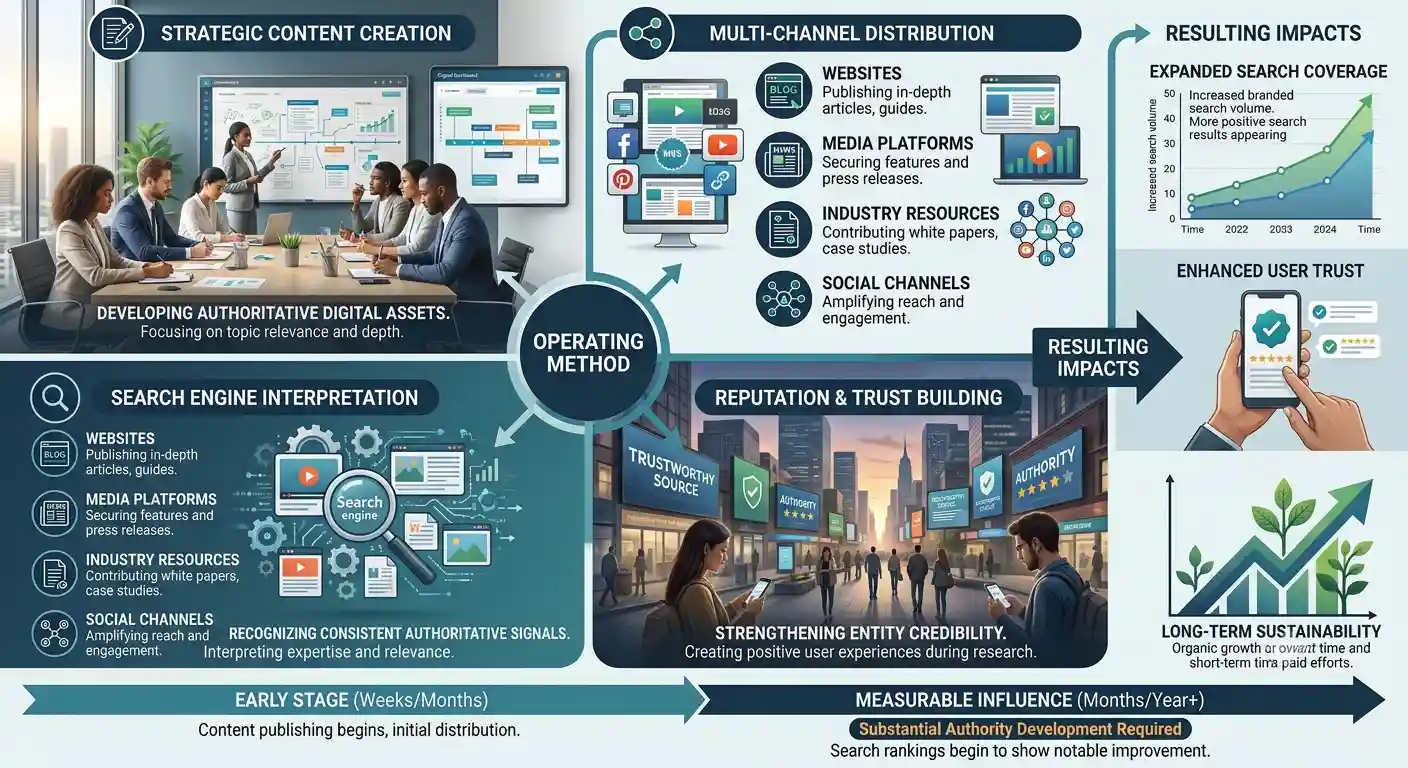
A decision framework can compare each method across effectiveness, scalability, risk exposure, and sustainability. Source removal generally provides the strongest direct change to content availability, while suppression operates more indirectly through SERP composition. Content enhancement provides broader long-term value when authoritative information is limited, but it does not remove the original recommendation. Reactive responses provide targeted attention but require ongoing monitoring when new recommendations appear.
For high-visibility negative recommendations, the evaluation can also consider Address Ex-Employee Facebook Reviews as a decision-stage pathway after the underlying mechanisms have been assessed. The strategic question remains whether the available intervention changes source availability, reduces search prominence, improves contextual interpretation, or strengthens the wider reputation environment. This distinction prevents businesses from selecting a tactic solely because it appears immediately available.
What is the most effective way to evaluate former-employee Facebook recommendations?
The most effective evaluation treats former-employee Facebook recommendations as components of a wider reputation system rather than isolated reviews. Removal, response management, content enhancement, and suppression operate at different levels and produce different effects on content availability, search visibility, and entity perception. Comparing these mechanisms provides a clearer basis for selecting an appropriate response.
Short-term reputation control focuses on visible risks, while long-term reputation development strengthens the wider digital footprint. Organic strategies provide continuing reputation signals, while reactive strategies address specific content after it becomes visible. Neither approach provides a universal solution because effectiveness depends on source authority, content relevance, indexing, duplication, sentiment distribution, and SERP composition.
A structured evaluation therefore measures the full information environment. Businesses can assess recommendation sentiment, search ranking influence, content accessibility, entity associations, competing information, and changes in SERP visibility over time. This evidence-led approach provides a more reliable basis for comparing Facebook recommendation strategies and determining whether an intervention produces an immediate change, a broader reputational improvement, or sustainable search visibility.
How can businesses handle Facebook recommendations from former employees?
Businesses can assess whether a former employee’s Facebook recommendation is genuine, relevant, and compliant with Meta’s content policies. Responses should remain factual and professional, while inappropriate or misleading content can be reported through the appropriate Facebook review process.
Can a former employee leave a negative Facebook recommendation about a business?
Yes, a former employee can generally share their experience, provided the content follows Facebook’s applicable policies. A negative recommendation is not automatically removable simply because the person previously worked for the business.
Can businesses remove unfair Facebook recommendations from former employees?
Businesses cannot directly delete another person’s Facebook recommendation, but they can report content that violates applicable policies. Evidence of harassment, false claims, spam, impersonation, or other policy violations can support a removal request.
How should a business respond to a negative Facebook recommendation from an ex-employee?
A business should respond calmly, avoid disclosing confidential employment information, and address factual inaccuracies without escalating the dispute. Keeping the response professional helps protect the business’s public reputation while the recommendation is reviewed.
When should a business seek help with Facebook recommendation management?
Businesses may seek specialist support when former-employee recommendations become repeated, coordinated, misleading, or damaging to the organisation’s online reputation. Clear My Name can help assess the wider search and social-media context and identify appropriate reputation-management or content-removal options.