

Reputation management is the process of understanding how search engines evaluate credibility, authority, and information quality to influence search visibility and public trust. Online reputation refers to the collection of indexed information, reviews, institutional profiles, media references, and authority signals that shape entity perception within search ecosystems.
Independent prep school admissions in the UK operate through structured assessment processes designed to evaluate whether a child is suitable for a school’s academic environment, values, and admissions criteria. Parents increasingly research schools online before beginning the admissions process, making search engine results pages (SERPs) an important source of information. Search engines organise official school websites, inspection reports, review platforms, educational directories, news coverage, and parent discussions into a searchable digital profile. Understanding how admissions information and reputation signals interact helps explain how schools establish credibility and influence online perception.
What are independent prep school admissions?
Independent prep school admissions are the procedures private preparatory schools use to assess and select pupils before enrolment. Admissions refer to the structured evaluation of academic readiness, personal development, school suitability, and available places according to each school’s published entry requirements.
Most independent prep schools determine their own admissions policies because they operate independently from the state education system. Entry requirements often include application forms, school reports, interviews, classroom observations, assessment activities, and reference information. Search engines index this information through official school websites, admissions guides, educational publications, and independent directories.
Admissions information contributes to search visibility because it represents one of the most frequently accessed areas of a school’s website. Clear, comprehensive admissions guidance strengthens content quality while supporting accurate entity perception across search ecosystems.
How do admissions processes influence online reputation?
Admissions processes influence online reputation because they shape the information prospective parents encounter before making enquiries. Search engines evaluate admissions-related content as part of a school’s overall digital footprint and authority profile.
Schools publish admissions policies, assessment procedures, fees, open day information, scholarship guidance, and frequently asked questions through official websites. Search engines analyse this content alongside inspection reports, educational directories, parent reviews, and media references to evaluate topical relevance and authority.
Accurate admissions information improves content indexing because search engines identify consistent relationships between the school, educational services, and user intent. Comprehensive information also supports stronger entity perception by demonstrating organisational transparency and informational completeness.
As prospective parents compare schools, admissions content becomes an important component of search visibility. Well-organised information enables search engines to understand educational topics more effectively while improving the school’s representation within relevant search results.
How does content indexing support admissions information?
Content indexing is the process through which search engines discover, organise, classify, and retrieve webpages for future search queries. Admissions information becomes available within search results only after indexing systems analyse and store relevant content.
Search engines evaluate admissions pages according to relevance, content quality, semantic relationships, structured data, and authority signals. Clear navigation, descriptive headings, and comprehensive educational information improve algorithmic understanding while supporting stronger search visibility.
Entity perception also develops through indexed admissions content. Consistent references relating to school values, age ranges, curriculum, admissions criteria, and educational philosophy strengthen semantic relationships between the school and relevant educational queries.
Historical indexing contributes additional context because admissions information remains associated with broader institutional authority. Updated admissions pages reinforce consistency while supporting accurate search engine evaluation over time.
Why do search engines evaluate school authority?
Search engines evaluate school authority because educational information requires accuracy, credibility, and reliable sourcing. Authority refers to the confidence search systems assign to educational institutions based on trusted information, recognised references, and consistent digital evidence.
Official school websites represent primary authority sources because they provide verified information regarding admissions, curriculum, governance, facilities, and educational policies. Additional authority develops through inspection reports, educational associations, independent directories, and recognised publications.
Search engines compare these interconnected sources to establish confidence in institutional identity. Consistent information strengthens entity recognition by reducing ambiguity regarding school names, locations, admissions procedures, and educational provision.
Authority therefore contributes directly to search visibility by enabling algorithms to prioritise reliable educational information within relevant search results.
How are reputation signals formed for independent prep schools?

Reputation signals are measurable indicators that search engines analyse when evaluating institutional credibility and online trust. These signals develop through authoritative content, verified information, structured data, reviews, educational references, and digital consistency.
Official admissions information provides foundational reputation signals because it communicates educational standards, application procedures, and institutional expectations. Inspection reports contribute additional authority by supplying independently verified educational assessments recognised by search engines.
Educational directories reinforce these signals through structured institutional profiles that improve entity recognition. Parent reviews, media references, academic publications, and community information expand the school’s digital footprint while providing broader contextual evidence regarding institutional identity.
Search engines evaluate reputation signals collectively rather than individually. The interaction between admissions content, authoritative references, and educational resources creates a more comprehensive understanding of institutional credibility within search ecosystems.
How do reviews influence parent perception during admissions?
Reviews influence parent perception because they provide publicly accessible information alongside official admissions guidance. Search engines interpret reviews as one component within broader reputation assessment rather than the sole measure of educational quality.
Review platforms contain structured information relating to parent experiences, school communication, educational standards, and organisational practices. Algorithms evaluate review content together with official school resources, inspection findings, and recognised educational references.
Parents frequently compare reviews with admissions information before arranging school visits or submitting applications. Search engines recognise this search behaviour and organise review platforms alongside authoritative educational resources within SERPs.
Understanding how review platforms influence search visibility also explains why broader discussions surrounding How Do Prep Schools Respond to Negative Reviews on Mumsnet and Google? contribute to ongoing evaluation of institutional reputation within search ecosystems.
How does digital footprint affect school credibility?
Digital footprint refers to the complete collection of searchable information associated with an educational institution across online platforms. Within search ecosystems, a school’s digital footprint provides the evidence search engines use to evaluate entity perception, authority, and search visibility.
An independent prep school’s digital footprint extends beyond its official website. Inspection reports, educational directories, admissions guides, news articles, parent review platforms, academic achievements, social profiles, and community publications all contribute indexed information. Each source strengthens semantic relationships between the school and educational topics.
Search engines compare these interconnected resources to verify institutional identity and informational consistency. A comprehensive digital footprint improves content indexing by supplying multiple authoritative references that reinforce credibility. Strong digital coverage therefore supports more accurate SERP evaluation while increasing confidence in the school’s online presence.
What role does content quality play in admissions visibility?
Content quality is the level of accuracy, relevance, clarity, and authority demonstrated by published information. Search engines evaluate admissions content because prospective parents rely on detailed educational guidance when researching independent schools.
Admissions pages containing comprehensive information about entry requirements, assessment processes, key dates, age groups, scholarships, fees, and school values improve semantic understanding. Algorithms recognise these resources as more useful because they answer common educational queries while supporting search intent.
Content quality also influences content ranking dynamics. Structured headings, logical navigation, descriptive information, and factual consistency help search engines retrieve admissions pages for relevant searches. Improved retrieval increases search visibility while strengthening institutional authority.
Educational content contributes to long-term credibility because search systems continuously compare updated admissions information with existing indexed resources. Consistent publication therefore reinforces online trust across search ecosystems.
Dive Deeper With Our Expert Guides:
What Is an Independent Prep School? Ages, Curriculum, and Fees Explained
Where Do Parents Research Private Schools UK? 8 Review Platforms Compared
How do search engine results pages shape school perception?
Search engine results pages (SERPs) shape school perception by determining which information prospective parents encounter first during their research. SERP evaluation combines authority signals, content relevance, semantic relationships, structured information, and user intent before presenting search results.
Independent prep schools appear across official websites, inspection reports, educational directories, review platforms, media publications, and community resources. Search engines organise these sources into a visible ranking that influences how institutional credibility is interpreted.
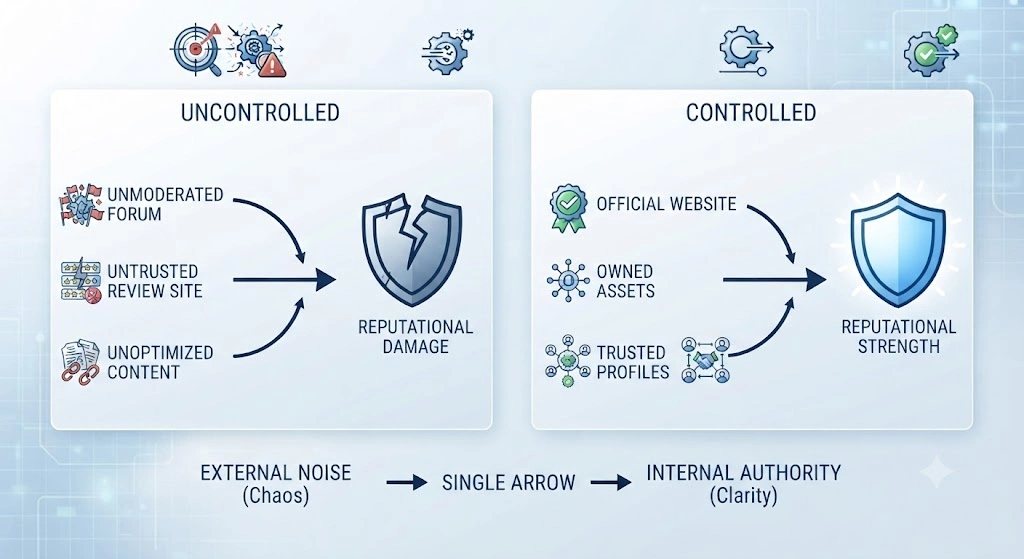
Balanced SERP composition improves entity perception because authoritative information becomes more accessible alongside supporting educational resources. Parents gain a broader understanding of admissions, educational standards, inspection outcomes, and school identity through multiple trusted sources rather than a single webpage.
As additional information becomes indexed, SERPs continue evolving. Search visibility therefore reflects the cumulative effect of authoritative content and digital consistency instead of isolated online assets.
Why do authority signals strengthen online trust?
Authority signals are indicators of credibility that search engines use to evaluate whether information originates from reliable and trustworthy sources. Within education, authority develops through recognised institutions, official documentation, verified organisational information, and independent educational references.
Inspection reports represent strong authority signals because they provide independently verified assessments of educational provision. Educational associations, government information, accredited directories, and official school publications contribute additional evidence supporting institutional legitimacy.
Search engines compare these authoritative references with admissions content to strengthen entity recognition. Consistent factual information across trusted sources improves algorithmic confidence while reducing ambiguity during content indexing.
Authority signals therefore strengthen online trust by supporting accurate search visibility and balanced representation within educational search results.
How do admissions information and reputation work together?
Admissions information and reputation work together because both contribute to the digital evidence search engines evaluate when constructing institutional entity profiles. Admissions content explains educational procedures, while reputation signals provide broader context relating to credibility, authority, and online trust.
Official admissions guidance establishes factual information regarding applications, assessments, school policies, and educational provision. Inspection reports, educational publications, directories, review platforms, and media references expand this information by contributing additional reputation signals.
Search engines combine these resources through semantic relationships and authority analysis. Consistent information strengthens search confidence, improves entity perception, and supports more accurate content retrieval across relevant educational searches.
Understanding this relationship demonstrates that admissions visibility depends not only upon published information but also upon the wider reputation ecosystem surrounding an independent prep school.
Independent prep school admissions in the UK follow structured processes that assess suitability while providing parents with detailed educational information before enrolment. Search engines organise admissions guidance, inspection reports, educational directories, reviews, and authoritative publications into comprehensive search results that influence institutional perception.
Understanding how admissions information interacts with reputation signals, authority assessment, content indexing, digital footprints, and SERP evaluation explains how schools establish online credibility within search ecosystems. Search visibility develops through consistent, authoritative, and well-structured information that enables search engines to accurately interpret educational entities and present reliable results to prospective parents.
How do independent prep school admissions work in the UK?
Independent prep school admissions typically involve an application form, school reports, interviews, assessments, and reference checks. Each school sets its own admissions criteria, allowing parents to evaluate entry requirements before applying.
What factors influence admissions to an independent prep school?
Admissions decisions are based on factors such as academic ability, age, school reports, interviews, assessments, and the school’s individual entry requirements. Schools also consider whether an applicant is a good fit for their educational environment.
How does online reputation affect independent prep school admissions?
Online reputation influences how prospective parents evaluate a school’s credibility before submitting an application. Search engines display official school websites, inspection reports, reviews, and educational directories that collectively shape online perception.
Why is Reputation Management for Private Schools important?
Reputation Management for Private Schools helps strengthen search visibility, improve entity credibility, and maintain consistent information across digital platforms. Providers such as Clear My Name analyse reputation signals to support a balanced and trustworthy online presence.
What information do parents research before applying to a prep school?
Parents commonly research admissions requirements, inspection reports, academic results, school values, fees, reviews, facilities, and extracurricular activities. Search engines organise this information into search results, helping families compare schools before making decisions.