

Marketing recruitment agencies source candidates in 2026 through a combination of professional networks, recruitment platforms, social search, referrals, databases and targeted digital outreach. Their sourcing methods also influence how candidates perceive agency credibility, responsiveness and professional reputation.
Reputation management is the process of monitoring, interpreting and influencing the information that shapes how an entity is perceived online. Online reputation refers to the collective signals created by reviews, professional profiles, published content, candidate feedback and other indexed information. For marketing recruitment agencies, candidate sourcing is therefore connected to reputation because each interaction can generate information that influences future candidate decisions and search visibility.
How do marketing recruitment agencies source candidates in 2026?
Marketing recruitment agencies use a multi-channel sourcing model that combines searchable candidate databases, professional networks, recruitment platforms, referrals and direct outreach. Candidate sourcing is the process of identifying individuals whose skills, experience and professional interests align with an available role. In 2026, digital sourcing extends beyond searching for CVs because agencies evaluate professional profiles, specialist expertise, published work and online career signals. This creates a broader digital footprint around both the candidate and the recruitment agency. The quality of this information affects how efficiently recruiters identify relevant candidates and how candidates evaluate the agency initiating contact.
Recruitment databases remain structured sources of candidate information because they organise professional details into searchable fields. Professional networks provide additional context through employment history, skills, qualifications and public activity. Recruitment platforms contribute another layer through candidate preferences, application history and role relevance. Referrals operate through existing professional relationships and therefore introduce a trust component that differs from algorithmic candidate discovery. Each source generates different reputation signals for the recruitment organisation.
The sourcing process also affects the agency’s entity perception. An agency repeatedly associated with relevant marketing opportunities establishes stronger topical relationships around recruitment, marketing careers and specialist hiring. Conversely, irrelevant outreach, inaccurate role descriptions or poor communication create negative candidate perceptions. These perceptions can later appear through reviews, social discussions or professional commentary.
Why does candidate sourcing affect a recruitment agency’s online reputation?
Candidate sourcing affects online reputation because recruitment interactions create reputation signals that extend beyond the initial hiring process. A candidate evaluates the relevance of the role, accuracy of communication, response times and professionalism of the recruiter. These experiences contribute to how the agency is described in reviews or professional discussions. Search engines then index some of the publicly available information associated with the organisation. This connects recruitment activity with search perception.
An online reputation is not formed exclusively through formal review platforms. Agency websites, recruiter profiles, business directories, social platforms, industry publications and candidate discussions can all contribute information to the digital footprint. Search engines evaluate these sources according to relevance, authority and other ranking signals. Candidates independently interpret the information they encounter when researching an agency. The result is an information ecosystem in which operational behaviour and online perception interact.
For recruitment agencies, reputation therefore represents more than a branding concept. It functions as an information layer surrounding the organisation’s hiring activity. Candidate sourcing creates direct interactions, while published content and reviews create indirect reputation signals. Both contribute to the overall entity representation visible to prospective candidates.
Dive Deeper With Our Expert Guides:
Best Marketing Recruitment Agencies UK: 2026 Guide for Employers
How Much Do Executive Search Firms Charge? 2026 Fee Structures Explained
How do recruitment platforms influence recruiter reputation?
Recruitment platforms influence recruiter reputation by creating structured environments where candidates encounter agencies, roles and recruiter profiles. Platform information can establish associations between an agency and particular industries, job categories or professional skills. Accurate role descriptions reinforce relevance, while incomplete or misleading information creates inconsistencies within the candidate’s information journey. Platform visibility therefore contributes to both candidate acquisition and entity perception. The reputation impact depends on the accuracy and consistency of the information presented.
Recruitment platforms also create measurable interaction signals. Applications, response activity, recruiter communication and candidate feedback can influence how users evaluate an agency. These signals differ from traditional website content because they arise from direct platform experiences. A candidate researching the agency can combine these platform signals with information found elsewhere online. This produces a broader evaluation of organisational credibility.
Search engines do not simply convert platform activity into a universal reputation score. Instead, indexed information from authoritative sources contributes to the wider search environment. Platform pages with strong relevance and authority can become part of the SERP landscape for searches involving the agency. This makes platform management relevant to search visibility without reducing reputation to a single ranking factor.
How do candidate reviews influence marketing recruitment agency reputation?
Candidate reviews influence recruitment reputation by providing experience-based information about communication, transparency, responsiveness and hiring processes. A review is a publicly available reputation signal that describes an interaction between an individual and an organisation. Search engines can index review content when it is publicly accessible, while candidates interpret review patterns independently. Positive and negative sentiment therefore forms part of the wider information environment surrounding an agency.
Review signals contain both qualitative and contextual information. A candidate describing poor communication creates a different signal from a candidate criticising a role’s salary or job requirements. The meaning of a review therefore depends on its subject, wording, source and surrounding information. Reputation analysis evaluates sentiment distribution rather than treating every negative statement as equivalent.
Review quantity also does not establish reputation quality by itself. A large number of reviews without substantive information provides limited context about candidate experience. Detailed and relevant feedback creates stronger informational value for users researching an agency. Search visibility then depends on how review-related pages are indexed, ranked and connected to the recruitment entity.
How does candidate ghosting affect recruiter reputation?

Candidate ghosting affects recruiter reputation when repeated communication failures create negative feedback about the recruitment process. Candidate ghosting refers to a situation where a candidate stops responding during a recruitment interaction without completing the expected communication. Although the behaviour originates with the candidate, the surrounding recruitment process influences how the experience is interpreted. Candidates can associate unanswered communication, unclear expectations or delayed updates with the agency even when the candidate initiated the silence.
Recruitment agencies also encounter the reverse situation, where candidates report that recruiters stopped responding after an application or interview. This creates a distinct reputation signal because the agency controls the communication process. Repeated reports of recruiter non-responsiveness can influence candidate trust and sentiment. Public feedback then contributes to the agency’s digital footprint when published on accessible platforms.
This is why candidate ghosting feedback damage to marketing recruiter ratings represents a reputation issue rather than only a recruitment efficiency problem. The relevant mechanism involves the transition from private candidate experience to public reputation information. Once feedback becomes publicly visible, it can influence how future candidates evaluate the organisation. Search visibility then determines how easily that information can be discovered.
How do professional networks influence recruiter credibility?
Professional networks influence recruiter credibility by connecting agencies and individual recruiters with identifiable employment histories, specialist expertise and professional relationships. These profiles create entity associations that help candidates establish who represents the recruitment organisation. Consistent professional information strengthens entity clarity across the digital footprint. Inconsistent titles, outdated employment information or incomplete profiles create ambiguity. The resulting information quality affects how candidates interpret organisational credibility.
Professional networks also support specialist sourcing. Marketing recruitment requires understanding disciplines such as SEO, paid media, content, brand management, social media, analytics and communications. Recruiters demonstrating relevant knowledge establish stronger topical associations with these areas. Candidates can therefore evaluate not only the available vacancy but also the professional context of the recruiter contacting them.
From a search perspective, professional profiles can become authoritative sources associated with the agency. Search engines evaluate publicly accessible information and its relationship to relevant entities. Strong professional profiles can therefore contribute to a more coherent search environment. This does not guarantee a specific ranking position, but it strengthens the information available for entity evaluation.
How do referrals compare with digital candidate sourcing?
Referrals rely primarily on interpersonal trust, while digital sourcing relies more heavily on searchable professional information and platform signals. A referral transfers credibility from an existing professional relationship to the recruitment agency or candidate. Digital sourcing instead establishes relevance through qualifications, skills, employment history and role matching. Both approaches therefore create different trust mechanisms.
Referral sourcing can produce stronger initial trust because the candidate receives information from an existing professional connection. However, the candidate still evaluates the agency independently once direct communication begins. Digital sourcing provides greater scale because recruiters can identify candidates beyond their immediate network. Its effectiveness depends on the relevance and accuracy of available professional information.
From a reputation perspective, both channels create experiences that can generate future reputation signals. A successful referral does not remain isolated from the wider digital environment if the candidate later discusses the agency publicly. Similarly, a digital outreach campaign can create positive or negative perceptions depending on its relevance and execution. Reputation therefore connects sourcing channels through the experiences they produce.
How does content indexing affect recruiter search visibility?
Content indexing determines which publicly accessible recruitment information becomes available for retrieval through search engines. Indexing is the process through which a search engine stores and processes information from a webpage or other accessible resource. An agency’s website, recruiter profiles, specialist articles and publicly available reviews can therefore become components of its searchable digital footprint. Indexed information provides search engines with material for evaluating queries involving the organisation. Search visibility depends on whether those indexed pages are considered relevant and competitive for particular searches.
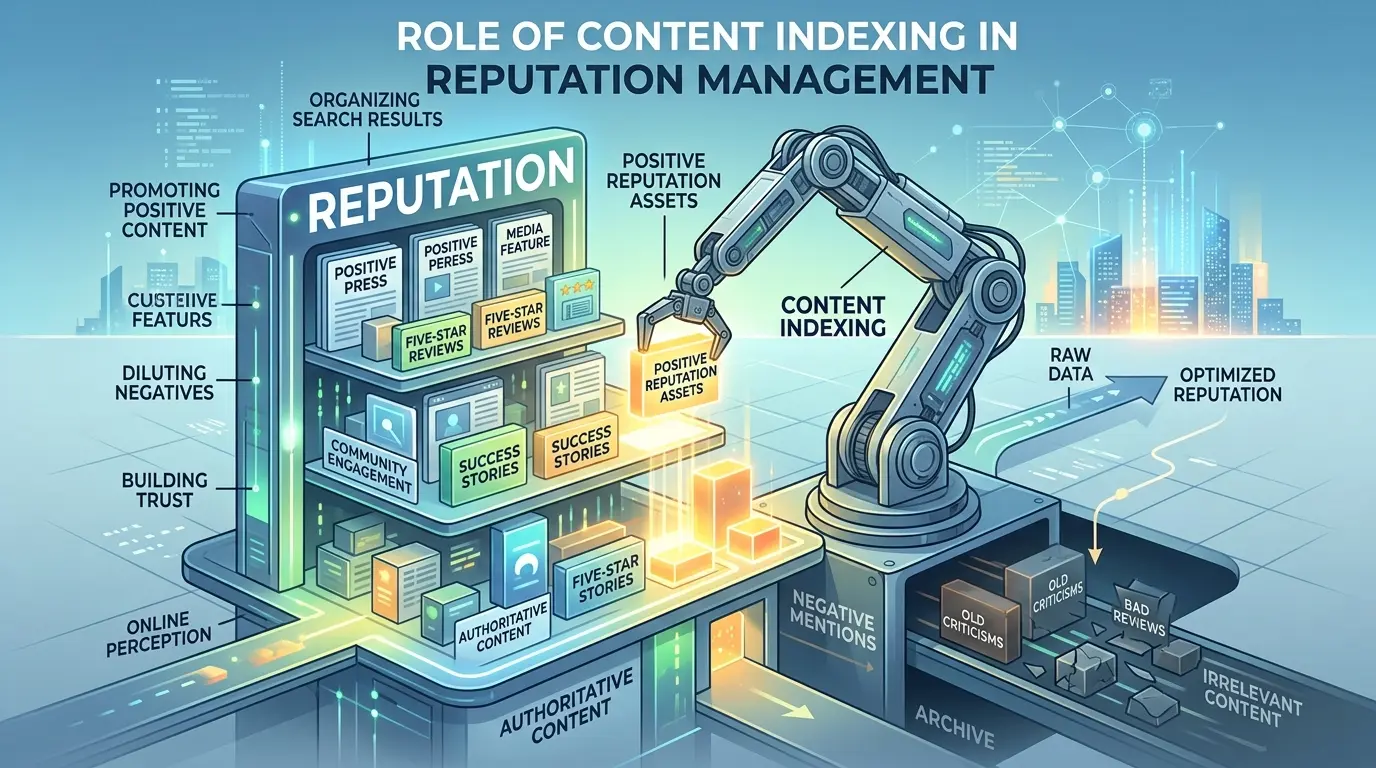
Recruitment agencies create different types of indexed information through their normal digital activity. Service pages establish the organisation’s recruitment specialisms. Job pages connect the agency with particular marketing disciplines and locations. Recruiter profiles establish professional entity associations. Educational content can establish topical relevance around hiring, careers and marketing recruitment.
The combined information creates a semantic environment around the agency. Search engines process relationships between entities, topics and documents rather than evaluating every page independently. Consistency across these sources therefore supports clearer entity perception. Contradictory information can create ambiguity and weaken the coherence of the digital footprint.
How do trust signals influence candidate decisions?
Trust signals influence candidate decisions by providing evidence that helps users evaluate an unfamiliar recruitment organisation. These signals include professional credentials, transparent job information, candidate feedback, recruiter expertise, authoritative references and consistent business information. Each signal contributes a different form of evidence. Candidates combine these sources when determining whether an agency appears relevant and credible. The evaluation therefore extends beyond the wording of an individual job advert.
Search engines also process information that contributes indirectly to perceived credibility. Authoritative publications, professional profiles and consistent organisational information can establish stronger entity relationships. Search visibility determines which of these signals candidates encounter during their research. A highly relevant source with strong authority has greater potential to become visible for associated queries than an isolated low-authority page.
Reputation signals also interact through sentiment. Positive, neutral and negative information can coexist within the same search environment. A balanced evaluation requires examining the distribution, authority and relevance of these sources. This prevents one isolated review or webpage from being treated as a complete representation of recruiter reputation.
What reputation risks emerge from modern candidate sourcing?
Modern candidate sourcing creates reputation risks when operational activity and public information become inconsistent. Inaccurate job descriptions create a mismatch between expectation and experience. Irrelevant outreach reduces perceived recruiter relevance. Poor communication can generate negative candidate feedback. Each issue produces a potential reputation signal that can extend beyond the original recruitment interaction.
A recruitment agency also faces risk when its digital footprint lacks consistency. Different websites displaying different company descriptions, recruiter names or areas of specialisation create competing information signals. Candidates then encounter uncertainty when researching the organisation. Search engines also have a less consistent entity representation to evaluate.
Reputation risk therefore needs to be understood as an information-system issue. The source of the problem can originate in recruitment operations, but the consequence can appear through reviews, indexed pages and search results. Monitoring these sources provides a mechanism for identifying changes in reputation perception. The process links operational behaviour with measurable digital visibility.
How can marketing recruitment agencies evaluate reputation signals?
Marketing recruitment agencies can evaluate reputation signals by analysing the sources, sentiment, authority and search visibility associated with the organisation. The evaluation begins with branded searches and relevant recruitment queries. Results are then categorised according to source type and relationship to the agency. This establishes which information candidates encounter when researching the organisation. Repeated monitoring identifies changes in the information environment.
A structured evaluation can:
- Audit search results by recording relevant pages, reviews, professional profiles and ranking positions associated with the recruitment entity.
- Analyse candidate feedback by separating comments about communication, role accuracy, responsiveness and overall recruitment experience.
- Evaluate authority by determining which sources have stronger relevance and credibility within the search ecosystem.
- Compare sentiment distribution by assessing the relationship between positive, neutral and negative reputation signals.
- Monitor indexing by identifying new pages, reviews and external references entering the searchable digital footprint.
This framework separates reputation perception from individual opinions. It also provides measurable evidence about how information surrounding the agency changes over time. Search visibility, content indexing and sentiment distribution become observable indicators rather than assumptions. The resulting analysis supports a clearer understanding of digital credibility.
How will candidate sourcing shape recruiter reputation in 2026?
Candidate sourcing in 2026 increasingly connects recruitment operations with searchable reputation signals. Agencies are discovered through a combination of professional networks, recruitment platforms, websites, reviews and specialist content. Each source contributes information that candidates can use to evaluate relevance and credibility. The resulting digital footprint therefore becomes part of the recruitment process itself. Candidate acquisition and reputation perception operate within the same information ecosystem.
The distinction between sourcing and reputation management is consequently becoming less rigid. A sourcing message creates an immediate candidate interaction, while the resulting experience can become a review or professional discussion. That public information can then be indexed and become visible to future candidates. The cycle connects recruitment behaviour, reputation signals, content indexing and search visibility.
Understanding this relationship provides a more complete view of recruiter credibility. Search engines organise information according to relevance, authority and ranking systems, while candidates independently interpret the information presented. A recruitment agency’s reputation is therefore shaped by both the information it publishes and the experiences that others publish about it.
Marketing recruitment agencies source candidates through a connected ecosystem of recruitment platforms, professional networks, referrals, databases, direct outreach and searchable digital information. Each sourcing method creates different opportunities for establishing relevance and different reputation signals through candidate interactions.
Reputation management is relevant because candidate experiences can become publicly accessible information that contributes to search perception. Reviews, professional profiles, job pages and external references create a digital footprint that candidates and search engines evaluate differently. Understanding these mechanisms provides a clearer framework for assessing recruiter credibility.
The central relationship is between recruitment activity and information visibility. Accurate job information, relevant outreach, professional communication and consistent digital profiles strengthen the information environment surrounding an agency. Conversely, poor experiences can create negative signals that remain discoverable through reviews and search results. Monitoring these signals provides a factual basis for understanding how recruitment practices influence online reputation.
How do marketing recruitment agencies source candidates in 2026?
Marketing recruitment agencies source candidates through professional networks, specialist job platforms, social media, referrals and targeted talent databases. Recruitment reputation also influences candidate trust, making accurate online information and credible employer-facing profiles important.
What recruitment channels do marketing agencies use to find candidates?
Recruitment agencies use LinkedIn, specialist marketing communities, recruitment databases, referrals and direct outreach to identify suitable candidates. The effectiveness of these channels depends on candidate relevance, response rates and the agency’s professional reputation.
How important is online reputation for marketing recruitment agencies?
Online reputation is an important trust signal for candidates evaluating a recruitment agency. Reviews, professional profiles, published content and search visibility contribute to how an agency’s credibility is interpreted.
How do candidate reviews affect marketing recruiter ratings?
Candidate reviews contribute to the overall reputation signals associated with a recruitment agency. Consistent negative feedback about communication, candidate experience or recruitment processes can influence public perception and search-related reputation.
How can recruitment agencies protect their online reputation in 2026?
Recruitment agencies can protect online reputation by monitoring reviews, maintaining accurate business information, publishing authoritative content and responding appropriately to legitimate feedback. Consistent reputation monitoring helps identify changes in sentiment and search visibility.