
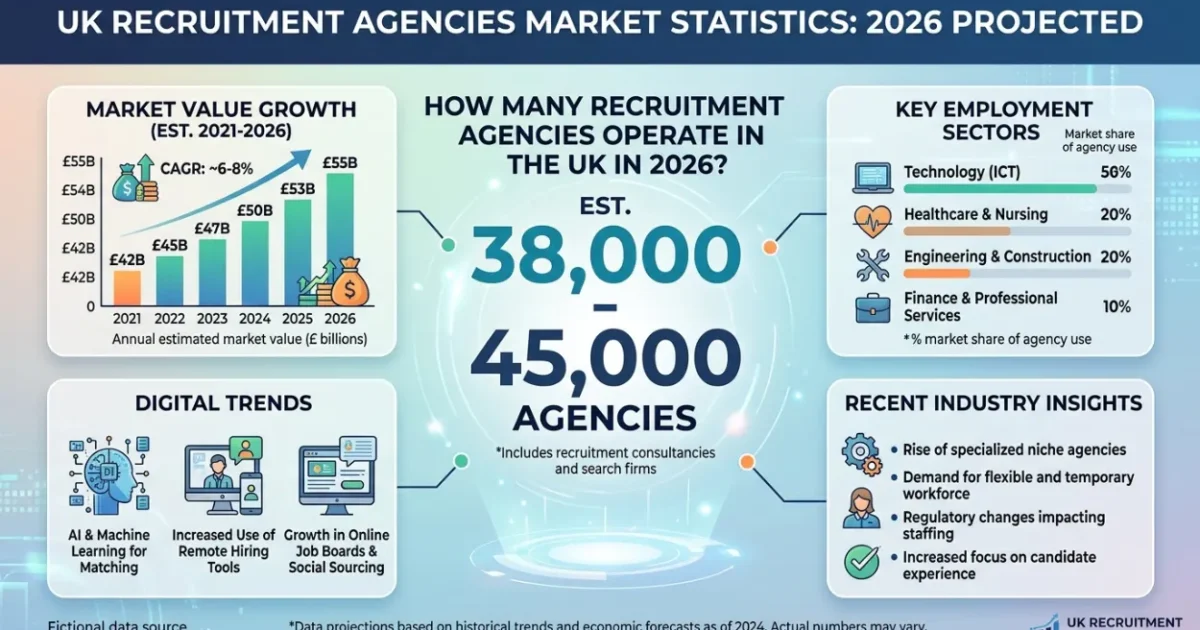
The UK recruitment industry in 2026 consists of tens of thousands of active recruitment agencies, reflecting a mature employment market supported by permanent, temporary, contract, and executive recruitment services. Market statistics demonstrate that agency numbers continue to fluctuate as economic conditions, hiring demand, and regulatory changes influence business activity.
Reputation management is the process of understanding how search engines, digital content, and online signals influence the perceived credibility of an organisation. Online reputation refers to the collection of indexed information, reviews, authoritative mentions, and entity-related signals that shape public and algorithmic evaluation within search ecosystems. Recruitment agencies operate within this digital environment, where search visibility, content indexing, and reputation signals affect how organisations are interpreted by both search engines and prospective clients. Market statistics provide context for understanding the scale of the recruitment sector, while reputation systems explain how individual agencies establish visibility and trust within competitive search results.
What Do the Latest UK Recruitment Market Statistics Show for 2026?
The latest market statistics indicate that the UK recruitment sector remains one of the largest professional services industries supporting employment across public and private sectors. The industry includes independent agencies, specialist recruiters, executive search firms, temporary staffing providers, and multinational recruitment organisations operating across regional and national markets.
The number of agencies reflects continuous business formation and consolidation. New firms enter specialist markets to address skills shortages, while mergers and acquisitions reshape the competitive landscape. Search ecosystems interpret these organisational changes through updated business profiles, company websites, news publications, and directory listings, all of which contribute to content indexing and entity perception.
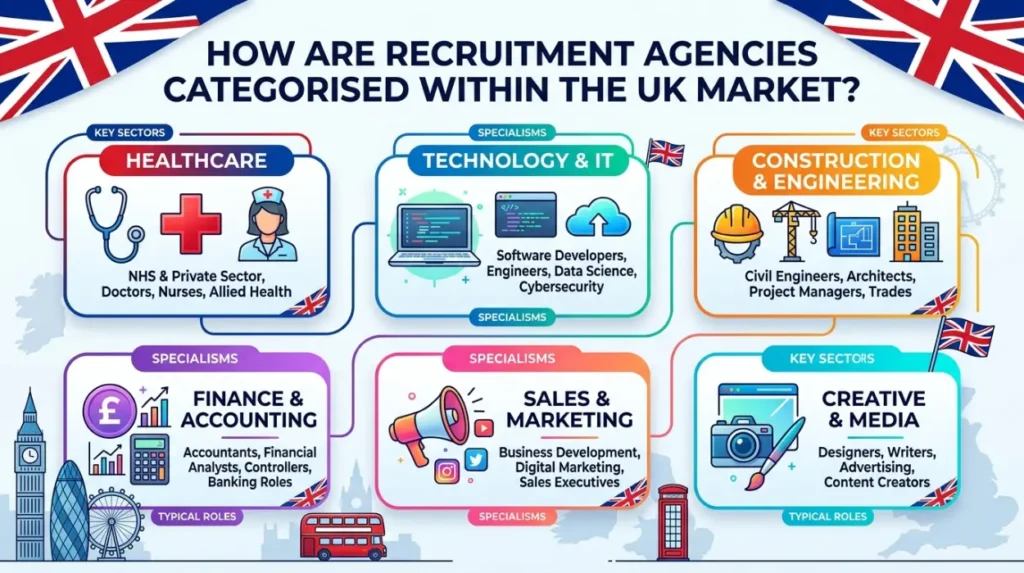
Recruitment market statistics also demonstrate the diversity of agency specialisms. Healthcare, construction, education, finance, information technology, engineering, hospitality, and logistics remain significant recruitment sectors. Each specialist market generates unique reputation signals because industry-specific content, expertise, and authority influence how search engines evaluate topical relevance.
The overall size of the recruitment industry creates an increasingly competitive digital environment. Agencies compete not only for candidates and employers but also for search visibility, making reputation signals an important component of online discoverability.
Why Does the Number of Recruitment Agencies Continue to Change?
The number of recruitment agencies changes because the employment market continuously responds to economic activity, workforce demand, business confidence, and regulatory developments. Recruitment businesses expand, merge, specialise, or cease trading as labour market conditions evolve.
Search ecosystems reflect these structural changes through continuous content indexing. Company registrations, website launches, updated business directories, employment publications, and news coverage contribute to how agencies are represented within search engine results pages (SERPs). Every indexed update strengthens or weakens entity perception depending on consistency and authority.
Digital visibility also changes as agencies create new content, publish industry insights, receive professional mentions, or update business information across multiple platforms. Search algorithms analyse these signals collectively rather than relying on a single source of information.
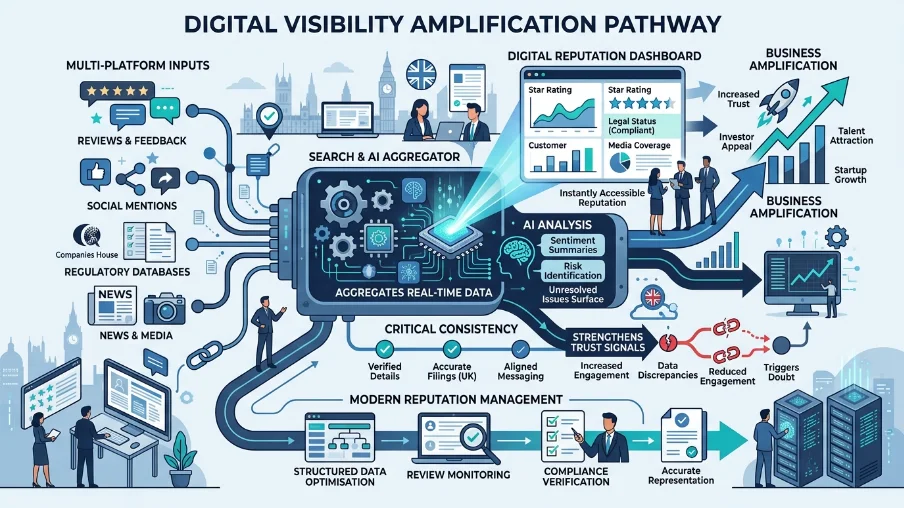
Market statistics therefore represent more than numerical growth. They illustrate how an evolving recruitment sector continuously generates new digital entities competing for recognition, authority, and search visibility.
How Are Recruitment Agencies Categorised Within the UK Market?
Recruitment agencies are categorised according to the services they provide, the industries they support, and the employment models they specialise in. These classifications help employers, candidates, regulators, and search engines distinguish organisations operating within different recruitment sectors.
Permanent Recruitment Agencies
Permanent recruitment agencies focus on long-term employment opportunities. Their digital footprint commonly includes employer partnerships, sector expertise, recruitment insights, and candidate resources. Search algorithms associate this content with professional hiring expertise, contributing to topical authority and entity recognition.
Temporary and Contract Recruitment Agencies
Temporary staffing providers support organisations requiring flexible workforce solutions. Content relating to workforce planning, seasonal hiring, shift management, and contract employment expands the agency’s indexed digital footprint and strengthens relevance for temporary recruitment queries.
Executive Search Firms
Executive search organisations specialise in senior leadership appointments. Their online authority often develops through thought leadership, executive market analysis, industry publications, and high-level recruitment expertise. Search engines evaluate this content as authority signals supporting entity credibility within executive recruitment.
Specialist Sector Recruiters
Specialist recruiters concentrate on defined industries such as healthcare, engineering, legal services, information technology, or education. Sector-specific knowledge produces highly focused reputation signals because content consistently addresses one professional area, improving topical relevance across search ecosystems.
How Does Industry Competition Influence Search Visibility?
Industry competition influences search visibility because thousands of recruitment agencies publish similar information targeting comparable employment sectors and hiring queries. Search engines evaluate which organisations provide the most relevant, authoritative, and trustworthy content for each search.
Content quality forms one layer of evaluation. Agencies producing detailed labour market analysis, recruitment guidance, sector reports, and employment insights establish stronger topical relationships across indexed pages. These relationships help algorithms understand the organisation’s expertise within defined recruitment categories.
Entity perception extends beyond website content alone. Search ecosystems analyse business consistency across multiple sources, including professional directories, regulatory databases, employer references, and reputable publications. Agreement between these sources improves confidence in organisational identity and strengthens reputation signals.
Review signals also contribute to overall interpretation. Search engines analyse sentiment, review frequency, review authenticity, and consistency across recognised platforms. Reviews do not function as isolated ranking factors but contribute to broader assessments of credibility, user experience, and trust.
Competition therefore exists across both commercial and informational search results. Recruitment agencies build digital visibility through accurate information, authoritative content, consistent entity signals, and a well-maintained online presence, all of which influence how search engines evaluate relevance within competitive SERPs.
What Reputation Signals Influence Recruitment Agency Visibility?
Reputation signals are measurable indicators that search engines use to evaluate the credibility, authority, and relevance of a recruitment agency. These signals originate from multiple digital sources rather than a single webpage, enabling algorithms to build a comprehensive understanding of an organisation.
Website quality represents one reputation signal. Clear information architecture, accurate business details, structured content, and regular updates contribute to stronger content indexing. Search engines interpret these characteristics as indicators that an organisation maintains reliable digital information.
Review sentiment forms another important reputation signal. Search ecosystems evaluate review frequency, consistency, authenticity, and language patterns to understand public perception. Positive and negative reviews both contribute to entity perception because algorithms analyse the overall pattern rather than isolated comments.
Authority signals also strengthen search visibility. References from respected industry publications, professional associations, educational institutions, and government resources demonstrate external recognition. These authoritative mentions improve confidence in organisational credibility while expanding the agency’s searchable digital footprint.
Dive Deeper With Our Expert Guides:
How Do Recruitment Agencies Work in the UK? Fees, Contracts, and Process
How Does Digital Content Shape Recruitment Agency Reputation?
Digital content defines how recruitment agencies communicate expertise and how search engines interpret topical authority. Every indexed page contributes additional context that strengthens or weakens entity perception across search ecosystems.
Informational resources such as salary guides, hiring reports, recruitment trends, and employment insights expand topical relevance. Search engines analyse relationships between these resources to determine whether an agency consistently demonstrates expertise within recruitment-related subjects.
Content freshness also influences indexing behaviour. Updated pages provide current information that supports ongoing relevance, while neglected content gradually loses informational value. Search engines continuously reassess indexed pages to reflect changes in accuracy, completeness, and usefulness.
Consistency across digital platforms remains equally important. Matching company descriptions, contact information, and business categories help search algorithms confirm organisational identity. Consistent information reduces ambiguity and strengthens confidence during SERP evaluation.
Why Do Search Engine Results Pages Influence Public Perception?
Search engine results pages influence public perception because they organise and prioritise information before direct interaction occurs. Users frequently develop initial opinions by reviewing visible search results, making SERPs an important component of online reputation.
Algorithms determine which content appears most prominently according to relevance, authority, quality, and user intent. Websites, business profiles, review platforms, news articles, and directory listings collectively shape the information presented within search results.
Entity perception develops as users encounter repeated information across trusted sources. Consistent messaging reinforces credibility, while conflicting information creates uncertainty regarding organisational reliability. Search engines recognise these patterns through continuous analysis of indexed content.
SERPs therefore function as structured information environments rather than simple lists of webpages. The arrangement, authority, and relevance of indexed content collectively influence how recruitment agencies are understood within digital search ecosystems.
What Do Recruitment Market Statistics Reveal About Digital Competition?
Recruitment market statistics reveal that digital competition increases as the number of agencies operating within the UK employment sector expands. Every organisation competes for visibility across informational, navigational, and transactional search queries.
A larger marketplace generates greater content volume. Recruitment agencies continuously publish vacancy information, industry reports, employer guidance, and candidate resources. Search engines evaluate this expanding collection of indexed material to determine which organisations provide the most authoritative information.
Competition also increases the importance of topical relevance. Agencies specialising in clearly defined industries develop stronger semantic relationships because their content consistently addresses specific recruitment subjects. This focused approach improves entity recognition within specialised search queries.
Digital competition therefore extends beyond commercial rivalry. It reflects how search ecosystems organise, interpret, and prioritise information across thousands of interconnected recruitment entities operating within the same online environment.
The UK recruitment industry in 2026 represents a substantial and continually evolving sector supported by thousands of recruitment agencies serving diverse employment markets. Market statistics provide valuable insight into the scale of the industry, while search ecosystems explain how individual agencies become visible, credible, and distinguishable within competitive digital environments.
Reputation management refers to understanding how search visibility, content indexing, authority signals, review sentiment, and entity perception interact to influence online credibility. Search engines evaluate recruitment agencies through interconnected sources of information rather than isolated webpages, creating comprehensive assessments based on consistency, expertise, and trust signals.
Understanding these reputation systems provides a clearer explanation of how recruitment agencies establish digital visibility within search engine results pages. Market size explains the level of competition, while reputation signals explain how organisations are interpreted, evaluated, and positioned across modern search ecosystems.
How many recruitment agencies operate in the UK in 2026?
The UK recruitment sector in 2026 includes tens of thousands of active recruitment agencies operating across permanent, temporary, contract, and executive recruitment markets. The exact number changes as new agencies are established, existing firms merge, or businesses cease trading.
Why are there so many recruitment agencies in the UK?
The UK has a diverse labour market that requires specialist recruitment services across industries such as healthcare, finance, engineering, education, and technology. Recruitment agencies meet different hiring needs, creating a competitive market with a large number of providers.
How does the number of recruitment agencies affect online reputation?
A larger number of recruitment agencies increases competition for search visibility and online credibility. Reputation management for recruiters focuses on understanding how search engines interpret reputation signals, reviews, authoritative content, and digital consistency within competitive search results.
What factors influence a recruitment agency’s online visibility?
Search visibility depends on content quality, reputation signals, review sentiment, website authority, business information consistency, and content indexing. Search engines evaluate these factors collectively to determine how recruitment agencies appear in search engine results pages (SERPs).
Why is reputation management important for recruitment agencies?
Recruitment agencies rely on trust from both employers and candidates, making online credibility an important factor in digital visibility. Reputation management helps explain how search engines evaluate entity perception, authority signals, and indexed content that influence how agencies are represented online.