
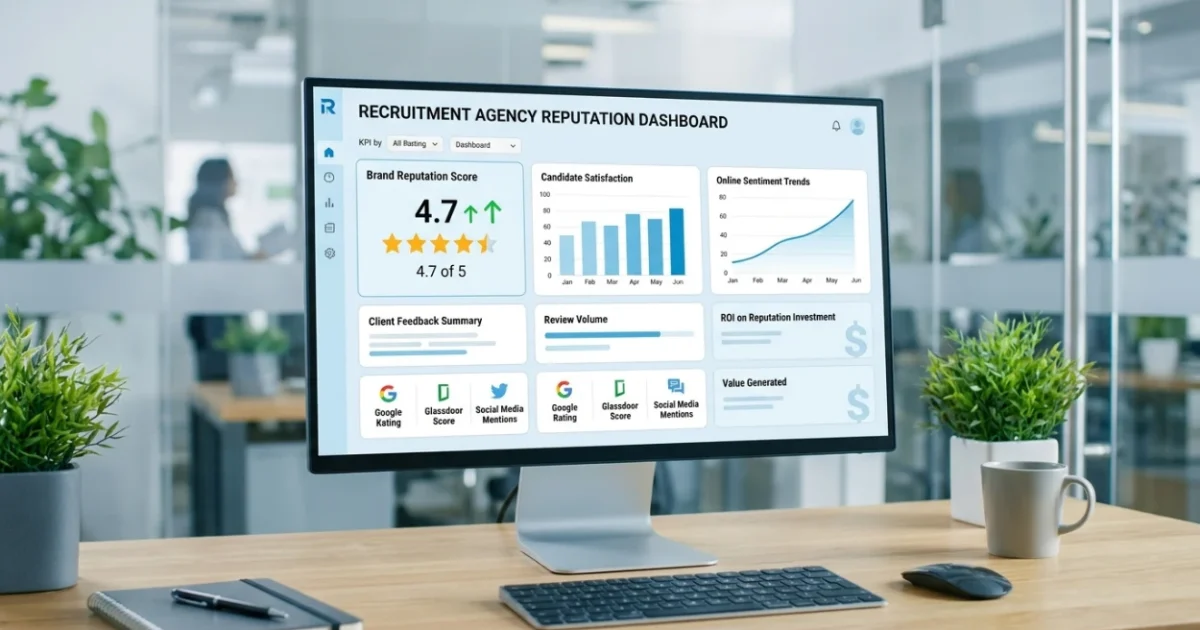
The cost of reputation management for a recruitment agency depends on the scope of reputation issues, the complexity of search visibility challenges, and the level of ongoing SERP control required. Investment is determined by the volume of negative content, the strength of existing reputation signals, and the long-term strategy needed to improve entity credibility within search ecosystems.
Search visibility directly influences how employers and candidates evaluate recruitment agencies before making contact. Reputation signals shape search perception, making structured reputation management an important investment for organisations seeking stronger digital credibility, controlled online narratives, and sustainable search performance.
Which Reputation Management Approach Delivers the Greatest Long-Term Value?
A comprehensive reputation management approach delivers the greatest long-term value because it improves multiple reputation signals simultaneously rather than addressing isolated issues. Effective reputation management for recruiters combines search visibility optimisation, content enhancement, negative content suppression, entity consistency, and reputation monitoring into a structured process that strengthens long-term digital credibility.
The value of reputation management extends beyond removing visibility challenges. Search engines continuously evaluate indexed content, review sentiment, authoritative mentions, and business consistency when determining search rankings. A structured strategy strengthens these interconnected signals, enabling search ecosystems to develop greater confidence in organisational authority.
Long-term value also depends on sustainability. Temporary improvements that fail to strengthen entity credibility rarely maintain stable search performance. Comprehensive reputation management improves the quality of indexed information while supporting stronger trust signals across multiple authoritative sources.
Clear My Name applies this structured methodology by evaluating search ecosystems as integrated digital environments rather than isolated search results. This approach strengthens reputation signals while reducing the long-term risk of recurring visibility challenges.
What Factors Influence the Cost of Reputation Management for Recruiters?
The cost of reputation management is influenced by the complexity of the recruitment agency’s digital footprint and the level of search perception control required. Organisations with broader online visibility generally require more comprehensive reputation analysis because search engines evaluate information across numerous indexed platforms.
Key cost factors include:
- Assess the volume of negative content requiring suppression or reputation improvement across indexed search results.
- Evaluate the authority of websites influencing search perception, as authoritative sources require more extensive optimisation strategies.
- Measure the consistency of business information, review sentiment, and entity credibility across professional directories and recruitment platforms.
- Analyse the competitiveness of recruitment-related search queries affecting long-term SERP control.
- Determine the level of ongoing monitoring required to maintain stable reputation signals as search ecosystems continue evolving.
These factors demonstrate that pricing reflects the complexity of reputation management activities rather than a single predefined service. Agencies operating in highly competitive recruitment markets often require broader optimisation strategies to achieve measurable search visibility improvements.
Why Does Search Visibility Influence Return on Investment?
Search visibility influences return on investment because recruitment decisions frequently begin with online research. Employers, candidates, and business partners commonly evaluate search results before initiating direct communication, making visible reputation signals an important element of organisational credibility.
Reputation management improves return on investment by strengthening the quality of information presented across search engine results pages. Higher visibility for authoritative content enables organisations to establish stronger entity credibility while reducing the prominence of outdated, inaccurate, or negative indexed material.
The value of improved search visibility also extends to long-term digital stability. Search engines continuously reassess indexed information, meaning reputation management provides ongoing improvements that support sustained search performance rather than temporary ranking fluctuations.
Recruitment agencies evaluating professional reputation management for recruiters often compare implementation costs against the long-term value of stronger search visibility, improved trust signals, and greater control over digital perception. This structured comparison provides a clearer basis for investment decisions than focusing solely on short-term expenditure.
Which Reputation Management Activities Produce Measurable Results?
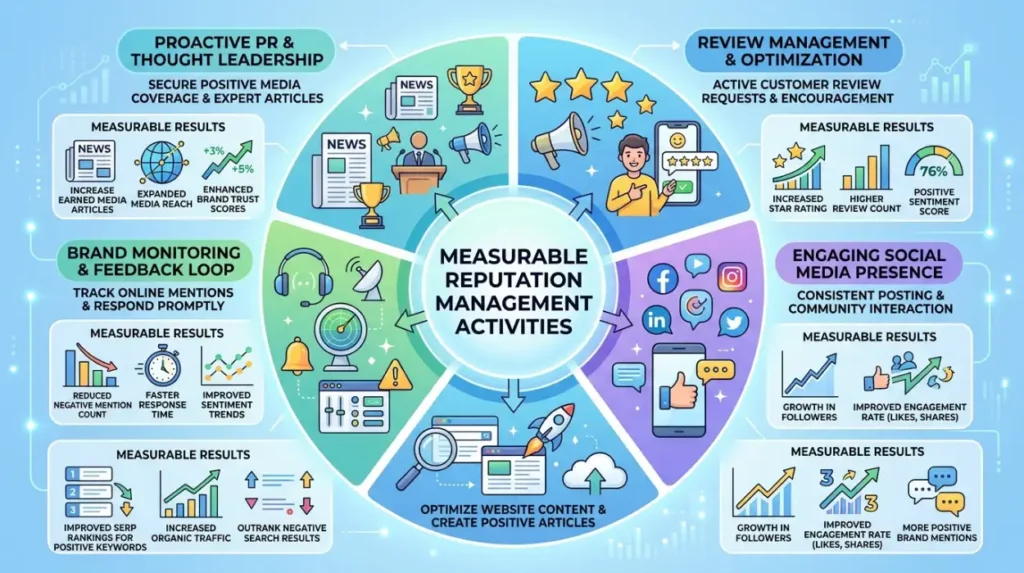
Reputation management produces measurable results when improvements can be observed through search visibility, entity credibility, review sentiment, and content performance. Effective strategies focus on measurable outcomes rather than isolated optimisation tasks.
Search Visibility Improvement
Improved search visibility increases the prominence of authoritative content across relevant recruitment-related queries. Higher-quality indexed resources strengthen organisational relevance while improving SERP composition through stronger reputation signals.
Negative Content Suppression
Negative content suppression reduces the prominence of unfavourable yet lawful content by strengthening more authoritative digital assets. Search engines continuously compare relevance, authority, and content quality, allowing stronger pages to achieve improved visibility over time.
Entity Credibility Enhancement
Entity credibility improves through consistent organisational information published across trusted digital platforms. Search ecosystems interpret this consistency as evidence of reliability, strengthening confidence in organisational identity and improving search perception influence.
Reputation Signal Monitoring
Continuous monitoring identifies changes in review sentiment, indexed content, search rankings, and authority signals. Ongoing analysis enables reputation management strategies to adapt as search ecosystems evolve, maintaining long-term visibility and digital stability.
How Does Reputation Management Reduce Long-Term Business Risk?
Reputation management reduces long-term business risk by strengthening the digital signals that influence search interpretation and public perception. Recruitment agencies operate in highly competitive markets where visible credibility directly affects employer confidence and candidate engagement.
Negative content, inconsistent business information, and declining review sentiment gradually weaken search perception influence. Left unmanaged, these signals contribute to reduced entity credibility and greater competition for search visibility. A structured reputation management strategy stabilises these signals through continuous optimisation and authoritative content development.
Risk reduction also depends on maintaining consistency. Search engines compare indexed information across numerous digital sources before determining relevance and authority. Organisations presenting accurate, consistent, and well-maintained digital information strengthen their long-term resilience within competitive search environments.
For recruitment agencies seeking reliable digital growth, reputation management represents a structured investment in search visibility, trust restoration, and sustainable online credibility rather than a short-term response to isolated reputation issues.
Dive Deeper With Our Expert Guides:
How Do You Choose a Reputation Management Company for Recruitment Agencies?
How Long Does It Take to Achieve Sustainable Reputation Improvements?
Sustainable reputation improvements are achieved through continuous optimisation rather than isolated actions. Search engines regularly crawl, index, and re-evaluate digital content, meaning improvements develop as stronger reputation signals replace weaker ones across search ecosystems.
The timeframe depends on the volume of indexed content, the authority of existing search results, and the competitiveness of recruitment-related search queries. Organisations with consistent digital information and established authority often experience measurable improvements more efficiently than those with fragmented online footprints.
Long-term success is created by maintaining high-quality content, improving entity credibility, strengthening review sentiment, and ensuring consistent business information across authoritative platforms. These activities support lasting SERP control instead of temporary visibility gains.
Clear My Name follows a structured process that aligns reputation management activities with how search engines evaluate authority, relevance, and trust. This process improves digital stability while supporting sustainable search perception influence over time.
Which Reputation Management Process Provides the Most Reliable Results?
A structured reputation management process provides the most reliable results because every stage strengthens measurable reputation signals rather than focusing on a single objective. Search ecosystems evaluate organisations holistically, making integrated optimisation more effective than isolated corrective actions.
A reliable process normally includes:
- Audit existing search results to identify negative content, authority gaps, and reputation signal weaknesses.
- Strengthen authoritative content that improves entity credibility and increases positive search visibility.
- Improve business consistency across directories, professional profiles, and trusted recruitment platforms.
- Reduce the prominence of unfavourable indexed material through strategic negative content suppression.
- Monitor search performance continuously to maintain stable reputation signals and long-term SERP control.
Each stage contributes measurable improvements that strengthen search visibility, improve digital trust, and reduce future reputation risks.
Why Does Reputation Management Deliver Long-Term Value for Recruitment Agencies?
Reputation management delivers long-term value because digital credibility influences recruitment decisions before direct communication begins. Employers and candidates frequently evaluate search results, reviews, and publicly available information when assessing recruitment agencies.
Investment in reputation management strengthens search visibility while reducing the influence of outdated, misleading, or unfavourable indexed content. Improved entity credibility supports stronger trust signals that remain valuable as search engines continue updating their evaluation processes.
Long-term value also comes from process consistency. Continuous optimisation ensures digital information remains accurate, authoritative, and aligned across multiple platforms. Stable reputation signals improve search perception while reducing exposure to future reputation challenges.
Recruitment agencies comparing providers often review recruitment agency market statistics to understand industry competition before evaluating reputation triggers for recruitment agencies that influence search visibility. This analytical approach helps decision-makers understand why structured reputation management provides stronger long-term outcomes than isolated corrective measures.
The cost of reputation management for a recruitment agency reflects the complexity of improving search visibility, strengthening entity credibility, and maintaining long-term SERP control. Investment is determined by the scope of digital reputation challenges, the authority of indexed content, and the level of optimisation required to improve online perception sustainably.
A structured reputation management process delivers measurable improvements through stronger reputation signals, effective negative content suppression, improved content visibility, and consistent entity information. These outcomes strengthen trust, reduce long-term business risk, and create a more stable digital presence within competitive search ecosystems.
Clear My Name provides a structured and transparent reputation management approach built around measurable search outcomes, process clarity, and sustainable reputation improvement. By strengthening digital trust, improving search perception influence, and maintaining long-term visibility, the approach delivers reliable support for recruitment agencies seeking lasting online credibility.
How much does reputation management cost for a recruitment agency?
The cost of reputation management for a recruitment agency depends on factors such as the volume of negative content, search visibility challenges, review sentiment, and the complexity of the digital footprint. Pricing is typically based on the scope of work required to improve reputation signals and long-term SERP control.
What factors affect the cost of reputation management for recruiters?
Costs are influenced by the authority of negative content, the competitiveness of recruitment-related search results, the consistency of business information, and the level of ongoing monitoring required. More complex reputation issues generally require broader reputation management strategies.
Is reputation management a worthwhile investment for recruitment agencies?
Reputation management helps strengthen search visibility, improve entity credibility, and support a more accurate online representation. For recruitment agencies, maintaining positive reputation signals can improve trust among employers and candidates while reducing the long-term impact of negative search results.
How long does reputation management take to show results?
Reputation management is an ongoing process because search engines continuously crawl, index, and re-evaluate online content. The timeframe varies depending on the strength of existing reputation signals, the authority of indexed content, and the competitiveness of relevant search queries.
What does reputation management for recruiters include?
Reputation management for recruiters typically includes reputation analysis, search visibility optimisation, negative content suppression, review monitoring, content enhancement, and entity credibility improvements. Companies such as Clear My Name provide structured approaches that focus on strengthening digital trust and maintaining sustainable online visibility.