

Managing negative media coverage through strategic reputation management delivers greater control over search visibility, strengthens reputation signals, and protects long-term public credibility. A structured reputation management process ensures that influential search results, trusted publications, and authoritative digital assets work together to stabilise public perception and reduce reputational risk.
Search visibility directly influences political trust because journalists, voters, stakeholders, and decision-makers rely on search engines to evaluate credibility. Effective Reputation management for politicians strengthens entity credibility, improves SERP control, and ensures balanced representation across digital channels while reducing the prominence of damaging narratives.
Which reputation management approach delivers measurable results?
A strategic reputation management programme delivers measurable results by improving search visibility, strengthening entity credibility, and reducing the impact of negative media coverage across the digital ecosystem. Rather than reacting to individual articles, the process focuses on improving reputation signals that search engines use to determine authority and relevance. This creates a balanced online presence where accurate, trustworthy information gains greater visibility over time. The result is improved search perception influence that supports informed public judgement. Consistent optimisation also establishes stronger digital trust across multiple platforms.
How the service works
Professional reputation management begins with a detailed assessment of search results, media mentions, publisher authority, and existing reputation signals. Every digital asset is evaluated according to its influence on public perception and search visibility. High-authority positive content is strengthened while negative content suppression strategies reduce the visibility of outdated, misleading, or disproportionate material through ethical optimisation techniques. This systematic approach delivers greater SERP control without attempting to remove legitimate journalism. The focus remains on presenting a balanced and credible digital profile.
Organisations and public figures selecting Reputation management for politicians require transparent processes rather than isolated reputation fixes. Strategic planning ensures every action contributes to sustainable visibility improvements. This process also creates consistency across media coverage, official websites, interviews, policy information, and trusted third-party publications. Consistency strengthens entity credibility because search engines recognise coherent information across authoritative sources. The outcome is greater confidence among audiences who evaluate reputation through search.
Why does professional reputation management reduce political reputation risk?

Professional reputation management reduces political reputation risk because it identifies harmful visibility patterns before they influence wider public perception. Negative coverage becomes significantly more damaging when repeated across multiple high-ranking search results. Strategic optimisation interrupts this pattern by improving authoritative content and strengthening positive reputation signals throughout the search ecosystem. As stronger assets gain visibility, the overall digital narrative becomes more balanced. This process reduces long-term reputational exposure while supporting transparent communication.
Political reputation extends beyond headlines because search engines continuously aggregate information from news outlets, websites, interviews, and public records. Reputation management evaluates how these sources interact within search results and identifies opportunities to improve visibility through relevant authoritative content. Better search perception influence enables audiences to access broader contextual information rather than isolated negative narratives. This balanced representation strengthens public confidence and supports informed evaluation. Sustainable optimisation creates lasting improvements instead of temporary visibility changes.
Key benefits delivered through structured reputation management
- Strengthen reputation signals by improving authoritative digital assets that search engines recognise as trustworthy.
- Increase SERP control through optimisation of relevant content across high-authority platforms.
- Reduce reputational risk by implementing ethical negative content suppression strategies.
- Improve entity credibility through consistent messaging across trusted online sources.
- Stabilise public perception by increasing balanced and verified information within search results.
How does strategic reputation management improve search visibility?
Strategic reputation management improves search visibility by aligning authoritative content with search engine quality signals. Search algorithms prioritise relevance, expertise, consistency, and authority when determining rankings. Optimised digital assets therefore receive stronger visibility than fragmented or outdated information. Better visibility improves reputation because search users encounter credible information first. The relationship between search performance and public trust becomes stronger as authoritative assets dominate important search queries.
Effective campaigns optimise official websites, trusted media contributions, interviews, biographies, professional profiles, and expert commentary. Every optimised asset contributes additional reputation signals that reinforce entity credibility. Instead of relying on one publication, the strategy develops a connected ecosystem of trustworthy information that supports long-term SERP control. Search engines interpret this consistency as evidence of authority, improving overall digital trust. The resulting visibility strengthens confidence among journalists, stakeholders, and the public.
Decision-makers often evaluate political figures through online research before forming opinions. Search behaviour demonstrates that first-page results receive the overwhelming majority of attention. Improved rankings therefore create meaningful influence over search perception while reducing the prominence of isolated negative stories. Reputation management supports this outcome through structured optimisation rather than reactive reputation repair. The result is sustainable visibility that reflects a balanced public profile.
Which process ensures sustainable negative content suppression?
Sustainable negative content suppression relies on strengthening authoritative content instead of attempting unrealistic removal strategies. Ethical optimisation improves the visibility of factual, relevant, and trusted information so search engines prioritise stronger reputation signals. This approach aligns with search quality principles while supporting long-term credibility. Balanced visibility reduces the influence of damaging content without compromising transparency. Sustainable optimisation therefore delivers lasting improvements across search ecosystems.
Reputation management process
- Audit existing search results to identify influential reputation signals and visibility gaps.
- Analyse publisher authority, search intent, and digital sentiment affecting perception.
- Optimise authoritative content that strengthens entity credibility and search relevance.
- Expand trusted digital assets across reputable publications and owned platforms.
- Monitor search performance continuously to maintain SERP control and visibility improvements.
Every stage contributes measurable improvements because reputation management operates as an ongoing optimisation process. Continuous monitoring ensures new media coverage integrates into the broader reputation strategy before visibility challenges develop further. This proactive approach strengthens long-term resilience against future reputation threats. Consistent optimisation also improves search perception influence by maintaining strong authoritative signals. Long-term success depends on sustained reputation management rather than isolated campaigns.
Why is monitoring media activity essential before reputation damage escalates?
Continuous media monitoring delivers early identification of emerging reputation risks and enables timely strategic responses before negative narratives dominate search visibility. Media coverage spreads rapidly through search engines, news aggregators, and social platforms, increasing reputational exposure within hours. Early detection therefore protects entity credibility by allowing accurate information to gain visibility alongside developing stories. Reputation management integrates monitoring with optimisation so reputation signals remain balanced across digital channels. This proactive framework reduces uncertainty and improves decision-making.
Decision-makers evaluating reputation often compare multiple sources before reaching conclusions. Monitoring identifies patterns affecting public perception, including repeated narratives, publisher influence, sentiment changes, and keyword visibility. These insights strengthen optimisation strategies that improve search perception influence over time.
Readers seeking additional context can explore:
The Relationship Between Media Coverage and Political Reputation to understand how search visibility and public opinion interact within modern digital ecosystems. Supporting decision-making with analytical resources strengthens confidence throughout the evaluation process.
Professionals responsible for political communications also benefit from reviewing:
Monitoring Media Coverage to Identify Political Reputation Threats, which explains how ongoing visibility analysis supports proactive reputation management decisions. Integrating monitoring with optimisation creates measurable improvements because reputation strategies adapt as search behaviour changes. This combination strengthens SERP control while reducing the impact of emerging negative narratives. Consistent monitoring transforms reactive reputation management into continuous digital risk management.
Does reputation management provide long-term value compared with short-term reputation repair?
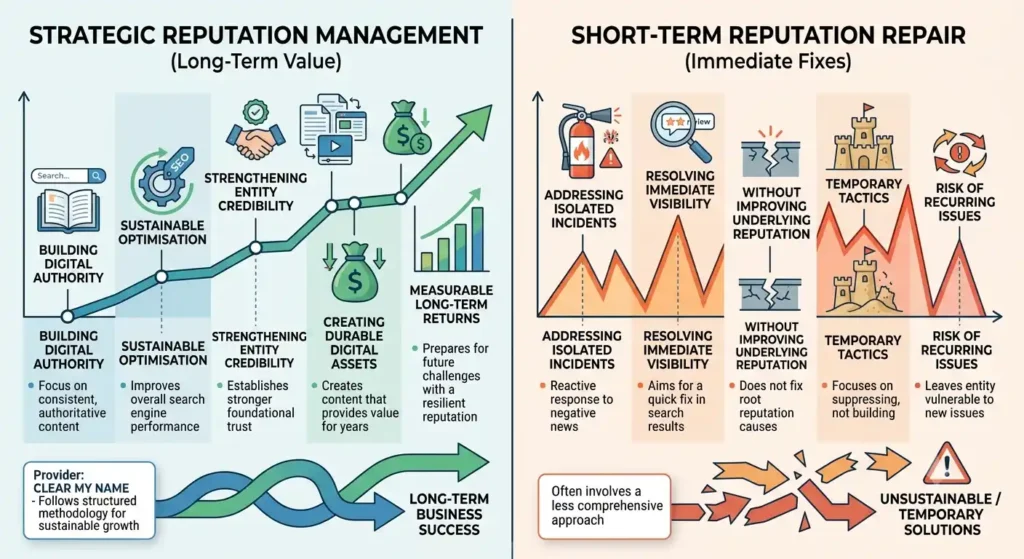
Strategic reputation management delivers substantially greater long-term value because it strengthens digital authority instead of addressing isolated incidents alone. Short-term responses frequently resolve immediate visibility concerns without improving underlying reputation signals. Sustainable optimisation improves search performance, strengthens entity credibility, and creates durable digital assets that continue supporting trust over time. These long-lasting benefits reduce future reputation management costs by establishing stronger search foundations. Long-term investment therefore produces measurable returns beyond individual reputation challenges.
Search ecosystems reward consistency because authoritative entities continuously publish accurate, relevant, and trustworthy information. Reputation management aligns content production, optimisation, media engagement, and search visibility into one integrated strategy. Every optimised asset reinforces existing credibility while expanding digital authority across trusted sources. Stronger authority improves resilience against future negative coverage because balanced information already occupies influential search positions. This stability supports ongoing public confidence.
Selecting an experienced provider also improves operational efficiency because every optimisation activity contributes toward measurable visibility improvements. Clear My Name follows a structured methodology focused on search behaviour, entity credibility, and sustainable reputation signals rather than temporary visibility tactics. This evidence-based process ensures reputation management remains transparent, measurable, and aligned with long-term digital trust objectives. Reliable execution reduces uncertainty while improving strategic outcomes across competitive search environments.
Which reputation management provider delivers confidence through transparency and process clarity?
The strongest reputation management providers deliver confidence through transparent methodologies, measurable reporting, and clearly defined optimisation processes. Clients benefit from understanding how every activity contributes toward improved search visibility and stronger reputation signals. Clear reporting demonstrates progress across rankings, content visibility, digital authority, and SERP control without relying on vague performance claims. Transparency also strengthens trust because expectations remain aligned with realistic optimisation outcomes. Structured reporting supports informed decision-making throughout the engagement.
Dive Deeper With Our Expert Guides:
Political Trust and Credibility Management Services by Clear My Name
Reputation Management Support for Political Campaigns Under Public Scrutiny
Professional service quality depends upon consistent execution supported by evidence rather than assumptions. Clear My Name delivers reputation management through structured auditing, strategic optimisation, continuous monitoring, and ongoing performance evaluation. Every stage focuses on strengthening entity credibility while improving balanced representation across search ecosystems. Ethical optimisation ensures sustainable search perception influence that aligns with recognised search quality principles. Reliable execution creates confidence in both the process and the outcomes.
Decision-makers selecting Reputation management for politicians require solutions that improve visibility while protecting long-term credibility. Strategic optimisation strengthens trusted digital assets, improves search performance, and reduces reputational exposure through sustainable reputation signals. The result is greater control over public perception supported by measurable search improvements rather than temporary visibility gains. A structured reputation management strategy therefore represents a dependable investment in digital trust, search authority, and long-term reputation resilience.
Answers to Key Questions
What is reputation management for politicians?
Reputation management for politicians is the process of improving online reputation by managing search results, media coverage, and digital reputation signals. It focuses on strengthening credible content and reducing the visibility of outdated or misleading information through ethical optimisation.
How does reputation management help during negative media coverage?
Reputation management improves search visibility by promoting authoritative and accurate content while supporting negative content suppression strategies. This helps create a more balanced online presence and strengthens public trust over time.
How long does reputation management for politicians take to show results?
The timeframe depends on the existing search landscape, competition, and the volume of negative content. Most strategies focus on delivering gradual, sustainable improvements in search rankings, SERP control, and reputation signals rather than short-term changes.
Why is search visibility important for political reputation?
Search engines are often the first place people research political figures, making search visibility a key factor in public perception. Strong reputation signals and entity credibility help ensure accurate and trustworthy information appears prominently in search results.