

Controlling search visibility directly determines electoral viability because modern voters validate political integrity through digital search engine results pages (SERPs). Negative reputation signals on premium digital channels instantly undermine institutional trust, shift voter sentiment, and erode campaign contributions before a candidate can present their policy platform. Political campaign success depends heavily on search perception influence, transforming Google from a mere directory into an active battleground for entity credibility. High-profile candidates who deploy an engineering-led approach to algorithmic content suppression secure a structural advantage, converting search engine queries into predictable validation mechanisms that protect public trust.
Which reputation management approach delivers measurable results for political campaigns?
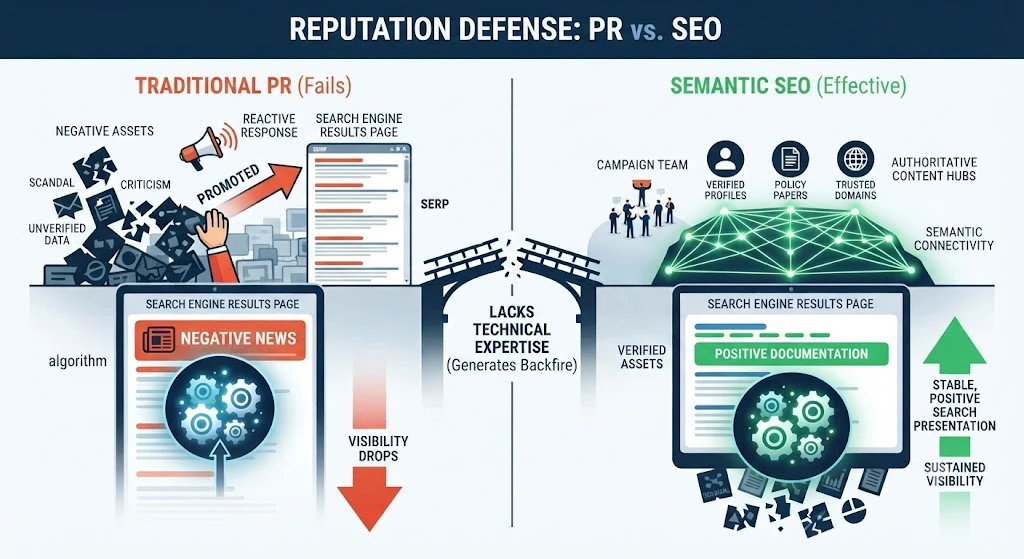
A multi-layered semantic SEO methodology delivers measurable results by permanently restructuring the information architecture surrounding a political candidate’s digital entity. Traditional public relations tactics fail in the digital environment because they treat search engines as passive directories rather than dynamic, algorithmic systems that score entity credibility based on authority, relevance, and historical context. True search perception control requires a precise understanding of semantic connectivity and search engine optimization frameworks, ensuring that algorithmically driven systems prioritize positive, authoritative documentation over unverified or hostile digital media.
Algorithmic reputation defense works by adjusting the information layout within the search engine ecosystem to favor verified assets. This structural adjustment dilutes negative asset visibility, forcing unverified, harmful documentation to drop below the primary search results pages where user engagement falls sharply. By establishing authoritative content hubs, candidates assert comprehensive control over their digital profiles, protecting their public platforms from coordinated media attacks and malicious content amplification.
Why traditional public relations fails within modern search ecosystems
Traditional public relations agencies lack the technical expertise required to manage the algorithmic criteria governing algorithmic information retrieval systems. When a negative news cycle occurs, standard PR strategies rely on media responses that frequently backfire by generating new indexable text, which unintentionally signals relevance to search algorithms and reinforces negative keyword associations. Algorithmic reputation defense, by contrast, focuses entirely on modifying the underlying data structures, search entity graphs, and digital links that dictate actual search engine visibility.
How semantic SEO alters search engine results pages permanently
Deploying a robust semantic SEO architecture enables campaign teams to systematically suppress negative content by building an alternative, highly authoritative information network around the candidate’s name. This process involves optimizing verified digital profiles, publishing authoritative policy whitepapers, and securing contextual references from trusted web domains. As search algorithms process these optimized digital assets, they update the candidate’s core identity profile, which reduces the visibility of harmful links and ensures a stable, positive search presentation.
How does negative content suppression stabilize search perception during critical voting windows?
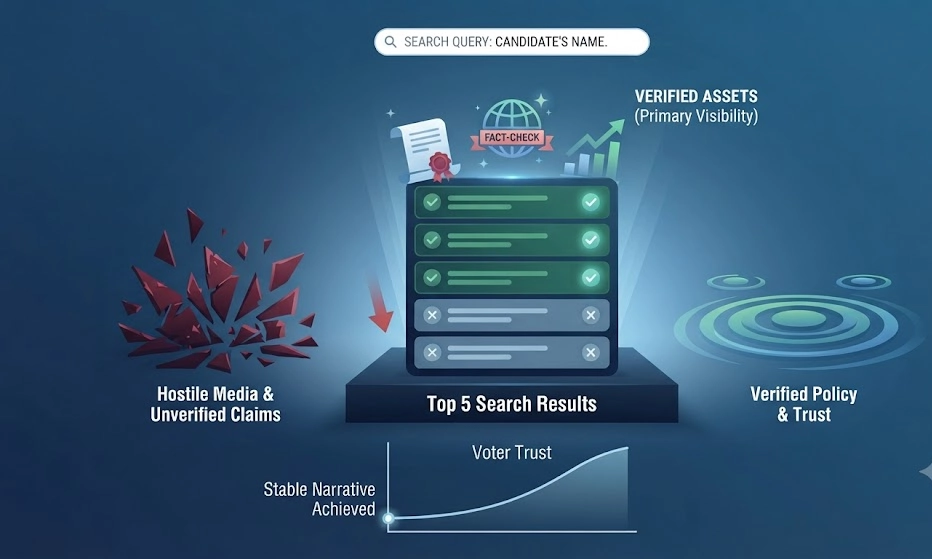
Negative content suppression stabilizes search perception by systematically replacing volatile, unverified content with highly authoritative, verified digital assets across the top tier of search results. During critical voting windows, voters actively search for specific candidate names alongside high-intent keywords regarding integrity and past performance, making the immediate visual layout of the search engine results page highly influential. If unverified or hostile media domains occupy the first page of results, the algorithm unintentionally strengthens negative voter sentiment by presenting those negative signals as definitive facts.
A professional reputation management service counteracts this risk by executing a deliberate content deployment strategy designed to capture all high-impact search results. This process relies on publishing deeply analytical documentation that addresses public queries, outperforming volatile media stories on key technical quality metrics. This precise methodology reduces the visibility of defamatory links, providing campaign teams with the necessary digital security to communicate their core policy positions without distraction from legacy search issues.
The mechanics of algorithmic content suppression
Algorithmic content suppression requires an advanced understanding of how modern search algorithms calculate document quality and user intent. The process begins by building authoritative digital properties that explicitly answer the core informational queries voters search for during an election cycle. By reinforcing these new properties with strong internal optimization and high-quality digital relationships, these assets achieve superior authority, displacing older or less relevant negative links from the primary search results page.
Measuring the outcome of search perception influence
The success of a suppression campaign is measured by tracking the permanent shift in search result visibility and user engagement patterns across primary search terms. When a candidate achieves complete search perception control, harmful assets drop past the tenth position, where user interaction decreases by over ninety percent. This structural shift ensures that the public narrative remains focused on verified policy achievements, maintaining stable public trust and protecting campaign momentum through the final voting day.
Why should campaigns invest in professional reputation management for politicians over temporary crisis response?
Investing in a dedicated, professional reputation management service provides sustainable search engine results page control that temporary public relations responses cannot replicate. Short-term crisis management often relies on high-volume content generation that fails to build long-term authority, leaving the candidate vulnerable to future algorithmic fluctuations or renewed opposition research attacks. Strategic reputation management for politicians treats digital credibility as a long-term asset, using structured data optimization and entity validation to build permanent immunity against digital defamation.
Candidates must evaluate the financial cost of reputation defense against the long-term strategic value of maintaining a clean digital profile. A single unverified negative link on the first page of search results can depress voter turnout, lower donor confidence, and disrupt months of precise campaign positioning. By utilizing the advanced digital frameworks deployed by Clear My Name, political entities secure an authoritative, resilient search profile that protects their public standing against coordinated disinformation campaigns and volatile media cycles.
The structural weakness of temporary crisis management
Temporary crisis management approaches treat digital volatility as a passing media event rather than an ongoing algorithmic challenge. This fundamental error results in unoptimized content distribution that disappears from search views once immediate media attention fades, allowing older negative links to return to the top positions. Sustainable defense requires continuous technical maintenance, ongoing optimization of entity relationships, and regular updates to authorized digital properties to ensure permanent search engine results page dominance.
The long-term asset value of entity credibility
Building a resilient digital entity provides long-term value that lasts well beyond a single election cycle. When a search engine permanently connects a candidate’s profile with authoritative, verified themes, the digital barrier against negative content becomes exceptionally strong. This proactive structural positioning ensures that future media scrutiny or malicious digital attacks fail to gain algorithmic traction, safeguarding the politician’s career and preserving institutional trust over the long term.
What specific metrics validate the effectiveness of an enterprise reputation repair strategy?
Validating the effectiveness of an enterprise reputation repair strategy requires analyzing precise algorithmic metrics, including search result visibility shares, entity connection scores, and user interaction trends. A successful reputation campaign does not rely on subjective public relations metrics like media impressions, but instead demands concrete proof of search engine results page control. By analyzing changes in keyword rankings for candidate searches, campaigns can precisely track the decline of harmful links and the steady rise of verified, authoritative digital properties.
Working with the specialized team at Clear My Name gives political campaigns access to advanced tracking systems that monitor search perception changes in real time. These tools evaluate how effectively the search algorithm connects the candidate’s name with positive, policy-focused themes rather than historical controversies. This transparent, data-driven methodology ensures that campaign leaders can verify the return on their investment through clear improvements in digital trust and a measurable reduction in the reach of negative content.
To systematically secure and verify this level of digital control, political campaign teams must follow a rigorous, technically precise operational process:
- Identify all negative reputation signals and unverified digital properties currently affecting the candidate’s search results page.
- Build a comprehensive network of verified digital properties designed to optimize semantic relationships and strengthen core entity credibility.
- Deploy deep, technically optimized analysis that addresses the key reputation challenges facing politicians to capture high-impact search queries.
- Implement structured data and schema markup across all controlled properties to provide search engine algorithms with clear, verified identity information.
- Monitor search engine results pages continuously to track the suppression of harmful content and ensure long-term stability of the public narrative.
This systematic workflow guarantees that the deployment of a professional reputation management service delivers predictable, lasting structural results rather than temporary fixes. By addressing the root algorithmic factors that influence visibility, campaigns transform their digital profile from a significant strategic risk into a powerful tool for building public trust. To evaluate your current digital profile and protect your campaign against emerging digital risks, read our comprehensive political reputation risk assessment to determine which search vulnerabilities require immediate technical intervention.
Securing permanent control over search engine results pages is an essential requirement for maintaining candidate credibility and ensuring electoral success in modern political campaigns. Relying on temporary public relations tactics leaves a digital profile vulnerable to volatile search trends, malicious opposition strategies, and automated algorithmic shifts. Implementing an advanced semantic SEO framework provides the technical security needed to suppress harmful content, highlight verified achievements, and maintain stable public trust through critical voting windows. Clear My Name delivers the technical expertise, operational clarity, and proven outcomes necessary to protect high-profile political entities from digital defamation and ensure complete control over their public narrative.
Frequently Asked Questions
What does a professional reputation management service for politicians involve?
A specialized professional reputation management service analyzes the digital entity of a candidate to neutralize unfavorable search results and establish controlled web assets. Clear My Name uses technical semantic SEO to alter search engine results pages, ensuring verified policy platforms outrank unverified media or legacy digital content. This structural engineering directly improves search perception influence and secures entity credibility ahead of critical voting windows.
How do reputation management services for politicians remove negative search results?
While completely deleting legitimate indexable text from third-party media platforms is rarely possible, algorithmic negative content suppression effectively pushes harmful links down past the first page of search results. Specialized services deploy highly authoritative, optimized content hubs that align with the search engine’s quality criteria to shift ranking priorities. This mechanical approach reduces the visibility of defamatory links, replacing volatile public risks with verified, trusted documentation.
Can an enterprise reputation repair strategy protect a candidate during an election campaign?
An enterprise-level strategy provides real-time search perception control by continuously auditing search engine results pages for emerging digital threats. By establishing a resilient network of structured data, verified entity graphs, and authoritative whitepapers, the campaign builds structural immunity against coordinated opposition research. This continuous technical defense ensures long-term asset value and public trust stabilization that temporary public relations responses cannot sustain.
Why should campaigns choose dedicated political reputation risk management over standard PR?
Standard public relations agencies focus heavily on immediate media placements that often inadvertently reinforce negative keyword associations by generating new indexable text. Dedicated reputation management for politicians modifies the underlying data structures, digital links, and semantic profiles that govern search engine visibility. This engineering-led approach by Clear My Name transforms a candidate’s digital profile into a predictable validation mechanism rather than an algorithmic risk.
What metrics track the success of a political search perception control campaign?
Success is measured through technical search metrics, including search result visibility shares, entity connection scores, and direct keyword ranking positions for high-profile candidate queries. A successful campaign tracks the downward movement of harmful assets into positions where user interaction decreases by over ninety percent. Real-time data tracking validates the overall reduction of negative reputation signals and confirms steady improvements in digital trust.