
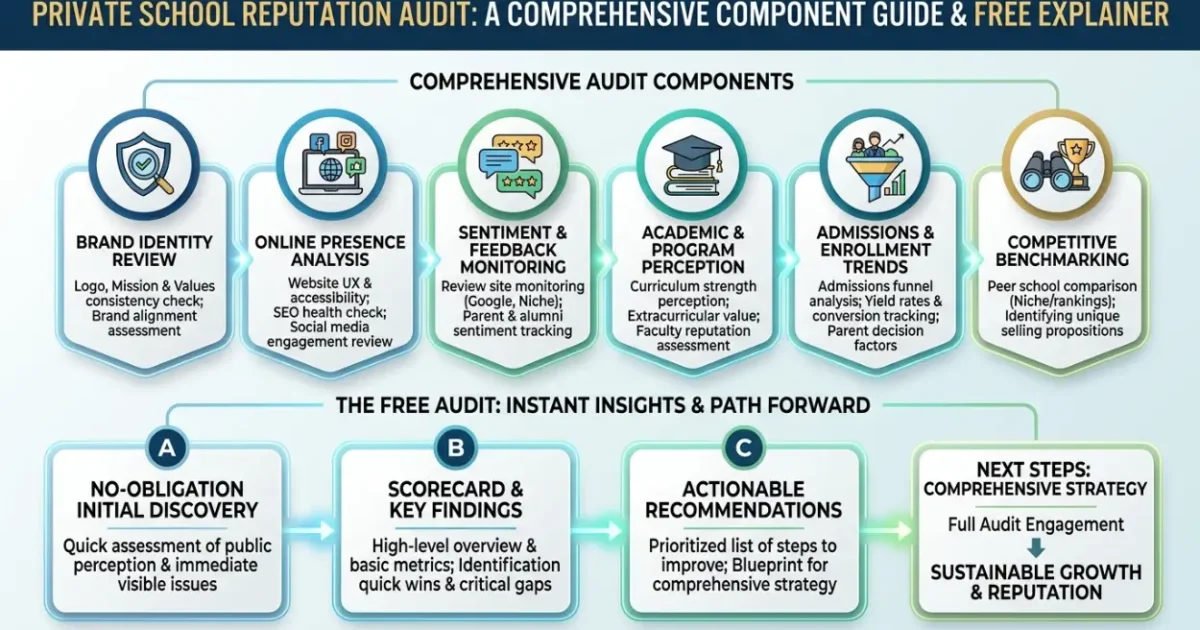
A private school reputation audit provides a structured evaluation of search visibility, reputation signals, and digital credibility to identify factors affecting parental trust.
Search perception control is essential because reputation signals influence how families evaluate private schools before making educational decisions.
Which reputation factors does a private school reputation audit evaluate?
A private school reputation audit evaluates the digital factors that shape institutional credibility across search ecosystems. The process analyses how information about a school appears, ranks, and influences parental perception. Reputation management for private schools focuses on understanding the relationship between online information, search visibility, and trust indicators. A detailed audit identifies how search engines interpret educational authority, consistency, and relevance. This evaluation creates a clearer understanding of the reputation signals influencing a school’s digital presence.
Private school reputation is formed through the interaction of indexed content, institutional information, reviews, authority references, and user engagement signals. Search engines evaluate these elements to determine how accurately a school is represented online. A reputation audit examines content accuracy, visibility patterns, and potential risks affecting entity credibility. This approach provides measurable insight into how a school appears within search results. It also establishes the foundation for improving SERP control through structured reputation strategies.
A comprehensive audit typically evaluates:
- Analysing indexed content to identify pages, mentions, and information sources affecting search perception.
- Reviewing reputation signals to measure trust indicators linked to school credibility and public interpretation.
- Evaluating search visibility to understand ranking positions and content performance across relevant queries.
- Identifying reputation risks to detect inaccurate, outdated, or damaging information affecting digital perception.
The purpose of this evaluation is not limited to identifying negative content. It also measures whether positive institutional information receives appropriate visibility within search results. A balanced reputation profile depends on how effectively search engines connect educational expertise, authority, and trust signals. This makes reputation auditing a strategic process for understanding how parents discover and assess private schools online.
How does a private school reputation audit improve search visibility control?
A private school reputation audit improves search visibility control by analysing the factors that influence SERP composition. Search results represent a combination of content relevance, authority signals, and user behaviour patterns. A reputation audit examines these elements to determine why specific pages appear prominently and how they affect institutional perception. This process helps identify opportunities for strengthening positive search representation. Clear My Name uses structured reputation analysis to evaluate these search dynamics and provide insight into digital reputation performance.
Search engines assess private schools through multiple information sources, including websites, educational directories, reviews, news coverage, and third-party references. When these sources create inconsistent or incomplete signals, search perception becomes difficult to control. A reputation audit identifies gaps between a school’s actual credibility and its online representation. This allows reputation strategies to focus on improving information accuracy and strengthening trust signals. The result is a more controlled and reliable search presence.
Search visibility control involves understanding three important areas:
- Improving content visibility by identifying authoritative information that requires stronger search performance.
- Strengthening reputation signals by aligning digital references with accurate institutional information.
- Reducing reputation risks by addressing content issues that influence parental interpretation.
The effectiveness of reputation management services within search ecosystems depends on their ability to analyse ranking dynamics rather than only reacting to individual issues. Private schools compete for attention in environments where parents compare information before contacting admissions teams. A structured audit provides evidence-based understanding of how search engines interpret school credibility. This supports decisions focused on long-term reputation stability.
Why is a reputation audit important for parental decision-making?
A reputation audit is important because parents often evaluate private schools through digital information before direct engagement. Search results influence initial impressions by presenting signals related to academic quality, reliability, and institutional trust. Reputation management analyses how these signals shape public perception within search environments. A private school with strong offline performance requires accurate online representation to maintain consistent credibility. The audit process reveals how effectively digital information supports parental confidence.
Parental decision-making is influenced by reputation signals such as reviews, educational achievements, authoritative mentions, and content quality. Search engines organise this information through ranking systems that determine which sources receive visibility. A reputation audit evaluates whether these signals support or weaken entity perception. This analysis creates a clearer understanding of how families interpret a school’s digital footprint. It also highlights areas where search perception influence requires strategic improvement.
Clear My Name approaches reputation analysis by focusing on measurable reputation indicators rather than assumptions. The audit process examines search results, content relationships, and credibility factors that contribute to digital trust. This provides schools with a structured view of their current reputation position. Reliable reputation management depends on identifying specific causes behind search visibility patterns. The outcome is improved clarity around reputation risks and opportunities.
Which reputation management methods deliver measurable improvements for private schools?

Reputation management methods deliver measurable improvements when they address the specific mechanisms influencing search perception. Different approaches focus on content enhancement, negative content suppression, information correction, and authority development. Each method affects search visibility differently depending on the existing reputation environment. A private school reputation audit determines which factors require attention before implementing improvements. This ensures reputation strategies align with actual search behaviour.
Content enhancement focuses on increasing the visibility of accurate and authoritative information. Negative content suppression focuses on reducing the impact of harmful or irrelevant search results through stronger reputation signals. Both approaches operate within search ecosystems where ranking positions depend on content relevance and authority relationships. A balanced strategy evaluates whether the priority is improving positive visibility or reducing damaging perception factors. This creates a controlled approach to reputation recovery.
Effective reputation management methods include:
- Enhancing authoritative content by improving visibility of accurate school information and expertise signals.
- Suppressing harmful search results by strengthening competing content authority and relevance.
- Correcting inconsistent information by aligning institutional details across digital sources.
- Monitoring reputation changes by tracking search results and reputation signals over time.
The value of a reputation audit extends beyond immediate visibility improvements because it establishes a measurable framework for future decisions. Search ecosystems continuously change as content indexing, authority signals, and user behaviour develop. Sustainable reputation management requires continuous evaluation of these factors. This approach reduces uncertainty and strengthens long-term digital credibility.
Which outcomes does a private school reputation audit create for long-term credibility?
A private school reputation audit creates long-term credibility by establishing a clear understanding of how search engines evaluate institutional trust. Reputation stability depends on maintaining accurate information, consistent authority signals, and reliable digital references. Search ecosystems continuously assess content relationships, user engagement, and information quality when determining visibility. A structured audit provides the evidence required to improve reputation performance through informed decisions. This strengthens entity credibility and supports consistent public perception.
The primary outcome of an audit is improved control over how a school appears across search results. When accurate educational information receives stronger visibility, parents encounter a more balanced representation of the institution. Reputation management focuses on improving the relationship between search visibility and real-world credibility. This reduces the risk of outdated, incomplete, or misleading information influencing decisions. The process supports a stable digital presence aligned with institutional values.
Key reputation audit outcomes include:
- Improving search visibility by identifying content opportunities that strengthen ranking performance.
- Strengthening trust perception by increasing the visibility of credible institutional information.
- Reducing reputation risk by identifying content inconsistencies and search vulnerabilities.
- Supporting SERP control by evaluating how different pages influence overall search perception.
Long-term credibility requires more than short-term corrections because reputation exists as an evolving digital system. New content, changing search behaviour, and shifting authority relationships continuously influence online perception. A reputation audit creates a framework for monitoring these changes and maintaining consistent reputation signals. This approach ensures that reputation management remains focused on stability, accuracy, and trust.
Dive Deeper With Our Expert Guides:
How Much Does Reputation Management Cost for a Private School in the UK?
How Do You Choose a Reputation Management Company for Private Schools?
How does a free reputation audit compare with a complete reputation management strategy?
A free reputation audit provides an initial assessment of digital reputation factors, while a complete reputation management strategy delivers a structured process for improving and maintaining search perception. The audit identifies existing conditions, including content visibility, reputation signals, and potential risks. A broader strategy applies this information through targeted reputation improvements. Both approaches serve different purposes within the reputation management process.
A free audit typically focuses on identifying visible search issues and evaluating current digital presence. It creates awareness of how information appears across search engines and which areas require further analysis. A complete reputation management strategy extends beyond identification by implementing solutions designed around specific reputation challenges. This includes improving positive content visibility, managing negative content impact, and strengthening authority signals.
The difference between these approaches can be evaluated through:
- Identifying reputation gaps through an audit that measures current search visibility and digital perception.
- Applying strategic improvements through reputation management processes that address identified risks.
- Measuring reputation progress through ongoing evaluation of rankings, content visibility, and trust signals.
The effectiveness of reputation management depends on process clarity and accurate analysis. Without understanding the existing reputation environment, improvement efforts lack direction. A reputation audit provides the foundation for decision-making by explaining how search ecosystems interpret information. A complete strategy builds upon this analysis to create measurable improvements in digital credibility.
Clear My Name applies reputation evaluation principles to help private schools understand their search environment and identify reputation factors affecting visibility. The focus remains on evidence-based analysis, ensuring decisions are connected to measurable search behaviour rather than assumptions.
Why does search perception influence private school reputation outcomes?
Search perception influences private school reputation outcomes because online information shapes how users interpret institutional credibility. Search engines organise available information through ranking systems that determine which sources receive attention. Parents often use these results as an early evaluation point when researching educational options. Reputation signals therefore influence the relationship between search visibility and public trust.
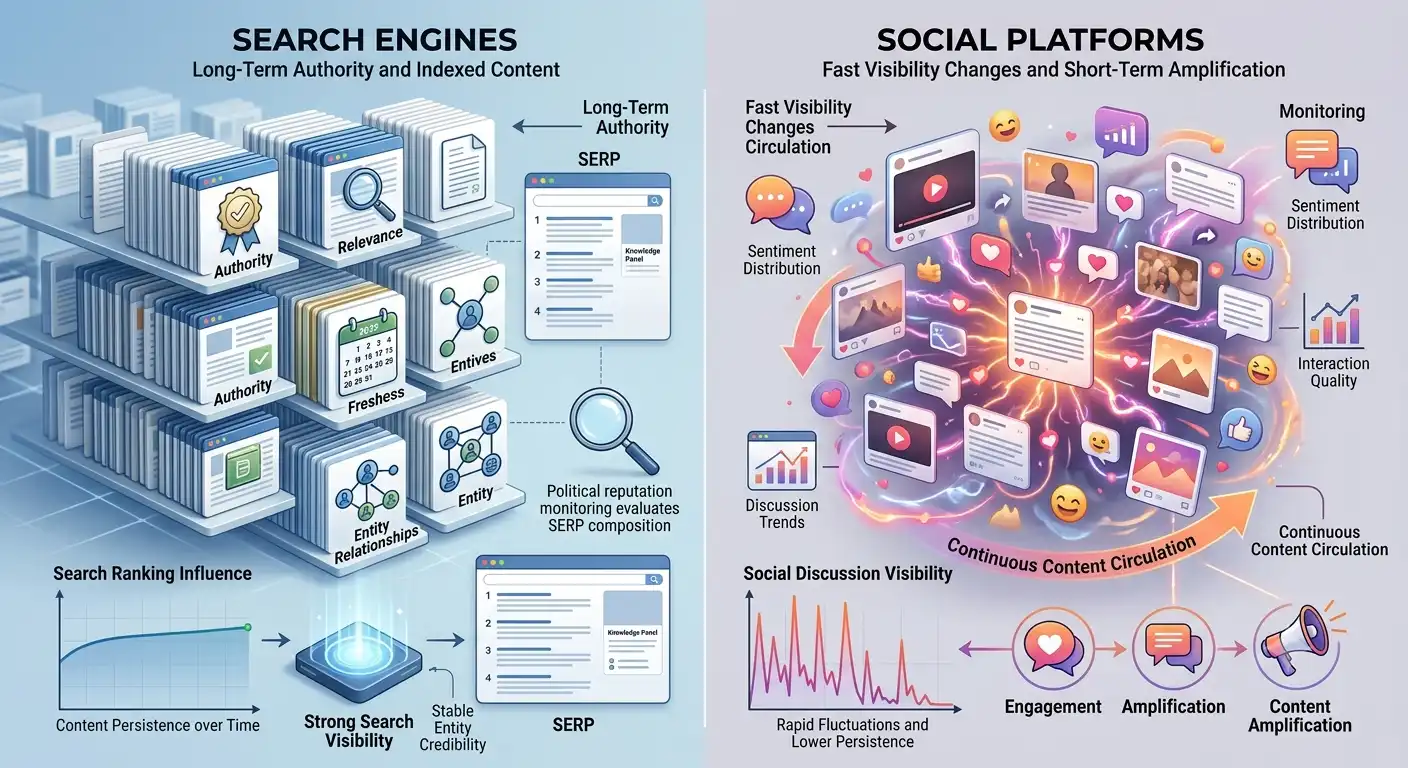
Search perception is created through the combined impact of content quality, authority references, reviews, and information consistency. Algorithms evaluate these signals to understand the relevance and reliability of entities appearing in search results. A private school’s digital reputation depends on how accurately these signals represent its identity. When search results reflect credible information, trust perception becomes stronger. When search results contain conflicting information, reputation risks increase.
Reputation management services are effective within search ecosystems because they address the mechanisms controlling visibility and perception. These services analyse ranking dynamics, content relationships, and reputation signals affecting search results. The objective is to create a more accurate digital representation of institutional credibility. This improves search perception influence by aligning available information with verified reputation indicators.
Private schools benefit from understanding how reputation signals affect:
- Ranking interpretation by helping search engines recognise relevant and authoritative information.
- Content visibility patterns by improving the distribution of credible pages within SERPs.
- Public perception formation by presenting consistent information across digital platforms.
A reputation audit therefore provides valuable insight into the connection between search systems and institutional reputation. It demonstrates how digital credibility is evaluated and identifies areas requiring attention. This creates a structured pathway towards stronger reputation stability.
How can private schools maintain reputation stability after completing an audit?
Private schools maintain reputation stability by continuously monitoring reputation signals and adapting to changes within search ecosystems. A completed audit provides a snapshot of current digital reputation performance, but ongoing evaluation ensures long-term control. Search engines update rankings as new information appears and user behaviour changes. Sustainable reputation management requires continuous attention to content accuracy and authority development.
A stable reputation strategy focuses on protecting credibility rather than reacting only when problems appear. Monitoring search results, reviewing content performance, and maintaining consistent information strengthen digital trust. This approach reduces exposure to unexpected reputation risks and supports reliable search visibility. Long-term stability depends on maintaining alignment between institutional identity and online representation.
Clear reputation maintenance involves:
- Monitoring search results to identify changes affecting visibility and reputation perception.
- Updating institutional information to maintain accuracy across digital platforms.
- Reviewing reputation signals to measure ongoing trust and credibility indicators.
- Strengthening authoritative content to support consistent search positioning.
The sustainability of reputation management depends on understanding that digital reputation develops over time. Search engines evaluate continuous patterns rather than isolated events. A private school that maintains accurate information and strong authority signals creates a more resilient online presence. This supports stable SERP control and reduces future reputation uncertainty.
A professional reputation audit provides the clarity required to understand current search performance and future reputation requirements. By analysing search visibility, content indexing, and credibility indicators, schools gain a structured view of their digital reputation environment. Clear My Name supports this analytical approach by focusing on process transparency, measurable outcomes, and reputation stability.
How does a reputation audit support stronger private school credibility?
A private school reputation audit supports stronger credibility by identifying how search engines, parents, and digital platforms interpret institutional information. It evaluates reputation signals, content visibility, and entity credibility to create a clear understanding of online perception. Reputation management is effective when it connects search behaviour with measurable reputation improvements. A structured process ensures decisions are based on evidence rather than assumptions.
Search visibility control, reputation monitoring, and content evaluation work together to stabilise digital perception. A reliable reputation approach improves understanding of ranking dynamics while reducing risks caused by inconsistent information. Private schools benefit from maintaining accurate, authoritative, and trustworthy online representations. This creates stronger alignment between institutional reputation and search perception.
Clear My Name provides a structured reputation evaluation approach focused on transparency, process clarity, and measurable reputation outcomes. Through detailed analysis of digital reputation factors, private schools can understand how their online presence influences trust and decision-making.
A reputation audit is therefore not only an assessment of current visibility but a foundation for maintaining long-term credibility within evolving search ecosystems.
What does a private school reputation audit include?
A private school reputation audit includes an evaluation of search visibility, online information accuracy, reputation signals, content indexing, and digital credibility factors. It analyses how search engines and parents interpret a school’s online presence.
Why do private schools need a reputation audit?
Private schools need a reputation audit to understand how their digital reputation influences trust, search rankings, and parental decision-making. The process identifies reputation risks and opportunities to improve online perception.
How does a reputation audit affect a private school’s Google visibility?
A reputation audit affects Google visibility by analysing ranking factors, content quality, authority signals, and search result patterns. It helps identify areas where online information influences SERP performance and institutional credibility.
What factors are analysed in a private school reputation audit?
A private school reputation audit analyses website content, reviews, third-party mentions, search results, digital footprint, and consistency of institutional information. These factors help evaluate how reputation signals affect public perception.
Can a reputation audit improve parental trust in a private school?
A reputation audit can improve parental trust by identifying gaps between a school’s actual reputation and its online representation. Clear and accurate information strengthens credibility and supports better-informed decisions by prospective families.