

Candidates and clients research recruitment agencies across multiple online platforms because search engines aggregate reputation signals from reviews, directories, and authoritative sources to support decision-making.
Reputation management is the systematic evaluation of digital information that shapes search visibility, entity perception, and online credibility within search ecosystems.
Why do candidates and clients research recruitment agencies across multiple platforms?
Candidates and clients research recruitment agencies across multiple platforms because search engines evaluate information from numerous sources rather than relying on a single website. Online reputation refers to the collection of indexed content, review signals, authority references, and digital interactions associated with an organisation. Search engines combine these signals to create a broader understanding of an entity’s credibility. This process influences search visibility and determines which agencies appear trustworthy within search engine results pages (SERPs). Understanding these information sources explains why reputation is distributed across multiple digital environments instead of existing in one location.
Content indexing allows search engines to discover information published on review platforms, business directories, company websites, news publications, and professional networks. Algorithms compare consistency, authority, and relevance across these sources before evaluating overall entity perception. Recruitment agencies therefore develop digital reputations through cumulative evidence rather than isolated reviews. Search visibility reflects this combination of authority signals and content quality. Reputation management analyses how these relationships influence public interpretation within search ecosystems.
Which review platforms contribute most to recruitment agency reputation?
Review platforms contribute to recruitment agency reputation because they generate structured reputation signals that search engines can evaluate. Each platform provides unique information about service quality, customer experience, employer relationships, or candidate satisfaction. Search algorithms compare these signals with content published elsewhere to establish credibility. No individual platform independently defines reputation because search evaluation depends on aggregated information. Understanding the function of different review platforms provides insight into digital reputation formation.
The following categories frequently influence search perception:
- Evaluate Google Business Profiles because they provide publicly accessible review signals, location information, and user engagement data that contribute to local search visibility.
- Review Trustpilot profiles because verified customer experiences create measurable credibility indicators that search engines interpret alongside other authority signals.
- Assess Indeed company pages because candidate feedback contributes to employer reputation and recruitment-related entity perception.
- Analyse Glassdoor profiles because workplace reviews influence organisational credibility from an employment perspective.
- Examine LinkedIn company pages because professional network authority strengthens entity relationships and organisational trust.
- Compare industry directories because specialist recruitment listings reinforce topical relevance and business verification.
- Review independent business directories because citation consistency supports entity validation across search ecosystems.
- Monitor social discussion platforms because publicly accessible conversations contribute additional contextual reputation signals.
Each platform performs a different function within reputation ecosystems. Some emphasise customer satisfaction, while others focus on employment experiences or business verification. Search engines evaluate these combined sources to understand the overall credibility of recruitment agencies. This multi-source evaluation strengthens the reliability of search ranking systems.
How do search engines interpret recruitment agency reputation signals?
Search engines interpret recruitment agency reputation signals by analysing relationships between content quality, authority, user engagement, and information consistency. Reputation signals refer to measurable indicators that demonstrate organisational reliability within digital environments. Algorithms compare these indicators across indexed content before determining search relevance. This evaluation process contributes to SERP composition rather than relying exclusively on keywords. Entity perception develops through accumulated evidence across trusted information sources.
Authority signals originate from verified business information, editorial mentions, professional associations, reputable directories, and recognised review platforms. Search engines assess whether these references consistently describe the same organisation. Information consistency strengthens confidence in entity identity and improves search interpretation. Conflicting or incomplete information reduces certainty during algorithmic evaluation. Reputation management therefore examines how authority relationships influence digital credibility.
Review sentiment also contributes to search evaluation through aggregated behavioural patterns rather than isolated opinions. Search engines identify recurring themes across large datasets to understand overall public perception. This analytical process supports balanced interpretation by evaluating both positive and negative reputation indicators. Content indexing allows these patterns to influence future visibility as new information enters search ecosystems. Reputation develops continuously through this dynamic evaluation process.
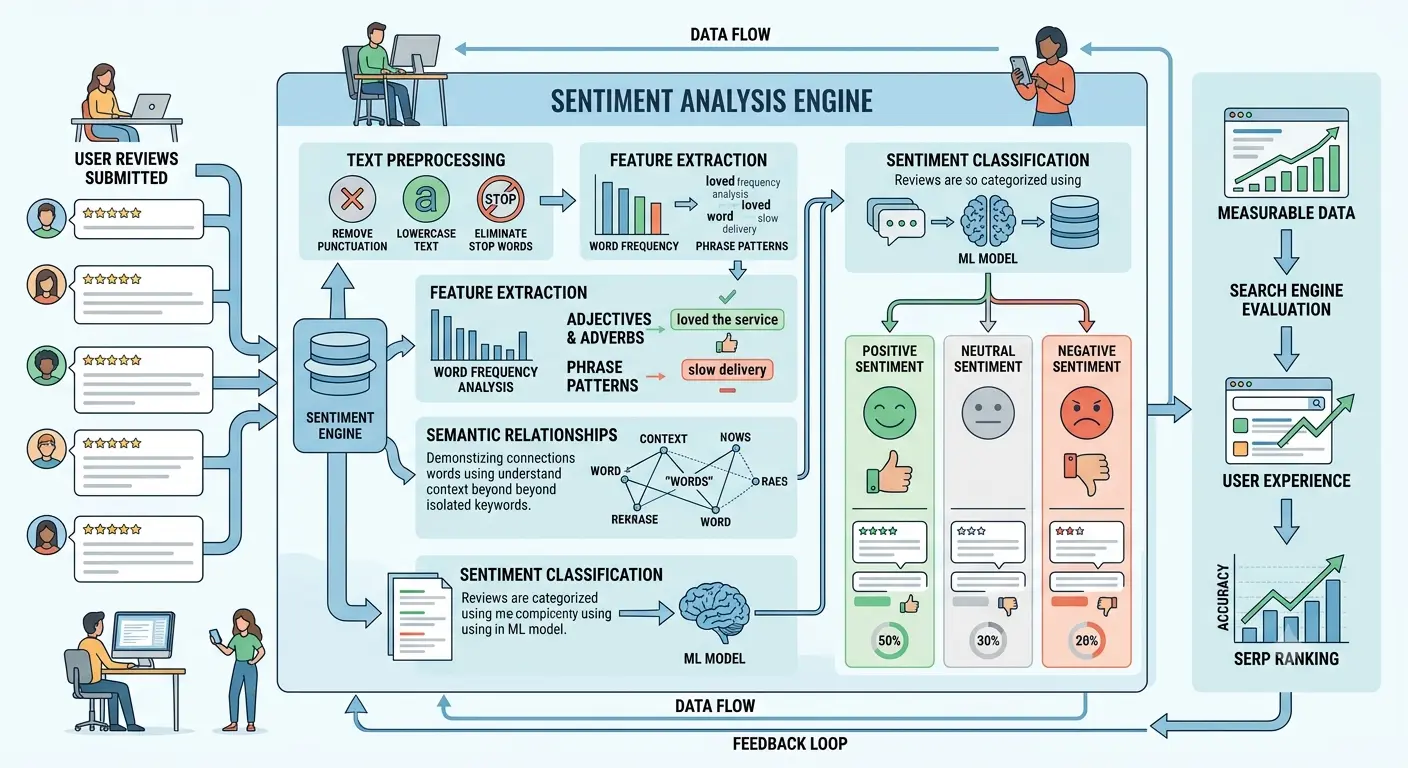
Why does Google compare information from multiple sources?
Google compares information from multiple sources because independent verification improves search accuracy and entity confidence. Reputation management refers to analysing these relationships to understand how credibility develops within search ecosystems. Information published on official websites provides one perspective, while external platforms contribute independent evidence supporting or challenging organisational claims. Algorithms evaluate these relationships to reduce uncertainty during ranking decisions. Multi-source comparison therefore improves SERP evaluation.

Search ecosystems operate by connecting entities across websites through structured information and authority references. Business listings, professional profiles, editorial publications, reviews, and directory citations all contribute contextual evidence. When consistent information appears across these sources, search engines strengthen confidence in entity credibility. Greater consistency also improves search visibility because algorithms recognise stronger verification patterns. Digital reputation therefore reflects interconnected evidence instead of isolated publications.
Content indexing continually updates these relationships as new material becomes available. Recently indexed reviews, revised business profiles, updated directory listings, and fresh editorial content all influence future evaluation. Search rankings remain dynamic because search engines continuously reassess information quality and authority. Reputation management analyses these evolving relationships to explain changes in digital perception over time.
How do review signals influence search visibility?
Review signals influence search visibility because they provide measurable indicators of public engagement and organisational credibility. Review signals refer to structured feedback that search engines interpret alongside authority, relevance, and information quality. Algorithms analyse review frequency, recency, consistency, and overall sentiment distribution when evaluating business entities. These factors contribute to broader entity perception instead of independently determining rankings. Search visibility therefore develops through the interaction of multiple reputation signals.
Review content also contributes semantic information describing services, expertise, responsiveness, and customer experiences. Search engines analyse this language to improve contextual understanding of recruitment agencies. Repeated references to consistent service characteristics strengthen topical relevance. Contradictory review themes create uncertainty during search evaluation. Reputation systems therefore consider linguistic consistency alongside quantitative review metrics.
Search engines balance review signals with authoritative content from official websites, trusted publications, professional organisations, and structured business information. This balanced evaluation reduces dependence on individual review sources while improving search reliability. Digital reputation emerges from the interaction of these multiple credibility indicators. Understanding this process explains why review management forms only one component of broader reputation analysis.
How do professional networks contribute to recruitment agency credibility?
Professional networks contribute to recruitment agency credibility because they establish verified organisational identity and strengthen entity relationships within search ecosystems. Platforms such as LinkedIn provide structured business information, employee associations, industry expertise, and professional activity that search engines can interpret as authority signals. These references improve entity perception by connecting an organisation with recognised professional communities. Search engines evaluate these relationships alongside other indexed content to create a broader understanding of organisational trust. Digital credibility therefore extends beyond customer reviews to include professional verification.
Professional profiles also reinforce information consistency through aligned company descriptions, locations, websites, and personnel details. Search algorithms compare this structured information with other indexed sources to verify organisational accuracy. Consistent business data strengthens confidence in entity identity, while conflicting information reduces algorithmic certainty. This verification process influences search visibility because reliable entities demonstrate stronger digital trust signals. Reputation management analyses these patterns to explain how professional platforms contribute to online credibility.
Dive Deeper With Our Expert Guides:
How Many Recruitment Agencies Operate in the UK in 2026? Market Statistics
How Do Recruitment Agencies Work in the UK? Fees, Contracts, and Process
Why do business directories remain important for reputation evaluation?
Business directories remain important because they provide structured organisational data that supports entity validation across search ecosystems. Directory listings contain business names, contact information, locations, websites, and industry classifications that search engines compare against other indexed sources. These references strengthen entity credibility when information remains consistent across multiple platforms. Search visibility benefits from accurate verification because algorithms rely on trustworthy organisational data. Directory authority therefore contributes to broader reputation evaluation.
Search engines continuously analyse citation consistency across trusted directories to identify reliable business entities. Accurate directory information supports stronger confidence in organisational legitimacy and improves contextual understanding. Inconsistent citations introduce uncertainty into entity perception and reduce confidence during SERP evaluation. Reputation management explains these relationships by analysing how structured business information contributes to digital trust. Business directories therefore function as supporting authority signals rather than isolated ranking factors.
How does content indexing shape recruitment agency reputation?
Content indexing shapes recruitment agency reputation because indexed information becomes available for search engine evaluation and public discovery. Content indexing refers to the process through which search engines discover, organise, and store digital information for future retrieval. Once indexed, webpages, reviews, directory entries, and editorial content contribute to search visibility and entity perception. Algorithms continuously reassess this information as new content becomes available. Reputation therefore evolves alongside ongoing indexing activity.
Indexed content creates interconnected relationships between organisational websites, external references, professional profiles, and review platforms. Search engines compare these relationships to evaluate authority, consistency, and relevance. Strong authority connections reinforce digital credibility, while fragmented or conflicting information weakens entity perception. Reputation management analyses these indexing relationships to explain why search visibility changes over time. Search ecosystems therefore remain dynamic rather than static.
How do authority signals influence recruitment agency reputation?
Authority signals influence recruitment agency reputation because they help search engines determine whether information originates from reliable and credible sources. Authority signals include editorial references, professional associations, recognised industry publications, verified organisational profiles, and established websites. Search algorithms evaluate these signals collectively rather than individually. Greater authority strengthens confidence in entity credibility and improves contextual understanding. Reputation evaluation therefore depends on relationships between authoritative sources.
Authority also develops through consistent publication of accurate information across trusted platforms. Search engines identify recurring references linking organisations with recognised expertise and professional relevance. These relationships strengthen entity perception by demonstrating established digital presence. Reputation management analyses authority development because authority influences both search visibility and online credibility. Search ecosystems reward organisations that maintain reliable information supported by recognised references.
Why does digital footprint influence candidate and client perception?
Digital footprint influences candidate and client perception because online information represents the most accessible source of organisational evaluation before direct interaction. A digital footprint refers to the collection of indexed content associated with an organisation across websites, review platforms, directories, professional profiles, and media publications. Search engines organise this information into visible search results that shape initial impressions. Entity perception therefore develops through accumulated digital evidence rather than personal experience alone. Reputation management examines these interconnected sources to explain how public perception forms online.
Search visibility determines which parts of the digital footprint receive the greatest exposure. Highly visible information contributes more significantly to reputation because users engage primarily with prominent search results. Content quality, authority relationships, and review sentiment collectively influence these visibility patterns. Search engines evaluate these factors continuously as digital information changes. Reputation therefore remains an evolving characteristic of search ecosystems.
Candidates and clients research recruitment agencies through interconnected review platforms, professional networks, directories, and search results because search engines evaluate multiple reputation signals simultaneously. Online reputation refers to the cumulative digital evidence that shapes entity perception, search visibility, and organisational credibility within search ecosystems. Review platforms, authority signals, content indexing, and structured organisational information all contribute to SERP evaluation. Search engines analyse these relationships continuously to improve the relevance and reliability of search results.
Understanding where recruitment agency reputation develops provides greater insight into how search engines interpret trust and authority. Reputation is not defined by one review platform or one website but by the interaction of consistent, credible, and authoritative digital information. Search visibility evolves as indexed content changes and authority relationships strengthen or weaken. Analysing these mechanisms explains how recruitment agency reputation forms across modern search ecosystems.
For readers seeking a deeper understanding of reputation monitoring methods, Recruitment Agency Online Reputation Monitoring expands on how reputation signals are measured and evaluated across digital platforms.
Where do candidates research recruitment agencies before applying for jobs?
Candidates commonly research recruitment agencies through Google Search, Google Business Profile, LinkedIn, Indeed, Glassdoor, Trustpilot, industry directories, and company websites. These sources provide reputation signals, reviews, and business information that influence search visibility and credibility.
Which review platforms matter most for recruitment agency reputation?
Google Business Profile, Trustpilot, Indeed, Glassdoor, LinkedIn, and recognised recruitment directories are among the most influential platforms. Search engines evaluate these sources alongside other authority signals to assess an agency’s online reputation and entity credibility.
How do Google search results influence recruitment agency credibility?
Google search results organise indexed content based on relevance, authority, and reputation signals. Candidates and clients often form their first impression from the information displayed in search results, making search visibility an important factor in reputation evaluation.
Why do clients compare recruitment agencies across multiple review websites?
Clients compare recruitment agencies across multiple review platforms to verify consistency in reviews, ratings, and business information. Comparing different sources helps build a more accurate understanding of an agency’s reputation and online credibility.
How do recruitment agencies monitor their online reputation across review platforms?
Recruitment agencies monitor their online reputation by tracking reviews, search visibility, business listings, and reputation signals across multiple platforms. This process helps identify changes in public perception and supports consistent digital credibility over time.