

Healthcare professionals need reputation monitoring because search engines continuously evaluate digital information that influences patient trust, professional credibility, and online visibility.
Reputation management is the process of analysing how search systems interpret reputation signals, while online reputation refers to the collective digital information that shapes public perception within search ecosystems.
Healthcare reputation is formed through indexed content, patient feedback, professional profiles, directory listings, news references, and authoritative healthcare information. Search engines evaluate these sources collectively to understand entity credibility and determine how healthcare professionals appear within Search Engine Results Pages (SERPs). Reputation monitoring provides continuous observation of these signals, allowing changes in online perception to be identified through objective analysis. Understanding this process explains why healthcare professionals require ongoing awareness of their digital footprint rather than relying solely on clinical expertise.
Why does reputation monitoring matter for healthcare professionals?
Reputation monitoring matters because healthcare decisions frequently begin with online research. Search engines evaluate reputation signals before presenting information to users, and patients often interpret those search results as indicators of professional reliability and expertise. Reputation monitoring refers to the continuous analysis of indexed information that contributes to digital trust. It provides a structured understanding of how online information evolves and influences search visibility.
Healthcare professionals generate extensive digital information through professional registrations, healthcare directories, hospital biographies, academic publications, review platforms, and media references. Search engines collect and organise these signals to construct an entity profile representing professional authority. Reputation monitoring analyses how these interconnected sources influence search evaluation. The objective is not to alter perception but to understand how digital information contributes to overall entity credibility.
Search algorithms continually reassess indexed content as new information becomes available. Fresh reviews, updated profiles, published research, and newly indexed webpages influence how reputation signals develop over time. Continuous monitoring identifies these changes and explains their relationship with search visibility. Without systematic evaluation, changes in digital representation remain difficult to detect until they become highly visible within search results.
Reputation monitoring also demonstrates how authority develops through information consistency. Search systems favour entities supported by accurate, relevant, and well-connected information. Monitoring allows professionals to evaluate whether their digital footprint maintains consistency across authoritative healthcare sources. Consistent information strengthens entity perception because search engines receive clearer evidence of identity and expertise.
Dive Deeper With Our Expert Guides:
Building Patient Confidence Through Online Reputation
How Negative Reviews Affect Medical Practices
How do search engines evaluate healthcare reputation?
Search engines evaluate healthcare reputation by analysing multiple layers of digital information instead of relying upon individual webpages. Reputation signals include professional credentials, patient-generated content, authoritative publications, structured data, healthcare directories, institutional references, and content indexing patterns. Algorithms combine these signals to develop an understanding of professional credibility within specific medical topics.
Entity perception refers to how search engines identify relationships between healthcare professionals, medical expertise, healthcare organisations, and relevant subjects. Consistent digital information strengthens these relationships because search systems detect stronger semantic connections between entities and topics. When authoritative sources consistently describe a healthcare professional using similar information, algorithms gain greater confidence in that entity’s identity.
Content indexing plays an important role in reputation evaluation because search engines can only assess information that has been discovered and organised. Indexed webpages become part of the available evidence supporting entity credibility. The visibility of professional achievements, publications, qualifications, and verified profiles depends upon successful content indexing across trusted sources.
Search engines also evaluate authority through contextual relationships rather than isolated keywords. Medical expertise becomes associated with healthcare professionals through recurring topical relevance, institutional references, and subject-specific publications. Reputation therefore develops from interconnected information rather than individual ranking factors. This explains why reputation monitoring focuses upon entire information ecosystems instead of isolated search positions.
What digital information contributes to healthcare reputation?
Healthcare reputation develops from numerous forms of publicly available information distributed across digital environments. Digital footprint refers to the collection of indexed information connected to an individual or professional entity. Search systems interpret these digital assets collectively when determining reputation signals and search visibility.
Important sources contributing to healthcare reputation include:
- Analyse professional profiles by evaluating registration information published on medical councils, healthcare providers, and institutional websites.
- Evaluate patient feedback by identifying review signals appearing across recognised healthcare review platforms.
- Interpret professional publications through indexed research articles, medical journals, conference participation, and educational resources.
- Assess directory listings by examining healthcare directories that contribute structured information supporting entity identification.
- Review media references through news articles, interviews, healthcare publications, and authoritative external citations.
Each information source contributes differently to entity perception. Professional registrations demonstrate verified identity, publications reinforce subject expertise, and review platforms provide publicly visible patient experience signals. Search engines evaluate these sources collectively rather than assigning significance to a single webpage. Reputation monitoring therefore requires comprehensive observation across multiple digital environments.
Healthcare professionals also develop reputation through associations with healthcare organisations, universities, research institutions, and recognised professional bodies. These contextual relationships contribute authority signals that support stronger entity credibility. Monitoring evaluates how these relationships appear across indexed information and whether they remain consistent over time.
How do patient reviews influence search visibility?
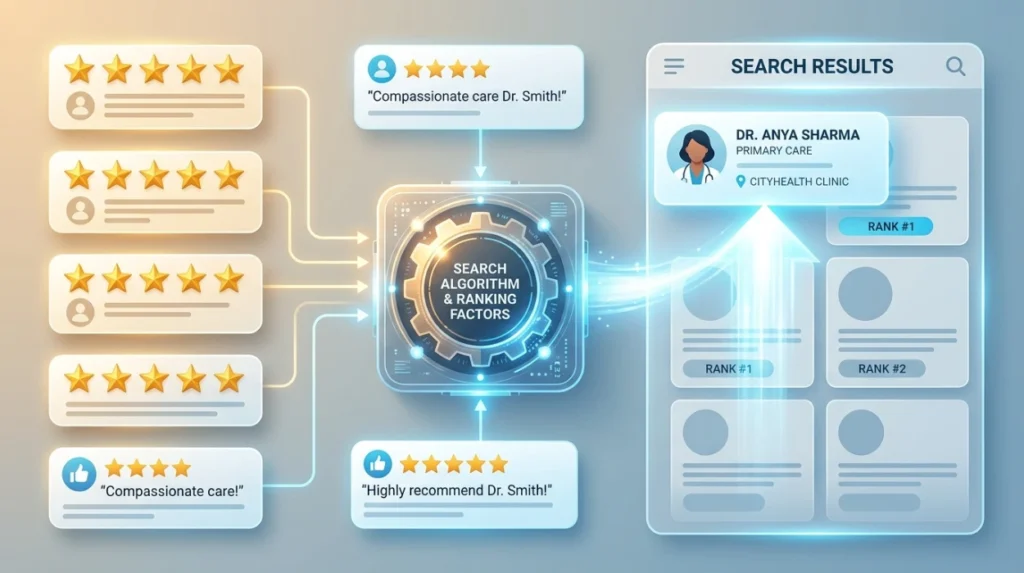
Patient reviews influence search visibility because they provide publicly available information that contributes to reputation signals. Reviews represent user-generated content that search systems evaluate alongside professional information when understanding public perception. Although reviews alone do not define reputation, they contribute valuable contextual evidence regarding patient engagement and service experience.
Review signals influence search evaluation through consistency, frequency, relevance, and contextual association. Search engines identify recurring patterns within review content rather than isolated opinions. Consistent review activity demonstrates ongoing engagement between healthcare professionals and patients, contributing additional information supporting entity evaluation.
Patient reviews also influence digital trust because prospective patients frequently compare publicly available feedback before selecting healthcare providers. Search engines recognise this user behaviour and incorporate reputation-related information into broader search evaluation processes. This interaction between user behaviour and indexed review content strengthens the relationship between reputation monitoring and search visibility.
Reputation monitoring examines review signals objectively rather than emotionally. The purpose is to identify patterns, evaluate emerging reputation trends, and understand how review content contributes to overall entity perception. Understanding How Doctors Can Build a Five-Star Online Reputation provides additional context regarding the relationship between patient feedback, reputation signals, authority development, and long-term search visibility.
How does content indexing affect professional credibility?
Content indexing affects professional credibility because search engines evaluate only the information they have successfully discovered, processed, and stored. Indexed content becomes part of the evidence used to assess entity perception, authority, and search visibility. Reputation monitoring analyses which professional assets are indexed and how they contribute to the overall digital footprint.
Healthcare professionals often publish information across hospital websites, academic institutions, professional associations, medical journals, and educational resources. When this information is indexed consistently, search systems establish stronger semantic relationships between the individual, their expertise, and relevant healthcare topics. These relationships reinforce entity credibility because algorithms recognise recurring evidence across authoritative sources.
Indexing also influences how search engines compare competing sources about the same professional. Accurate and authoritative content strengthens reputation signals by providing consistent factual references. Reputation monitoring evaluates whether important professional information remains visible within search ecosystems and whether outdated or incomplete content creates inconsistencies in entity evaluation.
Professional credibility therefore develops through the interaction between indexed information, topical relevance, and authoritative references. Monitoring this process provides a structured understanding of how search visibility evolves as new information enters the search ecosystem.
Why is digital footprint consistency important for healthcare professionals?
Digital footprint consistency is important because search engines compare information across multiple sources when evaluating entity identity. Consistent professional information reduces ambiguity and strengthens confidence in search evaluation. Reputation monitoring measures these relationships by analysing how accurately information is represented across digital platforms.
Healthcare professionals often appear in numerous online environments, including healthcare directories, licensing authorities, hospital biographies, research publications, conference websites, and educational platforms. Search systems evaluate whether these sources present consistent details relating to qualifications, specialties, professional affiliations, and career history. Consistency supports stronger entity perception because algorithms identify fewer conflicting signals.
Inconsistent information creates fragmented reputation signals that reduce clarity within search ecosystems. Differences in professional titles, outdated employment information, incomplete biographies, or conflicting contact details weaken semantic relationships between authoritative sources. Reputation monitoring identifies these inconsistencies through continuous observation of indexed information rather than isolated website reviews.
Consistency also improves the interpretation of authority because search engines connect similar information across trusted domains. A coherent digital footprint strengthens the understanding of professional expertise and contributes to more reliable search visibility over time.
How do reputation signals shape patient perception?
Reputation signals shape patient perception because search results influence how individuals evaluate healthcare professionals before direct interaction. Patients frequently interpret visible online information as evidence of competence, trustworthiness, and professional expertise. Search engines organise this information according to relevance, authority, and contextual relationships.
Reputation signals include verified professional profiles, healthcare directory listings, academic publications, review content, media references, and institutional affiliations. Together, these elements create a broader representation of professional identity within search ecosystems. Search visibility therefore reflects the collective interpretation of interconnected digital information rather than isolated webpages.
Search systems continually reassess reputation signals as new information becomes available. Updated professional achievements, revised biographies, recently indexed publications, and evolving patient feedback contribute to ongoing entity evaluation. Reputation monitoring explains these developments by identifying how digital information changes over time and how those changes influence public perception.
Patient perception ultimately reflects both the quality of available information and the way search algorithms organise that information. Monitoring provides objective insight into this process by evaluating the reputation signals contributing to digital trust.
Healthcare reputation monitoring is the systematic evaluation of digital information that influences search visibility, entity perception, and professional credibility. Search engines interpret indexed content, reputation signals, authority relationships, and content consistency to understand how healthcare professionals appear within Search Engine Results Pages.
Professional reputation develops through interconnected information rather than individual webpages or isolated reviews. Patient feedback, authoritative publications, healthcare directories, institutional references, and structured professional profiles collectively contribute to search evaluation and digital trust. Reputation monitoring analyses these relationships to explain how online credibility evolves within search ecosystems.
Understanding reputation systems provides healthcare professionals with greater awareness of how search engines organise, interpret, and present professional information. Continuous evaluation of reputation signals, content indexing, entity credibility, and digital footprint consistency offers a clearer understanding of the mechanisms that influence online perception and long-term search visibility.

Why do healthcare professionals need reputation monitoring?
Reputation monitoring helps healthcare professionals understand how search engines evaluate their online presence using reputation signals, patient reviews, and authoritative content. It supports search visibility by identifying changes that influence digital trust and professional credibility.
How does online reputation affect patients’ choice of a doctor?
Patients often review search results before choosing a healthcare provider, making online reputation an important factor in decision-making. Search engines display professional profiles, reviews, and other indexed content that collectively shape public perception and trust.
What information influences a doctor’s online reputation?
A doctor’s online reputation is influenced by patient reviews, medical directory listings, hospital profiles, professional registrations, research publications, and media mentions. Search engines evaluate these reputation signals together to determine entity credibility and search visibility.
Can reputation monitoring improve search visibility for healthcare professionals?
Reputation monitoring does not directly change rankings, but it helps identify reputation signals and indexed content that influence search visibility. Understanding these factors supports informed decisions about maintaining accurate and authoritative online information. Clear My Name discusses these principles as part of broader reputation management for doctors resources.
How often should healthcare professionals monitor their online reputation?
Online reputation should be monitored regularly because search results, reviews, and indexed content change over time. Continuous monitoring helps healthcare professionals identify new reputation signals, maintain digital consistency, and understand how search perception evolves.