

Reputation management is the process of understanding how information shapes the perceived credibility of a person or entity across digital environments. Touring incidents become persistent search results when indexed content accumulates relevance, authority, and continued visibility around an identifiable musician.
Online reputation refers to the information, associations, and credibility signals that search engines and audiences connect with a person across the digital footprint. For musicians, touring-related incidents become part of this footprint through news coverage, public statements, social media discussions, reviews, and repeated references across independent websites.
Why Do Touring Incidents Remain Visible in Search Results?
Touring incidents remain visible because search engines preserve and rank accessible content according to relevance, quality, authority, and other ranking signals rather than the current importance of an event alone. An incident involving a musician enters the search ecosystem when a publisher creates a report, a platform distributes the information, and a search engine discovers and indexes the relevant page. The content then competes for visibility against other documents associated with the musician’s name, tour, performance, or professional activity. Continued searches, references from other websites, and the authority of the original publisher contribute to the information environment surrounding the incident. Consequently, an event that has ended physically remains discoverable digitally because its published records continue to exist.
Search visibility is distinct from the continuing accuracy or significance of a story. An indexed article does not necessarily represent the musician’s current professional conduct, and a high-ranking result does not establish that its claims are complete or independently verified. Search engines evaluate documents against queries and ranking systems; they do not provide a definitive judgement of a person’s overall character. The persistence of a touring incident therefore reflects the interaction between content availability, query relevance, and ranking signals. Understanding this distinction separates technical visibility from the broader question of professional reputation.
How Does a Touring Incident Become Part of a Musician’s Digital Footprint?
A touring incident becomes part of a musician’s digital footprint when information about the event is published, indexed, linked, or repeatedly associated with the musician’s identifiable online presence. A digital footprint is the collection of accessible information and activity connected to a person or entity across digital platforms. In the music industry, this footprint includes artist biographies, event listings, interviews, concert reviews, news reports, social profiles, and public statements. Incident-related material enters the same information environment as career achievements, releases, collaborations, and performance records. Search engines then organise eligible documents in response to queries that connect these subjects.
Entity association is the mechanism that connects individual documents to a recognisable musician. Search engines use names, contextual references, structured information, links, and other signals to interpret relationships between people, events, organisations, and publications. When a touring incident repeatedly appears alongside an artist’s name, the event becomes easier to retrieve through relevant searches. This association does not mean the search engine adopts every claim as fact; it means the content has become relevant to the identifiable entity and particular queries. The resulting digital footprint reflects the material available online, not a complete record of the musician’s professional identity.
How Do Search Engines Evaluate Touring-Related Content?
Search engines evaluate touring-related content through automated systems that discover pages, analyse their contents, maintain searchable indexes, and determine their relevance to individual queries. Content indexing is the process through which a search engine processes eligible information and stores representations of documents for retrieval. Ranking systems subsequently assess which indexed pages best satisfy a searcher’s query, drawing on relevance, quality, usability, authority-related signals, and other factors. A touring incident report can rank prominently when its wording, subject, publication context, and supporting references align closely with the search query. The position of the report remains query-dependent and changes as the search environment evolves.
SERP evaluation refers to analysing the search engine results page (SERP) to understand which content types dominate a particular query and what information they communicate. A musician’s name search can return official websites, streaming profiles, news articles, interviews, concert reviews, social accounts, and incident-related reporting. The composition of these results determines which information receives the most immediate attention. A single report appearing prominently in the first results attracts more initial visibility than a similar document buried on a later page. However, ranking position alone does not establish the report’s accuracy, completeness, or importance to the musician’s current career.
Why Do News Reports and Social Media Posts Reinforce an Incident’s Visibility?
News reports and social media posts reinforce an incident’s visibility by extending the number of accessible references, discussions, and discovery pathways associated with the event. A publisher can establish an initial account, while other websites discuss the same incident through commentary, interviews, summaries, or follow-up reporting. Social platforms distribute posts through feeds, search functions, recommendations, and user sharing, creating additional opportunities for discovery. Some of these discussions become independently searchable, while others influence attention without appearing as separate conventional search results. The combined information environment makes the incident easier to encounter across different digital channels.
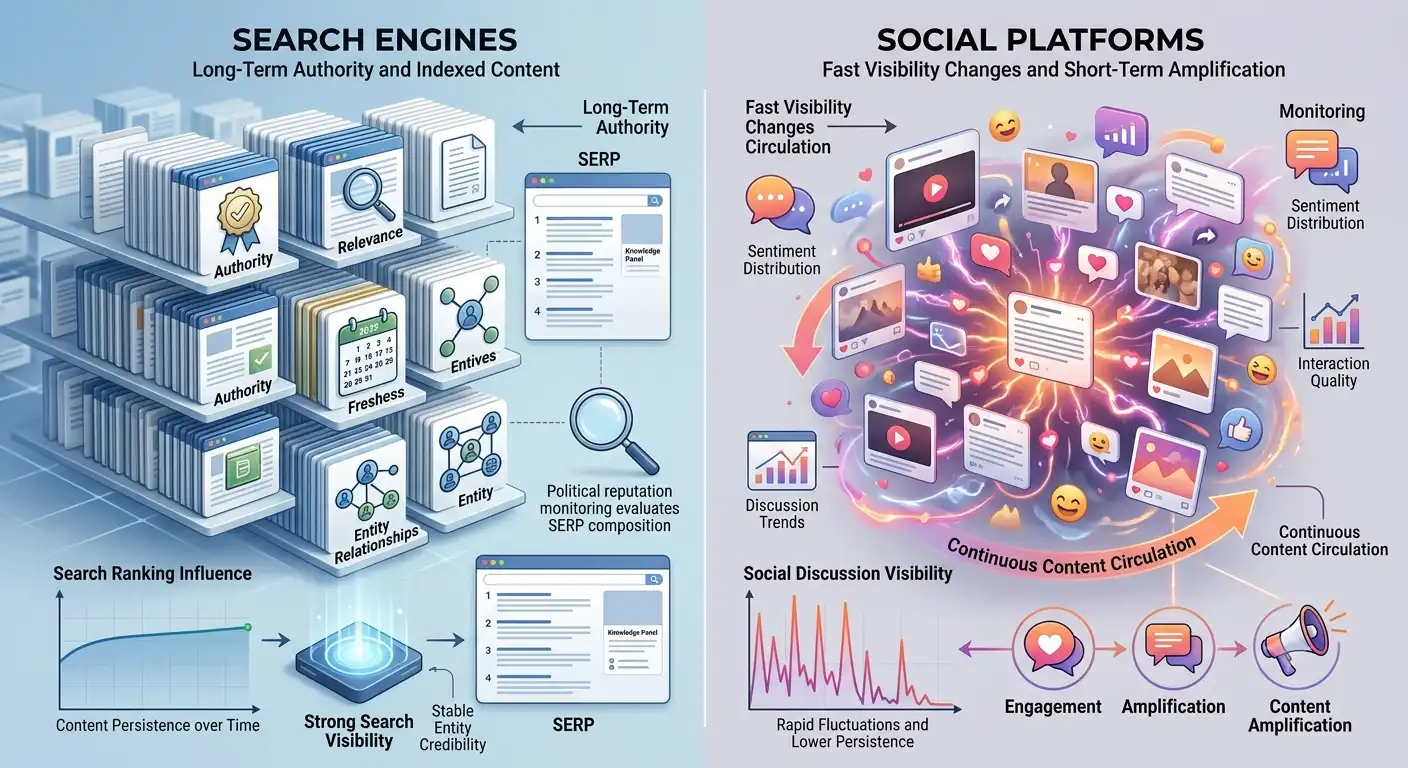
Publication volume and source independence are important distinctions when evaluating the strength of an online narrative. Ten articles repeating the same original report do not necessarily provide ten independent confirmations of its claims. Syndicated coverage, copied headlines, and derivative commentary can increase the incident’s digital presence while relying on a single underlying source. Search engines process individual documents and their relationships, but document repetition does not automatically establish factual accuracy. Analysing source provenance, original reporting, publication dates, and corroborating evidence provides a more reliable understanding of the information landscape than counting mentions alone.
How Do Authority and Trust Signals Affect Incident-Related Rankings?
Authority and trust signals influence how search systems assess the usefulness and credibility of content, although no single signal guarantees a particular ranking position. Search engines evaluate page-level and site-level characteristics through complex systems designed to return relevant and useful information. Established news organisations often possess substantial editorial infrastructure, recognised publication histories, and external references that contribute to their visibility. A report published by an established outlet therefore competes within a different information environment from an unverified post on a newly created website. This difference concerns the content’s publishing context and search performance rather than an automatic determination that every statement in the report is correct.
Credibility is also distinct from popularity. A post receiving extensive engagement demonstrates audience attention, but engagement alone does not verify its claims or establish the authority of its source. Search engines use different systems for different content types, and social platform engagement does not translate directly into a universal ranking advantage across conventional search results. Relevant evidence, clear sourcing, editorial standards, and consistent contextual information help readers evaluate the reliability of incident-related material. These distinctions are essential when assessing whether a touring incident’s visibility reflects established reporting, widespread repetition, or unverified commentary.
How Does Sentiment Interpretation Shape a Musician’s Online Reputation?
Sentiment interpretation concerns the positive, negative, or neutral attitudes expressed in content associated with a musician, event, or professional activity. Reviews, comments, interviews, and news reports communicate different forms of sentiment, from criticism of a specific performance to broader judgements about conduct or reliability. Search results expose users to these expressions through headlines, snippets, review summaries, and page descriptions. When negative material appears prominently for a musician’s name, users encounter adverse associations before reviewing the wider body of professional information. This creates a difference between the musician’s complete career record and the limited representation presented by a particular search query.
Search systems do not reduce every document to a single universal sentiment score that determines its position. Ranking depends on the query, document relevance, content characteristics, and other signals, while sentiment analysis tools used by publishers or researchers apply their own classification methods. A critical concert review, for example, concerns artistic evaluation, whereas a report about an alleged incident concerns a different subject and evidential context. Treating both as equivalent negative reputation signals obscures the purpose and reliability of each document. Accurate reputation analysis therefore distinguishes sentiment, subject matter, factual support, and search visibility instead of interpreting all negative content as the same type of reputational risk.
Dive Deeper With Our Expert Guides:
How AI Music Controversies Affect Human Artists’ Reputations
Why Merch and Crowdfunding Complaints Go Viral
Why Can an Old Touring Incident Outrank Recent Career Achievements?
An old touring incident can outrank recent career achievements when its associated pages remain more relevant or competitive for a particular query than newer material. Publication age is only one aspect of a document’s context, and a newer page does not automatically replace an older result. An established news report can retain references, query relevance, and historical significance after the event has ended. By contrast, a new release announcement or recent performance listing may target a narrower query or receive less external attention. Search results therefore reflect the competitive strength of individual documents rather than a chronological timeline of a musician’s career.
Content freshness is query-dependent. Recent information matters for subjects where users expect current details, such as tour dates, release schedules, or breaking news. Historical reporting remains relevant for queries about a past incident, particularly when the incident continues to attract discussion or forms part of a broader news record. A musician’s new professional achievements do not automatically change the relevance of an older article to a query about that event. The relationship between query intent and document relevance explains why search visibility can preserve historical material alongside current career information.
How Does Search Intent Influence the Results for a Touring Incident?
Search intent is the purpose behind a user’s query, and it influences which documents a search engine considers relevant. A query about a musician’s current tour prioritises different information from a query asking about a past backstage dispute or a reported performance incident. Searches using the artist’s name alone can produce a broad mixture of official, editorial, commercial, and discussion-based results. Adding incident-specific language narrows the subject and increases the relevance of documents that address that event. The same page can therefore rank differently across queries because each search expresses a different information need.
Query wording also influences the context in which a touring incident appears. Neutral wording can return official announcements and general reporting, while a query containing an allegation or controversy-related term directs attention towards documents addressing that subject. Autocomplete suggestions and related searches provide additional indications of how users explore a topic, although they do not establish the truth of any claim. The visible result set reflects the relationship between user language and available indexed content. Analysing these relationships helps explain how an incident becomes associated with a musician’s name across distinct search journeys.
How Can the Search Legacy of a Touring Incident Be Analysed?
The search legacy of a touring incident is the continuing body of indexed content, entity associations, and public references connected to an event after its immediate news cycle ends. Analysing this legacy requires separating the original incident, subsequent reporting, derivative commentary, and unrelated material that shares similar names or terminology. Publication dates establish the sequence of coverage, while source attribution reveals whether later documents provide independent evidence or repeat earlier claims. Search-result positions indicate visibility for specific queries, and changes in result composition reveal how the information environment develops. These measures provide a structured account of the incident’s digital persistence without assuming that visibility equals accuracy.
A useful analysis also distinguishes the existence of content from its accessibility and prominence. A page can remain published but receive little search visibility, while a highly visible result can direct users towards a narrow interpretation of a complex event. Archived copies, updated articles, publisher corrections, and subsequent statements contribute different forms of historical context. Reviewing these elements clarifies what information remains available, how sources relate to one another, and which queries surface particular narratives. This approach establishes a factual basis for understanding Managing the Search Legacy of a Touring Incident as a distinct topic within musician reputation analysis.
What Does the Long-Term Visibility of Touring Incidents Reveal About Online Reputation?
The long-term visibility of touring incidents demonstrates that online reputation develops through the interaction of published information, search engine indexing, ranking dynamics, and audience interpretation. A completed event can remain digitally accessible because its records continue to answer relevant queries and maintain associations with an identifiable musician. Publisher authority, source repetition, sentiment, and query intent influence how users encounter this information, but none independently establishes the complete truth or significance of an incident. Search visibility describes the discoverability of content, while reputation describes the broader set of perceptions formed from that content and other available evidence. Keeping these concepts separate produces a more accurate interpretation of digital credibility.
A musician’s search reputation is therefore a dynamic representation of the information ecosystem rather than a definitive assessment of professional identity. Touring reports coexist with official career information, reviews, interviews, releases, and later developments, creating a body of material that varies according to query and ranking conditions. Understanding content provenance, entity association, indexing, authority, and sentiment explains why historical incidents remain discoverable after their immediate relevance declines. These mechanisms also demonstrate why search results must be interpreted in context instead of treated as a complete or permanent verdict on a person’s career.
Why do touring incidents stay in Google search results for years?
Touring incidents remain visible because news articles, social media posts, and public statements can stay indexed long after an event ends. Their continued relevance, source authority, and connection to a musician’s name influence their search visibility.
How do touring incidents affect a musician’s online reputation?
Touring incidents can influence a musician’s online reputation by associating their name with negative headlines, critical commentary, or public allegations. When this content ranks prominently, it can shape audience perceptions before users explore the artist’s wider career.
Can old touring incidents appear above a musician’s recent achievements?
Yes, historical incident reports can rank above recent releases, interviews, or performance announcements when they better match a search query or have stronger ranking signals. Search engines do not automatically prioritise newer content over older, relevant pages.
How does online reputation management for musicians address touring incidents?
Online reputation management for musicians involves analysing search results, evaluating the accuracy of published information, and understanding how incident-related content affects search visibility. Clear My Name provides a relevant service category for examining these reputation concerns, while the available options depend on the content, its source, and applicable platform policies.
Can a musician remove a touring incident from Google search results?
Removal depends on the content’s nature, its source, and whether it meets Google’s removal policies or applicable legal requirements. When content does not qualify for removal, accurate updates, relevant professional information, and a broader digital footprint can help provide additional context in search results.