

Online reputation refers to the collective digital footprint, algorithmically generated data points, and public perceptions that define an entity within internet-mediated environments. In search ecosystems, personal brand reputation is the algorithmic synthesis of content indexing, entity extraction, and sentiment analysis that determines how a human individual is represented on search engine results pages (SERPs).
What Is Personal Brand Reputation within Search Ecosystems?
Personal brand reputation defines an individual’s algorithmic identity, established through the compilation of machine-readable data, digital mentions, and indexable assets. Search engines utilize natural language processing (NLP) to parse web documents, extracting specific attributes that connect an individual to distinct industries, topics, and organizations. This process transforms an unstructured human identity into a structured entity within a knowledge graph, which serves as a centralized database of verified real-world objects and concepts. Consequently, a personal brand is no longer merely a subjective public perception; it operates as a distinct data structure evaluated for accuracy, consistency, and authority.
The mechanism governing this digital identity relies heavily on semantic distance, which measures the conceptual proximity between an individual’s name and relevant industry-specific keywords. When high-authority publications continuously associate an individual with a specific field of expertise, search engine algorithms lower the semantic distance between that person and the subject matter. This structural connection ensures that the individual appears prominently for categorical queries within their sector. Conversely, a lack of structured data, conflicting professional histories across platforms, or unindexed achievements prevent algorithms from verifying the entity, resulting in lower search visibility and fragmented SERP performance.
Search visibility directly correlates with the perceived structural integrity of this digital footprint. Algorithms prioritize entities that exhibit clear, unambiguous relationships with other verified nodes in the knowledge graph, such as established corporate entities, academic institutions, or recognized media outlets. If an individual lacks a unified digital profile, search engines struggle to execute disambiguation—the process of distinguishing between two or more entities sharing identical or similar names. Proper entity disambiguation requires a consistent stream of authoritative inputs that validate the professional focus, geographic location, and verified outputs of the specific individual.
How Do Algorithms Interpret Trust and Credibility for Individuals?
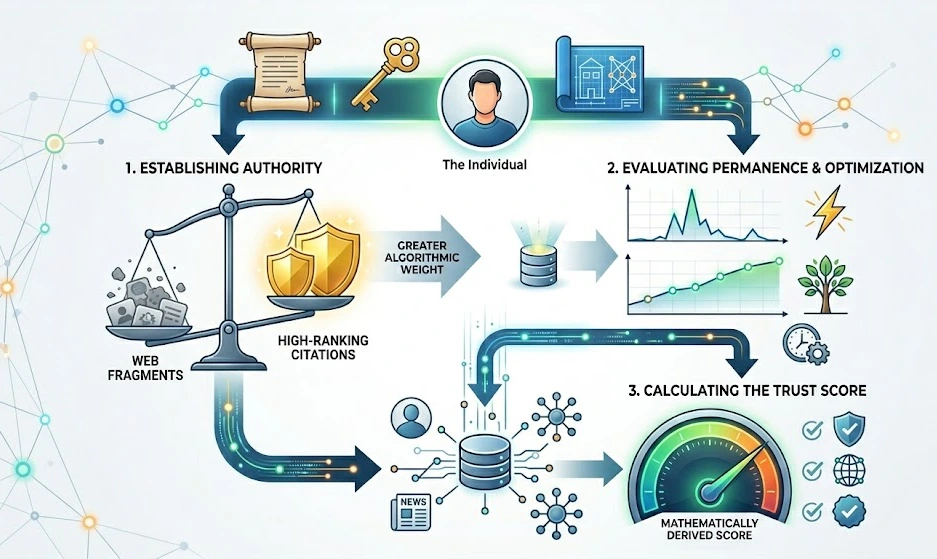
Algorithms interpret trust and credibility by evaluating the historical consistency, source authority, and structural verification of information associated with an individual. Search engines rely on explicit frameworks, such as Experience, Expertise, Authoritativeness, and Trustworthiness (E-E-A-T), to systematically quantify the reliability of content creators and public figures. This evaluation process moves beyond basic keyword matching to assess the overall integrity of the digital ecosystem surrounding an entity. Trust functions as a mathematically derived score based on the cumulative authority of the domains that host information about the individual.
The primary mechanism for establishing algorithmic trust involves the analysis of inbound links and citations from established, high-ranking domains. When an individual receives mentions, attributions, or backlinks from recognized news organisations, government databases, or peer-reviewed journals, these actions serve as digital endorsements. Search engines calculate the PageRank and topical authority of the referring domains to determine the weight of the citation. A single citation from a highly trusted, historically verified domain carries substantially more algorithmic weight than hundreds of low-quality mentions on unmoderated forums or self-published blogs.
Furthermore, algorithms evaluate the permanence and structural optimization of these trust signals over prolonged periods. Temporary surges in digital mentions, often caused by viral social media events, do not automatically translate into long-term algorithmic authority. Search engines look for sustained relevance, regular content indexing updates, and consistent biographical structured data across independent platforms. This comprehensive cross-referencing ensures that the entity maintains a stable, verifiable presence, minimizing the risk of algorithmic manipulation or temporary perception distortion.
Why Do Search Engine Results Pages Dictate Public Perception?
Search engine results pages dictate public perception because they serve as the primary, unedited interface through which information consumers validate the legitimacy of an entity. Modern search architectures utilize diverse SERP features, including Knowledge Panels, People Also Ask (PAA) boxes, top stories, and video carousels, to synthesize an immediate narrative about an individual. Because users inherently assign objectivity to algorithmic rankings, the composition of the first page of results establishes a definitive framework for how that individual is perceived. The ordering of these elements creates a cognitive hierarchy, where the highest-ranking assets receive the highest allocation of user trust and attention.
The mechanism driving this perception control is the layout of the SERP itself, which prioritizes condensed, easily digestible data fragments over deep research. Knowledge Panels, which appear prominently on desktop and mobile interfaces, extract factual data directly from trusted repositories like Wikipedia, Wikidata, and official corporate structures. When an individual possesses a fully populated Knowledge Panel, it signifies a high level of algorithmic verification, which immediately projects authority to the viewer. Conversely, a SERP dominated by unverified forum posts, outdated employment records, or negative third-party commentary communicates a fragmented or compromised professional identity.
SERP evaluation also depends heavily on user engagement signals, such as click-through rates (CTR) and search refinement patterns. If users frequently click on a specific negative or controversial result after searching for an individual’s name, search engines may interpret that document as highly relevant to the query. This behavioral feedback loop stabilizes the position of that specific piece of content within the rankings, making it a permanent fixture of the individual’s digital presentation. Consequently, the structural composition of a SERP operates as an automated reflection of public interest and machine calculation.
How Does Content Indexing Shape Digital Footprints?
Content indexing shapes digital footprints by determining which historical and contemporary documents are actively preserved within a search engine’s database for retrieval during a query execution. The indexing process involves automated web crawlers systematically discovering, parsing, and storing text, metadata, and structural code from across the internet. If a piece of information—whether an academic paper, a corporate announcement, or a legal filing—is not indexed, it remains functionally invisible within the digital ecosystem. Therefore, the architectural control of what enters the index dictates the baseline components available to form an online reputation.
The technical mechanism of content indexing relies on assessing document quality, canonicalization, and technical crawlability. Search engines filter out duplicate content, low-value pages, and documents with conflicting metadata to optimize index storage and processing efficiency. For individuals, this means that self-published profiles on low-authority directories often fail to index, leaving their digital footprint vulnerable to domination by higher-authority third-party sites. The structure of the indexed document, particularly the use of Schema markup (such as Schema.org/Person), explicitly guides the crawler to understand the precise relationships between the individual and their works.
Indexed content remains subject to ongoing evaluation through freshness algorithms and historical weight calculations. Older, deeply embedded documents with established backlink profiles possess high algorithmic inertia, meaning they resist displacement by newer, unoptimized content. This structural permanence requires a deliberate, strategic approach to content publishing, ensuring that positive, accurate, and authoritatively structured documents are indexed consistently to maintain a balanced, accurate digital footprint over time.
How Do Review Signals and Sentiment Interpretation Affect Entity Reputation?
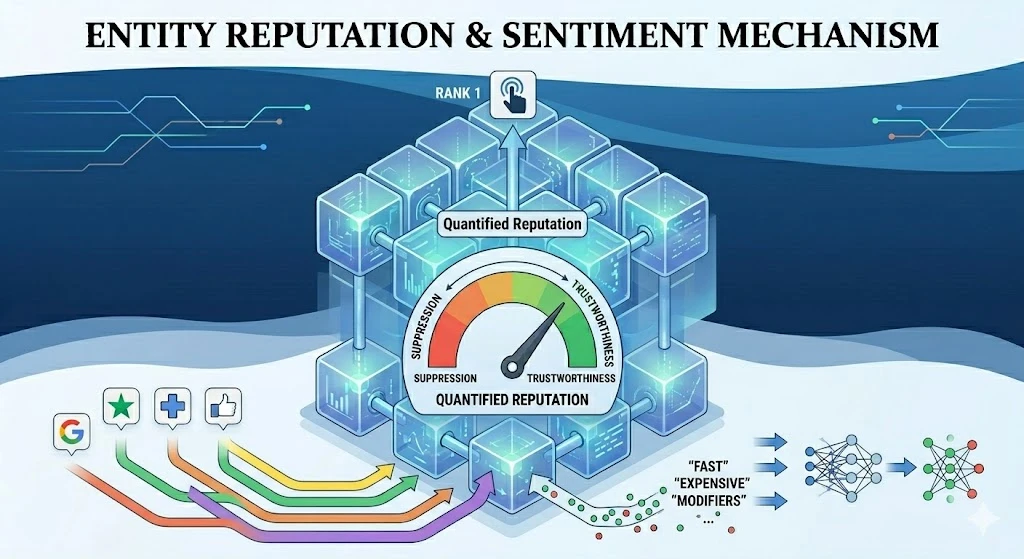
Review signals and sentiment interpretation affect entity reputation by introducing quantified consumer feedback and automated tonal analysis into the algorithmic evaluation of an individual’s profile. Search engines deploy advanced sentiment classification models, utilizing deep learning architectures to categorize online text as positive, negative, or neutral. This analysis extends beyond dedicated review platforms to encapsulate editorial content, social discussions, and public forums where an individual’s name appears. The resulting sentiment score integrates into the broader entity assessment, altering how the search engine calculates overall trustworthiness.
The mechanism of sentiment interpretation involves parsing sentences for specific modifiers, adjectives, and contextual phrases that denote satisfaction or criticism. For professionals operating within consumer-facing or advisory sectors, aggregated review scores from platforms like Trustpilot, Google Business Profiles, and industry-specific portals generate rich snippet stars directly on the SERP. These visual markers dramatically influence user click behavior and entity perception before a single web page is opened. A high density of negative review signals, combined with adverse sentiment extraction from news text, triggers algorithmic suppression in non-branded informational queries.
Furthermore, algorithms are designed to evaluate the velocity, distribution, and authenticity of review signals to detect artificial manipulation. Sudden influxes of highly polarized reviews often indicate coordinated perception attacks or unnatural promotion, prompting search engines to filter or disregard those signals entirely. Genuine, long-term sentiment distribution across diverse, independent platforms signals to the algorithm that the entity possesses an authentic, stable reputation within their operational market.
What are the Strategic Frameworks for Search Perception Control?
Strategic frameworks for search perception control rely on the systematic optimization of owned, earned, and shared digital assets to align algorithmic outputs with the intended professional identity of an entity. This discipline requires a thorough understanding of information retrieval systems, reverse-engineering SERP layouts, and addressing structural vulnerabilities that expose professionals to digital distortions. By deploying advanced technical optimization alongside strategic content asset creation, individuals can influence how search engines compile, categorize, and display their entity data.
Implementing this control framework involves several precise methodologies executed across independent digital channels:
- Construct verified entity nodes by deploying comprehensive, self-hosted web properties optimized with explicit
Personmicrodata schemas. This structural foundation defines the individual’s core attributes, professional relationships, and official digital touchpoints directly to search engine crawlers. - Diversify asset distribution by securing high-authority profiles on major professional networks, academic databases, and industry-specific registries. This execution ensures that the first page of the SERP is populated by controlled, highly stable domains that naturally resist displacement from unverified sources.
- Cultivate authoritative citation networks through the acquisition of editorial mentions and interviews in top-tier, topically relevant industry publications. This mechanism transfers domain authority and trust directly to the individual’s entity node within the search knowledge graph.
- Monitor query refinement patterns to identify shifts in user intent and address the hidden reputation risks professionals often miss during standard algorithmic evaluations. This continuous analysis allows for proactive content deployment that matches emerging secondary search phrases before negative sentiment can occupy those spaces.
Personal brand reputation within modern search ecosystems is a strictly quantifiable data structure governed by entity verification, algorithmic trust metrics, and semantic content parsing. Public perception is no longer formed merely through interpersonal interactions; it is heavily dictated by the automated synthesis of data displayed on search engine results pages. By understanding the underlying mechanisms of content indexing, sentiment analysis, and structural schema application, individuals can proactively manage their digital footprints. Maintaining a consistent, authoritative, and algorithmically verified online presence ensures that search engines interpret, rank, and present an individual’s identity with maximum accuracy and credibility.
Frequently Asked Questions
Why is a personal brand reputation important for professionals?
A professional personal brand reputation directly dictates search visibility and career progression in digital ecosystems. Search engine algorithms synthesize an individual’s digital footprint to calculate authoritative trust signals, which stakeholders use to verify credibility. A positive digital representation ensures that search engine results pages (SERPs) reflect an accurate, high-authority professional identity.
How do search engines evaluate online reputation management?
Search engines evaluate reputation management by extracting entities and assessing cross-platform content indexing consistency. Algorithms parse web documents using natural language processing (NLP) to measure sentiment interpretation and domain authority from inbound citations. This structured data analysis determines the trust score and stability of an individual’s node within the search knowledge graph.
What are the main digital risks to a professional reputation?
The main digital risks include fragmented digital profiles, unverified third-party content indexing, and negative sentiment interpretation on public forums. Without proactive entity disambiguation, search engine results pages can surface outdated or inaccurate records that misrepresent professional capabilities. These algorithmic vulnerabilities allow unauthorized data points or negative review signals to dominate branded search queries.
Can a personal reputation management service improve Google search results?
A dedicated reputation management service optimizes an entity’s digital footprint to align search results with their intended professional identity. Companies like Clear My Name employ structural frameworks that deploy optimized schema markup and cultivate authoritative citation networks across high-ranking domains. This technical process aids algorithmic verification, helping controlled, positive assets systematically displace unverified or negative content on the SERP.
How does sentiment analysis affect personal brand reputation on SERPs?
Sentiment analysis utilizes advanced deep learning architectures to evaluate text modifiers and classify online mentions as positive, negative, or neutral. Search engines aggregate these review signals and textual sentiments to modify an entity’s overall credibility and trust score. Persistent negative sentiment signals can suppress search visibility for non-branded informational queries while altering user perception.