

Online reputation control methods are evaluated through the precision of their sentiment tracking and their alignment with programmatic search evaluation frameworks. Selecting a business reputation monitoring methodology requires balancing structured feedback loops against the algorithmic weights assigned to specific third-party domains. This evaluation analyses how different review aggregation systems influence algorithmic entity understanding, trust signals, and brand perception within the UK digital ecosystem.
Which Core Methodologies Govern Business Reputation Monitoring?
Reputation management strategies differ based on the architecture of the data collection platform and its relationship with search engine crawl budgets. Business reputation monitoring splits into two primary operational models: open-access aggregation platforms and closed, verified-transaction networks. The choice between these models dictates how an organisation manages its sentiment distribution and mitigates digital risk.
Open-access aggregation platforms allow any user to submit a performance rating without proof of a commercial relationship. This approach operates by indexing a high volume of user-generated content, which expands the digital footprint of an entity but increases vulnerability to unverified negative sentiment. The mechanism relies on public crowd-sourcing, which search engines interpret as broad public sentiment, though the lack of strict validation filters lowers the baseline entity credibility.
Closed verified-transaction networks require a cryptographic or systemic link to a point-of-sale event before a review can be published. This methodology functions via automated triggers that connect consumer actions directly to feedback collection mechanisms. By restricting inputs to verified interactions, this model generates highly reliable reputation signals that search engines reward with enhanced rich snippet visibility.
How Do Algorithmic Engines Interpret Reputation Signals?
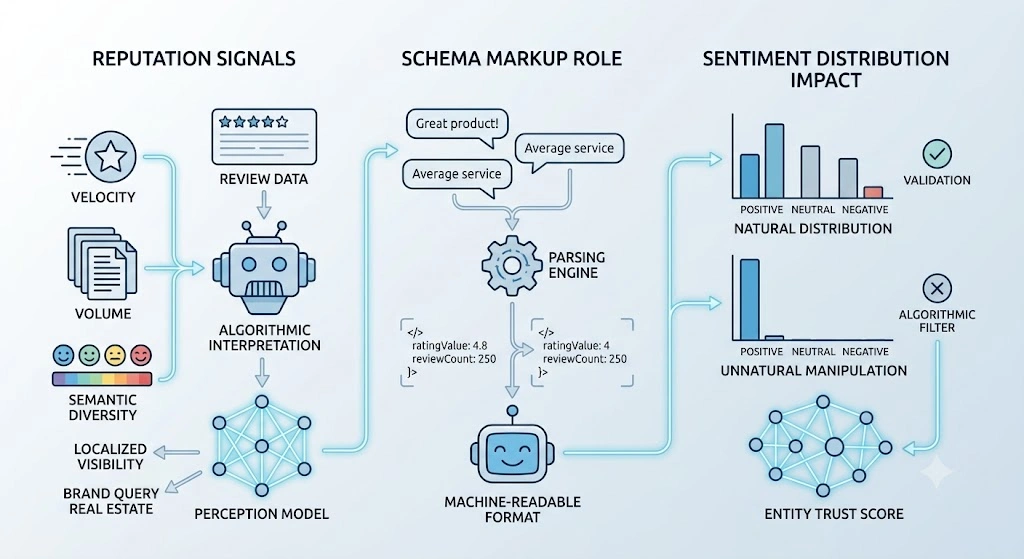
Search engines process third-party review data to assess entity credibility and determine real-world brand authority. Algorithmic interpretation relies on the velocity, volume, and semantic diversity of user feedback to construct a perception model of a business. This data directly influences localized search visibility and brand-name query real estate.
What is the Role of Schema Markup in Signal Processing?
Aggregate rating schema is a structured data protocol that translates qualitative text reviews into machine-readable format. This mechanism operates by parsing explicit properties such as ratingValue, reviewCount, and bestRating into the page source code. When search engine bots crawl these structured attributes, they bypass complex natural language processing to immediately update the entity’s trust score within the knowledge graph.
How Does Sentiment Distribution Impact Entity Validation?
Sentiment distribution refers to the statistical spread of positive, neutral, and negative metrics across a brand’s digital ecosystem. Search engines evaluate this distribution to identify unnatural manipulation patterns or sudden drops in operational quality. A highly skewed distribution lacking natural variance frequently triggers algorithmic algorithmic filters, whereas a balanced distribution indicates authentic consumer interaction.
What Determines the Search Ranking Influence of Different Platforms?
The capacity of a review platform to modify search engine results pages (SERPs) depends on its domain authority and its integration with search provider features. Platforms operate either as native components of a search engine ecosystem or as independent third-party authorities. Both positions offer distinct mechanisms for affecting content suppression versus content enhancement.
| Evaluation Metric | Native Search Review Systems | Independent Third-Party Platforms |
| Indexing Speed | Real-time injection into knowledge panels | Standard crawl-and-index cycle |
| SERP Real Estate | Dominates localized maps and local packs | Secures standard organic blue link rankings |
| Schema Compatibility | Automatic system-level rendering | Requires technical implementation |
| Review Verification | Relies on user account history metrics | Relies on transactional data validation |
Native search review systems inject sentiment data directly into localized knowledge panels and maps interfaces. This positioning captures immediate user attention during brand queries and influences localized algorithmic rankings directly. Because the data remains within the search engine’s proprietary infrastructure, processing latency is non-existent, making it the most volatile vector for short-term sentiment shifts.
Independent third-party platforms influence standard organic search results by ranking as standalone URLs. These domains possess significant equity, allowing their specific review pages to secure prominent visibility for branded search phrases. Organisations utilise these platforms to execute content enhancement strategies, using the high domain authority of the platform to displace less controllable assets from the first page of results.
How Do Content Creation and Content Removal Strategies Compare?
When managing algorithmic risk caused by negative sentiment, organizations choose between content suppression via strategic asset creation or direct content removal. These two operational frameworks require entirely different resource allocations and carry divergent long-term sustainability outlooks.
What are the Mechanisms of Content Removal?
Content removal functions through legal challenges, terms of service arbitrations, or formal defamation claims submitted directly to platform hosts. This strategy targets the absolute deletion of a specific piece of negative user-generated content from the internet. If successful, the asset disappears entirely, providing an immediate correction to the sentiment score of that specific URL.
The limitation of content removal lies in its binary nature and narrow scalability. Platforms reject removal requests that fail to meet strict legal thresholds, leaving the offending content active and visible. Furthermore, chasing individual negative inputs offers no protection against future algorithmic volatility, rendering it an inefficient option for systemic reputation vulnerabilities.
What are the Mechanisms of Content Suppression?
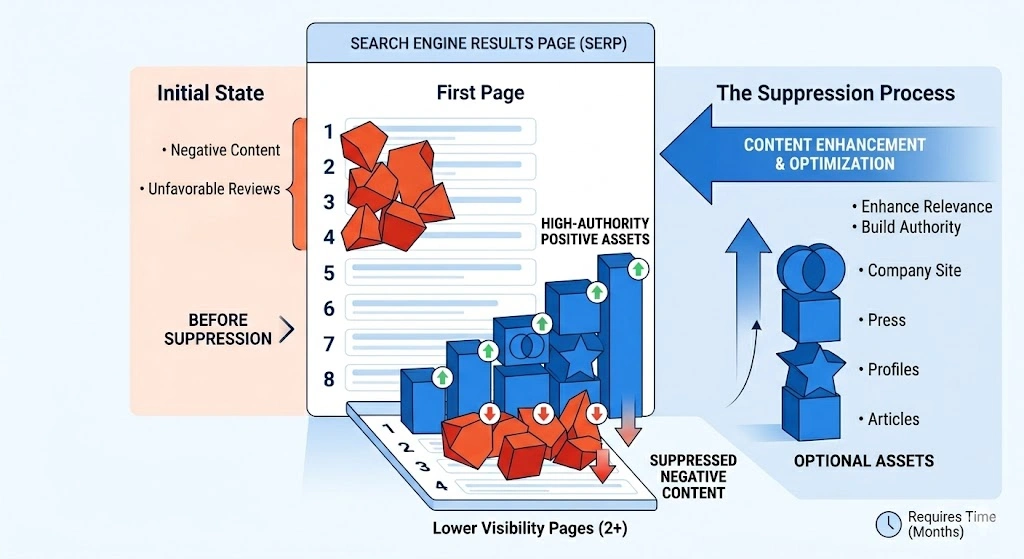
Content suppression operates through strategic content enhancement, where an organisation optimises a network of positive digital assets to outrank negative URLs. This methodology leverages semantic search principles by publishing high-quality, entity-aligned information across authoritative domains. Over time, these optimized assets consume the available first-page SERP real estate, pushing negative review links down into lower-visibility positions.
Suppression provides a sustainable framework because it builds permanent digital equity and reinforces entity validation. Instead of fighting platform guidelines, it works alongside ranking algorithms to dilute the visibility of unfavorable links. The main constraint is the required timeline, as establishing sufficient search ranking influence to displace established domains takes months of consistent optimization.
What are the Scalability and Risk Factors of Organic vs Reactive Approaches?
Evaluating reputation monitoring systems requires an analysis of resource scalability alongside potential exposure to algorithmic penalties. A business must choose between establishing permanent, automated feedback loops or deploying manual interventions during a public relations crisis.
- Implement automated transactional triggers to ensure a continuous influx of verified user feedback.
- Diversify feedback collection across multiple authoritative domains to prevent a single point of failure in sentiment distribution.
- Monitor natural language patterns within review text to identify emerging operational vulnerabilities before they affect macroscopic search ranking signals.
- Deploy precise schema markup across all owned assets to accelerate the processing of positive trust signals by search engine crawlers.
Organic approaches integrate reputation monitoring directly into daily operational workflows, establishing a baseline of steady sentiment generation. This consistency provides a buffer against occasional negative feedback, as the sheer volume of positive data dilutes the impact of isolated incidents. Search engine algorithms recognise this steady velocity as a indicator of legitimate business operations, which stabilises organic search visibility.
Reactive approaches operate only when an organisation faces severe online criticism or a concentrated drop in rating metrics. This methodology focuses on rapid damage control, often involving sudden bursts of review acquisition or aggressive legal challenges. Algorithmic engines frequently flag these abrupt shifts in data velocity as manipulative, which can lead to filter flags or the temporary suspension of rich snippets.
How Should Businesses Structure Their Long-Term Monitoring Architecture?
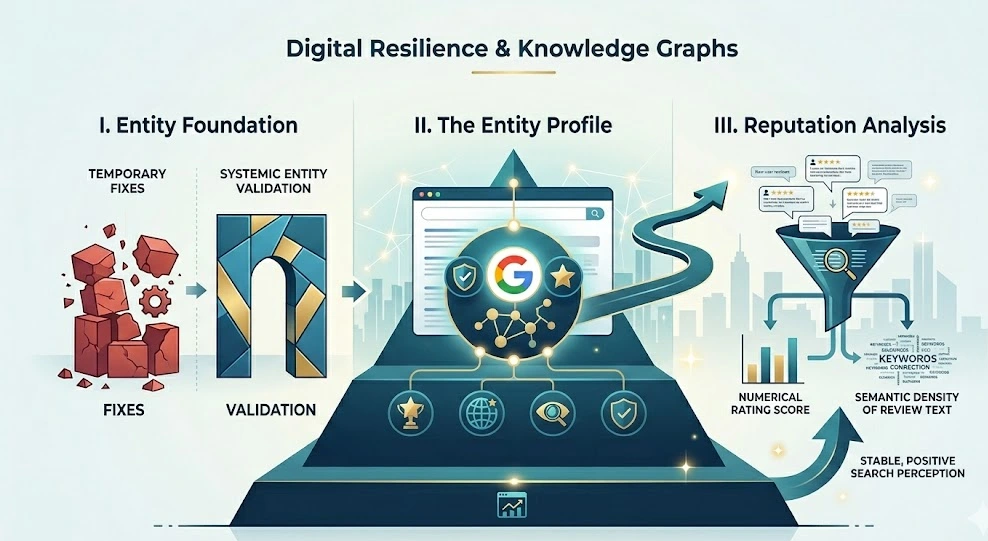
A resilient digital footprint depends on selecting platform architectures that match the risk profile and technical capabilities of the enterprise. Long-term sustainability requires moving away from temporary fixes toward systemic entity validation.
The primary objective must be the creation of an unassailable entity profile within search engine knowledge graphs. Achieving this involves choosing third-party platforms that offer transparent data structures, high domain authority, and strict verification protocols. By focusing on verified transactional inputs, an organisation guarantees that its digital trust signals remain accurate, compliant, and defensible against malicious exploitation.
Enterprise risk mitigation demands ongoing evaluation of how search engines parse reputation data. As algorithmic models evolve toward deep linguistic understanding, the semantic density of review text carries equal weight to the numerical rating score. Organisations that monitor these advanced metrics ensure their search perception remains positive, stable, and completely aligned with systemic trust requirements.
Key Strategic Differences
The fundamental divergence between monitoring methodologies lies in data verification control versus SERP real estate dominance. Open platforms offer wider visibility but carry higher risk profiles, whereas closed systems yield stronger validation signals at the expense of pure volume. Successful mitigation relies on using content enhancement to build long-term algorithmic resilience rather than relying on reactive removal tactics.
When addressing systematic digital vulnerabilities, organisations must establish proactive frameworks. For enterprises experiencing active digital crises, deploying business reputation support for brands facing online criticism provides the necessary structure to stabilise sentiment metrics and protect search visibility.
Frequently Asked Questions
How do business review platforms affect local SEO rankings?
Third-party review platforms influence local search visibility by transmitting critical signals regarding business volume, velocity, and semantic diversity. Google processes these incoming feedback metrics to verify entity authority and determine placement within localized map packages and knowledge panels. Consistently generating authentic, text-rich reviews helps establish the baseline entity credibility needed to outrank local competitors.
What is the difference between open and closed review platforms?
Open review platforms allow any online user to submit feedback and star ratings without requiring verified proof of a commercial transaction or service engagement. Closed review systems mitigate digital risk by utilising automated transaction triggers to restrict submission permissions exclusively to verified buyers. While open networks expand a brand’s overall digital footprint, closed networks generate higher-quality reputation signals that search engines reward with reliable rich snippet rendering.
How does aggregate rating schema improve brand search visibility?
Aggregate rating schema is a structured data code protocol that translates qualitative customer feedback into machine-readable format for search engine crawlers. Implementing this microdata allows algorithmic engines to immediately parse rating attributes like numeric values and total review counts directly from the page source. When validated, this structured information enables eye-catching star ratings to display directly within organic search results, significantly enhancing search click-through rates.
Can a business legally remove a negative online review?
Direct content removal is generally restricted to user submissions that explicitly violate a platform’s established terms of service, contain fraudulent data, or meet the legal thresholds for corporate defamation. If a negative entry represents an authentic consumer experience, platforms typically reject removal requests, leaving the content active. In these instances, implementing long-term content suppression through strategic content enhancement is more sustainable than pursuing binary removal methods.
How can brands face online criticism without dropping in search rankings?
Enterprises can protect their organic visibility by partnering with specialized corporate digital trust services like Clear My Name to deploy comprehensive content suppression architectures. This defensive approach focuses on building robust digital equity across highly authoritative third-party networks to dilute the search engine real estate of unfavorable URLs. Maintaining a steady velocity of fresh, verified positive signals ensures a balanced sentiment distribution that safeguards macroscopic ranking positions.