

Encouraging customers to add photos to their Google Reviews involves reducing upload friction, explaining the value of relevant images and maintaining a neutral review-request process. Reputation management strategies differ based on how businesses generate visual evidence, strengthen review credibility and influence the composition of branded and local search results.
How Do Photo Review Requests Compare With Organic Review Generation?
Photo review requests provide customers with a direct opportunity to attach relevant images, while organic review generation relies on customers choosing independently whether to share visual evidence. A structured request operates by reminding customers of the option to upload photographs alongside their written feedback. Organic generation operates through the customer’s own motivation, experience and willingness to document a product, service or premises. Both approaches contribute to a business’s online reputation, but they differ in consistency, operational control and the degree of influence a business exercises over participation.
Structured requests improve the visibility of the photo-upload option without guaranteeing that customers submit images. Organic contributions provide a more spontaneous representation of customer experiences, although their volume and subject matter remain less predictable. Search engines process publicly available review content as part of the information surrounding a business entity, while users interpret photographs as visual context for written claims. Neither approach independently guarantees higher search rankings, because local search visibility depends on a broader set of relevance, distance and prominence signals. The practical comparison therefore concerns contribution quality, participation patterns and credibility rather than the assumption that requesting photographs directly improves rankings.
What Are the Strengths and Limitations of Each Approach?
Structured requests offer operational consistency because businesses can include a neutral reminder in post-purchase messages, appointment follow-ups or service-completion communications. This mechanism makes the upload option more noticeable and creates a repeatable process across customer interactions. However, excessive reminders introduce communication fatigue and expose the business to complaints about review solicitation. Organic generation avoids repeated prompting and can produce images that reflect customers’ independent priorities. Its principal limitation is uneven coverage, as customers frequently provide written feedback without adding photographs.
A balanced evaluation measures the relevance and authenticity of submitted images rather than counting photographs alone. A clear image of a product, shop entrance or completed installation provides context that a written rating cannot fully communicate. An irrelevant, duplicated or misleading image adds little informational value, even when it increases the total number of visual contributions. Review generation practices also require neutrality: businesses must not condition incentives on positive sentiment, discourage negative feedback or selectively solicit favourable reviews in ways that breach platform policies. The stronger approach is the one that supports genuine participation without distorting the sentiment distribution.
Does Adding Photos to Google Reviews Improve Search Visibility More Than Written Feedback?
Photographs and written reviews provide different forms of information, and their value depends on the search task being completed. Written reviews communicate customer experiences through descriptions, ratings and sentiment, while photographs provide visual evidence of products, locations or service outcomes. Google’s local search systems evaluate relevance, distance and prominence, with prominence informed by information such as links, review quantity and review ratings. Publicly available review content contributes to a business’s broader online representation, but the presence of an individual customer photo does not establish an independent ranking advantage. Search ranking influence must therefore be distinguished from the effect visual information has on user behaviour.
Photographs can improve the usefulness of a business profile when they answer practical questions before a visit or purchase. An image of a restaurant entrance helps a customer identify the premises, while a photograph of a finished product gives prospective buyers a clearer view of its appearance. This additional context can reduce uncertainty and improve the alignment between customer expectations and the service offered. Written feedback remains important because images rarely explain reliability, staff conduct, delivery quality or the complete customer experience. Evaluating review content requires both informational relevance and credibility rather than treating visual contributions as a substitute for text.
How Should Businesses Measure the Search Value of Review Photos?
Businesses can evaluate visual review contributions through profile engagement, customer actions and the relevance of images to common search intentions. Performance measurement begins by establishing a baseline for profile interactions and tracking changes after the review-request process is introduced. Where reporting tools provide the necessary data, businesses can compare calls, website visits, direction requests and other available engagement measures across consistent periods. These indicators help identify changes in user behaviour, but they do not prove that photos alone caused the difference. Seasonal demand, review volume, business updates and local competition also influence performance.
A useful assessment separates visibility metrics from conversion and trust indicators. Search impressions indicate whether a profile appears in relevant search environments, while clicks and customer enquiries reveal additional stages of interaction. Image quality and subject relevance require a separate qualitative review because engagement figures do not establish whether photographs accurately represent the business. Businesses also need to avoid attributing every improvement in local performance to photo uploads when several reputation signals change simultaneously. This measurement framework distinguishes correlation from causation and supports more reliable decisions about review-management priorities.
Are Proactive Photo Requests More Effective Than Reactive Review Management?
Proactive photo requests build a repeatable process for collecting genuine customer contributions, whereas reactive review management responds to existing content after it appears. Proactive methods operate through customer communication, accessible upload instructions and consistent opportunities to leave feedback. Reactive methods operate through monitoring, responding to reviews, reporting content that breaches platform policies and correcting inaccurate business information. The distinction is operational: proactive management influences the conditions under which customers contribute, while reactive management addresses the quality and accuracy of information already published.
Proactive methods provide greater control over process consistency, but they cannot control the content customers choose to submit. Reactive methods address immediate reputation risks, including misleading images, irrelevant material and reviews that violate applicable platform rules. However, reporting a photograph does not guarantee removal, and disagreement with a customer’s opinion does not establish a policy violation. Google evaluates removal requests against its content policies, so businesses need to identify the specific rule relevant to the material rather than relying on dissatisfaction with its effect on reputation. Effective management separates legitimate criticism from content that qualifies for reporting.
Dive Deeper With Our Expert Guides:
How to Handle Negative Reviews From Former Employees on Google
Removing Off-Topic and Policy-Violating Reviews From Google
Which Approach Creates Lower Operational and Policy Risk?
Neutral proactive communication generally creates lower policy exposure when it invites honest feedback without dictating the rating, wording or visual content. A business can explain how customers attach photographs, provide a direct route to the review process and avoid repeated messages after a customer declines. This approach reduces friction while preserving the customer’s independence. Reactive management remains necessary because no request process prevents every inaccurate or policy-violating contribution. Its risk level depends on the accuracy of the complaint, the quality of supporting evidence and the proportionality of the response.
Businesses also need to distinguish content correction from content removal. Content correction addresses inaccurate information through clarification, updated business details or a professional response, while removal strategies target material that meets the platform’s eligibility criteria. Content enhancement adds useful, accurate information that improves the completeness of the business’s digital presence. These methods serve different purposes and are not interchangeable. Treating every unfavourable image as a removal problem wastes resources and creates avoidable policy risk, whereas documenting genuine violations supports a more defensible escalation process.
Do Short-Term Photo Campaigns Outperform Long-Term Review Management?
Short-term campaigns can increase awareness of the photo-upload option quickly, while long-term management builds a more consistent pattern of customer participation. A campaign operates through a concentrated period of communication, such as a post-purchase message or a follow-up after service completion. Long-term management embeds the request within ordinary customer communication and evaluates participation over time. Short-term activity provides faster feedback about message clarity and customer response, but it does not establish that the resulting contribution pattern will continue after the campaign ends.
Long-term processes provide better opportunities to evaluate image relevance, review quality and operational consistency across customer groups. They also make it easier to identify recurring barriers, such as unclear instructions, inaccessible upload routes or requests delivered before a customer has experienced the service. However, a permanent process still requires periodic review to prevent repetitive messaging and maintain compliance with platform policies. A high initial volume of photographs does not automatically create sustainable reputation value if later contributions decline or image quality deteriorates. Sustainability depends on the relationship between customer experience, participation friction and the continuing usefulness of the submitted content.
How Can Businesses Compare Scalability and Sustainability?
A scalable process uses consistent instructions and communication standards without removing the customer’s freedom to decide whether to contribute. Businesses operating across multiple locations can standardise neutral request wording while adapting the timing to the customer journey. For example, a retailer can send a post-purchase review invitation, while a service business can provide the same option after the agreed work is completed. This model reduces operational variation and makes participation rates easier to compare across locations. It does not justify automated pressure, excessive reminders or attempts to influence the substance of customer feedback.
Sustainability also depends on whether the process produces information that remains useful to prospective customers. Images that accurately show products, facilities, completed work or relevant service details contribute more context than repeated photographs with little informational difference. Businesses can review the mix of image subjects, identify gaps in useful visual information and refine instructions without asking customers to submit a predetermined type of praise. A sustainable approach measures the usefulness of contributions alongside their quantity. This prevents review management from becoming a volume-focused exercise that weakens trust signals through repetitive or irrelevant material.
Should Businesses Prioritise Content Enhancement or Photo Removal Strategies?
Content enhancement and photo removal address different reputation problems, so their effectiveness depends on the condition of the existing information. Content enhancement adds accurate material that helps customers understand the business, including useful profile photographs, complete business details and clear responses to customer feedback. It operates by improving the information available to users rather than attempting to eliminate unfavourable material. Photo removal strategies focus on images that qualify for action under the platform’s content policies, such as content that breaches applicable restrictions. The distinction between content suppression and content enhancement matters because improving the visibility of accurate information does not remove a policy-violating image from its original source.
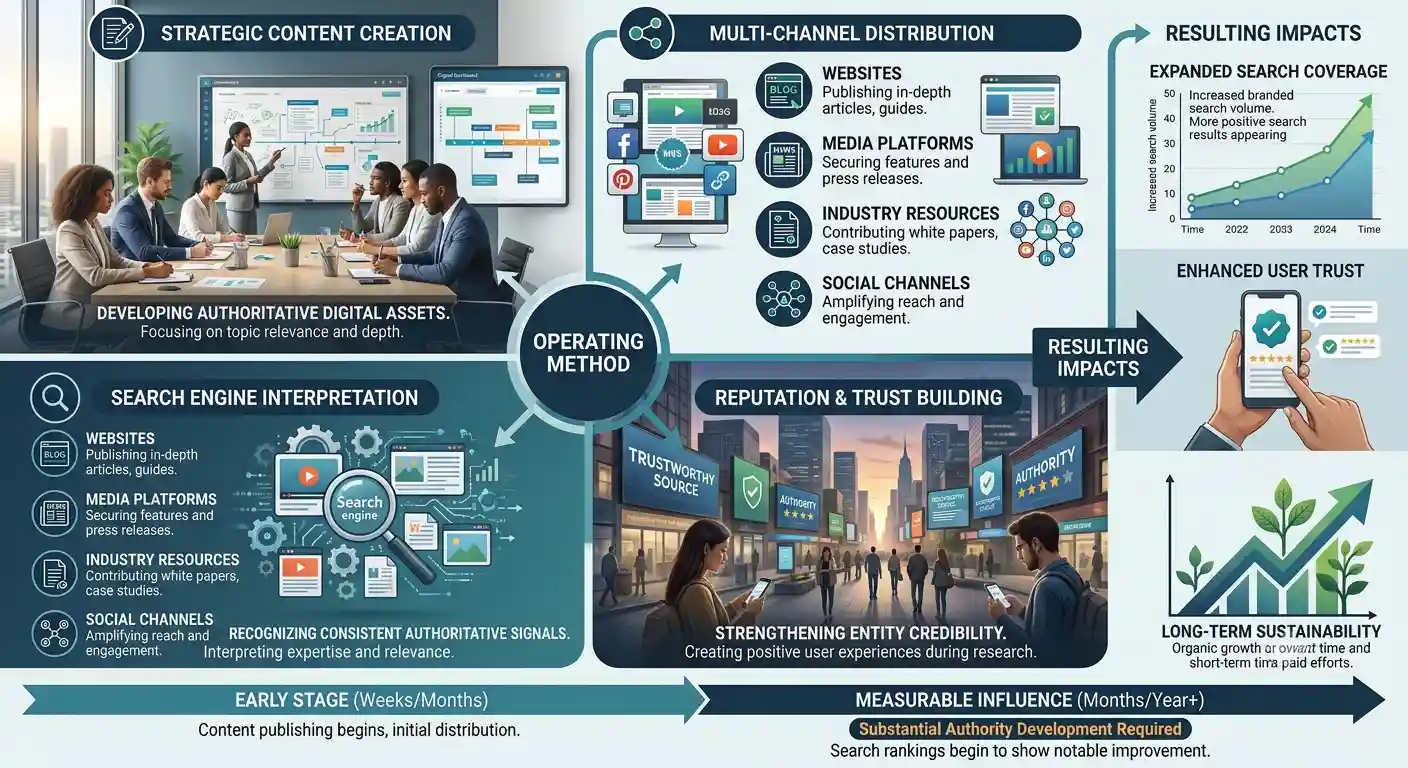
Enhancement is generally appropriate when existing photographs are incomplete, outdated or insufficient to explain the business. For example, current images of an entrance, service environment or product range can answer questions that customer-submitted photographs leave unresolved. Removal is relevant when the business has evidence that a specific image violates a platform rule, not simply because the image presents the business unfavourably. Requests for removal require accurate identification of the content and a reason grounded in the applicable policy. If a report is unsuccessful, a business can still improve the surrounding information, but enhancement must not be presented as equivalent to removal.
How Do These Strategies Affect Trust Signals and Search Perception?
Trust signals develop through the consistency between business information, customer feedback and the evidence available across digital platforms. Accurate photographs can reinforce entity credibility by helping users connect a business name with its real premises, products or services. Customer images can also reveal discrepancies between the business’s own presentation and reported experiences, making authenticity and context important to interpretation. Removing eligible policy-violating material protects the integrity of the information environment, but removing legitimate criticism would distort the customer record. The strongest evaluation therefore considers accuracy, relevance and policy compliance together.
Search engine results pages (SERPs) contain multiple information sources, including business profiles, websites, review platforms and other indexed pages. A complete profile and a consistent pattern of useful customer contributions can improve the information available to searchers, while responses to reviews can clarify specific concerns. These actions influence how users interpret available information, but they do not guarantee control over SERP composition or a particular ranking position. Search systems independently determine how eligible information appears in response to a query. Reputation management therefore focuses on improving information quality and addressing qualifying problems rather than promising a predetermined search outcome.
Which Evaluation Framework Best Identifies an Effective Photo Review Strategy?
A useful evaluation framework compares participation, content quality, trust, operational risk and sustainability instead of relying on one headline metric. Participation measures the proportion of customers who submit reviews or images after receiving a neutral invitation. Content quality evaluates whether photographs are relevant, clear, authentic and useful to a prospective customer. Trust analysis examines consistency between the images, written feedback and verified business information. Operational assessment considers staff time, communication frequency, policy compliance and the resources required to respond to content concerns.
Businesses can apply the following sequence to compare approaches consistently:
- Establish a baseline by recording existing photo contributions, review activity and available profile engagement measures.
- Standardise neutral invitations by using consistent wording and a clear review route without requesting positive sentiment.
- Measure participation by comparing review and photo contribution patterns across equivalent reporting periods.
- Assess image relevance by checking whether photographs provide useful context about products, premises or service outcomes.
- Audit policy risk by documenting questionable content and matching any report to a specific platform rule.
- Review sustainability by examining recurring participation, customer complaints, resource requirements and the continued usefulness of contributions.
This framework allows businesses to compare organic contributions, structured requests, content enhancement and reactive intervention using consistent criteria. It also prevents a temporary increase in photo volume from being mistaken for a proven improvement in search ranking or customer trust. Results need interpretation in the context of business type, customer journey and local competition. The preferred approach is the one that produces credible information with manageable operational costs and acceptable policy risk.
What Is the Most Sustainable Approach to Encouraging Photo Reviews?
The most sustainable approach combines neutral review invitations, useful upload instructions, accurate business information and proportionate responses to problematic content. Structured requests improve consistency, while organic contributions preserve customer independence and provide a less managed view of customer experiences. Content enhancement fills informational gaps, and policy-based removal requests address material that qualifies for intervention. Businesses can also boost photo reviews on your profile by making upload instructions clear and inviting customers to share authentic images without pressuring them to leave positive feedback. These methods are complementary because each addresses a different part of the reputation-management process.
The central consideration is not how to maximise photographs at any cost, but how to increase the availability of authentic, relevant visual information. Search visibility, trust signals and customer perception respond to different aspects of the digital information environment, so no single measure proves overall effectiveness. Businesses gain a clearer assessment by separating participation from image quality, profile engagement from ranking influence, and legitimate criticism from policy violations. A consistent process supports stronger information quality over time without relying on unsupported ranking claims or manipulative review practices.
How can businesses encourage customers to add photos to their Google Reviews?
Businesses can encourage photo reviews by sending neutral review invitations, providing clear upload instructions and explaining how photographs help other customers understand their experience. Requests must remain voluntary and must not pressure customers to leave positive feedback.
Do photos in Google Reviews improve local SEO rankings?
Photos provide visual context that helps customers evaluate a business, its products and its services. However, an individual customer photo does not guarantee higher Google rankings, which depend on broader factors including relevance, distance and prominence.
Why are photos important for Google Reviews and online reputation management?
Photos add visual evidence to written reviews, helping prospective customers assess products, premises and service outcomes. Relevant, authentic images strengthen the information available to users and contribute to how they perceive a business’s credibility.
Can businesses offer incentives to get more Google review photos?
Businesses must follow Google’s review policies and avoid incentives in exchange for reviews, including photo reviews. Neutral invitations that allow customers to share honest feedback without rewards or pressure provide a safer approach to review generation.
How can businesses manage inappropriate or misleading photos in Google Reviews?
Businesses can report photographs that appear to violate Google’s content policies and provide a clear explanation of the relevant violation. Images are not guaranteed to be removed simply because they are negative or unfavourable, so reputation management also involves maintaining accurate business information and responding appropriately to legitimate criticism.