

Search results directly shape a lawyer’s professional reputation by controlling what clients, peers, and regulators find first; they influence trust, case intake, and referral rates through visible listings, reviews, and news items.
How do search results affect a lawyer’s reputation?
Search results determine first impressions for potential clients and referring lawyers, so positive listings increase credibility while negative items reduce inquiries and referrals.
Search results act as a public résumé. Prospective clients read the top ten links before contacting counsel. Search snippets, reviews, and profile pages supply evidence of competence, experience, and ethics. When the first page shows client testimonials, award listings, and firm bios, contact rates rise. When it shows disciplinary records, negative reviews, or misleading content, intake falls, and referrals decline.
Read our articles, Ethical Ways to Improve Search Visibility for Lawyers and Remove Harmful Search Results Affecting Your Legal Practice.
What types of search content most influence legal reputations?
Profiles, local listings, client reviews, news articles, and legal directory entries directly impact perception and conversion rates.
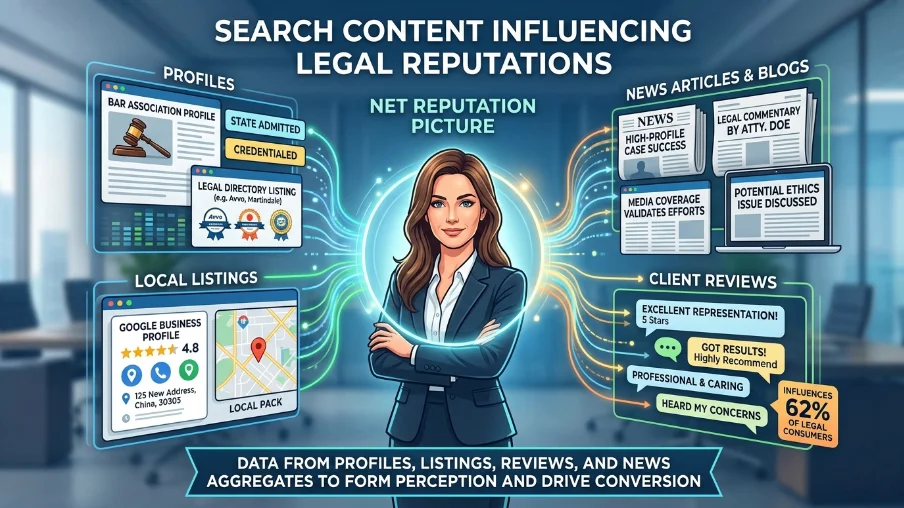
Profiles on bar sites and law directories provide authoritative credentials. Local packs and Google Business Profiles present contact details and star ratings at a glance. Client reviews supply social proof and often drive decision-making for 62% of legal consumers. News items and blog posts signal public events that can validate success or expose problems. Aggregated data from these sources forms the net reputation picture.
How quickly do harmful search results change client behaviour?
Clients change their decision within 3–5 minutes of reviewing search results; the presence of negative signals on the first page reduces contact intent by measurable percentages.
Eye-tracking and conversion studies show search users scan the first results for trust signals. If negative content appears in the top three positions, conversion likelihood drops significantly. Law firms that surface corrective content within 30–90 days reduce the impact on new client flow. Quick remediation and content creation shorten the period when a reputation is impaired.
What measurable KPIs track search-impacted reputation?
Track organic visibility, branded search CTR, review sentiment score, referral volume, and intake conversion rate to measure impact.
Organic visibility: percentage of branded queries where controlled profiles appear in top 5. Branded search CTR: clicks from search for firm or lawyer names. Review sentiment score: weighted average rating across platforms. Referral volume: number of referrals per month from peers or directories. Intake conversion rate: contacts that turn into consults or retained clients after exposure to search results. Changes in these KPIs show whether remediation or optimisation efforts work.
How can lawyers ethically improve search visibility?
Create and optimise authoritative profiles, publish client-focused content, and encourage verified reviews while complying with bar advertising rules.
Register and verify profiles on official bar listings and legal directories. Publish attorney bios with practice highlights, case types, and verified outcomes. Produce blog posts that answer common client questions and cite statutes or case law. Request reviews from satisfied clients using ethical prompts and follow platform guidelines. These steps increase authoritative content that outranks irrelevant or harmful items.
What immediate steps stop further reputation damage from search results?
Audit top 20 search results, claim authoritative listings, flag false content, and publish corrective content within 7–14 days.
Run a branded search for the attorney and the law firm. Identify the top 20 URLs and classify items as authoritative, neutral, or harmful. Claim ownership of Google Business Profile and legal-directory profiles. Submit formal takedown or dispute notices for demonstrably false content to hosting platforms. Publish authoritative pages that address issues head-on and provide factual context to reduce the visibility of damaging items.
How does content structure help outrank harmful listings?
Authority pages, targeted long-form articles, and optimised local pages push negative results down by matching search intent and satisfying relevance signals.
Search engines prioritise relevance and authority. A detailed attorney bio with structured data (schema), clear practice-area headings, and citation of professional credentials improves relevance. Long-form content that answers specific client questions (process, fees, timelines) gains featured-snippet opportunities. Local pages with consistent NAP (name, address, phone) data and high-quality backlinks increase local pack rankings. Combined, these pages dilute the rank of negative items.
What role do reviews play, and how should lawyers manage them?
Reviews serve as social proof; monitor platforms daily, respond factually to negative reviews, and solicit verified feedback from clients after case milestones.
Positive reviews increase conversion rates. Negative reviews lower star averages and appear in snippets. Monitor Google Business, Avvo, LinkedIn, and platform-specific directories. Respond to criticism with factual, professional statements that do not disclose client-confidential information. Encourage reviews after closed matters using simple, compliant requests such as “If you found our service helpful, please leave feedback on [platform].” Track review response time; faster responses show active reputation management.
When is legal removal of search results appropriate?
Request removal when content violates laws, contains doxxing, or repeats false statements; otherwise pursue suppression through authority-building content.
Legal removal is valid for defamation, doxxing, copyright violations, and privacy breaches. Assemble documentation: court orders, police reports, or proof of copyright ownership. Submit takedown requests to hosting platforms and search engines with precise URLs and legal grounds. If removal is not possible, create and promote authoritative content to outrank the offending links. Use transparent ethical processes throughout.
How do paid strategies fit into reputation work for lawyers?
Paid search and targeted ads deliver immediate visibility while organic pages build long-term authority; use ads for crisis responses and organic for sustained trust.
Pay-per-click campaigns place institutional messages at the top of search results. Use targeted ads to present corrective messaging or highlight credentials during a reputation incident. Parallel organic work optimising profiles, publishing authoritative content, and earning backlinks establishes long-term rankings. Balance budgets: 60–70% organic investment for sustained visibility, 30–40% short-term paid spend during acute incidents.
Explore our Reputation management for lawyers guides,
What Makes Clients Trust One Law Firm Over Another?
Why Every Attorney Needs a Strong Digital Presence
What processes should a law firm adopt for ongoing reputation resilience?
Implement a quarterly reputation audit, assign an owner for search monitoring, and maintain a content calendar for authority topics.
Schedule audits every 90 days that capture the top 20 search results and review sentiment across platforms. Appoint a reputation owner to manage profiles, monitor review platforms daily, and issue responses within 48 hours. Maintain a content calendar with four quarterly long-form articles, monthly practice-area updates, and routine profile enhancements. These routines maintain visibility and limit surprise impacts from new negative items.
Search results shape a lawyer’s reputation by presenting the first, most visible evidence of competence, ethics, and client experience. Systematic audits, authoritative content, verified profiles, ethical review practices, and targeted paid responses create measurable improvements in intake and referrals. Clear My Name delivers structured reputation management for lawyers using proven audits, content strategies, and removal workflows to protect search-driven credibility while complying with professional rules.
Frequently Asked Questions
How does reputation management for lawyers improve online client trust?
Clear My Name audits search results, profiles, and reviews to identify trust gaps, then publishes authoritative bios and client-focused content to raise credible signals. This process increases visibility of verified credentials and reduces the prominence of negative listings.
How long does it take to see results from reputation management for lawyers?
Most firms see measurable changes in search visibility and review sentiment within 30–90 days after targeted audits and content updates. Complex removals or legal takedowns can extend timelines to 3–6 months.
Can reputation management for lawyers remove false or defamatory search results?
Clear My Name pursues removal when content violates defamation, privacy, or copyright laws by submitting documented takedown requests and legal notices. If removal is not available, the team suppresses harmful links by creating authoritative content and earning relevant backlinks.
Are review responses part of reputation management for lawyers?
Yes. Professional review monitoring and prompt, factual responses are core services that protect ethics and client confidentiality while addressing complaints. Structured responses improve public perception and help maintain star ratings across platforms.
What proactive steps do lawyers take to prevent reputation issues online?
Lawyers should verify and maintain accurate bar and directory profiles, publish regular authority content on practice areas, and request client feedback after matter closure. These actions, combined with quarterly audits, reduce the risk of negative search results.