

Ethical search-visibility tactics raise a lawyer’s authoritative pages and truthful profiles, improving client trust and lead quality while complying with professional rules.
What ethical steps improve a lawyer’s search visibility?
Create verified profiles, publish authoritative content, and manage reviews while following bar advertising rules to increase relevant visibility.
Start by claiming and verifying official profiles: bar directories, law-specific directories, and Google Business Profile. Use exact name, firm, address, and registration numbers to authenticate entries. Add structured data (schema) to bios so search engines validate credentials and display rich snippets. These steps establish authoritative signals that rank above low-quality pages.
How should lawyers structure bios and profiles for search engines?
Publish complete, credential-focused bios with practice-area headings, representative matters, and verifiable dates to validate expertise.
Use short, clear headings such as “Family Law,” “Commercial Litigation,” and “Admissions.” List concrete achievements: years admitted, court admissions, and published decisions with citations. Include downloadable CVs or PDF judgment links to authenticate claims. Structured content increases the chance of appearing in featured snippets and knowledge panels.
Read our articles, How Search Results Shape a Lawyer’s Reputation and Remove Harmful Search Results Affecting Your Legal Practice.
What content types best improve visibility ethically?
Client-focused FAQs, case-process pages, and issue-specific guides answer search intent and build topical authority.
Write long-form guides that solve specific client questions, for example: “How divorce property is divided in England 6 steps.” Use numbered process descriptions, timelines, and statutory citations. Publish practice-area FAQs that repeat common search queries in question form. These pages attract organic links and reduce prominence of irrelevant or harmful results.
How should lawyers handle online reviews without breaking rules?
Request verified reviews after matter closure, monitor platforms daily, and respond factually to negative feedback without disclosing confidential information.
Ask clients for reviews using clear, neutral language such as “If you found our service helpful, please leave feedback on [platform].” Track Google, Avvo, and Trustpilot sentiment weekly. When responding to complaints, state verifiable facts: case reference, contact process, or offer to discuss offline. This protects client confidentiality and demonstrates active reputation management.
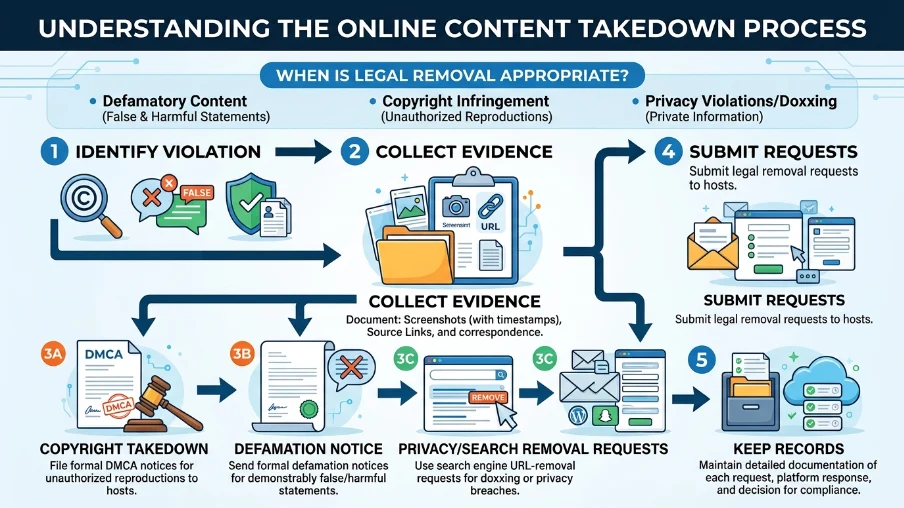
When is takedown or legal removal appropriate?
Pursue removal for defamatory, private, or copyrighted content by submitting documented legal requests to hosts and search engines.
Collect evidence: screenshots, original source links, and correspondence. File copyright takedowns for unauthorized reproductions. Send formal defamation notices when statements are demonstrably false and harmful. Use search-engine URL-removal requests for doxxing or privacy breaches. Keep records of each request and decision for compliance.
How do link-building and citations support ethical visibility?
Secure citations from legal institutions, journals, and local organisations to validate authority and increase ranking signals.
Obtain links from law society pages, university law clinics, and court judgments that reference counsel. Publish scholarly commentary for legal journals and link back to practice pages. List firm events and pro bono clinics on local authority sites. These citations provide credible endorsement and improve search relevance.
What immediate audit steps reveal visibility gaps?
Perform a branded search audit of the top 20 results, check knowledge panel data, and map review sentiment to conversion metrics.
Search the lawyer’s full name and firm name. Record the first 20 organic and local-pack results, classifying them as: authoritative, neutral, or harmful. Verify schema presence on key pages and check knowledge panel accuracy. Correlate negative items with intake data to quantify impact on consultations and referrals.
How should paid and organic tactics be balanced for ethical results?
Use targeted ads for time-sensitive issues and sustained organic content for long-term authority and trust.
Deploy PPC to surface corrective messaging during crises and to promote high-trust pages such as attorney bios. Invest in organic content: four long-form articles per quarter and continuous profile optimizations. Allocate budget with a 60/40 organic-to-paid ratio for sustained reputation growth and short-term remediation.
How are results measured and reported during MOFU evaluation?
Track branded search visibility, review sentiment score, organic traffic to authority pages, and intake conversion rate monthly.
Measure visibility as the percentage of branded queries with controlled pages in the top five. Calculate review sentiment as a weighted average across platforms. Monitor organic sessions and goal completions on key pages. Report changes monthly and tie them to lead volume to demonstrate ROI for reputation management work.
Explore our Reputation management for lawyers guides,
How Reviews Influence Legal Client Acquisition
SEO vs Reputation Management: What Law Firms Actually Need
What governance processes maintain search visibility over time?
Adopt quarterly audits, assign a reputation owner, and run a yearly compliance review to align content with advertising rules.
Schedule audits every 90 days to reassess top 20 results and update profiles. Designate a responsible person for daily review monitoring and review-response workflow. Conduct annual compliance reviews against bar advertising standards and update templates for review requests and public responses.
Ethical search visibility relies on verified profiles, evidence-based content, strategic citations, and measured review management. These tactics improve authority, trust, and client conversion while complying with professional regulations. Clear My Name provides reputation management for lawyers through structured audits, content strategies, and lawful removal workflows that protect search-driven credibility with transparent processes.
Frequently Asked Questions
How long does reputation management for lawyers take to show results?
Clear My Name typically reports measurable search-visibility and review-sentiment changes within 30–90 days after audits and content updates. Complex removals or legal takedown processes can extend timelines to 3–6 months.
What does a reputation audit include for lawyers?
A reputation audit maps the top 20 branded search results, verifies bar and directory profiles, and measures review sentiment across platforms. The audit produces a prioritized action plan for profile fixes, content creation, and takedown or suppression steps.
Can reputation management for lawyers remove defamatory or private content?
Clear My Name pursues removal when content meets legal grounds such as defamation, privacy breaches, or copyright infringement by submitting documented takedown requests. If removal is not available, the team suppresses harmful URLs via authoritative content and citation-building.
How should lawyers respond to negative online reviews without breaching confidentiality?
Respond with concise, factual statements that acknowledge the issue and invite offline resolution, for example: “We regret your experience; please contact our office with reference X to discuss.” Avoid disclosing case details and follow bar rules on client communication.
What proactive steps reduce future reputation risk online?
Maintain verified bar and local listings, publish regular issue-specific guides and FAQs, and request verified client feedback after matter closure. Schedule quarterly audits and assign a reputation owner to monitor search results and reviews.