

Class action attorneys attract coordinated online backlash when legal disputes, public narratives, and networked digital activity converge around a recognisable lawyer or firm. Reputation management is the process of analysing and influencing how an entity is represented across digital information environments, while online reputation refers to the collection of signals that shape how search engines and users perceive that entity.
Why Do Class Action Attorneys Attract Online Backlash?
Class action attorneys attract online backlash because collective litigation creates concentrated public attention around identifiable legal entities. A class action typically involves a large group of claimants, a defendant with an established public identity, and legal representatives whose activities become associated with the dispute. This creates an information environment in which articles, commentary, reviews, social posts, legal documents, and discussion threads can reference the same attorneys repeatedly. Search engines process these references as separate pieces of content while users often interpret them as connected evidence about the firm or individual lawyer. The resulting reputation signals contribute to entity perception because repeated references increase the volume of information associated with the legal entity.
The mechanism involves the interaction between legal visibility and digital visibility. A class action can generate news coverage, regulatory discussion, legal analysis, social commentary, and public criticism, creating multiple content sources around a single entity. Each source has its own authority, relevance, publication date, engagement patterns, and contextual relationship to the underlying event. Search systems evaluate these characteristics when determining which pages appear for queries involving an attorney or firm. Online backlash therefore becomes a search reputation issue when critical narratives become sufficiently visible, indexed, and relevant to branded or professional queries.
How Does Coordinated Online Backlash Form Around Legal Entities?
Coordinated online backlash forms through repeated publication, interaction, and distribution of related narratives across interconnected digital channels. Coordination does not necessarily mean that every participant operates under a single organisation or instruction; it can also describe the convergence of users, publications, communities, and platforms around the same subject. A common topic provides semantic consistency between separate pieces of content, allowing search engines to associate repeated terms, entities, events, and claims. When those references point towards the same attorney or firm, they contribute to the broader digital footprint surrounding that entity. The reputation effect therefore develops through information accumulation rather than through one isolated publication.
Digital platforms amplify this process through different forms of visibility. Social platforms prioritise interaction patterns, discussion platforms organise content around topics and communities, while search engines organise indexed pages according to relevance and ranking signals. A critical post can therefore influence visibility on one platform without immediately changing conventional search results. However, repeated references can create additional searchable content containing the same entity names and associated terminology. Content indexing then determines which of those references become available within search ecosystems, while ranking dynamics determine their position for relevant queries.
How Do Search Engines Interpret Reputation Signals?
Search engines interpret reputation signals through the broader relationship between entities, content, relevance, authority, and user queries. A reputation signal is an observable piece of information that contributes to the representation of an entity within a digital ecosystem. Examples include references from authoritative publications, consistent business information, expert commentary, reviews, legal reporting, and publicly accessible discussions. These signals do not operate as a single reputation score that directly determines whether an attorney is considered trustworthy. Instead, they form part of the information environment from which search systems evaluate relevance and determine which content deserves visibility for particular queries.
Authority is particularly important because search engines distinguish between sources with different levels of credibility and relevance. A highly authoritative publication discussing a legal dispute occupies a different position within SERP evaluation from an anonymous discussion post with limited external references. This distinction does not eliminate the lower-authority content, because relevance and query alignment remain separate considerations. A page with strong topical relevance can therefore receive visibility even when its source has limited authority. Reputation analysis consequently requires examination of both the quality and distribution of information surrounding an entity.
How Does Content Indexing Affect Online Reputation?
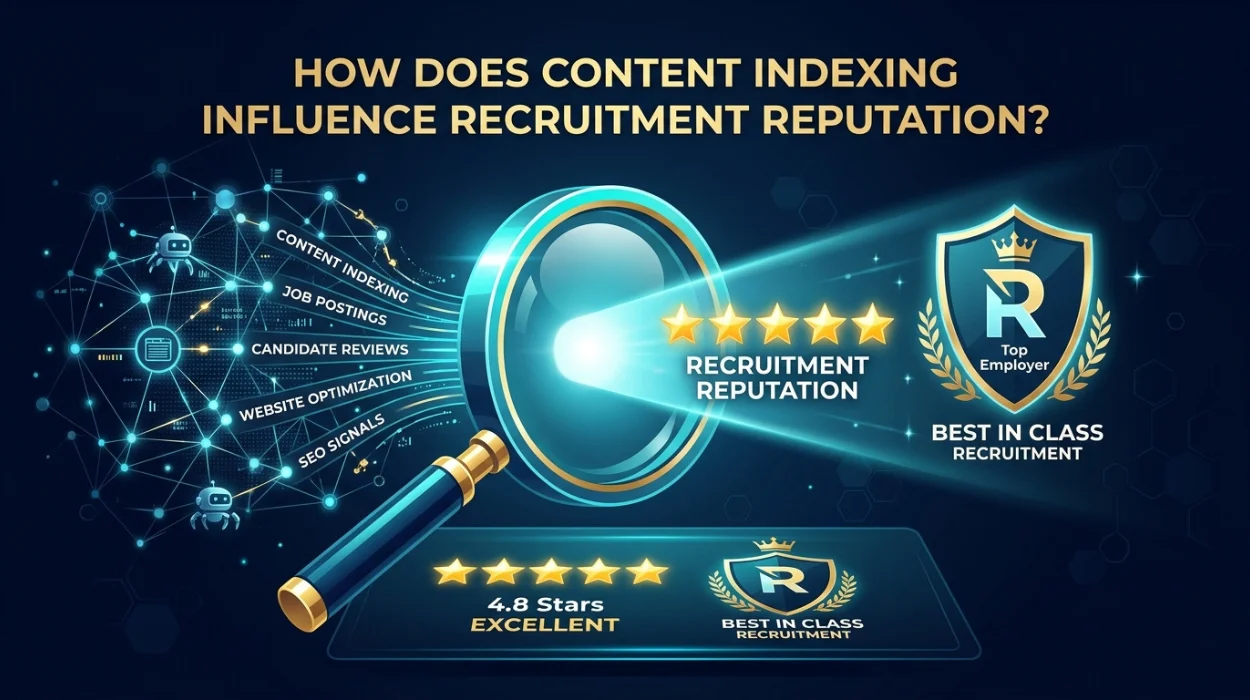
Content indexing affects online reputation by determining which publicly accessible information enters a search engine’s searchable database. Indexing is the process through which search engines discover, process, and store information from web pages so that the content can be considered for relevant search queries. A piece of content that is published online does not automatically have the same search visibility as an indexed page. Its visibility depends on whether the search engine discovers and processes the page, understands its subject matter, and considers it relevant to particular queries.
Indexing also creates persistence within the digital footprint of an attorney or firm. Once content becomes searchable, users can encounter it through queries involving an individual’s name, firm name, case references, or related legal terminology. The relationship between content and entity therefore becomes important for search reputation. If multiple indexed pages connect the same attorney to a specific controversy, the search ecosystem contains a larger body of information associated with that entity. This increases the importance of understanding content indexing as a mechanism rather than treating online reputation as a purely social phenomenon.
How Do SERPs Influence Perception of Class Action Attorneys?

SERPs influence perception because search results establish an ordered information environment through which users encounter an entity. A search engine results page does not simply display all available information in chronological order; it organises pages according to relevance, authority, query intent, and other ranking considerations. The position and presentation of individual results therefore affect which information receives initial attention. Users often form an early interpretation of an attorney or firm from the collection of results visible for a name-based or reputation-related query.
SERP evaluation also creates an interaction between content quality and content prominence. A critical page positioned prominently can receive more attention than a similar page buried deeper within search results. This does not mean that ranking position establishes factual accuracy or legal validity. It means that search visibility influences exposure, while exposure influences which information users encounter first. Entity perception is consequently shaped by the composition of visible results rather than by the total amount of information available across the internet.

How Do Reviews And Sentiment Signals Affect Legal Reputation?
Reviews affect legal reputation by providing user-generated signals that describe experiences, opinions, and perceptions associated with an attorney or firm. Review signals include ratings, written comments, review frequency, recency, topical relevance, and patterns in the language used by reviewers. Search platforms can use publicly available review information as part of the information associated with a business or professional entity. Users also interpret reviews independently, often comparing rating patterns and recurring themes when evaluating credibility.
Sentiment interpretation adds another layer because written content contains positive, negative, or neutral language connected to identifiable entities. Automated systems can analyse language patterns, while users interpret sentiment through context, specificity, and perceived credibility. A cluster of negative comments can therefore create a noticeable reputational pattern even when individual reviews differ in detail. The search impact depends on where those reviews appear, whether the pages are indexed, how strongly they relate to the entity, and how prominently they appear for relevant queries.
How Does Authority Affect The Visibility Of Backlash Content?
Authority affects visibility by influencing how search engines evaluate the reliability and prominence of information sources. Authoritative domains often possess established topical relevance, recognised publication histories, strong link relationships, and broader signals of trust. Content published by such sources can therefore receive substantial visibility when it closely matches a user’s search intent. In reputation contexts, a critical article from an established publication can have a different search trajectory from a similarly worded comment published on a low-authority page.
The distinction between authority and sentiment is essential. Negative information does not become authoritative simply because it receives attention, while positive information does not automatically rank because it has favourable language. Search engines evaluate content through multiple signals that determine relevance and ranking. Reputation analysis therefore examines the relationship between sentiment, source authority, topical relevance, entity references, and search demand. This provides a more precise explanation of why some backlash narratives become prominent while others remain largely invisible.
Dive Deeper With Our Expert Guides:
Why Retiring Partners Leave Reputation Gaps for New Associates
How a Law Firm Merger Can Scramble Your Online Reputation
Can A Digital Footprint Increase The Visibility Of Online Backlash?
A digital footprint can increase the visibility of backlash when repeated references expand the amount of searchable information associated with an entity. A digital footprint is the collection of digital information, references, profiles, publications, discussions, reviews, and other online signals connected to a person, organisation, or brand. For class action attorneys, the footprint can include professional profiles, case reporting, legal commentary, media articles, reviews, social accounts, and discussion pages. Each source contributes information to the wider entity representation.
The important factor is not simply the size of the footprint but its composition and structure. A large number of pages containing unrelated information does not necessarily create a strong reputational association. By contrast, repeated references connecting the same attorney to a particular controversy create stronger semantic relationships between the entity and the event. Search engines process these relationships when interpreting pages and queries. This demonstrates why digital footprint analysis focuses on relationships between entities and content rather than merely counting online mentions.
How Does Entity Perception Develop Across Search Ecosystems?
Entity perception develops through the cumulative representation of an identifiable person or organisation across connected information sources. An entity is a recognisable person, organisation, brand, place, or concept that search systems can associate with attributes and references. Entity perception refers to how that entity is represented through the information available across search and digital platforms. The representation is influenced by recurring descriptions, associated topics, authoritative references, reviews, media coverage, and other indexed information.
For legal professionals, entity perception becomes particularly significant when a name is repeatedly associated with the same dispute or criticism. Search engines organise information around entities and relationships rather than treating every page as completely independent. This means that recurring references can strengthen the association between an attorney and a particular topic. Users then encounter that association through branded queries, case-related searches, and broader reputation searches. Understanding entity perception therefore explains how separate content items contribute to a broader digital reputation without requiring a single page to define the entire entity.
How Can Coordinated Online Backlash Be Analysed Systematically?
Coordinated online backlash can be analysed by examining the relationship between content creation, indexing, ranking, authority, sentiment, and entity association. A structured analysis separates publication activity from search visibility because these processes operate through different mechanisms. Analysts can evaluate where the content originates, how frequently the entity is referenced, which pages are indexed, what queries surface the material, and how authoritative the sources are. They can then examine sentiment patterns and the semantic relationships connecting the content to the attorney or firm.
A useful analysis can follow four distinct stages:
- Map the digital footprint by identifying indexed pages, profiles, reviews, publications, and discussion sources connected to the legal entity.
- Evaluate content indexing by determining which references are searchable and which remain limited to their original platforms.
- Analyse SERP evaluation by comparing ranking positions, query relevance, source authority, and content characteristics across reputation-related searches.
- Measure reputation signals by assessing recurring sentiment, entity associations, authoritative references, and the distribution of positive, neutral, and negative information.
This framework separates observable search mechanisms from assumptions about user behaviour. It also provides a clearer method for understanding How Class Action Firms Can Manage Coordinated Online Backlash as a search and reputation analysis topic rather than reducing the issue to social media activity alone.
What Does Coordinated Backlash Reveal About Online Reputation?
Coordinated backlash demonstrates that online reputation is an ecosystem rather than a single piece of content. Reputation management is concerned with the information signals that shape how an entity is represented and interpreted across digital environments. Online reputation refers to the cumulative representation produced by indexed content, reviews, authoritative references, sentiment, entity associations, and search visibility. For class action attorneys, public legal activity can generate concentrated information that increases the number of signals connected to a particular name or firm.
The central distinction is between content creation and search interpretation. People and organisations create information across websites, platforms, publications, and review systems, while search engines discover, index, evaluate, and rank that information according to their own systems. Reputation signals emerge from this interaction between content and search infrastructure. Understanding these mechanisms provides a more accurate explanation of why coordinated online backlash can affect search perception without assuming that every negative reference carries equal authority or ranking influence.
Ultimately, class action attorneys attract coordinated online backlash through the convergence of public legal activity, repeated digital references, platform participation, and search visibility. Content indexing determines what information enters searchable systems, while ranking dynamics determine which information receives prominence. Authority, sentiment, reviews, and entity relationships further influence how that information contributes to online credibility and perception. Analysing these mechanisms provides a structured understanding of reputation systems and explains how digital information surrounding legal entities becomes visible, connected, and interpreted within search ecosystems.
Why do class action attorneys attract coordinated online backlash?
Class action attorneys can attract online backlash because high-profile litigation generates public attention, criticism, reviews, and discussion across digital platforms. Repeated references to the same attorney or firm can increase associated reputation signals and search visibility.
How does online backlash affect a class action attorney’s reputation?
Online backlash can influence how users interpret an attorney’s credibility when negative articles, reviews, social posts, or discussions appear prominently in search results. The impact depends on content relevance, authority, indexing, sentiment, and SERP position.
Can negative reviews affect a class action law firm’s search reputation?
Negative reviews contribute to the wider digital footprint of a law firm and can influence user perception through ratings, recurring themes, and sentiment signals. Their search impact depends on the platform, content relevance, indexing status, and visibility for branded queries.
How do search engines rank negative content about class action attorneys?
Search engines evaluate content using signals related to relevance, authority, query intent, content quality, and other ranking factors. Negative content gains search visibility when it closely matches queries and satisfies the systems used to evaluate and rank relevant pages.
How can class action firms manage coordinated online backlash?
Managing coordinated online backlash involves analysing the digital footprint, identifying indexed negative content, evaluating reputation signals, and monitoring SERP changes. A structured reputation analysis separates content creation, content indexing, ranking behaviour, sentiment, and entity perception.