
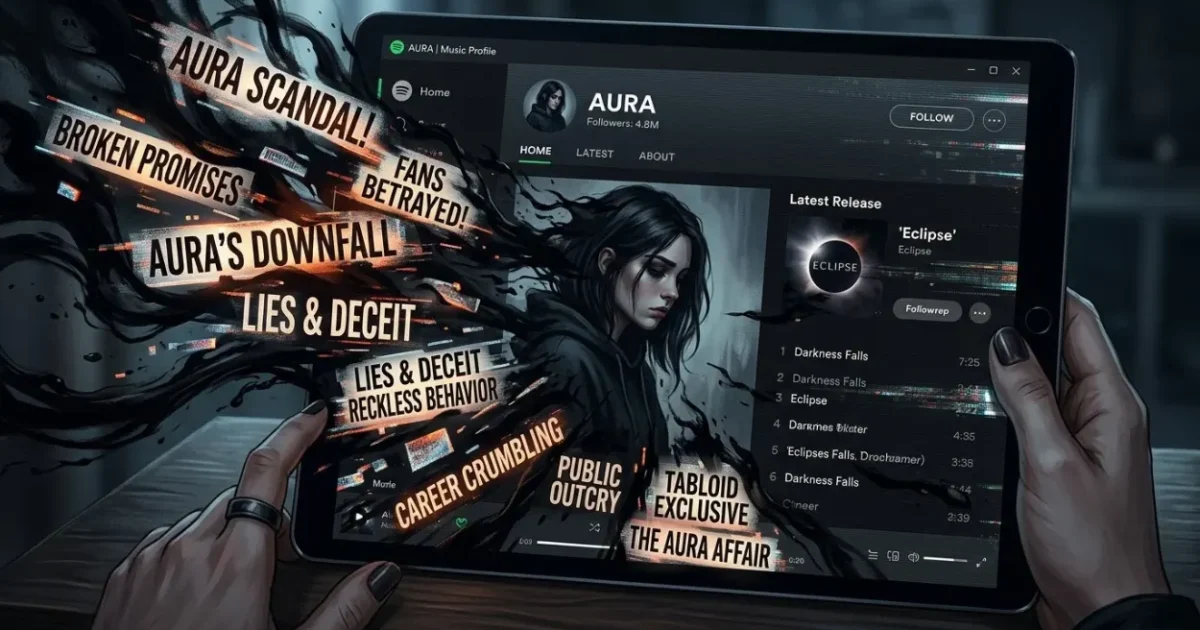
Negative press follows musicians into streaming bios when indexed articles, third-party profiles, reviews, and other reputation signals become associated with the musician’s searchable entity. Reputation management is the process of understanding and influencing how information about an individual is represented across digital search ecosystems.
Online reputation refers to the collective interpretation of indexed information associated with a person, organisation, or public entity. For musicians, streaming bios form part of this digital footprint because biography text, artist descriptions, editorial profiles, reviews, and external references contribute to entity perception. Search engines evaluate relationships between these information sources rather than treating a streaming bio as an isolated page. This creates a reputation system in which negative press can remain connected to an artist even after the original event has stopped receiving active attention.
Why does negative press become associated with a musician’s streaming bio?
Negative press becomes associated with a musician’s streaming bio when external content repeatedly connects the artist’s name, identity, work, or public history with negative topics. Search engines use textual relationships, entity references, links, structured information, and content context to understand what a page represents. When the same association appears across authoritative sources, it becomes part of the broader information environment surrounding the musician.
A streaming bio does not need to contain negative statements for negative associations to affect its surrounding search context. Search engines analyse the wider entity ecosystem, including news coverage, interviews, reviews, social profiles, knowledge sources, and other indexed pages. The musician’s name functions as an entity reference that connects these sources. As a result, negative press can influence how users interpret an otherwise neutral biography.
The strength of this association depends on factors such as source authority, content relevance, publication history, indexing status, and repetition. A highly authoritative publication carrying negative information has a different search signal from an obscure page with limited visibility. SERP evaluation therefore considers the broader relationship between the musician and the information available about them.
How do search engines connect press coverage with an artist entity?
Search engines connect press coverage with an artist entity by analysing identifiable relationships between names, activities, organisations, publications, locations, and topical references. Entity recognition allows search systems to distinguish a musician from similarly named individuals and connect relevant information to the correct searchable identity. This process forms part of how search engines construct an understanding of entities across the web.
Content indexing provides the underlying mechanism for these relationships. When an article is crawled and indexed, its words, links, headings, metadata, and contextual references become available for retrieval and interpretation. If the musician’s name appears alongside a recurring negative topic, that relationship becomes part of the indexed information associated with the entity.
The relationship becomes stronger when independent sources reproduce the same association. Repetition does not automatically establish factual accuracy, but it increases the visibility and persistence of the topic within the search ecosystem. This distinction is important because search systems organise available information rather than independently determining whether every statement about an entity is true.
Can a negative article affect how a musician is perceived in search results?
A negative article can affect search perception when it achieves sufficient visibility and becomes prominent for searches involving the musician’s name. Search perception refers to the interpretation users form from the information presented within search results. The position, title, source, publication date, description, and surrounding results all contribute to that interpretation.
Search results operate as a filtered representation of the indexed web. A musician can therefore have a neutral or positive streaming bio while users encounter negative external content before reaching the official biography. This creates a difference between the information controlled by the artist and the information that dominates the search environment.
Ranking dynamics also influence the effect of negative press. Pages with stronger relevance, authority, engagement, links, or historical visibility can occupy prominent positions for branded searches. When negative content satisfies the search intent associated with the musician’s name, it becomes a significant reputation signal even when the streaming bio itself contains no negative information.
What role does a streaming bio play in a musician’s digital footprint?
A streaming bio forms one component of a musician’s digital footprint by providing structured descriptive information about the artist. A digital footprint refers to the collection of information created, published, indexed, or associated with an individual across digital platforms. Streaming bios contribute to this footprint because they provide search engines and users with direct information about the artist’s identity, work, genre, history, and professional positioning.
The bio itself acts as an entity-confirmation signal when its information aligns with other credible sources. Consistent names, artist descriptions, discographies, affiliations, and professional information help establish relationships between the streaming profile and external references. This consistency assists search systems in understanding whether different pages refer to the same entity.
A streaming bio does not function as a complete reputation system. Its influence depends on the wider information network surrounding the artist. If authoritative external pages contain persistent negative associations, changing the wording of a streaming bio does not automatically remove those associations from search results.
How do reviews influence a musician’s reputation signals?
Reviews influence a musician’s reputation signals by providing third-party evaluations that search engines and users can interpret as evidence about the artist, release, performance, or professional activity. Review signals refer to publicly available evaluations that contribute contextual information about an entity. Their relevance depends on factors such as source credibility, topical relevance, publication context, and the relationship between the reviewer and the musician.
Sentiment interpretation also affects how review content is understood. Search systems can analyse language patterns and contextual terms associated with positive, negative, or neutral evaluations. A review containing criticism does not automatically create a negative entity reputation, because the overall context determines what the content communicates.
Review content becomes more significant when it ranks prominently for searches involving the musician or their work. Users frequently interpret visible third-party commentary as an independent reputation signal. Consequently, review pages form part of the search environment in which the streaming bio is evaluated.
Why does negative press remain visible after the original story loses attention?
Negative press remains visible because content indexing and ranking are not directly tied to the current level of public attention surrounding an event. Once a page has been indexed, it remains part of the searchable information environment unless it is removed, deindexed, blocked, or displaced through normal ranking processes. Historical content therefore retains a potential search presence after active media attention declines.

Publication history also contributes to persistence. Established pages can accumulate links, references, engagement, and historical relevance over time. These signals create ranking strength that does not disappear simply because newer events receive more attention.
Search engines also evaluate relevance according to the query rather than the emotional importance of the original event. A historical article can remain relevant when a user searches the musician’s name alongside the subject discussed in that article. This creates a mechanism through which old negative press continues to appear within contemporary SERPs.
How do authority and trust signals affect negative press about musicians?
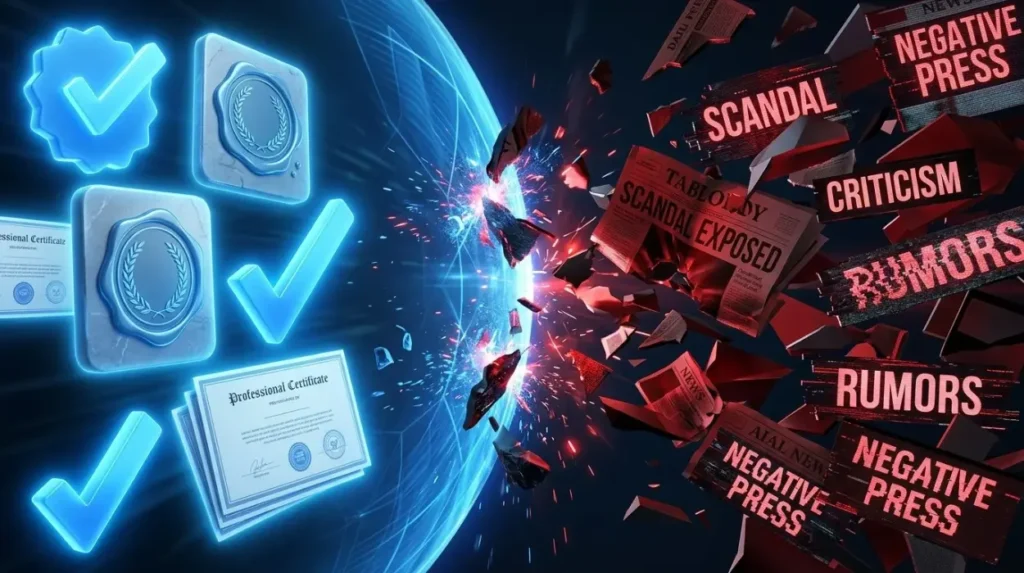
Authority and trust signals influence how information is interpreted by determining the perceived reliability and relevance of the source publishing it. Authority refers to the strength and recognition of a source within a particular information environment. Trust signals refer to indicators that help search systems and users evaluate the credibility, consistency, and reliability of information.
A negative article from an established publication therefore occupies a different position within the information ecosystem from an unverified page with little independent recognition. Search systems assess signals connected to the source, content, links, topical relevance, and entity relationships. These factors influence whether a page receives search visibility.
Trust does not mean that every statement from an authoritative publication is factually correct. Search algorithms operate through measurable signals rather than human-style verification of every claim. Reputation analysis therefore requires distinguishing source authority from factual accuracy when evaluating negative content.
How does content ranking influence a musician’s online reputation?
Content ranking influences online reputation by determining which information becomes most visible when users search for an artist. Ranking systems order indexed pages according to relevance, quality-related signals, query intent, authority, freshness, and other computational factors. The resulting SERP becomes an important interface between the musician’s digital footprint and the user.
High-ranking negative content has greater practical visibility because users encounter it earlier in the search journey. Lower-ranking content remains indexed but receives less exposure through ordinary search behaviour. This distinction explains why reputation is closely connected to search visibility rather than simply to the total amount of information available online.
Ranking also changes the balance between first-party and third-party information. A musician controls the content of an official or streaming bio, but external publishers control their own pages. Search perception therefore emerges from the combined visibility of controlled and uncontrolled information sources.
Can updating a streaming bio remove negative search associations?
Updating a streaming bio can improve the clarity and consistency of an artist’s entity information, but it does not directly remove negative external content from search indexes. A biography update changes the information presented on that specific platform. External articles, reviews, interviews, and profiles remain separate indexed resources.
An updated bio can nevertheless contribute to entity clarity when it accurately reflects information that is consistent with other authoritative sources. Consistency reduces ambiguity around the musician’s identity and professional attributes. This creates a clearer information structure for both users and search systems.
Negative associations require analysis at the level where those associations exist. If the association originates from an indexed news article, changing a streaming profile does not modify the news article. The distinction between first-party profile information and third-party indexed information is therefore central to understanding search reputation.
How can musicians understand the connection between negative press and search perception?
Musicians can understand the connection by analysing how their name, biography, releases, reviews, interviews, and external coverage interact across indexed search results. Reputation analysis begins with identifying the information sources connected to the artist entity. The objective is to understand the structure of the search ecosystem rather than simply count positive or negative pages.
A useful analysis evaluates the source, topic, ranking position, publication date, entity relationship, and content context of each relevant result. This establishes which reputation signals have actual search visibility and which remain relatively obscure. It also distinguishes persistent information from temporary ranking changes.
The relationship between negative press and streaming bios is therefore indirect but significant. The bio forms part of the artist’s digital identity, while external content supplies additional reputation signals that influence the surrounding search environment. Understanding both layers provides a more accurate explanation of how online credibility develops.
Dive Deeper With Our Expert Guides:
Why Off-Stage Behaviour Defines an Artist’s Brand Online
How Plagiarism Allegations Spread Through Music Media
What does negative press mean for a musician’s overall digital footprint?
Negative press becomes part of a musician’s digital footprint when it is published, indexed, connected to the artist entity, and made discoverable through relevant searches. The digital footprint is not a single profile or website; it is an interconnected collection of information sources that collectively shape online visibility. Streaming bios represent one controlled component within this larger ecosystem.
The persistence of negative information depends on indexing, ranking, authority, relevance, and entity relationships. These mechanisms explain why a musician’s current professional identity does not automatically replace historical information in search results. Search systems continue to evaluate indexed resources according to their relevance to user queries.
The key distinction is between content ownership and search perception. A musician can control the wording of a streaming bio while having limited control over how independent sources rank around it. Reputation management in this context refers to understanding the information ecosystem, identifying reputation signals, and analysing how those signals affect search visibility and entity perception, including Cleaning Up Negative Press in Your Streaming Bios.
Negative press can follow musicians into streaming bios because search reputation operates across interconnected information sources rather than within a single profile. Streaming bios contribute to entity clarity, while news articles, reviews, interviews, social profiles, and other indexed resources create the broader digital footprint.
Search engines evaluate relationships between entities, content, sources, and queries to determine which information appears in SERPs. Authority, relevance, indexing, sentiment, and ranking dynamics influence how users encounter and interpret that information. Understanding these mechanisms explains why historical negative coverage can remain associated with an artist even when the streaming bio itself contains neutral information.
The central principle is that online reputation is an ecosystem. A musician’s search perception results from the combined visibility and interpretation of information distributed across that ecosystem, making content indexing, entity perception, reputation signals, and SERP evaluation essential concepts for understanding digital credibility.
Why does negative press appear when people search for a musician?
Negative press can appear when indexed news articles, reviews, interviews, or profiles are strongly associated with the musician’s name. Search engines evaluate these pages as part of the artist’s wider digital footprint and search reputation.
Can negative articles affect a musician’s streaming bio reputation?
Yes, negative articles can influence the search context surrounding a streaming bio even when the bio itself contains neutral information. External content contributes reputation signals that affect how users interpret the artist entity in search results.
How do search engines connect negative press to a musician?
Search engines connect content to musicians through entity references, names, contextual terms, links, and other indexed information. Repeated associations between an artist and a negative topic can become part of the broader entity perception shown in search results.
Does changing a musician’s streaming bio remove negative press from Google?
Updating a streaming bio does not directly remove negative articles or reviews from search indexes because those pages are controlled and indexed separately. A bio update primarily improves the clarity and consistency of the artist’s own profile information.
How can musicians manage negative press in streaming bios?
Managing negative press involves analysing the sources, ranking positions, content context, and reputation signals associated with the musician’s name. Understanding these search visibility factors helps identify how external coverage affects the artist’s overall online reputation.