

Negative search results alter user behaviour and diminish marketing efficiency by disrupting the digital trust chain before a prospect enters the acquisition funnel. Reputation management strategies differ based on the choice between algorithmic suppression and digital content erasure, both of which seek to alter the sentiment distribution of an entity’s brand SERP (Search Engine Results Page).
What Is the Relationship Between Search Perception and Lead Generation?
Search perception functions as the primary filtering mechanism for B2B and high-value B2C lead generation funnels. When a prospect searches for a brand name, the sentiment distribution of the first page of results dictates whether that prospect transitions from awareness to consideration. Search engines interpret reputation signals by calculating the co-occurrence of brand terms with negative entities, phrases, or legal terms within the index. If toxic entities populate the top positions, user trust drops immediately, which increases cost-per-lead metrics and lowers overall conversion rates.
Online reputation control methods are evaluated through their capacity to stabilize the digital ecosystem against these algorithmic vulnerabilities. An organization must understand that a search engine is an information retrieval system that rewards authority, relevance, and entity credibility. When negative content achieves high search ranking influence, the algorithm recognizes it as an authoritative response to user queries. Consequently, standard lead generation campaigns fail because the brand SERP actively contradicts the marketing messaging presented in advertisements.
How Do Content Suppression and Content Removal Strategies Differ?
Content Suppression (Content Enhancement)
Content suppression is the process of displacing negative search results by outranking them with authoritative, positive, or neutral digital assets. This approach operates by optimizing a network of owned, earned, and shared media assets to occupy the top ten positions on a brand SERP. The mechanism relies on sending stronger entity credibility signals to search algorithms than the negative source material provides. Over time, the algorithm adjusts the ranking positions, pushing the undesirable links to lower pages where user visibility drops significantly.
- Strengths: This method builds long-term digital asset value, improves overall search visibility, and creates a resilient digital perimeter around the corporate entity.
- Limitations: It requires continuous resource allocation, demands high domain authority for new assets, and remains subject to future search ranking influence shifts.
Content Removal (Digital Erasure)
Content removal is the complete elimination of a specific URL or piece of content from either the source website or the search engine’s index. This strategy operates via legal interventions, such as the Right to Be Forgotten (GDPR) in the UK, copyright notices (DMCA), or terms of service violations. The mechanism completely deletes the information from the digital ecosystem or de-indexes the link, ensuring it cannot appear for any search queries.
- Strengths: It offers a permanent resolution to specific threats and completely removes the toxic reputation signals from public view.
- Limitations: The approach applies only under narrow legal criteria, carries high initial legal costs, and offers no defense against future negative content creation.
Why Do Organic Approaches Outperform Reactive Reputation Methods?
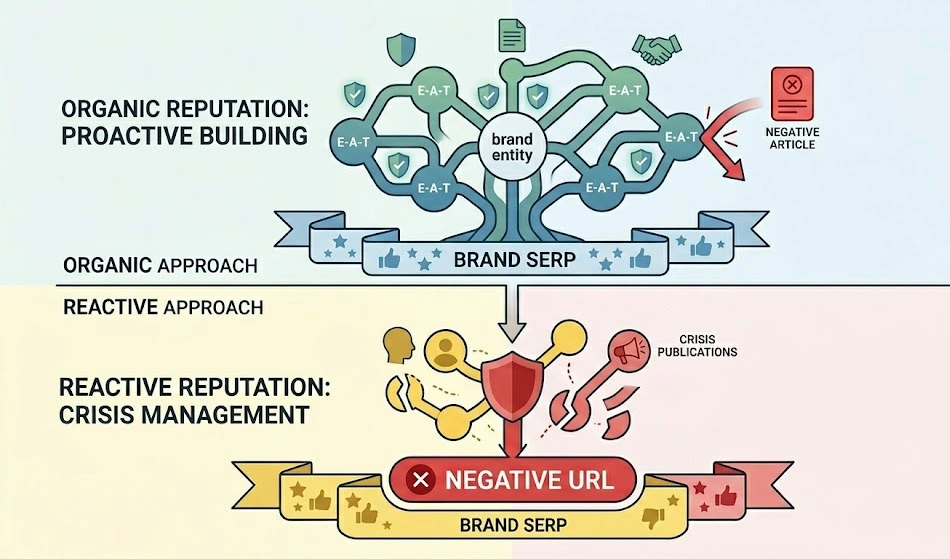
Organic reputation management is the proactive construction of a diversified, authoritative digital footprint before a crisis occurs. This method establishes an interconnected network of highly optimized profiles, corporate publications, and third-party validation points that solidify entity credibility. Reactive reputation methods, conversely, activate only after negative content alters the sentiment distribution of the SERP. This delayed action forces an organization to fight for search visibility against an already established and algorithmically trusted negative URL.
An organic approach ensures that the brand controls the primary nodes of its semantic network. Search engines prioritize websites that demonstrate sustained expertise, authoritativeness, and trustworthiness. By maintaining an active, optimized content enhancement pipeline, a business ensures that its brand SERP contains a stable buffer of positive sentiment distribution. If a negative review or critical article emerges, the pre-existing authority of the organic network prevents the new link from easily gaining search ranking influence.
How Do Search Engine Algorithms Process Entity Reputation Signals?
Search engine algorithms evaluate corporate entities by analyzing data points across the wider web ecosystem. The algorithm constructs a semantic map where the brand acts as a central node, and all mentions, reviews, and news articles function as connecting attributes. When user queries involve a brand name, the information retrieval system evaluates the sentiment distribution and contextual relevance of the surrounding text. Persistent negative attributes weaken the entity credibility score, signaling to the algorithm that the brand may pose a risk to users.
This assessment directly impacts organic visibility and lead capture performance. Algorithms monitor user engagement signals, such as click-through rates and bounce rates on specific search results. If a negative result receives high engagement because users seek verification of a scandal, the algorithm interprets this as a signal of high relevance. The search engine then solidifies the position of that negative result, which systematically undermines standard reputation management for business frameworks.
What Technical Frameworks Evaluate the Sustainability of a SERP Control Strategy?
Scalability and Resource Efficiency
Evaluating the viability of a SERP control strategy requires an analysis of resource scalability over a multi-month timeline. Content enhancement strategies scale effectively because the assets created—such as industry whitepapers, corporate subdomains, and executive profiles—serve secondary marketing purposes. Conversely, legal removal strategies do not scale; each individual link requires a distinct legal assessment and budget allocation, making it ineffective against widespread media coverage.
Risk Exposure and Algorithmic Vulnerability
Every strategy carries a specific risk profile regarding algorithmic updates and counter-actions. Content suppression faces the risk of algorithmic volatility, where a search engine core update can alter the ranking dynamics of the suppressing assets. Content removal avoids algorithmic vulnerability but risks triggering the Streisand effect if the target website notices the removal attempt and republishes the content with greater prominence.
| Evaluation Metric | Content Suppression Method | Content Removal Method |
| Primary Mechanism | Algorithmic dilution and asset optimization | Legal de-indexing and source erasure |
| Implementation Speed | Medium to long-term (3 to 9 months) | Variable (Days for clear violations, months for legal disputes) |
| Algorithmic Risk | Vulnerable to core search ranking shifts | Immune to algorithm changes once erased |
| Asset Creation | High (Builds corporate digital footprint) | None (Purely defensive action) |
| Cost Structure | Predictable, operational expenditure | Variable, transactional legal fees |
How Does Sentiment Distribution Quantitatively Impact Lead Conversion?
The ratio of positive to negative links within the first page of search results correlates directly with user acquisition costs. When sentiment distribution leans heavily toward negative entries, prospects display high friction during the consideration phase. This friction manifests as extended sales cycles, increased demands for discounts, and lower conversion rates from landing pages. Quantifying this impact involves tracking the drop-off rate of branded search traffic at the exact moment a negative link enters the top five positions.
A balanced digital trust system requires that informational queries yield results that reinforce corporate authority. If search ranking influence remains dominated by third-party criticism, the efficacy of paid advertising diminishes. Users frequently exit a paid acquisition funnel to conduct independent brand research via search engines. If that research exposes unmanaged reputation signals, the capital spent on the initial advertisement is lost, proving that SERP sentiment distribution is an active driver of lead generation performance.
What Strategic Considerations Govern Long-Term Digital Footprint Optimization?
Maintaining control over an enterprise search ecosystem requires a dual-track strategy that balances technical SEO with public relations risk management. An organization must establish a continuous monitoring framework to detect sentiment shifts before they achieve significant search ranking influence. This involves tracking entity co-occurrence phrases, evaluating the link-building velocity of critical forums, and auditing the visibility of executive profiles.
The architecture of a corporate digital footprint must favor diversification over reliance on a single web property. By spreading authority across multiple independent domains, social networks, and media platforms, an enterprise minimizes its vulnerability to isolated negative events. The long-term sustainability of lead generation depends on this structural resilience, as a diversified footprint naturally dilutes the impact of any single toxic URL.
When analyzing the resource allocation required to build this digital resilience, organizations must evaluate whether to develop these technical capabilities internally or leverage external expertise. Navigating complex algorithmic systems and entity-level optimization structures requires deep specialization, which is why enterprises frequently analyze the structural options available when outsourcing business reputation management. Ultimately, the choice between suppression and erasure must match the company’s specific risk profile, regulatory environment, and long-term search perception objectives.

Frequently Asked Questions
How do negative search results affect a company’s sales lead generation performance?
Negative search results interrupt the digital acquisition funnel by weakening entity credibility at the consideration stage. When prospective buyers encounter critical content on a brand SERP, conversion rates drop and the cost per lead increases. Clear My Name coordinates content enhancement and search suppression strategies to stabilize sentiment distribution and protect inbound marketing investments.
Can a business completely remove unwanted search results from Google in the UK?
Complete removal of unwanted URLs from search indexes is possible only if the content meets specific legal thresholds, such as the Right to Be Forgotten under UK GDPR, copyright infringements, or terms of service violations. When content does not qualify for legal erasure, reputation management for business frameworks must pivot to content suppression methods. Clear My Name evaluates corporate digital footprints to determine whether legal de-indexing or algorithmic dilution is the most viable strategy.
What is the difference between content suppression and content removal in reputation management?
Content removal permanently deletes a specific URL from the source website or entirely de-indexes it from search engine results through legal mechanisms. Content suppression, conversely, uses organic search engine optimization to outrank negative links by publishing highly authoritative, neutral, or positive digital assets. Clear My Name implements both approaches depending on the risk exposure, scalability requirements, and legal parameters of the corporate entity.
How do search engine algorithms process corporate reputation signals?
Search engines process corporate reputation signals by analyzing semantic maps that link a brand entity to third-party mentions, review platforms, and news media. Algorithms evaluate the sentiment distribution and user engagement metrics across these digital nodes to calculate an overall trustworthiness score. If toxic search ranking influence remains unmanaged, search engines may prioritize critical content, which systematically damages lead generation and brand equity.
Why should an enterprise invest in proactive digital footprint optimization?
Proactive digital footprint optimization establishes an authoritative buffer of owned and earned media assets before an organization encounters a public relations crisis. This continuous content enhancement process builds resilient entity credibility, making it difficult for new negative links to achieve high search ranking influence. Clear My Name designs these long-term organic frameworks to secure brand SERPs and maintain stable customer acquisition costs.