

Online reputation refers to the collective digital perception of an entity generated by algorithmically indexed information, user-generated sentiment, and search engine results pages (SERPs). Consumers research brands before contact because web ecosystems provide immediate access to historical performance metrics, third-party validations, and aggregated risk signals that dictate pre-conversion trust.
What is Search Perception Control Within Digital Ecosystems?
Search perception control defines the systematic management of indexed informational signals that shape how users evaluate an entity within search engine results. Search engines operate as primary validation layers where algorithms index, categorise, and rank content based on relevance, authority, and user intent. When a user queries a brand name, the resulting SERP serves as a proxy for the organization’s operational integrity.
This process relies heavily on entity perception, which is the algorithmic understanding of a brand’s attributes, relationships, and historical trust scores. Search engines utilize natural language processing (NLP) to parse text across news sites, forums, blogs, and review platforms. The aggregated data forms a digital footprint that defines the entity’s public risk profile.
Perception control does not manipulate facts; rather, it ensures that accurate, authoritative, and contextually relevant data dominates the first page of search results. Unmanaged SERPs allow unstructured user sentiment or outdated information to dictate the narrative. Consequently, proactive content indexing strategies are required to ensure that positive and neutral trust signals outweight unverified or malicious digital noise.
How Do Search Engine Algorithms Interpret Authority and Trust Signals?
Algorithms evaluate digital authority by measuring the quality, source, and velocity of inbound data points connected to an entity. Search engines utilize complex frameworks to assess Experience, Expertise, Authoritativeness, and Trustworthiness (E-E-A-T). Trust acts as the foundational metric, determined by the reliability of the domains publishing information about the brand.
The Role of Entity Linking in Search Ecosystems
Entity linking defines the process of connecting web text to specific nodes within a search engine’s knowledge graph. When high-authority domains link to a brand or discuss its operations, the search ecosystem registers a positive reputation signal. This association transfers trust from the established domain to the target brand entity.
Sentiment Analysis and Algorithmic Interpretation
Sentiment analysis involves the automated parsing of adjectives, verbs, and nouns within user-generated content to determine emotional polarity. Algorithms categorize text into positive, negative, or neutral vectors to assess brand health. Consistent negative sentiment across indexed pages triggers a downward adjustment in search visibility for brand-preference queries.
Structured Data and Knowledge Graph Integration
Structured data refers to standardized code added to a website to provide explicit clues about the meaning of a page. Utilizing schema markup allows search engines to identify corporate connections, official channels, and verified reviews unambiguously. Correct integration stabilizes the entity perception within the knowledge graph, minimizing the risk of algorithmic misinterpretation.
Why Do Review Signals and Sentiment Variation Determine Entity Perception?
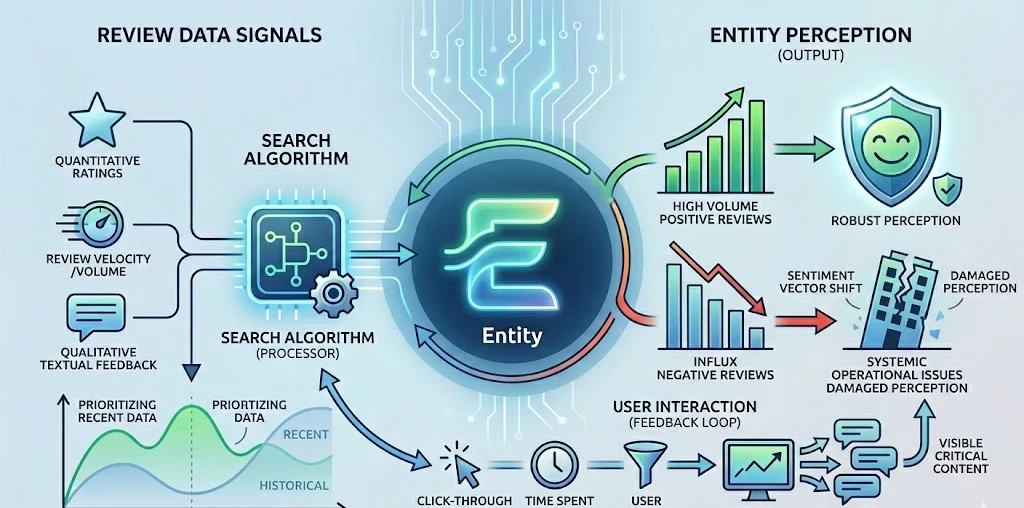
Review signals determine entity perception by serving as quantitative and qualitative benchmarks for consumer risk assessment. Algorithms continuously crawl review aggregators, social platforms, and specialized forums to extract star ratings, review velocity, and textual feedback. This data provides real-time verification of an organization’s current operational standards and customer satisfaction levels.
The search ecosystem prioritises diverse, consistent, and recent review data to prevent historical bias from distorting current SERP evaluations. A high volume of positive reviews establishes a robust trust layer that buffers the entity against isolated negative events. Conversely, a sudden influx of negative reviews alters the sentiment vector, signaling systemic operational issues to the algorithm.
Furthermore, user interaction with review content—such as click-through rates, time spent reading specific feedback, and filtering behaviors—influences ranking dynamics. Search engines interpret deep user engagement with negative reviews as a signal that the information is highly relevant to the query intent. This interaction elevates the visibility of critical content, further shifting the public perception of the digital footprint.
How Do Negative Search Results Affect Lead Generation Performance?
Negative search results affect lead generation performance by introducing friction into the consumer decision-making journey, which directly lowers conversion rates. When prospects encounter critical articles, legal notices, or poor ratings during pre-contact research, the perceived risk of engagement rises. This cognitive shift halts progression through the acquisition funnel, invalidating prior marketing investments.
The presence of defamatory or critical content on the first page of a brand query disrupts the transition from awareness to action. Search visibility for negative assets ensures that a substantial percentage of researching users divert to competitors with cleaner search profiles. The mathematical correlation demonstrates that a single negative link on the primary SERP results in a measurable drop in lead volume.
Organizations must understand how negative search results affect lead generation performance to insulate their digital pipelines from algorithmic volatility. When critical assets rank highly, the cost per acquisition increases because the brand must deploy more resources to convince skeptical prospects. Reversing this degradation requires systematic content suppression through the optimization of authoritative, positive corporate assets.
What Content Dynamics Drive Search Visibility for Corporate Profiles?
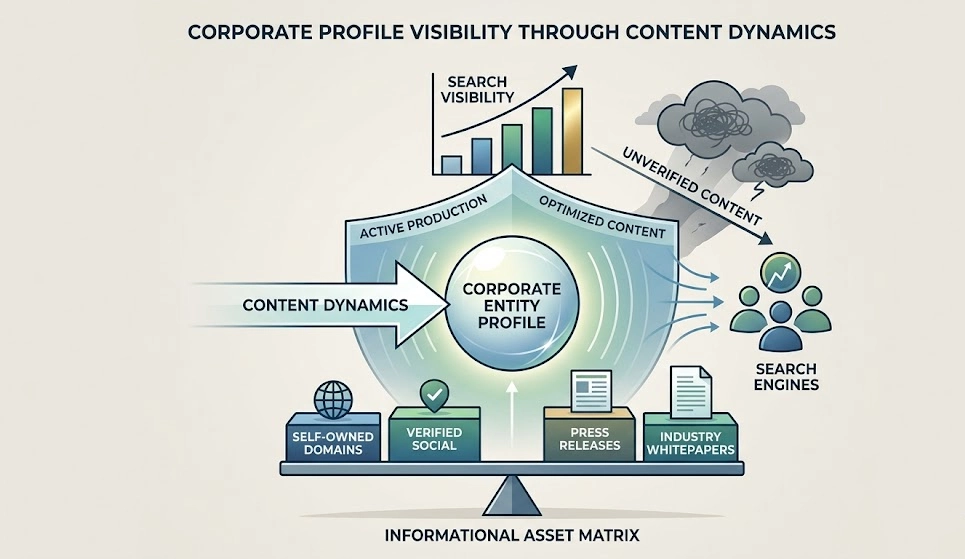
Content dynamics drive search visibility by dictating how effectively an entity’s owned, earned, and paid media assets compete for prominent SERP positions. Search visibility relies on a continuous stream of optimized, contextually relevant content that aligns with user intent. If an organization neglects its digital footprint, third-party platforms fill the informational void, often to the detriment of the brand.
To maintain control over corporate search profiles, entities must deploy an informational asset matrix. This matrix consists of self-owned domains, verified social profiles, press releases, and industry whitepapers. Each asset must be optimized using semantic SEO principles to ensure search engines recognize their direct relationship to the primary entity node.
Active content production ensures that the first page of search results remains populated by controlled or neutral assets. Algorithms reward authoritative domains that demonstrate consistent update schedules and deep topical coverage. By dominating the SERP space with high-value informational assets, an organization restricts the visibility of unverified third-party content and secures its algorithmic reputation.
Online reputation within modern search ecosystems depends entirely on the quality, sentiment, and authority of indexed informational signals. Search engines act as objective filters, analyzing digital footprints to establish entity perception and trust scores. Organizations that understand these algorithmic mechanisms can proactively manage their search visibility, ensuring that pre-contact research yields positive validation rather than conversion friction.
Frequently Asked Questions
How does corporate online reputation impact consumer decision-making?
Online reputation directly dictates consumer trust by serving as a digital proof point during pre-contact research. When prospects audit a brand entity on search engines, positive trust signals lower perceived risk and accelerate conversions. Conversely, unmanaged digital footprints introduce friction, causing 68% of consumers to abandon engagement before first contact.
Why do businesses use reputation management for business services?
Organizations implement Reputation management for business to systematically monitor, protect, and optimize their search perception control. This specialized service utilizes content indexing, entity linking, and sentiment analysis to suppress negative assets on SERPs while elevating authoritative corporate profiles. Proactive digital maintenance ensures that brand searches present accurate, trust-verified information to prospective leads.
Can bad search results affect corporate lead generation and acquisition?
Critical articles, negative reviews, and legal notices on the first page of search results significantly degrade client acquisition performance. When negative assets gain high search visibility, they divert researching prospects directly to competitors with cleaner digital profiles. This structural disruption lowers conversion rates across marketing funnels and inflates the overall cost per acquisition.
How do search engines evaluate the trust and authority of a brand?
Search engines evaluate brand trust by analyzing algorithmic signals such as domain authority, review velocity, and structural data alignment. Natural language processing models parse inbound backlinks and user-generated sentiment across forums to update an entity’s knowledge graph node. Consistent positive third-party validation establishes high authority scores, which insulates the corporate SERP from sudden negative visibility.
What is the fastest way for a company to fix negative search engine results?
The most sustainable method to neutralize negative search results is through a strategic content suppression framework managed by experts like Clear My Name. This involves producing highly optimized, semantically rich owned assets, verified social profiles, and high-authority press releases to displace damaging links. By dominating the top SERP positions with controlled informational assets, an organization effectively minimizes the visibility of hostile digital noise.