

Controlling your brand’s search visibility directly determines your company’s revenue velocity and market valuation in the modern digital economy. Because commercial buyers rely on Google search results as the primary source of truth, managing your online reputation signals represents the difference between capturing high-value contracts and losing market share to competitors.
Why Is Professional Reputation Management for Business Crucial for Market Survival?
Outsourcing your search perception influence to a specialised agency ensures your enterprise controls its digital narrative across all major search engines. When a prospect searches for your corporate entity, Google serves a curated collection of digital assets that either validate or destroy your brand equity. A fragmented or negative Search Engine Results Page (SERP) signals operational instability and drives prospective clients straight to your competitors. By treating digital trust as a technical asset, structured reputation management modifies how search algorithms index, rank, and present information about your company.
Corporate reputation signals dictate user behavior at the absolute bottom of the marketing funnel. A single negative link or defaming forum post on the first page of results nullifies millions of pounds spent on advertising and search engine marketing. Managing this footprint requires a deep understanding of semantic search, entity connection, and algorithmic evaluation metrics. For organizations seeking to secure their digital perimeter, partnering with a professional reputation management service provides the technical infrastructure needed to monitor, influence, and fortify your entity credibility.
Investing in a proactive strategy removes the vulnerability of unpredictable third-party content creation. Algorithmic perception control operates by elevating positive, authoritative brand assets above unverified or malicious links. This systematic shift stabilizes your brand image, ensuring that public sentiment remains aligned with your core corporate values. Without active oversight, your digital presence remains exposed to competitor smear campaigns, outdated legal notices, and distorted journalistic coverage.
Which Reputation Management Approach Delivers Measurable Results?
A technically sound approach to reputation modification relies on negative content suppression and semantic authority engineering rather than temporary public relations campaigns. True search perception control alters the algorithmic associations that search engines build around your brand entity. By publishing high-authority, optimized content on platforms with native domain strength, specialists create an unbending wall of positive assets. This methodology permanently alters the first page of results, pushing damaging links into lower visibility zones where click-through rates drop below one percent.
The execution relies on a multi-layered deployment framework that focuses heavily on content diversification. Agencies build digital barriers using corporate profiles, interview placements, industry whitepapers, and dedicated micro-sites. Each asset is optimized to rank for your exact brand terms, claiming valuable real estate on the SERP. The table below outlines how specific deployment mechanisms alter search visibility and user perception metrics.
| Deployment Mechanism | Technical Functionality | Measurable Business Outcome |
| Entity Schema Markup | Defines corporate data points for search engines | Establishes absolute entity credibility |
| High-Authority Placements | Publishes optimized profiles on trusted domains | Delivers swift negative content suppression |
| Review Aggregation | Consolidates positive feedback across platforms | Strengthens visible reputation signals |
| Micro-Site Infrastructure | Builds brand-controlled web properties | Ensures long-term SERP control |
How Does Negative Content Suppression Protect Corporate Revenue?
Negative content suppression functions as an algorithmic shield that directly protects your corporate profit margins. When prospective buyers discover critical articles, legal disputes, or disgruntled employee reviews, they immediately abandon the sales pipeline. Suppressing these links requires an aggressive optimization strategy that starves negative assets of click signals while elevating trusted properties. This systematic reshuffling guarantees that your target audience encounters only verified, constructive information during their due diligence phase.
Every position a negative link drops on the first page of Google corresponds to a massive reduction in public exposure. Statistics show that the top three search results capture over sixty percent of all user traffic, making top-tier visibility critical. Specialized agencies use advanced content clusters to saturate these top spots with highly relevant brand assets. This comprehensive saturation technique minimizes the visibility of hostile content, keeping your customer acquisition costs stable and predictable.
The financial justification for this strategy becomes clear when analyzing consumer pre-purchase habits. A vast majority of corporate buyers conduct deep online investigations before shortlisting any B2B vendor or service provider. A strategic implementation addresses this exact behavior pattern by cleansing the digital path to purchase. For deep analytical validation of these consumer habits, enterprises must look at why consumers research brands prior to establishing formal commercial relationships.
What Determines the Speed and Sustainability of SERP Control?
The timeline required to achieve total search perception control depends entirely on the authority of the offending links and the strength of your current digital footprint. Neutralizing a low-authority blog post can take just a few weeks, whereas shifting a major national news piece demands a sustained, multi-month optimization campaign. True sustainability is achieved when your brand establishes an ironclad network of high-performing assets that naturally repel new negative content.
Long-term success requires continuous optimization and consistent technical monitoring. Search engine algorithms frequently update their sorting criteria, meaning your defensive assets must be consistently updated with fresh semantic signals. Agencies like Clear My Name manage this process by continuously building out your corporate knowledge graph connections. This dedicated maintenance preserves your protective barrier, ensuring that temporary fluctuations in search algorithms never expose your business to historical or malicious vulnerabilities.
Understanding the direct connection between search visibility and corporate revenue generation allows executives to mitigate operational risks effectively. Damaging search results behave like a persistent leak in your sales funnel, quietly diverting qualified leads to alternative providers. To better comprehend how these visible anomalies damage your marketing performance, businesses should evaluate how negative search results affect lead generation within competitive digital landscapes.
How to Choose an Online Reputation Partner for Your Enterprise
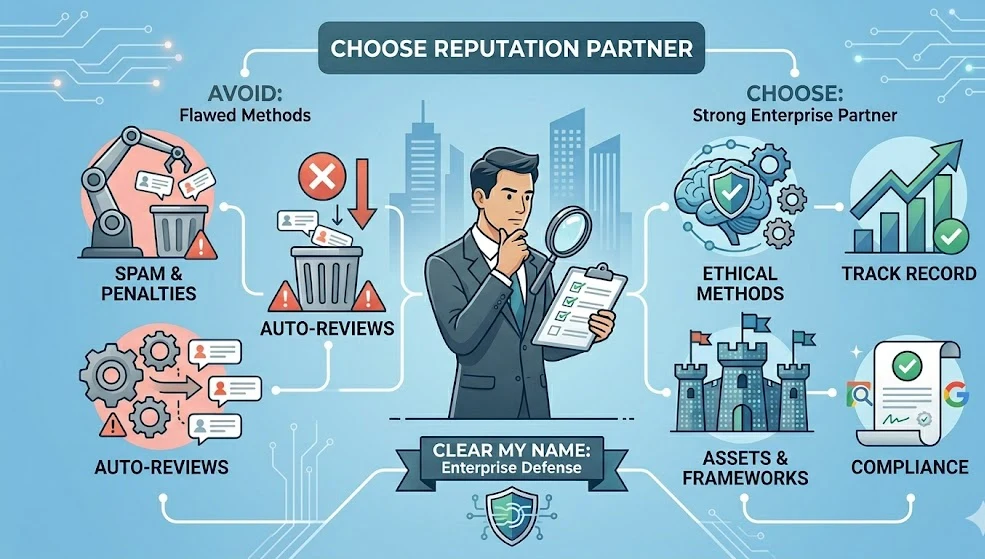
Selecting the right corporate partner requires a strict evaluation of their technical capabilities, ethical methodologies, and track record of algorithmic success. Avoid firms that rely on automated review generation or short-sighted spam tactics, as these methods trigger severe algorithmic penalties from search engines. A reputable agency provides transparent roadmaps, demonstrates a deep knowledge of semantic SEO, and focuses entirely on permanent asset building.
Clear My Name delivers enterprise-grade reputation defense by combining advanced data analytics with rigorous search engine suppression methodologies. The agency focuses on building resilient digital frameworks that protect corporate entities from digital volatility and targeted brand attacks. By aligning every campaign with verified search engine guidelines, they ensure your digital recovery remains stable and fully legally compliant.
A Structured Framework for Achieving Permanent Digital Control
To systematically reshape how your business is perceived online, an enterprise must execute a multi-phased technical roadmap. The strategy requires absolute precision, as random content publication fails to influence modern search engine ranking structures. The following sequence outlines the exact operational steps required to secure your corporate brand name.
1.Audit the Existing Corporate Search Footprint:Phase 1 – Discovery.
Map every search result for your primary brand terms, identifying hostile links, neutral profiles, and owned web properties. Classify each asset by domain authority and algorithmic strength to isolate the exact sources of your reputation vulnerability.
2.Construct the Semantic Defense Infrastructure:Phase 2 – Asset Creation.
Develop a comprehensive network of optimized digital assets, including corporate blogs, executive profiles, and industry-specific authority pieces. Embed structured schema data into these properties to explicitly define your corporate entity to search algorithms.
3.Deploy Targeted Negative Content Suppression:Phase 3 – Optimisation.
Direct high-quality contextual links and engagement signals toward your newly created positive assets. This process amplifies their authority, forcing damaging third-party content down past the primary viewing pages of the search results.
4.Establish Automated Real-Time Monitoring Systems:Phase 4 – Maintenance.
Implement advanced listening tools to detect new content indexations, brand mentions, and sentiment shifts across the web. Continuous tracking ensures your defensive network adapts instantly to emerging digital threats before they gain search visibility.
Maximizing Corporate Value Through Algorithmic Assurance
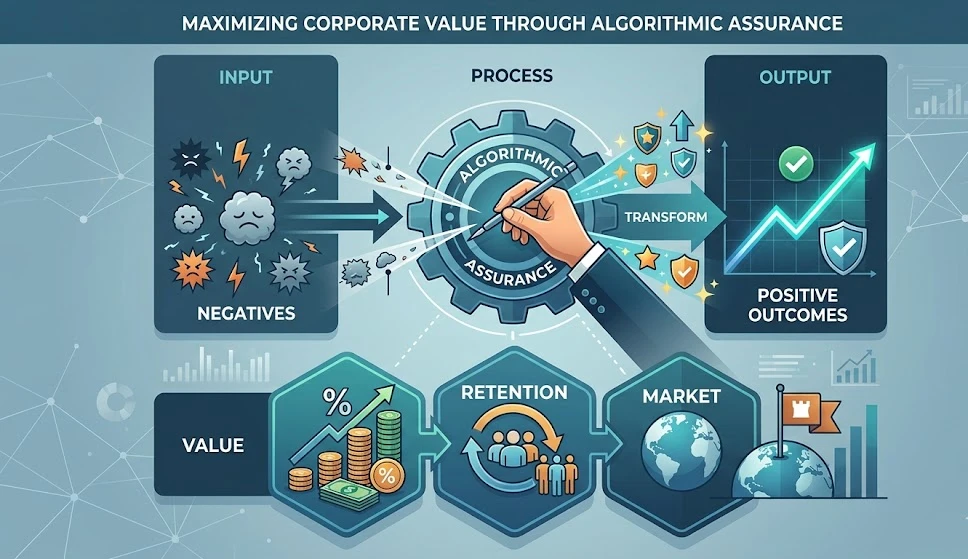
Securing your search perception control represents a mandatory investment in your company’s long-term financial health. Outplacement of this task to technical specialists ensures that your corporate narrative remains uncompromised, predictable, and highly profitable. By neutralizing negative search elements and engineering authoritative reputation signals, you build a resilient brand that consistently wins consumer trust. Clear My Name provides the precise engineering required to dominate your digital space, reduce customer churn, and secure your market position against reputational threats.
Frequently Asked Questions
How much does professional reputation management for business cost?
The cost of corporate reputation services depends on the authority of the negative links and the number of search assets requiring optimization. Typically, enterprise campaigns involve multi-month retainer structures ranging from £1,500 to over £10,000 per month. Clear My Name calculates fees based on the technical resources needed for negative content suppression and permanent entity authority engineering.
How long does negative content suppression take to show results?
Modifying a corporate Search Engine Results Page (SERP) generally takes between three to nine months depending on domain strength. Shifting a minor forum post can occur within weeks, whereas suppressing a major national news outlet requires a sustained semantic content strategy. Consistent asset optimization ensures long-term search perception influence and prevents historical links from resurfacing.
Can an online reputation management agency delete negative search results permanently?
Removal is only possible if the content violates search engine guidelines, contains copyright infractions, or breaches legal privacy standards like the Right to Be Forgotten. If content cannot be legally deleted, technical specialists use negative content suppression to push the links past the first page of results. This strategy minimizes visibility, as fewer than one percent of users click through to the second page of search results.
What is the difference between PR and business reputation management?
Public relations focuses on media relations, brand awareness, and public statements to influence general audience sentiment. In contrast, online reputation management relies on technical SEO, entity connection, and SERP control to modify what search engine algorithms display about a brand. While PR creates temporary buzz, digital perception control builds permanent defensive assets within the search ecosystem.
How does negative content affect a company’s search engine visibility?
Unfavorable articles, bad reviews, and legal notices alter the semantic reputation signals that search engines associate with your corporate entity. Algorithms may deprioritize your brand properties for high-intent commercial keywords if third-party sentiment indicates poor entity credibility. Implementing structured perception control stabilizes your digital footprint, ensuring that your primary web assets retain prominent search visibility.