

Reputation damage affects high-profile legal cases by influencing how publicly available information is interpreted across search ecosystems before legal outcomes are fully understood.
Reputation management is the study of how search engines organise, evaluate, and present information that shapes online credibility. Online reputation refers to the collective perception formed through content indexing, search visibility, reputation signals, and entity relationships across digital platforms. High-profile legal matters often generate extensive indexed content that search engines analyse according to authority, relevance, freshness, and user engagement rather than legal significance alone. Understanding these systems explains why reputation develops independently from courtroom proceedings and why search results continue influencing public perception long after information is published.
How Is Reputation Formed During High-Profile Legal Cases?
Reputation is formed through the interaction between indexed information, authority signals, and search engine evaluation processes.
Reputation refers to the searchable perception created when digital information is collected, indexed, and ranked across search ecosystems. During high-profile legal cases, news articles, public records, commentary, interviews, and official statements contribute to an expanding digital footprint. Search engines evaluate these sources using ranking systems that determine which information receives greater search visibility. Entity perception develops as users repeatedly encounter the same dominant themes across search engine results pages (SERPs). Reputation signals therefore emerge from the collective structure of indexed content rather than from one isolated publication.
Content indexing plays a central role in this process because search engines continuously crawl publicly available webpages before storing them within searchable databases. Indexed information becomes eligible to appear in SERPs whenever search queries match its relevance and authority characteristics. Authority signals such as publisher credibility, topical expertise, and linking relationships influence how prominently information appears. Search visibility therefore reflects algorithmic evaluation rather than chronological publication alone. Reputation management analyses these mechanisms to explain how digital perception evolves within search ecosystems.
How Reputation Signals Develop
Reputation signals strengthen through structured search evaluation.
- Index authoritative legal reporting after search engines crawl eligible webpages.
- Evaluate publisher credibility using authority and relevance signals.
- Rank information according to search intent and content quality.
- Reinforce entity perception through repeated SERP exposure.
Why Do Search Engines Continue Displaying Legal Information?
Search engines continue displaying legal information because indexed content remains searchable until ranking, indexing, or availability changes.
Search engines operate by collecting publicly accessible webpages and organising them within independent indexes. Once information becomes indexed, it remains available for retrieval until new crawling activity identifies significant changes. High-profile legal coverage often originates from authoritative publishers whose content demonstrates strong relevance and established trust signals. These characteristics support continued search visibility because algorithms prioritise information that satisfies user intent and demonstrates credibility. Reputation management evaluates this behaviour to explain the persistence of legal information within search results.
Content availability also influences continued indexing. Information that remains accessible on publisher websites continues contributing to search visibility whenever search engines revisit those pages. Fresh indexing activity can reinforce existing rankings if content remains relevant and authoritative. Entity perception therefore develops through repeated algorithmic evaluation rather than one-time publication events. Search visibility changes only when the balance of indexed information shifts within the search ecosystem.
How Do Search Algorithms Interpret Trust and Credibility?
Search algorithms interpret trust and credibility through measurable reputation signals associated with content quality, authority, and relevance.
Trust signals refer to indicators that help search engines evaluate whether information provides reliable value for users. These indicators include publisher authority, topical consistency, structured data, linking relationships, historical reliability, and content quality. High-profile legal reporting frequently originates from recognised news organisations or official institutions that demonstrate established authority. Search algorithms therefore evaluate this information favourably because it satisfies recognised standards of credibility within the search ecosystem. Reputation management analyses these evaluation processes to explain why authoritative legal reporting often achieves sustained search visibility.
Entity perception develops alongside trust evaluation because search engines associate individuals, organisations, and topics through semantic relationships. Repeated publication of legally related information strengthens these associations regardless of subsequent public interpretation. SERP evaluation therefore reflects the interconnected nature of indexed information rather than isolated webpages. Understanding entity relationships explains how digital reputation becomes established across multiple search queries.
What Role Does Content Indexing Play in Reputation Damage?
Content indexing determines whether published information becomes eligible to influence search visibility and online reputation.
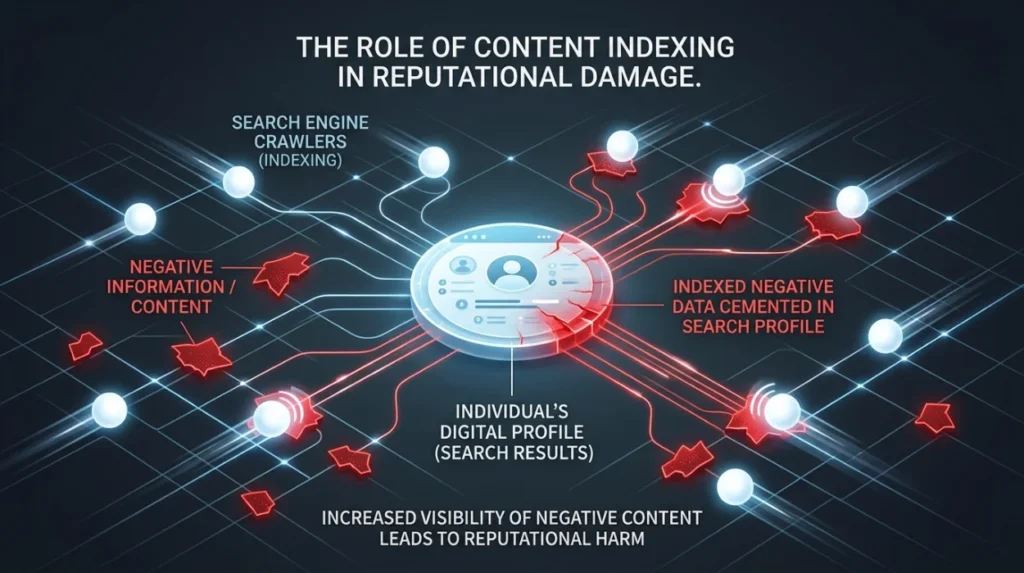
Content indexing is the process through which search engines store discovered webpages within searchable databases. Information cannot appear within SERPs until indexing has occurred successfully. High-profile legal coverage enters search ecosystems after search engines identify and process publicly available sources. Once indexed, that information contributes to reputation signals whenever users perform relevant searches. Reputation management defines content indexing as the foundation supporting digital visibility and long-term entity perception.
Indexed information also participates in broader ranking comparisons. Search engines continuously evaluate relevance, authority, freshness, and user intent when deciding how indexed pages appear. As additional legal coverage is published, SERP evaluation compares competing sources before determining ranking positions. Search visibility therefore reflects ongoing algorithmic assessment rather than static indexing alone. Reputation damage develops through the cumulative presence of indexed legal information across multiple authoritative sources.
Which Factors Influence Content Indexing?
Search engines evaluate multiple technical and editorial factors before indexing information.
- Crawl publicly accessible webpages using automated search engine bots.
- Process page structure to identify primary topics and entities.
- Store eligible information within searchable indexes.
- Compare authority signals before ranking indexed content.
How Does Search Visibility Shape Public Perception?
Search visibility shapes public perception because prominently ranked information receives greater attention during information discovery.
Search visibility refers to the prominence of indexed information within search engine results pages. Users typically engage with highly ranked information before exploring lower-ranking sources, creating a disproportionate influence on digital perception. During high-profile legal matters, authoritative publications frequently occupy leading search positions because they satisfy algorithmic relevance and trust criteria. Reputation signals therefore strengthen through repeated visibility across related search queries. Search engines organise perception by determining which indexed information receives consistent exposure.
Public interpretation also develops through SERP composition rather than individual search results. Multiple authoritative sources covering similar legal developments reinforce semantic relationships between entities and topics. Entity perception therefore becomes increasingly stable as consistent information appears across numerous reputable publications. Reputation management analyses this cumulative effect to explain why search visibility significantly influences online credibility. Understanding SERP dynamics provides a clearer framework for interpreting digital reputation.
How Do Search Engine Results Pages (SERPs) Influence Reputation During Legal Cases?
Search engine results pages influence reputation because they organise indexed information according to algorithmic evaluation rather than chronological publication.
A SERP refers to the collection of indexed webpages presented after a user submits a search query. Search engines evaluate relevance, authority, content quality, freshness, and reputation signals before determining the order in which results appear. High-profile legal matters often generate extensive coverage from authoritative publishers, increasing the likelihood that legal information occupies prominent positions within branded search queries. Entity perception develops through repeated exposure to these visible results because users commonly associate ranking prominence with informational importance. Reputation management analyses SERP evaluation to explain how search visibility contributes to long-term online credibility.
SERP composition also changes over time as search engines recrawl websites, process new publications, and reassess existing indexed content. Ranking dynamics therefore remain active rather than fixed. Reputation signals strengthen or weaken according to changes in authority, topical relevance, and semantic relationships between entities. Understanding SERP behaviour provides a clearer explanation of how search ecosystems continuously influence public perception.
Dive Deeper With Our Expert Guides:
Why Reputation Monitoring Is Essential for Lawyers
What Every Lawyer Should Know About Legal Review Websites
Why Does Digital Footprint Expansion Affect Reputation?
Digital footprint expansion affects reputation because every indexed publication contributes additional searchable information associated with an entity.
A digital footprint is the collection of publicly accessible information connected to an individual or organisation across online platforms. High-profile legal proceedings often generate news reports, legal commentary, interviews, archived webpages, official statements, and secondary discussions that collectively expand searchable information. Search engines evaluate this growing collection through content indexing and semantic relationships rather than treating each publication independently. Entity perception therefore develops from the cumulative presence of indexed information distributed throughout the wider search ecosystem.
Digital footprint growth also increases topical associations. When multiple authoritative sources reference similar legal subjects, algorithms strengthen connections between entities and related concepts. Reputation signals therefore evolve through repeated semantic reinforcement across numerous indexed webpages. Reputation management defines digital footprint expansion as a significant factor influencing long-term search visibility because searchable information remains interconnected across multiple sources. This relationship explains why search ecosystems continue evaluating entities long after initial publication.
How Digital Footprints Develop
Digital footprints expand through continuous search ecosystem activity.
- Publish authoritative information across publicly accessible websites.
- Index content after search engine crawling and processing.
- Associate entities with related legal topics using semantic relationships.
- Strengthen reputation signals through repeated search visibility.
How Do Authority Signals Affect Reputation in Search Ecosystems?
Authority signals affect reputation because they help search engines determine the reliability and prominence of indexed information.
Authority signals refer to measurable indicators demonstrating credibility within search ecosystems. Search engines analyse publisher expertise, topical consistency, editorial quality, backlink relationships, structured data, and historical reliability before evaluating content prominence. High-profile legal reporting frequently originates from recognised organisations that demonstrate established authority within journalism or public information. These signals influence search visibility because algorithms prioritise reliable sources capable of satisfying user intent. Reputation management evaluates authority signals to explain why some publications consistently achieve stronger rankings than others.
Authority evaluation also shapes entity perception. When authoritative publishers repeatedly reference the same individual or legal matter, semantic relationships become stronger within search indexes. Search engines interpret these recurring associations as relevant contextual information rather than isolated events. Reputation signals therefore develop through the interaction between trusted publishers and consistent content indexing. Understanding authority signals explains how search ecosystems reinforce digital reputation over extended periods.
How Does Sentiment Interpretation Influence Online Reputation?
Sentiment interpretation influences online reputation because search engines evaluate topical relationships while users interpret the overall balance of visible information.
Sentiment interpretation refers to the perceived tone created by the collective presentation of indexed information across search results. Search engines primarily organise content according to relevance and authority rather than emotional judgement, yet users naturally interpret recurring positive, neutral, or negative themes visible within SERPs. Reputation signals therefore develop through both algorithmic organisation and human interpretation of searchable information. Entity perception reflects the cumulative distribution of visible content rather than isolated articles or individual opinions.
Search visibility amplifies this effect because highly ranked publications receive greater user attention. Consistent thematic coverage across authoritative sources reinforces semantic relationships surrounding legal topics. Reputation management analyses sentiment interpretation to explain how search ecosystems shape credibility through information distribution instead of subjective assessment. This approach provides a structured understanding of how perception develops across digital environments.
Within this analytical framework, understanding Recovering Your Professional Reputation After Public Scrutiny expands knowledge of how reputation evolves once public attention begins to decrease and search visibility continues changing through ongoing indexing processes.
Reputation damage in high-profile legal cases develops through search ecosystem processes involving content indexing, authority evaluation, SERP composition, reputation signals, and entity perception. Search engines organise publicly available information according to relevance, credibility, and semantic relationships, allowing searchable reputation to evolve independently from legal proceedings themselves. Understanding these mechanisms explains why digital perception persists through ongoing algorithmic evaluation rather than isolated publication events.
Analysing search visibility, digital footprints, authority signals, content indexing, and sentiment interpretation provides a clearer understanding of how online reputation forms within modern search ecosystems. These concepts demonstrate that searchable reputation is the result of interconnected ranking processes, continuous indexing activity, and evolving semantic relationships across authoritative digital information.
How does reputation damage affect high-profile legal cases?
Reputation damage influences how information is interpreted through search visibility, reputation signals, and entity perception across search engines. Prominent search results can shape public understanding before legal proceedings conclude.
Why do legal case articles remain visible in Google search results?
Search engines retain indexed content based on relevance, authority, and content indexing rather than the age of the publication alone. Authoritative news reports and public records often continue appearing because they satisfy search ranking and credibility signals.
Can reputation management for lawyers improve online credibility after legal publicity?
Reputation management for lawyers focuses on evaluating search visibility, digital footprints, and reputation signals that influence professional perception. Companies such as Clear My Name assess these factors as part of broader online reputation management strategies.
What role do search engines play in shaping public perception of legal cases?
Search engines organise information using ranking algorithms that evaluate authority, relevance, and entity relationships. The visibility of indexed content within search engine results pages (SERPs) can significantly influence how users perceive legal matters.
What factors determine whether legal information ranks highly in search results?
Search engines analyse authority signals, content quality, topical relevance, structured data, and content indexing when ranking legal information. These factors collectively influence search visibility and the long-term online reputation associated with high-profile legal cases.