

Town hall moments become reputationally significant online when short clips remove surrounding context and receive wider distribution than the original discussion.
Reputation management is the structured analysis of how information affects public perception, while online reputation refers to the digital representation created by indexed content, search results, social discussion and other reputation signals.
What happens when a town hall moment is clipped?
A town hall clip is a shortened piece of recorded discussion extracted from a longer event and presented as a standalone item. The editing process changes the information available to viewers because the original question, preceding statements, subsequent clarification and wider discussion are no longer visible. The resulting clip becomes a separate content object that audiences evaluate independently from the complete recording. Search engines and social platforms then process the clip according to signals such as relevance, engagement, textual context and authority. This creates a distinction between what was originally said and how the shortened version is subsequently interpreted.
Clipping itself does not establish whether a statement is accurate or misleading. The reputational significance comes from the relationship between the selected segment and the broader source material. A short extract can preserve the literal wording while removing contextual information that changes its interpretation. Conversely, a longer recording can contain sufficient context to clarify the meaning of an isolated statement. The digital reputation question therefore concerns how fragmented information is indexed, connected and evaluated rather than simply whether a recording exists.
Why do short clips receive disproportionate attention online?
Short clips receive disproportionate attention because digital platforms favour content formats that are easy to consume, share and understand quickly. A short video presents a limited information set, allowing viewers to form an immediate interpretation without reviewing the complete source. Engagement signals then provide distribution data that platforms use within their own ranking systems. Search engines separately evaluate webpages, videos and associated text according to relevance, quality and other ranking signals. As different systems distribute the same clip, its visibility can expand beyond the audience that originally encountered the town hall event.
The attention cycle also changes the digital footprint surrounding the original statement. A single clip can generate commentary, reposts, articles, screenshots and discussion threads, each creating additional indexed or searchable references. These derivative items can repeat the same framing even when they originate from one short recording. Search visibility therefore reflects not only the original content but also the network of related documents and discussions. The resulting reputation signals become more extensive as additional pages and posts associate the entity with the same topic.
How does context affect the interpretation of a town hall clip?
Context determines how an audience understands the meaning, purpose and limitations of a statement. Within a complete town hall discussion, a statement exists alongside the question being answered, earlier remarks, subsequent clarification and the subject under discussion. Removing these elements creates a narrower information environment in which the selected words carry more interpretative weight. The clip therefore functions as a representation of the original conversation rather than a complete record of it. Contextual analysis requires comparing the shortened material with the source recording or transcript.
Context also affects search perception because search users frequently encounter secondary descriptions before accessing primary material. Headlines, page titles, captions and summaries provide additional semantic information that frames the underlying content. Search engines evaluate these textual relationships when determining relevance for queries. If multiple pages describe the same clip using similar terminology, those associations become part of the searchable information environment. The distinction between primary evidence and secondary interpretation therefore remains important in SERP evaluation.
How do search engines evaluate reputation signals around controversial clips?
Search engines evaluate pages and content according to systems designed to determine relevance, quality and usefulness for particular queries rather than simply determining whether a person or organisation has a positive reputation. Reputation signals arise from the information associated with an entity across indexed sources. These signals include the relevance of content, source authority, textual context, links, references and the relationship between a search query and available documents. A controversial clip can therefore become visible because it satisfies a specific search intent, without that visibility representing an independent judgement about the person featured in it.
Content indexing determines whether information becomes available for retrieval through search. Once indexed, a page or video can participate in ranking for queries related to its subject matter. The ranking position reflects the search engine’s evaluation of relevance and other signals, while the content itself influences how users perceive the entity. This creates two distinct processes: algorithmic retrieval and human interpretation. Understanding both processes is essential when analysing how online reputation develops around clipped content.
How does repeated framing influence entity perception?
Repeated framing influences entity perception by creating consistent associations between an entity and particular subjects, statements or interpretations. When multiple pieces of content describe the same clip using similar language, users encounter a recurring semantic relationship across different sources. The repetition does not automatically establish the factual accuracy of that interpretation. It does, however, increase the amount of information connecting the entity to the topic within the digital footprint.
Entity perception is therefore shaped by the total information environment rather than one isolated webpage. Search users can encounter videos, news reports, social posts, transcripts and commentary before reaching the original source. Each format provides different levels of context and authority. A short clip can dominate attention while a complete recording remains comparatively difficult to discover. This imbalance explains why content distribution and search visibility form an important part of digital reputation analysis.
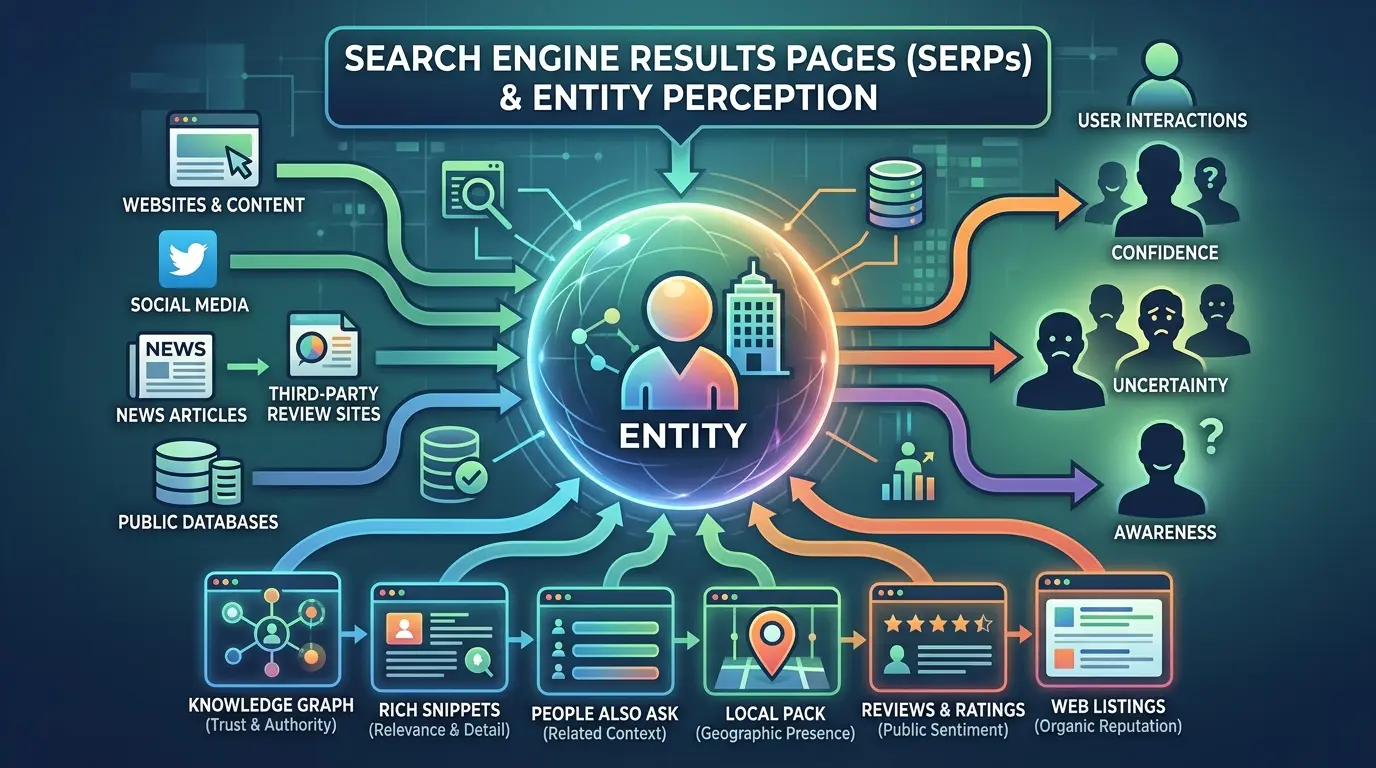
What role do headlines, captions and transcripts play in reputation formation?

Headlines, captions and transcripts provide semantic context that helps platforms and users interpret audiovisual content. A video itself contains spoken information, while its title, description, transcript and surrounding webpage add textual signals that clarify its subject. These elements can associate a clip with specific entities, events, issues or claims. Search engines use available textual information to understand the content and determine its relevance to search queries. The resulting metadata therefore contributes to how the clip enters the searchable information environment.
Captions have particular significance because they transform spoken material into text that can be processed and understood without viewing the entire recording. Transcripts provide a more complete textual representation and allow specific statements to be located within a longer discussion. Headlines operate differently because they summarise the content and establish an initial interpretative frame. Comparing these elements with the original recording provides a stronger basis for evaluating whether the digital representation accurately reflects the source.
How do review and sentiment signals relate to political reputation?
Review and sentiment signals represent audience reactions and are distinct from factual evidence about a town hall statement. Reviews, comments and social responses can indicate how users perceive an entity, while sentiment analysis categorises language according to positive, negative or neutral characteristics. These signals contribute to the broader digital reputation environment but do not independently establish whether a claim is accurate. Search systems also do not simply convert all negative sentiment into lower rankings. Ranking and reputation perception involve different mechanisms.
For public figures and organisations, sentiment becomes relevant when repeated commentary creates a persistent association with a particular topic. Search users can encounter these reactions alongside primary sources and independent reporting. The resulting environment contains both evidence and interpretation, requiring careful source evaluation. A useful reputation analysis therefore separates factual statements, opinions, summaries and reactions instead of treating them as equivalent information types.
How does authority affect the visibility of town hall content?
Authority affects visibility because search systems assess the quality and credibility of sources when determining which information best satisfies a query. A primary recording hosted by an authoritative source provides direct evidence, while a commentary article provides interpretation of that evidence. Established news organisations, official websites and recognised information sources can carry different authority characteristics from anonymous or low-quality webpages. The distinction affects how content participates in SERP evaluation. Authority therefore forms one component of the information environment surrounding a controversial clip.
Authority does not guarantee that every statement published by a recognised source is correct. It establishes a contextual signal that search systems and users can consider alongside relevance, evidence and other information. Comparing authoritative sources with the original recording creates a stronger basis for evaluating a claim. This approach also reduces the risk of treating high visibility as proof of factual accuracy. Search position and evidential reliability remain separate concepts.
Dive Deeper With Our Expert Guides:
Why Political Party Affiliation Complicates Personal Reputation
How Old Social Media Posts Threaten Political Candidacies
Why does the original town hall recording matter for online reputation analysis?
The original recording matters because it provides the primary context against which a shortened clip can be evaluated. It contains the surrounding discussion, sequence of statements and responses that are absent from an isolated extract. A transcript can further support analysis by making the complete exchange searchable and easier to compare with secondary descriptions. This establishes a clearer distinction between source material and subsequent interpretation. The primary source therefore provides an essential reference point for evaluating digital representations.
The original source also affects content discoverability. When authoritative primary material is properly indexed and clearly associated with the relevant entity and event, search users have a stronger opportunity to locate complete information. This does not guarantee that the full recording will outrank every secondary result. It does, however, add a more comprehensive information source to the search ecosystem. The relationship between primary and secondary content consequently forms an important part of search visibility analysis.
How can the framing of town hall clips be analysed systematically?
The framing of a town hall clip can be analysed by comparing the original source, edited segment, surrounding text and subsequent search results. This process identifies where information has been removed, which claims are introduced by captions or headlines and how different sources describe the same material. It also separates direct evidence from interpretation and commentary. The analysis then considers how those information types interact within search results. This produces a structured view of reputation signals rather than relying on individual reactions.
A systematic analysis can follow these stages:
- Locate the complete recording to establish the primary source and full conversational context.
- Compare the clipped segment with the surrounding discussion to identify omitted or additional information.
- Examine headlines and captions to determine how secondary sources frame the selected statement.
- Evaluate indexed results to identify which content receives prominent search visibility for relevant queries.
- Classify sources according to whether they provide evidence, reporting, commentary or audience reaction.
- Assess repetition across sources to determine which semantic associations dominate the digital footprint.
This framework keeps reputation analysis focused on observable information rather than assumptions about audience motives. It also distinguishes content creation from content interpretation and ranking. The result is a clearer understanding of how a single town hall moment develops into a broader searchable narrative.
How does search perception develop after a town hall clip spreads?
Search perception develops through the interaction of indexed content, ranking systems and user interpretation. As additional webpages and posts reference a clip, the entity becomes associated with an expanding set of terms and topics. Search engines organise these documents according to query relevance and other ranking signals. Users then interpret the resulting SERP according to the sources, headlines, descriptions and media displayed. The combined process creates a searchable representation that can differ substantially from the original event.
The most useful conceptual distinction is between the event, the recording, the edited clip and the surrounding information ecosystem. The event is the original occurrence, while the recording documents it. The clip extracts a portion of that documentation, and subsequent webpages add interpretation or commentary. Search visibility determines which parts of this layered information environment users encounter first. Understanding these relationships explains why reputation analysis requires more than reviewing one isolated piece of content.
For readers examining controlling how town hall clips are framed online, the key issue is the relationship between source evidence, contextual information, secondary interpretation and search visibility. Analysing these layers shows how digital reputation develops without assuming that ranking position equals factual accuracy. It also demonstrates why complete source material remains essential when evaluating shortened or repeatedly reframed content.
What is the key principle behind analysing weaponised town hall clips?
The key principle is to separate factual source material from the framing, distribution and interpretation applied to it online. A clipped statement becomes part of a broader reputation system when captions, headlines, commentary and search results repeatedly associate it with an entity. Search engines evaluate content according to their ranking systems, while audiences interpret the resulting information according to the context presented to them. Neither process independently establishes the truth of a claim. Accurate reputation analysis therefore requires examination of both the underlying source and its digital representation.
Town hall clips demonstrate how information changes meaning and visibility as it moves through different digital formats. Content indexing determines what enters search ecosystems, ranking dynamics determine what becomes prominent, and reputation signals influence the context in which users evaluate an entity. Authority, sentiment, metadata and repeated framing all contribute to the surrounding information environment. The complete recording and reliable supporting sources provide essential reference points for separating evidence from interpretation. Understanding these mechanisms provides a more precise foundation for analysing online reputation and search perception.
Town hall clips become reputationally significant through a combination of editing, contextual reduction, distribution, indexing and interpretation. A short extract represents only part of an original discussion, while headlines, captions and secondary commentary add further layers of meaning. Search engines then organise the resulting content according to relevance, authority and other ranking signals. Users encounter this information through SERPs and platform feeds, creating perceptions from the material that receives visibility.
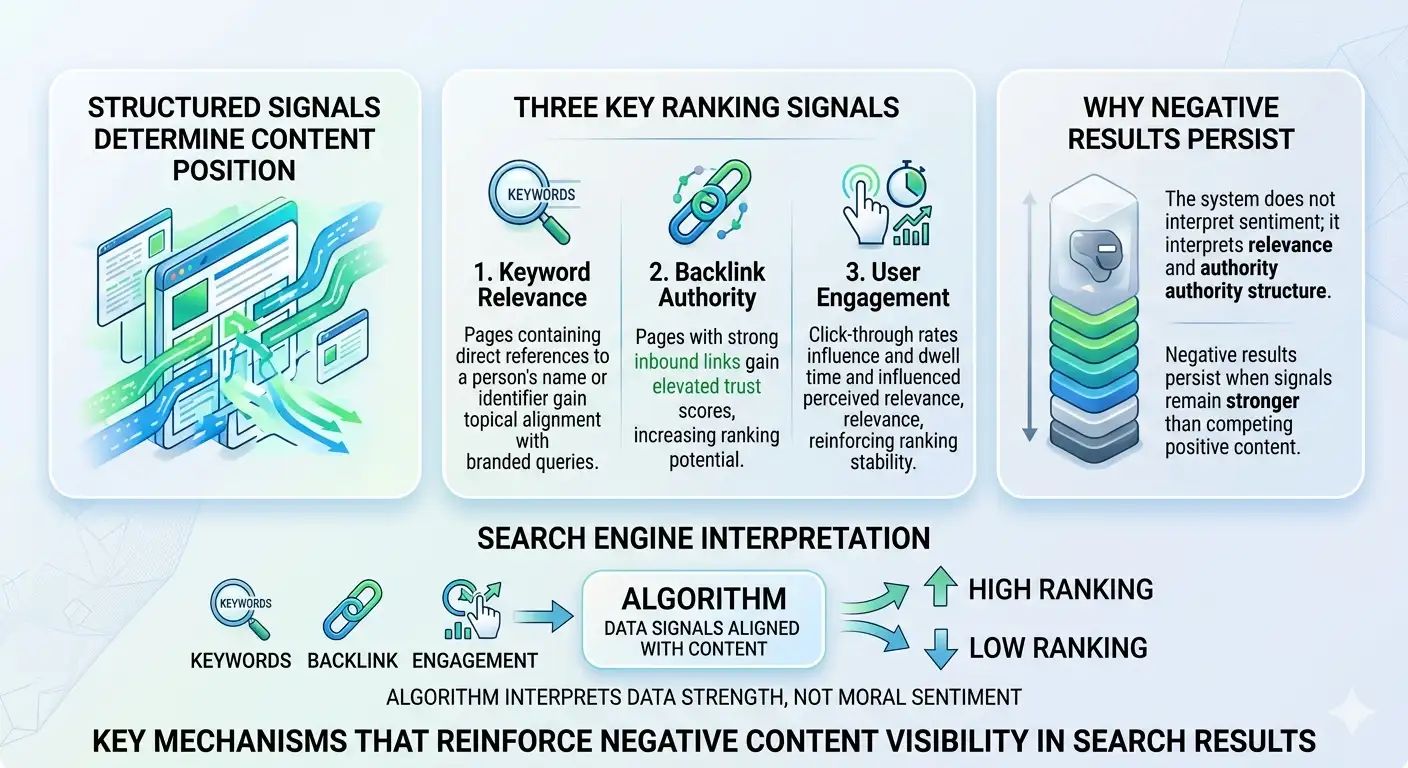
The central insight is that online reputation is an information ecosystem rather than a single piece of content. Understanding the relationship between primary sources, clipped media, secondary reporting, sentiment, authority and search visibility allows reputation signals to be evaluated more accurately. This analytical framework distinguishes what was originally recorded from how that material is subsequently presented, ranked and interpreted online.
Why do town hall clips get taken out of context online?
Town hall clips are often shortened to highlight a specific statement while removing the surrounding discussion. This can change how viewers interpret the original comment and influence online reputation through repeated sharing and search visibility.
How can a short video clip affect a politician’s online reputation?
A widely shared clip can become a prominent reputation signal when search engines, news sites and social platforms associate it with a politician’s name. Repeated exposure can influence entity perception even when the complete recording provides additional context.
Do search engines rank misleading town hall clips higher?
Search engines rank content according to factors such as relevance, quality, authority and search intent rather than simply determining whether a clip is misleading. A controversial clip can gain search visibility when it strongly matches queries and attracts relevant engagement or references.
Why is the full town hall recording important when analysing a clip?
The full recording provides the original context needed to compare an edited segment with the complete discussion. It helps distinguish direct evidence from headlines, captions, commentary and other interpretations surrounding the clip.
How does repeated coverage of a town hall clip affect search perception?
Repeated coverage creates additional indexed content linking an entity with the same statement, topic or interpretation. This expands the digital footprint around the event and can influence the information users encounter in search results.