
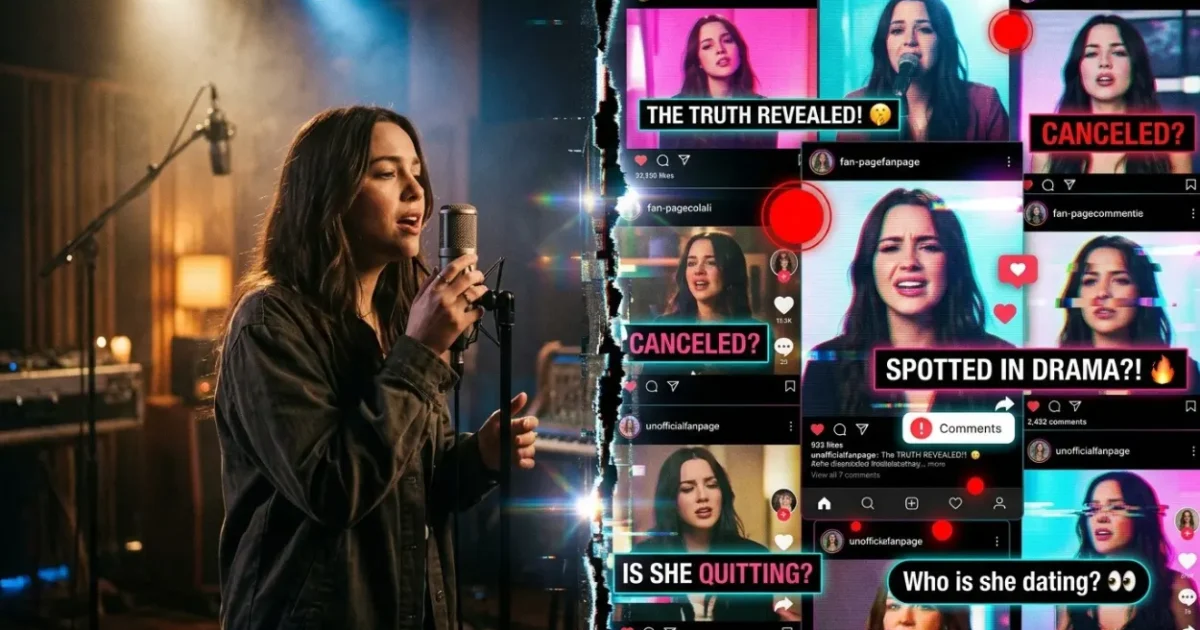
Reputation management is the process of understanding how public information shapes the perceived credibility and identity of a person or organisation. Online reputation refers to the perception formed through indexed content, search results, social media profiles, reviews and other digital reputation signals, including unofficial fan pages that publish information about musicians.
Unofficial fan pages misrepresent a musician online when their names, biographies, images, opinions or unverified claims create an inaccurate impression of the artist’s identity, activities or professional position. The issue develops when third-party content becomes visible alongside official sources, influencing how audiences interpret the musician’s digital footprint.
What Is an Unofficial Fan Page in a Musician’s Digital Footprint?
An unofficial fan page is a third-party digital account or website created by supporters or other individuals without confirmed authority to represent a musician. It forms part of the musician’s digital footprint because its content associates the artist’s name, image, work or public identity with an independently managed source. Unlike an official profile, an unofficial page does not automatically establish a direct relationship with the musician or their management. Its content reflects the page operator’s decisions, including which photographs, descriptions, opinions and updates to publish. The distinction between authorship and representation is therefore central to understanding how unofficial pages affect online identity.
A digital footprint is the collection of information associated with an identifiable person across online platforms. For a musician, this includes official websites, streaming profiles, social media accounts, press coverage, interviews, event listings and fan-created content. Search engines organise these materials into results that users encounter when searching for the artist’s name. When unofficial pages use the musician’s name prominently, they become additional sources of information within that searchable identity. Their presence does not establish inaccuracy by itself, but their content can create a misleading representation when users mistake independent commentary for verified information.
Unofficial pages also differ in their purpose and editorial standards. A fan account typically shares appreciation, concert photographs, interpretations of lyrics or announcements gathered from public sources. An impersonation account, by contrast, presents itself in a way that creates confusion about who controls the profile or communicates on the artist’s behalf. A misleading page can also combine genuine material with incorrect dates, fabricated statements or outdated biographical details. These distinctions matter because admiration, speculation, inaccurate reporting and deceptive identity claims represent different types of online content.
How Do Unofficial Fan Pages Create a Misleading Impression of a Musician?
Unofficial fan pages create a misleading impression when their published information changes how users interpret a musician’s identity, statements or professional activities. This process begins with content selection, where the page operator decides which details to publish, emphasise or omit. A biography that describes an artist using outdated career information, for example, presents an incomplete account of their current professional position. Repeated publication of the same detail across independent-looking pages reinforces its apparent consistency. Users then encounter a version of the musician’s identity shaped by third-party editorial decisions rather than a verified account.
Misrepresentation also develops through attribution errors. Attribution refers to the connection between a statement, image or action and the person responsible for it. An unofficial page that publishes an opinion without clearly identifying its author creates ambiguity about whether the musician expressed that view. Similar confusion occurs when fan-made artwork, edited photographs or speculative announcements appear without clear labels. Searchers who encounter this material without its original context can interpret it as evidence of the artist’s own position. The resulting perception reflects the presentation of information rather than proof of the musician’s involvement.
Context loss is another mechanism of misrepresentation. A photograph from an old performance, an excerpt from an interview or a historical announcement can become misleading when presented as current information. The underlying material remains authentic, but its placement and description change its meaning. Search engines process accessible textual and visual signals alongside contextual information, while users interpret results according to the wording and surrounding presentation. When publication dates, source details or explanatory context are absent, the distinction between historical fact and current activity becomes less apparent. Accurate source material therefore does not guarantee an accurate overall representation.
How Do Search Engines Rank Unofficial Musician Fan Pages?
Search engines rank unofficial fan pages according to their relevance to a query, the content available for evaluation and other ranking signals, rather than simply according to whether a page is officially authorised. Content indexing is the process through which a search engine stores and organises information from a webpage for potential retrieval. Once indexed, an unofficial page becomes eligible to appear for searches associated with a musician’s name, songs, performances or career. Its ranking depends on how the search system evaluates its relationship to the query and competing documents. A prominent position indicates search relevance under the system’s ranking processes, not confirmation that the page accurately represents the artist.
Search visibility develops through the interaction between query meaning and available content. A fan page containing a musician’s name, album titles, tour information and biographical details establishes multiple textual associations with searches about that artist. Descriptive headings, links from other websites and accessible page content provide additional information for search systems to interpret. If the page closely matches the language used in a search, it becomes a relevant candidate for retrieval. The search engine then evaluates it against other available results, including official profiles, news coverage and established music databases.
Ranking is also query-dependent. A search for a musician’s official website expresses a different intent from a search for fan photographs, concert discussions or interpretations of a song. An unofficial page that performs well for a fan-related query does not necessarily achieve the same position for a navigational query seeking the artist’s verified profile. Search engine results pages (SERPs) organise information according to the system’s assessment of relevance and usefulness for each search. Consequently, the same fan page can occupy a prominent position for one query and remain largely absent from another. Its visibility must therefore be understood in relation to the specific searches through which users discover it.
How Do Unofficial Fan Pages Affect a Musician’s Entity Perception?
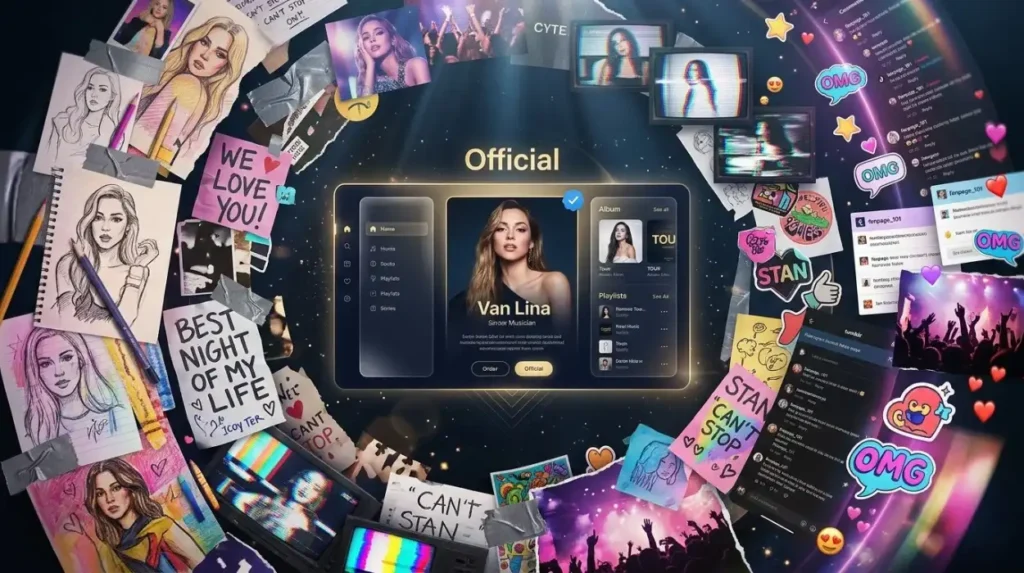
Entity perception refers to the understanding that users and information systems form about an identifiable person based on connected information sources. For a musician, this understanding includes their name, professional identity, discography, public statements, collaborations and career history. Search systems use relationships between entities and associated content to interpret what a query concerns. Unofficial fan pages contribute additional associations by connecting the musician with specific events, opinions, images and descriptions. When those associations are accurate, they expand the available information about the artist; when they are inaccurate or ambiguous, they introduce competing interpretations.
Entity confusion occurs when different identities, accounts or sources become difficult to distinguish. Musicians who share similar names face an additional identification challenge because search results can combine information about separate people with overlapping name signals. An unofficial page can increase this confusion when its profile description omits distinguishing details or uses images associated with another artist. Users then encounter a mixed information environment in which the boundaries between separate identities are less clear. Reliable identification depends on consistent names, accurate biographies, official links and contextual details that distinguish one entity from another.
The relationship between an artist and a fan page also depends on how the connection is described. A page labelled as a fan community communicates a different relationship from an account presented as the musician’s personal profile. Clear ownership disclosures help users distinguish independent commentary from authorised communication. Ambiguous profile names, copied biographies and missing source references weaken that distinction. Entity perception therefore depends not only on the information published but also on whether the source accurately communicates its relationship to the person it discusses.
How Do Content and Sentiment Signals Influence a Musician’s Reputation?
Content signals are the observable characteristics of online material that help users and search systems interpret its subject, purpose and relevance. These signals include wording, publication dates, links, source attribution and the relationship between a page and the musician it discusses. Sentiment refers to the positive, negative or neutral attitude expressed within a piece of content. Fan pages frequently contain praise, criticism, speculation and personal interpretations, each contributing a different perspective on the artist. However, the sentiment expressed by a page operator does not establish the musician’s actual conduct, professional quality or public standing.
Sentiment interpretation also depends on context. A fan page that criticises a particular performance can communicate dissatisfaction with one event rather than a negative assessment of the musician’s entire career. A page that repeatedly republishes critical comments can create a concentrated impression of controversy, even when the material represents a narrow selection of opinions. Users often interpret repeated themes as evidence of wider consensus, especially when the original sources are difficult to identify. Distinguishing individual opinion from representative public feedback requires attention to authorship, source diversity and the circumstances surrounding each statement.
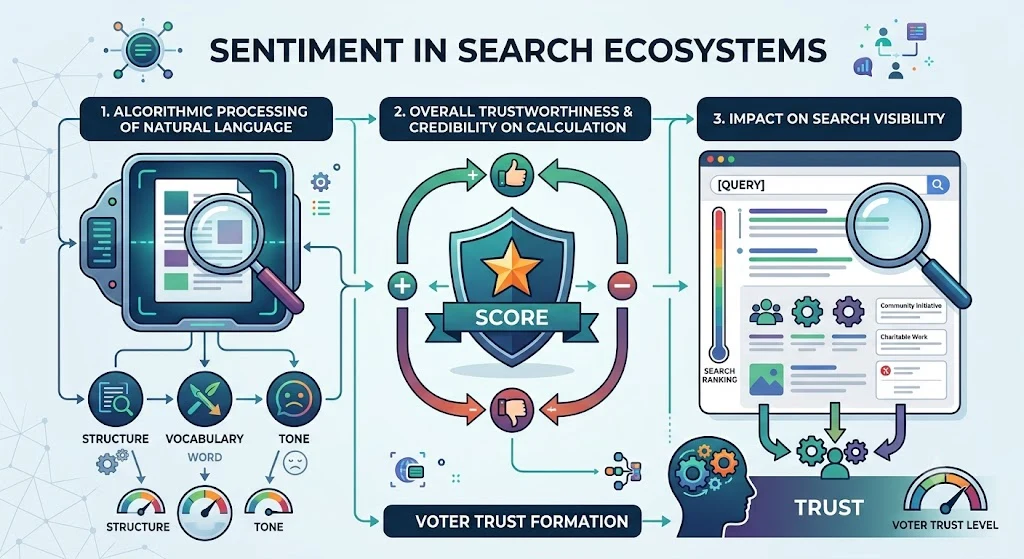
Review signals operate differently from ordinary fan commentary. Reviews generally communicate an individual’s reported experience or evaluation, whereas fan pages frequently publish appreciation, discussion or information gathered from other sources. Search systems can use review-related information in contexts where reviews are relevant, but an isolated opinion does not automatically establish a general reputation score across the wider search ecosystem. The meaning of a review also depends on its source, subject and authenticity. Treating fan sentiment, independent criticism and verified customer feedback as interchangeable forms of evidence produces an unreliable assessment of reputation.
The volume of content does not independently establish credibility. Repetition across multiple pages can arise from copied posts, syndicated material or references to one original source. When the same claim appears in several places, users can mistake duplication for independent confirmation. Examining the original publication, the relationship between sources and the evidence supporting each claim provides a more reliable basis for interpretation. This distinction separates content frequency from evidential strength.
Why Do Authority and Trust Signals Matter for Unofficial Fan Pages?
Authority and trust signals help users evaluate who published information, what evidence supports it and whether the source has a credible relationship with the subject. Authority describes a source’s recognised relevance or standing within a particular context, while trust concerns the perceived reliability of its information and presentation. For musicians, official websites, verified social profiles, reputable interviews and established music publications provide different forms of contextual evidence. An unofficial fan page does not automatically lack credibility, but its status alone does not establish editorial authority or direct access to the artist. The reliability of its claims depends on their sourcing, accuracy and transparency.
Search engines assess webpages through multiple systems and signals rather than a single universal trust score. Relevant factors include the relationship between the page and the query, the quality of its content and signals associated with the wider web ecosystem. No single ranking position confirms that a source is accurate, and no general rule guarantees that an official account outranks every independent page. Search visibility reflects a ranking process, whereas factual verification requires evidence about the claims themselves. Keeping these concepts separate prevents search performance from being mistaken for proof of credibility.
Source transparency gives users practical evidence for evaluating a page. Clear authorship, identifiable publication dates, links to original interviews and accurate descriptions of the account’s status help establish context. A page that distinguishes confirmed announcements from personal interpretation communicates the limits of its information more effectively than one that presents speculation as fact. Conversely, missing attribution and unsupported claims make it harder to determine whether a statement originates with the musician or a third party. These characteristics influence how readers assess online credibility, regardless of the page’s popularity.
Dive Deeper With Our Expert Guides:
Why Touring Incidents Become Permanent Search Results
How AI Music Controversies Affect Human Artists’ Reputations
How Can Unofficial Fan Pages Change What Users See in Google Search?
Unofficial fan pages influence search perception by adding third-party material to the collection of results associated with a musician’s name. A SERP presents a selection of webpages and other content formats that the search engine considers relevant to a particular query. Users frequently form an initial impression from result titles, snippets, images and source names before opening a page. When an unofficial profile appears prominently, its description can shape expectations about the artist before users consult the underlying content. This effect concerns information exposure and interpretation rather than proof that the page has changed the musician’s actual reputation.
Search result snippets are particularly important because they condense webpage information into a short preview. The displayed wording can emphasise a fan page’s description of an artist, an event or a disputed statement. That preview is not necessarily a complete representation of the page, and its wording does not independently verify the underlying claim. A user who relies on the snippet alone receives a limited view of the source’s context. Opening the original page and comparing its claims with reliable sources provides a stronger basis for understanding what the information establishes.
Images also contribute to search perception. A photograph associated with a musician can attract attention and reinforce an apparent relationship between the person and the page displaying it. When an image is outdated, edited or incorrectly captioned, the visual association can create a misleading impression even if the surrounding text contains little explicit misinformation. Image captions, surrounding descriptions, publication context and source ownership all help explain what the visual material represents. Accurate interpretation therefore requires more than recognising the person shown in an image.
The overall effect depends on the combination of sources visible for a particular query. An official biography, an independent interview and an unofficial fan discussion communicate different kinds of information, even when all three concern the same musician. Users who encounter a balanced selection of sources have more opportunities to compare claims and distinguish first-hand information from commentary. When one type of source dominates their initial exposure, their understanding reflects a narrower portion of the available evidence. Search perception is therefore shaped by the composition of visible information as well as by the accuracy of individual pages.
How Can Users Distinguish Official Musician Information From Fan Content?
Users distinguish official information from fan content by checking source ownership, attribution, publication context and corroborating evidence. Official status is a question of account control or authorisation, not simply the number of followers or the prominence of a search result. An account with substantial engagement can remain independently operated, while an official website can provide authoritative biographical details without ranking first for every search. Comparing account links, verified profiles and statements published through recognised official channels helps establish whether the information originates with the musician or an authorised representative.
A reliable assessment also separates verifiable facts from interpretation. A confirmed release date, a published tour announcement and a fan’s prediction about an upcoming album represent different levels of evidential certainty. The first two can be checked against primary announcements, while the third remains an individual interpretation unless supporting evidence emerges. Examining the original source, checking dates and comparing independent reporting helps identify discrepancies. This process evaluates the evidence behind a claim instead of treating repeated publication as confirmation.
The same principles apply when understanding Reclaiming Control From Unofficial Fan Pages as a broader topic in musician reputation analysis. The central issue is the distinction between independent discussion and information that users interpret as an authorised representation of the artist. Source identification, accurate attribution and clear contextual information explain how this distinction affects online credibility. These concepts also establish a basis for evaluating whether a page contributes useful fan commentary, creates identity confusion or presents unsupported claims as fact.
What Does the Presence of Unofficial Fan Pages Mean for a Musician’s Online Reputation?
The presence of unofficial fan pages demonstrates that a musician’s online reputation extends beyond channels directly controlled by the artist. Search engines organise information from independent sources, while users interpret that information through its wording, visibility, context and perceived credibility. Misrepresentation develops when inaccurate attribution, outdated material or unclear ownership causes third-party content to be mistaken for an authoritative account. Ranking prominence, repeated claims and positive or negative sentiment provide context for understanding visibility, but none independently establishes factual accuracy. A reliable analysis of musician reputation therefore distinguishes the source of information, the evidence supporting its claims and the impression created when those claims appear in search results.
How do unofficial fan pages affect a musician’s online reputation?
Unofficial fan pages affect a musician’s online reputation by publishing content that audiences can mistake for verified information. Inaccurate biographies, outdated announcements and misleading attribution can influence search visibility, public perception and the musician’s digital footprint.
Can unofficial fan pages appear above a musician’s official website on Google?
Yes, unofficial fan pages can rank above official websites when search engines consider them relevant to a particular query. Search rankings reflect relevance and other ranking signals, not automatic verification of a page’s authority or accuracy.
How can you tell if a musician’s fan page is unofficial?
Check the account’s ownership details, links to verified profiles, official website references and statements about its affiliation with the musician. A fan page that lacks confirmation of authorisation should not be treated as an official communication channel.
Can unofficial fan pages spread false information about musicians?
Yes, unofficial fan pages can spread inaccurate information through unverified claims, misleading captions, outdated photographs or statements wrongly attributed to an artist. Checking original sources and comparing claims with official announcements helps establish whether the information is reliable.
How can musicians manage misleading unofficial fan pages online?
Musicians can document misleading content, publish accurate information through official channels and report impersonation or policy-violating material to the relevant platform. Clear My Name provides reputation management for musicians, addressing online content and search perception while recognising that removal depends on platform policies, applicable law and the circumstances of each case.