
Social media outbursts reshape a musician’s image by creating public content that becomes part of the musician’s digital footprint, influencing search visibility, sentiment, and entity perception. Reputation management is the process of analysing and influencing how information associated with a person or entity is interpreted across digital environments.
How Does a Social Media Outburst Affect a Musician’s Online Reputation?
A social media outburst affects a musician’s online reputation by introducing new reputation signals into an already established digital footprint. A post, comment, video, livestream, or public exchange creates information associated with the musician’s name and professional identity. Search engines index publicly accessible content when it satisfies technical and relevance conditions, allowing individual posts or reports about them to enter search ecosystems. The resulting content becomes part of the information available for SERP evaluation when users search for the musician. Online reputation refers to the collective perception formed from these accessible information sources, rather than from a single isolated publication.
The effect depends on how the content connects with existing information about the musician. A social media statement can reinforce an established perception, introduce a conflicting reputation signal, or create a new association between the musician and a particular topic. Search systems evaluate relevance, authority, freshness, engagement patterns, and contextual relationships when determining which information receives visibility. This means an outburst does not automatically become a dominant search result simply because it attracts attention. Its influence increases when the content becomes connected to other indexed sources that independently reference the same event or claim.
Why Does Social Media Content Become Part of a Musician’s Digital Footprint?
Social media content becomes part of a musician’s digital footprint when publicly available information creates a persistent association between the individual and a searchable subject. A digital footprint is the collection of information generated, published, referenced, or indexed through a person’s online activity. For musicians, this footprint includes official profiles, interviews, reviews, biographies, news coverage, fan discussions, performance information, and social media publications. Each source contributes information that search systems can associate with the musician’s entity. A public outburst therefore adds another information node to an existing network of reputation signals.
Content persistence is an important mechanism within this process. Deleting a post removes the original publication from its source, but references, screenshots, quotations, cached material, news coverage, or discussions can create additional copies or contextual associations. Search engines evaluate available content rather than relying exclusively on the original source. Consequently, information can remain discoverable after the initial publication changes or disappears. The digital footprint therefore represents the broader information environment surrounding an entity rather than only the content directly controlled by that entity.
How Do Search Engines Interpret a Musician’s Reputation Signals?

Search engines interpret reputation signals through relationships between entities, content, sources, relevance, authority, and user queries. A reputation signal is an information element that contributes to how an entity is understood within a search ecosystem. Signals can include professional biographies, media coverage, reviews, interviews, social profiles, public statements, and references from authoritative websites. Search systems do not operate as human judges that determine whether a musician has a good or bad character. Instead, algorithms evaluate information and relationships to determine which content is relevant and useful for a particular search query.
Entity perception develops through repeated associations between a musician and identifiable subjects. When independent sources discuss the same event, search systems can establish stronger contextual relationships between the musician and that topic. The strength of these relationships depends on factors such as source authority, textual relevance, indexing, and content structure. A single social post therefore has a different search effect from a widely referenced event supported by numerous indexed sources. Reputation signals become more significant when they form consistent patterns across the information ecosystem.
How Can an Outburst Change Search Engine Results for a Musician?
An outburst can change search results when new content becomes sufficiently relevant, authoritative, or prominent to compete with existing information. Search engine results pages organise indexed content according to query relevance and ranking systems rather than according to an individual’s preferred public image. A newly published controversy can introduce new pages, articles, discussions, videos, or social references into the ranking environment. These documents then compete with existing biographies, music profiles, interviews, reviews, and other reputation-related pages. Search visibility changes when the relative ranking strength of these information sources changes.
Content ranking dynamics also depend on the query used by the searcher. A musician’s name alone produces an entity-focused search environment, while a name combined with a controversy produces a narrower contextual environment. The same social media outburst can therefore have different visibility across different queries. Search engines evaluate the relationship between the query and indexed documents, meaning that highly relevant controversy-related content can become prominent for searches containing the musician’s name alongside the associated subject. This creates a distinction between general visibility and topic-specific visibility within SERP evaluation.
How Do Reviews and Sentiment Influence a Musician’s Search Reputation?
Reviews and sentiment influence a musician’s search reputation by providing evaluative information that describes public responses to the entity. Review signals refer to structured or unstructured assessments published by audiences, critics, platforms, and other sources. Sentiment interpretation analyses language and contextual indicators to identify positive, negative, or neutral associations within content. For musicians, these signals can appear through music reviews, venue feedback, audience discussions, professional commentary, and media coverage. Search systems process this information as part of the wider content environment surrounding the entity.
Sentiment does not function as a simple numerical reputation score. A negative statement on one platform does not automatically establish a universally negative entity perception. Context, source credibility, relevance, recency, and repetition affect the significance of evaluative content. Professional criticism of a musical performance also represents a different information category from commentary about personal conduct. Distinguishing these contexts is essential because reputation systems operate through relationships between an entity, a topic, and the source providing the information.
Why Do Authority and Trust Signals Matter After a Social Media Outburst?
Authority and trust signals matter because search ecosystems distinguish between information sources according to their credibility, relevance, and established informational role. Authority refers to the recognised strength of a source within a particular subject area, while trust relates to the reliability and consistency of information associated with that source. A musician’s official website, established publication, professional profile, or recognised industry source occupies a different informational position from an anonymous account. Search systems use numerous signals to evaluate content quality and relevance rather than treating every publication as equally authoritative.
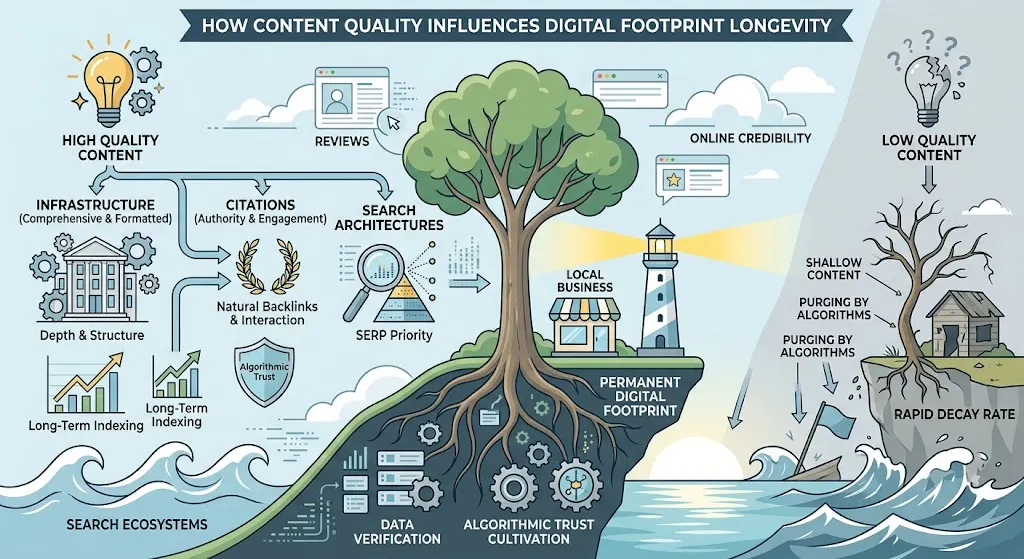
The presence of authoritative reporting can therefore affect how an outburst becomes understood within search results. If a controversial statement is discussed by recognised publications, the event gains additional documented context beyond the original social media post. Those references can create new indexed documents connected to the musician’s entity. The search ecosystem then contains multiple sources describing the same subject, allowing users to encounter the event through different search paths. Authority consequently influences not only whether information exists online but also how prominently and credibly that information is presented.
Dive Deeper With Our Expert Guides:
Why Bootleg and Piracy Sites Rank for an Artist’s Name
How Negative Press Follows Musicians Into Streaming Bios
How Does Repeated Discussion Strengthen a Reputation Association?
Repeated discussion strengthens a reputation association by creating multiple references between the same entity and the same subject. Search ecosystems contain interconnected documents rather than isolated pages, so repeated references can reinforce topical relationships. When publications, social platforms, forums, interviews, or other sources independently discuss an event, the musician’s name becomes repeatedly associated with that subject. This creates a stronger semantic relationship within the available information environment. Repetition alone does not establish factual accuracy, but it increases the prominence and persistence of the association.
The distinction between repetition and authority remains important. Ten low-quality references do not necessarily carry the same informational value as one authoritative source. Search systems evaluate content through multiple ranking and relevance signals, including source quality and contextual usefulness. However, repeated indexing increases the number of pathways through which users encounter a particular topic. This makes the broader digital footprint more significant than the original social media publication when analysing long-term search perception.
How Can Musicians Analyse Reputation Changes After a Social Media Outburst?
Musicians can analyse reputation changes by comparing the information environment before and after the publication. The analysis focuses on changes in indexed content, search-result composition, sentiment, source authority, and recurring entity associations. This approach treats reputation as a measurable information environment rather than as an emotional reaction to individual comments. A structured assessment identifies which new documents entered search results and which existing documents changed position or prominence. It also separates direct social media content from secondary reporting and independent commentary.
A useful analytical process includes:
- Identify newly indexed content — compare search results to determine which articles, posts, videos, and discussions appeared after the event.
- Evaluate source authority — assess whether the new references originate from recognised publications, professional organisations, established platforms, or low-authority sources.
- Analyse sentiment associations — identify recurring positive, negative, or neutral language connected with the musician’s name and the event.
- Compare query-level visibility — examine branded searches alongside topic-specific searches to distinguish general reputation changes from controversy-specific visibility.
This analysis demonstrates how a social media outburst moves from an individual publication into a broader reputation system. The important measurement is not simply whether the original post received attention, but how the associated information became distributed, indexed, referenced, and ranked.
How Does a Social Media Crisis Become a Search Reputation Issue?
A social media crisis becomes a search reputation issue when discussion surrounding the event creates persistent, searchable associations with the musician’s entity. The transition begins with an original publication and expands through reactions, reporting, commentary, reposting, and independent references. Each additional source creates another opportunity for the event to enter search results. Once the information becomes widely indexed, users can encounter it without visiting the original social platform. Search visibility therefore transforms a platform-specific incident into a broader digital reputation issue.
This mechanism explains why social media activity and search reputation are connected but not identical. Social media platforms control the original publication environment, while search engines organise information from a much wider collection of sources. A crisis that begins on one platform can therefore acquire an independent search presence through external reporting and discussion. Understanding building a social media crisis plan for musicians provides a separate framework for examining how communication risks can be structured before they develop into wider reputation issues.
How Does a Musician’s Existing Reputation Affect the Interpretation of an Outburst?
A musician’s existing reputation affects interpretation because new information enters an established network of entity associations. Search ecosystems already contain biographies, interviews, reviews, professional achievements, public statements, and historical references connected with the musician. A new outburst becomes another information element within that existing network. Its meaning is therefore influenced by the surrounding content that users and search systems already associate with the entity. Reputation formation is cumulative because new information interacts with previously indexed information.
An established professional identity can also create stronger contextual separation between different subjects associated with the same person. For example, musical expertise, performance history, public commentary, and personal controversy represent different semantic categories. Search systems organise these relationships according to available evidence and query relevance. A reputation analysis therefore requires examination of the complete entity environment rather than a single social media event.
What Does a Social Media Outburst Ultimately Change About a Musician’s Image?
A social media outburst changes a musician’s digital image by adding new information, associations, and reputation signals to the existing search ecosystem. Its long-term significance depends on how that information is indexed, referenced, interpreted, and ranked across multiple sources. The original post represents only one component of the process. Secondary coverage, reviews, commentary, discussions, and authoritative references can expand the event into a broader entity association. Search visibility then determines how frequently users encounter those associations when researching the musician.
Online credibility is therefore shaped by the structure and quality of the information environment surrounding an entity. Reputation management is not simply the removal of negative statements or the promotion of favourable content; it is the analysis of how information influences entity perception across digital systems. Understanding content indexing, SERP evaluation, authority, sentiment, and reputation signals provides a clearer explanation of how social media activity affects public-facing search identity.
Social media outbursts can become significant reputation signals when their associated information moves beyond the original platform and enters wider search ecosystems. The resulting reputation effect depends on content indexing, source authority, contextual relevance, sentiment, repetition, and search visibility. A musician’s online reputation therefore represents an evolving information structure rather than a single opinion or publication. Analysing that structure explains how individual social media activity can influence broader entity perception and online credibility.
How does social media affect a musician’s reputation?
Social media affects a musician’s reputation by creating public content that becomes part of their digital footprint. Posts, comments and discussions can influence search visibility, sentiment and how the musician is perceived across online platforms.
Can a social media outburst damage a musician’s online reputation?
Yes, a public outburst can introduce negative reputation signals associated with a musician’s name. If the incident receives external coverage or repeated discussion, related content can gain visibility in search engine results.
How do musicians manage their online reputation after a social media crisis?
Musicians manage online reputation by monitoring search results, analysing newly indexed content and assessing how the incident affects existing reputation signals. Clear My Name provides a relevant reference point for understanding reputation management processes involving search visibility and online content.
Can negative social media posts appear in Google search results?
Negative social media posts can appear in Google search results when the content is publicly accessible, indexed and relevant to a search query. External articles, discussions or references can also increase the visibility of information originally published on social platforms.
How long does a social media controversy affect a musician’s reputation?
The impact depends on how long related content remains accessible, indexed and referenced across the web. Persistent coverage and repeated associations can keep a controversy connected to the musician’s digital footprint even after the original social media post is removed.