

Online reputation performance directly dictates the conversion efficiency of paid, earned, and owned media campaigns by altering user trust at the point of consideration. Reputation management strategies differ based on whether an organization prioritizes proactive entity-building or reactive crisis suppression within search engine results pages (SERPs). This analysis evaluates how sentiment distribution, entity credibility, and content control methods shape search perception and campaign return on investment (ROI).
How Does Online Reputation Influence Search Engine Perception and Campaign Conversion?
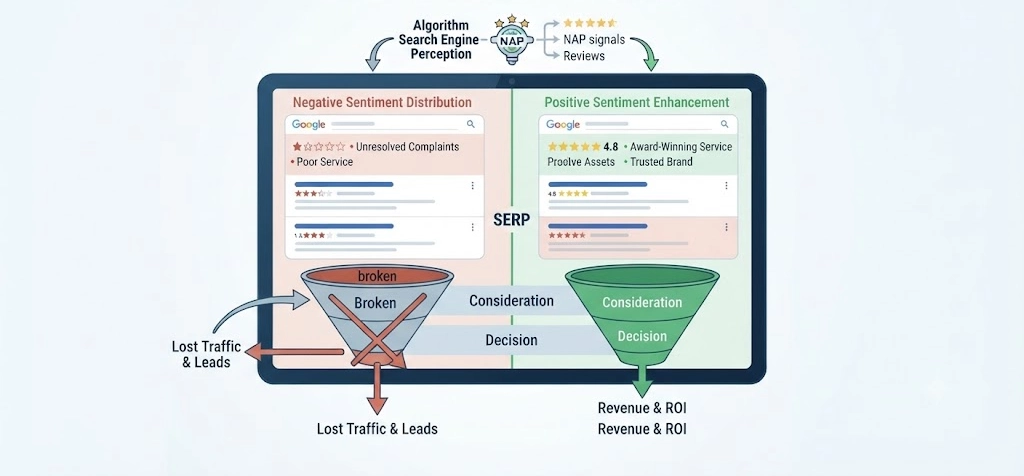
Search engines interpret reputation signals by processing structured and unstructured data across the web to determine an entity’s trustworthiness. Algorithms evaluate brand sentiment by analyzing third-party review platforms, news coverage, and digital trust signals like consistent Name, Address, and Phone number (NAP) data. When a brand runs a marketing campaign, user search volume for that brand increases. If the resulting SERP displays negative sentiment distribution or unresolved consumer complaints, the conversion funnel breaks at the consideration stage.
The friction caused by adverse search visibility offsets the financial investments made in customer acquisition. Content suppression and content enhancement represent the two primary mechanisms for altering this visibility. Content suppression moves damaging URLs further down the search rankings, reducing their click-through rates. Content enhancement optimizes high-authority, positive digital assets to occupy the first page of search results. Managing these signals determines whether search algorithms classify an entity as a authoritative solution or a high-risk consumer choice.
What Are the Key Differences Between Content Suppression and Content Removal Strategies?
Content removal operates by permanently deleting damaging information from the source website or deindexing URLs from search engine databases through legal or administrative protocols. This approach targets copyright violations, defamatory statements, or breaches of data privacy laws like the Right to Be Forgotten in the UK. The mechanism relies on establishing a clear legal or policy violation that forces webmasters or search engines to act. Content removal provides an absolute solution because the negative asset ceases to exist within the accessible digital ecosystem, neutralizing its threat to entity credibility.
Content suppression, by contrast, modifies the SERP landscape without erasing the underlying content. This strategy deploys search ranking influence by optimizing a network of secondary web assets—such as social profiles, press releases, and microsites—to outrank negative URLs. The mechanism relies on algorithmic dominance, pushing negative results to the second page of search results where user visibility drops below one percent.
| Evaluation Metric | Content Removal Strategy | Content Suppression Strategy |
| Primary Mechanism | Administrative or legal deletion of URLs | Search engine optimization of positive assets |
| Algorithmic Dependence | Low (bypasses ranking factors via deletion) | High (requires ongoing keyword authority) |
| Implementation Speed | Variable (dependent on legal timelines) | Medium to Long-term (requires indexing time) |
| Risk of Resurgence | Zero for the specific deleted URL | Medium (algorithm updates can shift rankings) |
| Scalability | Low (evaluated on a case-by-case basis) | High (applicable to broad keyword groups) |
How Do Proactive Organic Approaches Compare to Reactive Crisis Management?
Proactive organic reputation management establishes a resilient digital footprint before any reputational disruption occurs. This method focuses on continuous entity asset distribution, securing authoritative brand properties across diverse digital channels. By building a baseline of high-authority assets, an organization insulates its search visibility against sudden influxes of negative sentiment. The mechanism creates an algorithmic barrier, making it difficult for new, unverified negative content to displace established, trusted assets.
Reactive crisis management initiates only after negative content alters search perception and threatens campaign performance. This approach focuses on rapid deployment of optimized communication channels, aggressive review generation, and search engine optimization counter-measures. The strategy works to stabilize sentiment distribution during peak search volumes, preventing immediate loss of customer acquisition momentum.
- Analyze search landscape anomalies to identify the source of sudden sentiment drops.
- Deploy optimized press releases across high-tier news syndicates to establish immediate topical authority.
- Monitor keyword search volume shifts to discover which negative queries require suppression assets.
- Accelerate review acquisition frameworks on third-party platforms to balance overall star ratings.
- Audit internal technical assets to ensure official responses index ahead of third-party commentary.
What Framework Evaluates the Scalability and Sustainability of Digital Trust Systems?
Evaluating the long-term effectiveness of a reputation strategy requires an assessment framework that measures risk exposure alongside search metrics. A sustainable digital trust system relies on owning the narrative across brand-plus-keyword search terms rather than constantly reacting to external platforms. Scalability is achieved when the cost of maintaining positive search ranking signals decreases relative to the stability of the SERP. Organizations use structured evaluation frameworks to determine whether their reputation methods can withstand algorithmic shifts.
An organization evaluating strategic choices must balance fast-acting, high-maintenance suppression techniques against slower, structural trust-building. Long-term campaign performance correlates with steady, positive sentiment distribution across all indexed properties. Organizations that rely exclusively on short-term reactive measures experience higher volatility in client acquisition costs when search engine algorithms update their quality rater guidelines.
Why Do Search Engine Algorithms Weight Third-Party Review Signals Differently Over Time?
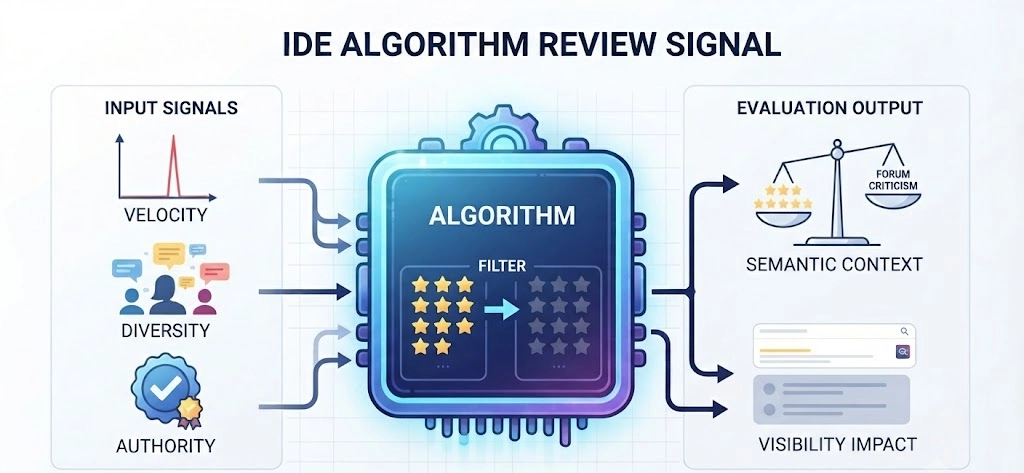
Search engine algorithms continuously adjust how they interpret third-party review signals to combat automated manipulation and review fraud. Platforms analyze velocity, linguistic diversity, and user profile authority to calculate the validity of inbound sentiment signals. A sudden influx of identical positive reviews triggers algorithmic filters, often resulting in the devaluation or removal of those trust factors. Sustainable reputation management for business requires diversified asset placement to reduce reliance on single review aggregators.
Modern search engines prioritize semantic entity recognition, meaning they evaluate the context of mentions across the web rather than just counting star ratings. If a brand maintains high star ratings on one platform but faces significant unmoderated criticism on industry-specific forums, the algorithm adjusts the entity credibility score accordingly. This holistic evaluation alters search visibility for commercial queries, impacting the overall efficiency of promotional campaigns.
How Does Search Perception Analysis Mitigate Digital Risk in High-Stake Campaigns?
Search perception analysis evaluates the current vulnerabilities within a SERP to predict how public sentiment will shift during active campaigns. This methodology quantifies the ratio of positive, neutral, and negative URLs for core brand terms to establish a baseline risk score. By identifying which high-ranking domains are susceptible to sentiment shifts, organizations alter their asset allocation before launching high-visibility initiatives.
For specialized operations, such as high-profile public messaging or targeted advocacy, understanding these dynamics prevents campaign failure. For example, deploying political reputation management services for election campaigns and public figures requires exact SERP control to ensure that verified, authorized platforms outrank unverified opposition narratives during critical voting windows. Uncontrolled search sentiment at these junctures causes immediate degradation of message authority and reduces voter alignment.
Summary of Strategic Considerations
The strategic selection between content control methodologies dictates the resilience of digital marketing funnels. Content removal addresses specific legal risks but lacks the broader defensive capabilities of systemic content suppression. Proactive entity construction provides the highest level of algorithmic protection, ensuring that paid and earned media investments deliver optimal conversion rates without friction from negative search results.
- Content Control: Select removal for clear legal violations; utilize suppression for subjective or unremovable sentiment challenges.
- Approach: Prioritize proactive organic asset building over reactive crisis intervention to lower long-term digital maintenance costs.
- Algorithmic Alignment: Diversify third-party trust signals to protect search visibility against core engine updates and platform policy changes.
Frequently Asked Questions
How does online reputation affect marketing campaign performance?
A negative online reputation creates immediate friction in the marketing funnel by causing potential customers to abandon purchases during the consideration stage. When campaigns drive increased search volume for a brand, consumers encounter negative search results, poor review scores, or critical third-party articles. This drop in consumer trust directly lowers conversion rates, inflates customer acquisition costs, and diminishes the overall return on investment of paid advertisements.
Can content suppression fix a damaged business reputation?
Content suppression repairs a business reputation by using search engine optimization to rank positive, high-authority digital assets above damaging URLs. This approach pushes negative reviews, outdated news articles, or critical forum posts to lower pages of the search results where visibility drops significantly. While suppression does not delete the original content, it successfully alters search perception by ensuring users primarily encounter controlled, positive brand properties.
What is the difference between content removal and content suppression?
Content removal permanently deletes a damaging URL or review from its source website or removes it from search engine indexes through legal and administrative procedures. Content suppression alters the search landscape by optimizing a network of positive secondary web assets to outrank negative search results without erasing them. While removal offers an absolute solution for legal or policy violations, suppression serves as a scalable strategy for managing broader sentiment distribution challenges.
How do search engines evaluate business entity credibility?
Search engine algorithms evaluate business entity credibility by processing structured and unstructured data across third-party review platforms, news outlets, and business directories. Algorithms analyze factors such as review velocity, semantic sentiment distribution, and the consistency of core business information across the web. If a brand maintains highly volatile sentiment or unaddressed complaints, search engines may adjust its search visibility for high-intent commercial queries.
Why should a business use proactive reputation management?
Proactive reputation management establishes a resilient digital footprint by securing and optimizing authoritative brand assets before any negative publicity occurs. This ongoing organic strategy builds a defensive barrier within search engine results pages, making it difficult for new negative content to achieve high visibility. By maintaining consistent, positive trust signals, a business protects its future campaign investments from sudden shifts in online sentiment.