

Controlling search visibility neutralises algorithmic vulnerabilities and ensures that accurate entity data populates the first page of search results before malicious actors manipulate public sentiment. Securing optimal reputation signals guarantees that search engines prioritise authoritative assets, which directly mitigates political risk and dictates voter decisions during high-stakes electoral cycles.
In the modern political ecosystem, search engine results pages serve as the primary source of verification for the electorate, journalists, and institutional stakeholders. When information seeking spikes during a campaign, unverified assertions or historical inaccuracies frequently gain algorithmic velocity, altering voter perception within hours. Deploying proactive search asset engineering establishes an impenetrable digital barrier, safeguarding candidates against sudden media crises and systematic digital attacks.
Which reputation management approach delivers measurable results?
An engineering-led methodology rooted in semantic search principles delivers consistent and measurable control over public search profiles. Rather than relying on superficial, short-term content placement, this framework restructures the entity profile across authoritative web nodes to influence algorithmic rankings permanently. This structural approach ensures that the primary search engine results pages align precisely with verified narratives, leaving zero space for unverified third-party content to gain organic visibility.
The operational framework requires a comprehensive semantic audit of the political entity to identify structural content gaps and potential vectors for negative content propagation. By identifying these vulnerabilities before opposition campaigns exploit them, public figures can strategically publish optimised corporate assets, whitepapers, and official biographies that search engines natively trust. This sophisticated architecture guarantees that high-authority platforms dominate the top positions, effectively mitigating the threat of negative content exposure.
Algorithmic Narrative Control and Entity Validation
Altering search perception requires a deep understanding of semantic connection mechanisms and how web entities relate to information clusters. Search algorithms systematically evaluate candidate profiles based on institutional data sources, news citations, and cross-platform verification networks. When negative data entries disrupt this semantic graph, search visibility decreases, allowing unfavourable media outlets to capture prominent visibility across high-volume keyword spaces.
Implementing targeted content engineering restructures these digital links, reinforcing positive entity associations while isolating outdated or malicious profiles. This precise technical execution changes how search engine algorithms process the candidate profile, ensuring that only authoritative content remains visible to the electorate. Consequently, public figures achieve complete narrative control, turning search environments from a reputational threat into a powerful mechanism for campaign stability.
How does search perception influence voter intent?
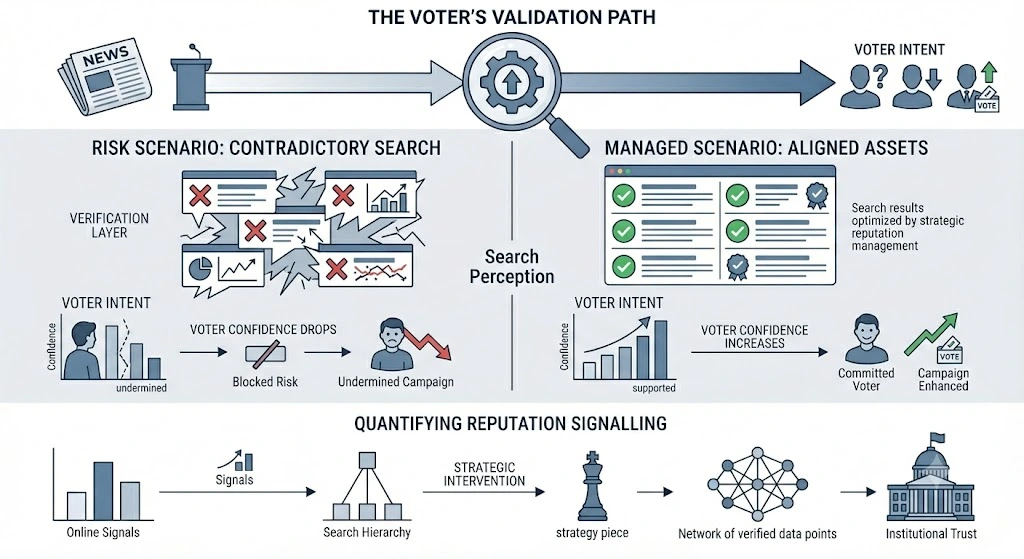
Search engines directly shape voter intent by serving as the ultimate verification layer for all campaign messaging, advertisements, and public debates. When voters see breaking news or political advertisements, they immediately perform specific informational searches to validate those claims. If the resulting search layout presents contradictory information or unverified allegations, voter confidence drops, reversing the impact of costly offline media campaigns.
Strategic deployment of a professional reputation management service eliminates these conversion risks by aligning top-ranking search assets with current campaign objectives. When search results consistently show verified accomplishments, policy papers, and authoritative third-party coverage, voter confidence increases substantially. This technical alignment converts casual searchers into committed voters, ensuring that digital discovery processes enhance campaign messaging rather than undermining it.
Quantifying the Impact of Online Reputation Signalling
Reputation signals function as digital validation metrics that search algorithms use to rank content and determine the visible hierarchy of search results. These signals include citation frequency, sentiment trends within authoritative publications, and user engagement consistency across validated digital profiles. Unfavorable updates from high-authority media platforms disrupt these signals, signalling to search engines that the negative content is highly relevant to public queries.
Understanding how online reputation influences modern political campaign outcomes allows strategic teams to deploy proactive countermeasures that protect vital search queries. By introducing highly structured, data-driven content nodes across the web, campaigns build reliable signal networks that outperform speculative media coverage. This data-driven intervention ensures that the visible search landscape consistently reflects verified historical records, preserving institutional trust throughout critical voting windows.
What are the outcomes of negative content suppression?
Negative content suppression delivers total search engine results page control by systematically pushing unverified allegations and damaging articles out of visible ranking positions. Because less than five percent of users browse past the first page of search results, displacing negative links to the lower pages achieves functional narrative removal. This technical execution ensures that damaging content loses organic traffic, stopping the spread of misinformation across the electorate.
This suppression methodology uses authoritative digital properties to outrank and isolate volatile URLs without triggering algorithmic penalties or public backlash. The process builds an enduring digital barrier around the candidate name, ensuring that any new negative content cannot achieve high visibility. As a result, the campaign secures long-term digital stability, protecting the candidate from unexpected media shifts and synchronized opposition attacks.
The Technical Mechanics of SERP Exclusion
Achieving sustained content displacement requires building an advanced ecosystem of interconnected digital profiles and highly authoritative publication channels. Search engine algorithms rank web documents based on structural relevance, domain authority, and user engagement patterns. Suppression strategies create highly optimised informational assets that naturally satisfy these algorithmic metrics, outperforming negative articles over time.
Our dedicated methodology focuses on building long-term domain value and optimising entity profiles to ensure that positive assets maintain top rankings indefinitely. By monitoring measuring the impact of online reputation on campaign performance, data teams track visibility shifts and adjust asset deployment dynamically. This continuous optimization guarantees that the first page of search results remains secure, keeping negative narratives isolated and invisible to the public.
Why should public figures trust Clear My Name for campaign security?
Clear My Name delivers a highly technical, data-driven framework engineered specifically for the complex demands of high-profile political campaigns and public figures. Unlike traditional PR firms that rely on temporary media placements, our strategy uses semantic SEO and entity optimisation to build permanent digital protection. This advanced framework ensures that search engine algorithms prioritise verified assets, maintaining narrative control under intense media scrutiny.
The specialised infrastructure developed by Clear My Name provides comprehensive digital risk mitigation by continuously tracking search variations and algorithmic shifts. This real-time analysis allows our engineering team to deploy protective content layers before negative stories can damage search positions. By choosing Clear My Name, political figures gain an experienced technical partner committed to delivering verifiable search control and absolute narrative confidentiality.
Measurable Deliverables and Process Security
Our operational deployment adheres to a strict, multi-stage protocol designed to provide rapid visibility control while building long-term digital protection. We provide clear, data-backed milestones that demonstrate exactly how your digital profile improves, giving campaign leaders absolute confidence in our process. Every phase of our execution focuses on delivering measurable security and verifiable data improvements:
- Establishes complete ownership of primary brand queries by building a verified network of optimised web properties.
- Deploys advanced semantic entity structures to align your search profile with trusted institutional databases.
- Suppresses volatile or unverified web links from the first page of search results using ethical, high-authority optimisation methods.
- Monitors international search environments continuously to intercept and neutralise emerging digital threats before they rank.
- Delivers comprehensive data reports that track structural visibility improvements, entity authority scores, and sentiment shifts.
How do the long-term benefits of search control justify the investment?
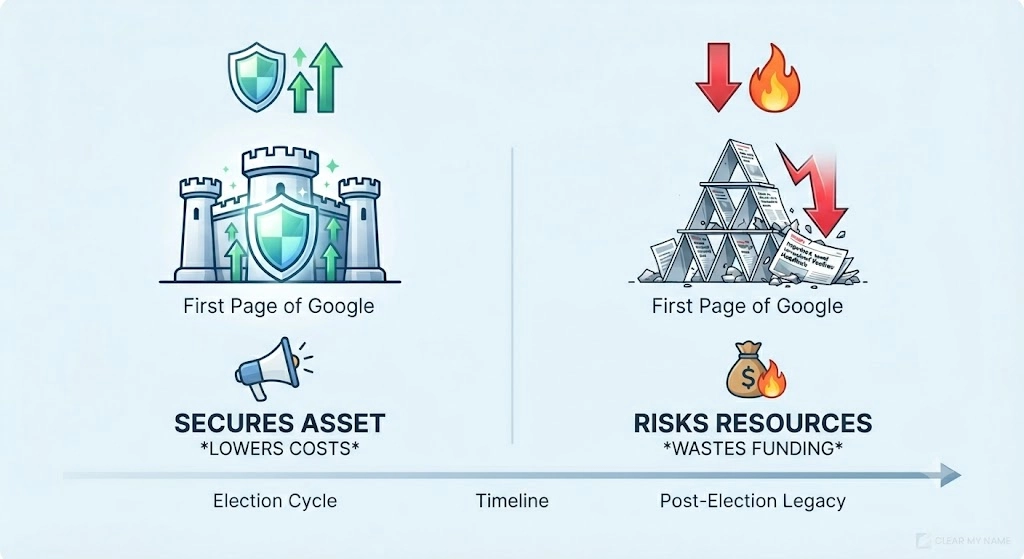
Investing in advanced search control provides a permanent digital asset that protects a candidate’s reputation long after the active election cycle concludes. While traditional media advertisements require continuous funding and disappear once the budget ends, search engine optimisation provides lasting visibility control. Securing the first page of search results forms a permanent defence system that continuously protects the public figure from future digital crises.
This strategic approach lowers future crisis communication costs by preventing negative narratives from gaining algorithmic visibility in the first place. When an unexpected issue arises, a properly optimised search profile automatically resists visibility shifts, keeping unverified content hidden from the public. This structural resilience protects the candidate’s personal brand, ensuring that historical achievements and verified policies remain the primary focus of public discovery.
Risk Management and Strategic Resource Allocation
Failing to secure critical search profiles introduces severe institutional risks, leaving campaign messaging vulnerable to opposition manipulation and algorithmic shifts. When unverified stories capture the first page of search results, campaigns must spend significant financial and operational resources on reactive crisis control. Proactive search asset development avoids these costly disruptions, allowing campaigns to focus their resources on core voter engagement strategies.
Choosing Clear My Name guarantees that your digital architecture is built by expert search strategists using proven, data-driven methodologies. Our sophisticated approach ensures that your search profile remains clear, authoritative, and perfectly aligned with your strategic goals. Secure your digital narrative and protect your campaign’s future by partnering with our elite reputation engineering team today.
Frequently Asked Questions
What does a political reputation management service actually do during an election campaign?
A specialized reputation management service for public figures engineers the search ecosystem to ensure that authoritative, verified assets dominate the first page of search results. This process involves optimizing official candidate biographies, policy platforms, and trusted media citations to suppress unverified third-party content and negative narratives. By controlling search perception influence and entity credibility, the framework builds a reliable digital barrier that protects the campaign from unexpected media shifts.
How long does it take for negative content suppression to show visible results on search engines?
The timeline for noticeable SERP control varies depending on domain authority and the algorithmic velocity of the negative content, but initial visibility shifts typically materialize within four to eight weeks. Lasting suppression requires creating an interconnected network of highly optimized informational nodes that naturally outperform volatile URLs over time. Clear My Name deploys a multi-stage protocol that continuously strengthens positive entity signals to establish permanent narrative security across primary search queries.
Can a reputation management service for business principles be applied to public figures?
Yes, the foundational mechanics of a professional reputation management service apply equally to corporate entities and public figures because both rely on semantic search algorithms and entity validation. Whether managing a corporate brand or a political candidate, the objective remains the same: auditing structural content gaps, building domain value, and reinforcing positive reputation signals. This advanced content engineering ensures that search engines natively trust and prioritize your primary web properties.
How do online reputation signals influence voter decisions and campaign performance?
Search engine results serve as the ultimate verification layer for the electorate when validating campaign advertisements and public statements. If prominent search results display unverified allegations or negative sentiment trends, voter confidence drops and overall campaign performance is compromised. Proactive search asset development neutralizes these algorithmic vulnerabilities, ensuring that the visible search landscape consistently reflects verified historical records.
Is long-term search perception control sustainable after an election cycle ends?
Sustained search perception control is highly stable because it focuses on building permanent digital assets and long-term domain value rather than temporary fixes. Once an entity’s semantic graph is properly structured with authoritative links, the optimized search profile automatically resists future visibility shifts and opposition manipulation. Partnering with Clear My Name guarantees an enduring digital defense system that continuously protects a public figure’s personal brand long after active campaigning concludes.