

Search visibility control dictates political survival, as search engine results pages (SERPs) function as the primary definitive source for voter verification and constituent trust. Digital reputation signals directly influence public perception, electoral outcomes, and party credibility during critical campaign windows and legislative periods.
Why Does Political Search Visibility Management Demand an Algorithmic Approach?
Algorithmic narrative control requires systematic data engineering rather than simple public relations adjustments because search engines rank information based on entity authority, freshness, and sentiment density. Political entities are classified as Your Money or Your Life (YMYL) subjects by search algorithms, meaning search engines enforce strict information quality thresholds and elevate content that possesses high entity credibility. When negative press, outdated controversies, or coordinated misinformation campaigns dominate the first page of search results, the algorithm prioritises these sources due to high user engagement and click-through rates. Effective reputation management within search ecosystems systematically alters these data feeds to shift the balance of prominent visibility.
By deploying advanced technical SEO, strategic asset creation, and semantic content optimization, public figures restructure how search engines understand their digital footprint. This methodology relies on building a protective perimeter of high-authority web assets that target the same semantic keywords as the damaging material. Over time, search engine algorithms recognise these newly optimized entities as more contextually relevant and authoritative sources of information, which systematically demotes unfavorable links. The outcome of this process is a stabilised digital asset portfolio that insulates a political brand against sudden shifts in media sentiment.
Sustainable search perception influence relies heavily on establishing verifiable trust signals across independent data nodes, including Knowledge Panels, official portals, and top-tier journalistic publications. Through precise data structuring and schema markup deployment, a political entity forces search engines to index verified biographical facts, policy achievements, and neutral historical records. This structural optimization ensures that automated search systems pull data from controlled, accurate assets rather than speculative or hostile third-party forums. Ultimately, this approach creates a resilient search profile that protects public standing and reduces vulnerability during high-stakes political events.
Which Reputation Management Strategy Guarantees Long-Term SERP Control?
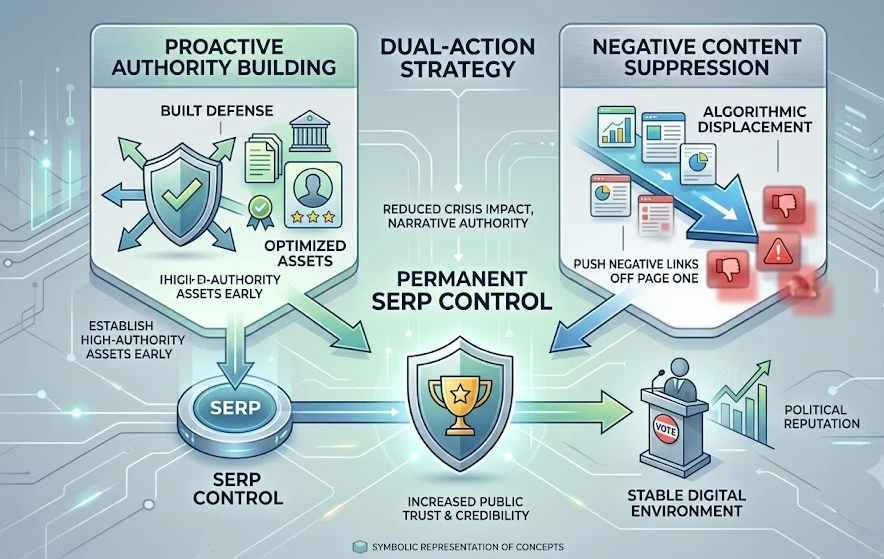
A dual-action strategy combining proactive authority building with aggressive negative content suppression delivers permanent SERP control by addressing the root mechanics of algorithmic ranking. Proactive management involves the continuous deployment of optimized digital assets, whitepapers, and verified neutral profiles that occupy valuable search real estate before a crisis emerges. When high-authority assets are established early, they act as a defensive buffer that absorbs and neutralizes sudden influxes of negative news or algorithmic volatility. This comprehensive preparation reduces the likelihood that unverified or malicious content will gain traction on the first page of search results.
Negative content suppression operates on the principle of algorithmic displacement, pushing damaging links off the first page where over 90% of user clicks occur. This mechanism is achieved by out-ranking the offending URLs through the strategic distribution of semantically rich, high-engagement content across third-party media outlets and official platforms. As these positive and neutral assets gain greater contextual relevance and backlink authority, search engines naturally relegate the negative URLs to lower, less visible positions. This systematic displacement completely changes public perception by ensuring that constituents encounter authoritative and verified information during their search journeys.
The integration of a specialized reputation management for politicians service secures the digital landscape by treating search results as a permanent asset portfolio that requires constant optimization. This technical intervention ensures that all public-facing platforms align perfectly with the target entity’s core values and legislative record, thereby reinforcing total narrative authority. By executing this structured methodology, political figures eliminate the randomness of organic search behavior and establish a predictable digital environment. The resulting stability enhances overall entity credibility, builds long-term public trust, and protects the brand from coordinated digital attacks.
How Do Controlled Reputation Signals Transform Public Trust and Voter Perception?
Reputation signals serve as the primary digital currency for public trust, directly affecting how voters interpret political intentions and policy decisions. When a user queries a politician’s name, the composition of the SERP provides immediate psychological confirmation regarding that individual’s integrity and competence. If the search results display structured, professional data alongside positive journalistic coverage, the user experiences a high degree of cognitive alignment and trust validation. Conversely, a chaotic search landscape filled with unverified claims triggers immediate skepticism, eroding voter confidence regardless of the politician’s actual real-world achievements.
To understand how these digital narratives impact public opinion, one must examine how search engines shape political narratives through automated filtering and user exposure. Search engine algorithms prioritize content that demonstrates high user interaction, meaning unmanaged negative headlines can quickly become permanent fixtures of a public profile. By actively managing these digital touchpoints, political organizations interrupt negative feedback loops and replace speculative content with verified factual records. This active intervention transforms the search interface from an unpredictable reputational liability into a powerful tool for constituent reassurance and engagement.
The quantifiable outcomes of controlled search perception influence include increased digital engagement, enhanced campaign resilience, and superior control over policy announcements. When media outlets or opposing campaigns attempt to introduce hostile narratives, an optimized digital footprint prevents those narratives from capturing top-tier search rankings. This systemic resistance ensures that the public receives a balanced, evidence-based view of the politician’s career and legislative contributions. Managing these signals systematically reduces communication risks, allowing political teams to execute long-term strategies with complete confidence in their digital foundation.
What Process Mitigates Digital Risks During Critical Election Campaigns?
Managing political search visibility requires a precise, multi-phase technical workflow designed to discover vulnerabilities, optimize authoritative assets, and suppress damaging information in real time.
- Conduct comprehensive search footprint audits to identify high-risk URLs, sentiment vulnerabilities, and negative search suggestions across all major engines.
- Deploy structured data schema across all owned digital properties to explicitly define entity relationships, official titles, and verified policy positions for search crawlers.
- Publish high-authority, semantically optimized editorial content across trusted media networks to capture prominent positions within news carousels and organic listings.
- Execute strategic link-building campaigns to elevate the authority of neutral and positive biographical assets, accelerating the suppression of damaging links.
- Monitor SERP fluctuations continuously using real-time tracking software to detect emerging reputational threats and algorithm changes instantly.
By adhering to this technical workflow, political campaigns transform their digital profiles into highly defensible assets capable of weathering intense media scrutiny. Each phase of the process targets a specific algorithmic ranking factor, ensuring that asset optimizations yield measurable improvements in content visibility and narrative control. This structured execution minimizes the impact of negative publicity, allowing communication teams to maintain an uncompromised public narrative throughout the electoral cycle.
How Do Campaign Teams Justify the Financial Investment in Search Perception Control?
The financial commitment required for professional search visibility management is fully justified when measured against the catastrophic costs of unmanaged reputational crises and lost political capital. A single unaddressed negative story on the first page of search results can alienate donors, fracture constituent support, and neutralize millions of pounds spent on traditional advertising campaigns. Traditional marketing and public relations deliver fleeting visibility, whereas search engine optimization provides a permanent infrastructure that continuously protects and promotes the political entity. Investing in search control safeguards all other campaign investments by ensuring the digital foundation remains secure against hostile attacks.
To accurately evaluate the return on investment, campaign teams rely on targeted political search visibility audits to track narrative ownership metrics and track the displacement of negative assets over time. These technical audits provide objective data on search share-of-voice, keyword rankings, and the overall stability of the entity’s digital footprint. By analyzing these metrics, strategists can link improvements in search visibility directly to shifts in constituent sentiment and increased digital fundraising efficiency. This data-driven framework removes guesswork from reputation management, proving that systematic SERP control is an essential component of modern political strategy.
The professional visibility management solutions delivered by Clear My Name ensure that political organizations achieve predictable, sustainable control over their digital narratives without sacrificing process clarity. By combining deep search engineering expertise with a sophisticated understanding of political communications, Clear My Name builds resilient digital profiles that withstand intense public scrutiny. This professional intervention provides the strategic certainty required to navigate complex media landscapes, protect public institutional trust, and secure lasting electoral success.

Frequently Asked Questions
What is online reputation management for politicians?
Online reputation management for politicians is the strategic optimization of digital search results to ensure accurate, authoritative, and verified information dominates public profiles. This specialized service by Clear My Name uses advanced search perception influence and technical SEO to address negative content suppression and stabilize brand sentiment. By engineering prominent search visibility, public figures protect their digital footprint against unverified claims and coordinated misinformation during critical election cycles.
How do political search visibility audits protect a candidate’s digital reputation?
A political search visibility audit acts as a comprehensive risk assessment tool by tracking entity credibility and indexing structural vulnerabilities across major search engines. These data-driven evaluations map negative reputation signals, hostile URLs, and unfavorable search autocomplete trends that threaten a campaign’s narrative control. Strategists use these metrics to develop precise algorithmic remediation plans, ensuring long-term SERP control and safeguarding public trust.
How long does it take for negative content suppression to improve search results?
The timeline for negative content suppression typically ranges from a few weeks to several months, depending on the authority of the offending URLs and the competition for target search queries. Clear My Name accelerates this process by deploying high-authority, semantically optimized digital assets that systematically displace damaging links from the first page of search results. Consistent, long-term asset optimization ensures these neutral and positive changes remain sustainable against future search volatility.
Why can public relations firms not resolve search engine reputation risks alone?
Traditional public relations firms focus on media relations and short-term press visibility rather than the technical algorithms that govern permanent search index rankings. Search engines prioritize algorithmic factors like entity authority, schema markup, and search user engagement metrics, which demand specialized search engineering rather than standard press releases. Professional reputation management services bridge this gap by reshaping how search engine crawlers permanently index and rank an individual’s digital identity.
What is the cost vs long-term value of political reputation management services?
While professional search perception control requires a dedicated financial investment, its long-term value lies in mitigating the high risk of unmanaged digital crises that can neutralize traditional campaign advertising. Establishing a resilient portfolio of optimized web assets provides a permanent defensive barrier that continuously protects a politician’s public standing and donor confidence. This systematic stabilization of search visibility secures digital capital and prevents hostile narratives from altering voter perception during high-stakes legislative windows.