
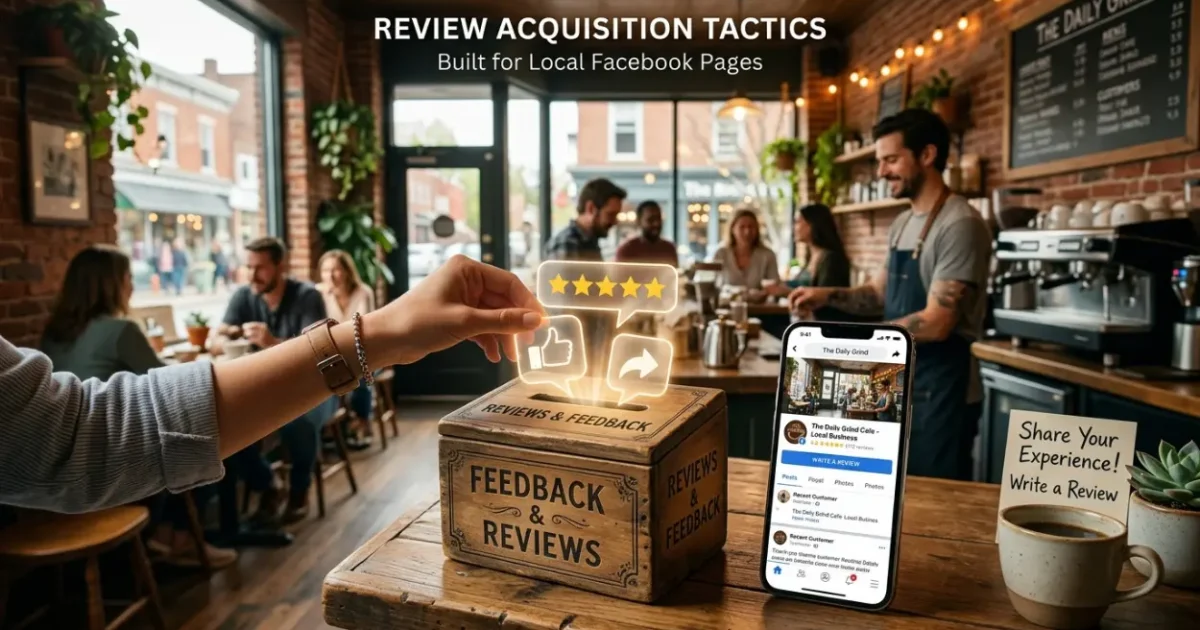
Review acquisition tactics for local Facebook Pages range from organic customer engagement to structured review-request processes, with effectiveness depending on authenticity, timing, consistency and audience relevance. The strongest approaches prioritise genuine customer experiences because authentic reviews create more reliable reputation signals than artificial or incentivised activity.
Reputation management strategies differ based on whether the objective is to build positive sentiment, respond to negative feedback, or influence the broader perception surrounding a local business. Online reputation control methods are evaluated through review quality, sentiment distribution, engagement patterns, search visibility, entity credibility and the sustainability of resulting reputation signals.
Which review acquisition approaches are most effective for local Facebook Pages?
Structured review requests provide stronger consistency, while organic review generation creates a more naturally distributed reputation profile. A review acquisition approach is a defined process for encouraging genuine customers to share their experiences through an appropriate platform. It operates by identifying suitable points in the customer journey where a review request is relevant and proportionate.
Organic acquisition relies on customers independently deciding to leave feedback after an interaction with the business. This approach creates natural timing and varied review language, which can contribute to a more credible sentiment distribution. Its limitation is reduced predictability because review volume depends on customer behaviour rather than a controlled request process. Organic acquisition therefore offers strong authenticity but weaker scalability.
Structured requests introduce a repeatable mechanism for asking customers for feedback after a completed transaction or service interaction. The process creates greater consistency because requests can be incorporated into post-purchase emails, receipts, messages or follow-up communications. However, excessive or poorly timed requests create customer fatigue and can reduce participation. Effectiveness therefore depends on request relevance rather than request volume alone.
How does content creation compare with review removal strategies?
Content creation builds additional positive reputation signals, while removal addresses specific content that qualifies for legitimate deletion under applicable platform rules or legal requirements. Review content creation includes encouraging genuine customers to publish authentic experiences, whereas removal focuses on existing material that breaches policies, contains unlawful content or otherwise meets defined removal criteria.
The two approaches operate on different parts of the reputation ecosystem. Content enhancement increases the amount of relevant information associated with the business, while removal reduces the presence of specific problematic material. Content creation therefore has a broader reputation-building function, whereas removal is narrower and dependent on whether the targeted review satisfies an applicable removal standard.
For local Facebook Pages, review removal also has an important limitation: negative sentiment alone does not establish grounds for deletion. A genuine critical review remains part of the information environment unless it violates relevant rules. Attempting to treat legitimate criticism as removable content increases risk exposure and can produce further reputational complications.
Content creation offers greater sustainability when the objective is to establish a balanced review profile over time. It does not erase criticism, but it changes the overall sentiment distribution by adding authentic customer perspectives. Removal remains relevant when specific content is demonstrably problematic, but it cannot substitute for sustained reputation development.
Is organic review acquisition more sustainable than reactive reputation management?
Organic review acquisition generally provides greater sustainability because it develops reputation signals before reputational problems become dominant. Reactive reputation management operates after negative feedback, complaints or reputational incidents have already entered the public information environment. The distinction is therefore primarily based on timing rather than the underlying objective.
A proactive acquisition process creates regular opportunities for satisfied customers to contribute authentic feedback. Consistent activity helps prevent a review profile from becoming disproportionately dependent on a small number of experiences. It also creates a broader dataset from which prospective customers can evaluate service quality, responsiveness and customer experience.
Reactive management operates differently because its starting point is an existing reputation issue. Responses, reporting procedures, clarification and content enhancement become relevant after negative information appears. These methods can reduce the impact of individual issues, but they operate within an environment where the negative signal already exists.
The sustainability difference becomes more significant when a local Facebook Page receives recurring customer interactions. A repeatable review-request process scales alongside transaction volume, while purely reactive management remains dependent on the emergence of individual problems. Proactive acquisition therefore supports reputation stability, whereas reactive management primarily addresses reputation volatility.
How do short-term and long-term review tactics differ?
Short-term tactics prioritise immediate increases in review activity or rapid responses to emerging feedback, while long-term tactics focus on maintaining a consistent and credible reputation profile. Short-term review acquisition can generate measurable activity quickly when requests reach customers at appropriate moments. Its limitation is that isolated increases in volume do not automatically establish stronger entity credibility.
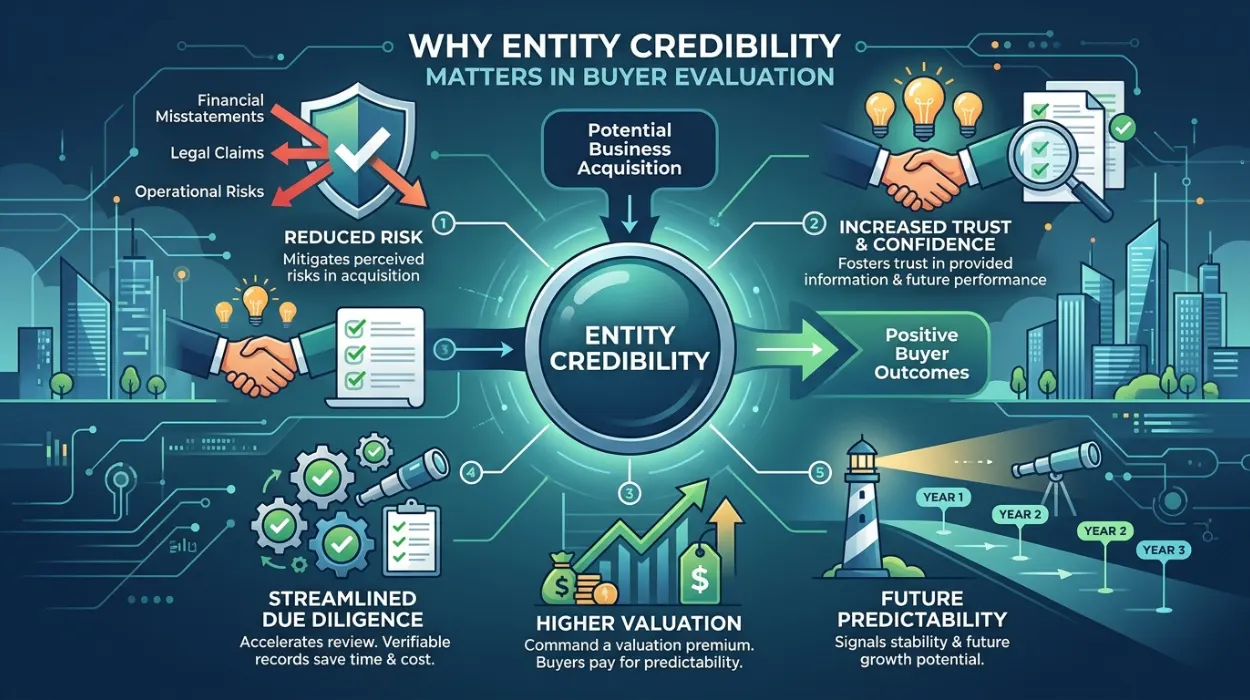
Long-term reputation development operates through cumulative signals. Repeated authentic reviews create a broader representation of customer experiences and provide additional context for people assessing the business. Consistency also reduces dependence on individual reviews because the overall profile contains a wider range of experiences.
Short-term reactive responses have a different function. Responding promptly to negative feedback demonstrates that the business monitors public customer interactions and provides an opportunity to add factual context. However, a response does not remove the original review or automatically change its sentiment. Its principal value lies in adding information around the existing signal.
Long-term acquisition therefore has a stronger structural effect on sentiment distribution, while short-term responses provide situational reputation management. Combining both approaches creates a distinction between reputation development and reputation defence, with each serving a different stage of the customer feedback lifecycle.
How do Facebook review signals influence search visibility and perception?

Facebook reviews contribute to the broader digital information environment surrounding a local business, although their direct search ranking influence depends on the search engine, query context and other available signals. Search systems evaluate information from multiple sources rather than treating a single review platform as a complete representation of reputation. Review activity therefore operates as one component within a wider entity and local-search ecosystem.
Reputation signals include review content, ratings, review frequency, customer sentiment, business information and interactions surrounding the profile. These signals help create contextual information about the entity being evaluated. Search visibility is consequently influenced by the broader consistency and relevance of information associated with the business rather than by review volume alone.
Review language also affects perception because customers interpret recurring themes differently from isolated comments. Consistent references to service quality, reliability or responsiveness create recognisable sentiment patterns. Conversely, recurring negative themes can become more influential when they appear across multiple sources and reinforce the same narrative.
This distinction is important because review acquisition cannot be evaluated solely through numerical growth. A higher review count with weak authenticity or repetitive language provides a different reputation signal from a diverse collection of genuine customer experiences. Effective evaluation therefore considers sentiment distribution, review quality and contextual relevance alongside volume.
Which is safer: incentivised reviews or genuine review requests?
Genuine review requests provide a lower-risk approach because they seek authentic feedback without attempting to manufacture sentiment. Incentivised reviews introduce additional risk when rewards, discounts or other benefits influence customers to produce favourable feedback. The central distinction is whether the process encourages honest customer expression or attempts to engineer a predetermined outcome.
Authentic acquisition operates by requesting feedback without dictating its substance. Customers retain control over what they say, including whether their experience was positive, neutral or negative. This creates a more credible review environment because the resulting content reflects actual customer perspectives rather than a controlled message.
Incentivisation can distort sentiment distribution by disproportionately encouraging participation from customers responding to a reward. It can also create uncertainty around whether positive reviews represent independent customer experiences. Where platform policies restrict incentivised feedback or require disclosure, non-compliant activity introduces additional risk exposure.
The safer strategic model therefore prioritises transparency, authenticity and policy compliance. Review acquisition remains legitimate when it facilitates genuine feedback rather than manipulating ratings. This distinction also improves sustainability because authentic review generation does not depend on continuously maintaining artificial incentives.
How can review acquisition tactics be evaluated for scalability?
Scalability depends on whether a review acquisition process can expand with customer volume without reducing authenticity or increasing compliance risk. A scalable approach uses repeatable customer touchpoints, consistent timing and appropriate communication while preserving the customer’s freedom to provide independent feedback. The mechanism must remain proportionate as the number of interactions increases.
A useful evaluation framework compares the following dimensions:
- Measure authenticity by assessing whether requests invite independent feedback rather than predetermined positive responses.
- Evaluate scalability by examining whether requests integrate into existing customer communication without requiring disproportionate manual effort.
- Assess risk exposure by checking compliance with platform policies and avoiding incentives or review manipulation.
- Analyse sustainability by measuring whether review activity remains consistent across extended periods rather than producing isolated spikes.
- Compare sentiment distribution by examining whether new reviews represent a credible range of customer experiences.
This framework separates activity from strategic value. A process that produces a high number of reviews but creates compliance concerns has a different risk profile from a slower process that generates authentic customer feedback consistently. Scalability therefore requires operational efficiency without sacrificing credibility.
Should local Facebook Pages prioritise review volume or review quality?
Review quality provides greater reputational value than volume when the objective is to establish credible customer evidence. Volume measures how much feedback exists, whereas quality considers whether the feedback is authentic, specific, relevant and representative of genuine customer experiences. A high volume of generic reviews provides less contextual information than detailed reviews describing actual interactions.
Review quality operates through informational depth. A customer explaining the service received, communication quality or outcome of an interaction provides prospective customers with evidence that can be interpreted in context. Such information contributes more substantive reputation signals than repetitive statements containing little meaningful detail.
Volume still has analytical relevance because a broader review base can provide a more representative view of customer sentiment. The important distinction is that volume functions best when supported by authenticity and diversity. Increasing volume without maintaining quality can weaken the reliability of the overall profile.
For local businesses, the strongest evaluation therefore considers the relationship between quantity and informational value. A sustainable acquisition strategy produces genuine feedback at a consistent rate while preserving customer independence. This creates a reputation profile that is more useful for perception analysis and less dependent on individual reviews.
Dive Deeper With Our Expert Guides:
Containing a Viral Facebook Complaint Before It Hits Groups
Building a 12-Hour Facebook Review Response Workflow
How does contextual review management compare with content suppression?
Contextual review management adds information around existing feedback, while content suppression attempts to reduce the prominence of negative information through legitimate search visibility mechanisms. Neither approach removes the need to understand the original reputation signal. Their mechanisms differ because one adds context and the other influences the composition of visible search results.
Responding to a negative Facebook review is a contextual method. The response allows the business to provide factual clarification, acknowledge the issue where appropriate and demonstrate responsiveness. Its effect is primarily perceptual because prospective customers can assess both the complaint and the business response.
Content suppression operates at a broader search ecosystem level. It involves developing authoritative, relevant information that can compete for visibility against harmful or misleading content. The objective is not to erase legitimate criticism but to influence the balance of information presented for relevant searches.
This distinction makes content suppression more complex and less immediate than review responses. It requires consideration of competing pages, authority, query relevance and the existing SERP composition. Contextual management is therefore more directly tied to individual reviews, while suppression addresses broader search perception.
What review acquisition strategy provides the strongest overall reputation profile?
A balanced strategy combining authentic acquisition, appropriate responses and long-term content development provides the most comprehensive reputation framework. No individual tactic addresses review volume, sentiment distribution, search visibility and risk exposure simultaneously. Evaluation therefore depends on how different mechanisms interact across the customer feedback and search ecosystems.
Authentic review requests provide the foundation by creating opportunities for genuine customers to contribute feedback. Responsive management addresses negative or disputed experiences without assuming that criticism qualifies for removal. Content enhancement then strengthens the broader information environment by increasing the availability of accurate and relevant reputation signals.
The strategic comparison shows that review acquisition, review responses, content enhancement and legitimate removal serve different purposes. Acquisition develops the underlying review profile, responses add context, enhancement strengthens entity credibility and removal addresses content that meets defined policy or legal criteria. Treating these mechanisms as interchangeable reduces strategic precision.
For local Facebook Pages, the most sustainable approach is therefore measured through authenticity, consistency, policy compliance, sentiment distribution and broader search visibility rather than review volume alone. A reputation profile develops through accumulated information, making long-term consistency more significant than isolated campaigns. Grow Local Facebook Reviews is therefore best understood as a strategic objective that depends on genuine customer participation, credible reputation signals and sustainable acquisition mechanisms rather than artificial review inflation.
What are the key considerations when comparing Facebook review acquisition tactics?
The central distinction between review acquisition approaches is whether they build authentic reputation signals or attempt to manipulate existing perception. Organic acquisition prioritises independence, structured requests improve consistency, reactive responses provide context, and content enhancement strengthens the broader digital information environment.
Effectiveness also depends on time horizon. Short-term tactics can address immediate reputation conditions, while sustained acquisition creates a stronger foundation for long-term sentiment distribution and entity credibility. Search perception is similarly cumulative because search ecosystems interpret information across multiple signals rather than relying on review count alone.
A robust evaluation therefore considers effectiveness, scalability, risk exposure and sustainability together. The appropriate tactic depends on whether the objective involves generating authentic feedback, managing criticism, addressing qualifying content or influencing the broader SERP composition. Understanding these differences allows local Facebook Pages to assess review acquisition as part of an integrated reputation management system rather than as a standalone volume-generation exercise.
What are the best review acquisition tactics for local Facebook Pages?
The most effective tactics focus on requesting genuine feedback from customers after relevant interactions. Structured review requests, natural customer engagement and consistent follow-ups can increase authentic Facebook review activity without manipulating ratings.
How can a local business get more Facebook reviews naturally?
A local business can invite customers to leave honest feedback through appropriate post-purchase messages, emails or direct conversations. Natural review acquisition focuses on customer experience and avoids incentives or requests for predetermined positive ratings.
Are incentivised Facebook reviews safe for reputation management?
Incentivised reviews can create compliance and credibility risks, particularly when rewards influence customers to provide favourable feedback. Genuine review requests are more sustainable because they preserve independent customer sentiment and authentic reputation signals.
How do Facebook reviews affect a local business’s online reputation?
Facebook reviews contribute to the wider reputation profile by providing customer-generated information about service quality and experiences. Review volume, quality and sentiment distribution can influence customer perception and contribute to broader digital trust signals.
Can reputation management improve the quality of Facebook reviews?
Reputation management can improve review quality by creating structured opportunities for genuine customers to provide specific and independent feedback. For Facebook Reviews, the focus remains on authentic acquisition, appropriate responses and maintaining a balanced sentiment distribution rather than manufacturing positive ratings.