
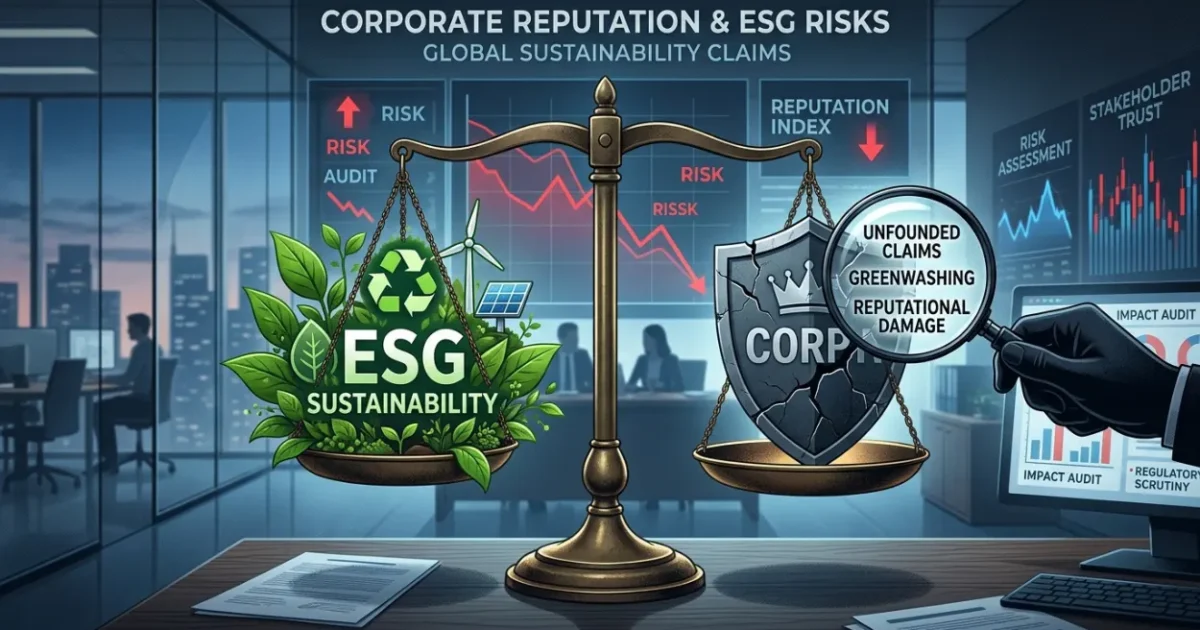
ESG and sustainability claims create reputation risks when public statements, search content and corporate evidence do not consistently support the environmental, social or governance position being presented. Reputation management is the process of analysing and managing the information, signals and associations that shape how an organisation is perceived across digital search ecosystems.
Online reputation refers to the collection of publicly available information that influences entity perception, credibility and trust. ESG refers to environmental, social and governance factors used to evaluate aspects of organisational conduct and performance, while sustainability claims communicate environmental or social characteristics, commitments or outcomes. When these claims appear on websites, reports, social platforms, news articles and third-party sources, they become part of an organisation’s digital footprint. Search engines index this information and evaluate its relevance, consistency and authority in relation to search queries. Reputation risk therefore develops when the information supporting an ESG or sustainability claim conflicts with other indexed evidence or lacks sufficient contextual support.
Why have ESG and sustainability claims become reputation risks?
ESG and sustainability claims have become reputation risks because public statements are increasingly evaluated against the evidence available across digital information ecosystems. A sustainability claim is a statement that associates an organisation, product or activity with an environmental or social characteristic. ESG claims extend this concept into environmental, social and governance performance, policies and practices. When such statements are published online, they become searchable reputation signals rather than isolated corporate communications. Search users can compare these claims with reports, reviews, regulatory information, journalism and independent assessments. The resulting comparison influences both human perception and the broader information environment surrounding an entity.
The central reputation risk arises from a gap between claim and evidence. A statement describing an organisation as environmentally responsible creates an expectation that supporting information exists elsewhere. If indexed sources contain contradictory information, unclear definitions or insufficient evidence, entity credibility becomes less consistent. Search engines process these different documents as part of the available information surrounding the organisation. Users also interpret contradictions when researching the entity through search results. Reputation risk therefore relates to the relationship between what an organisation claims and what the wider digital footprint appears to demonstrate.
How does greenwashing affect online reputation?
Greenwashing is the presentation of environmental benefits in a manner that creates a stronger sustainability impression than the available evidence supports. It is a reputation risk because the claim itself becomes part of an organisation’s searchable identity. Search engines index sustainability statements across websites, publications and other digital sources, creating multiple representations of the same entity. When external information challenges those representations, the discrepancy becomes part of the entity’s reputation signals. Users evaluating the organisation then encounter competing interpretations of its environmental position. The resulting SERP can therefore reflect both the original claim and information questioning its accuracy.
Greenwashing also affects semantic consistency. Terms such as “sustainable”, “eco-friendly”, “carbon neutral” and “net zero” represent specific concepts that users interpret according to their context and supporting evidence. Using broad sustainability language without explaining its scope creates ambiguity within the digital footprint. Search systems process the surrounding text to establish topical relationships, while users evaluate whether the language corresponds with substantive information. Clear definitions therefore contribute to more accurate entity perception. Unsupported or ambiguous terminology introduces additional reputation risk because different sources can establish conflicting interpretations.
How do search engines interpret ESG reputation signals?
Search engines interpret ESG reputation signals through the indexed information associated with an organisation, its activities and the subjects connected to its entity. A reputation signal is information that contributes to the perceived identity, credibility or relevance of an entity within a search ecosystem. Corporate reports, sustainability pages, news coverage, expert publications, reviews and third-party references provide different forms of evidence. Search engines evaluate these documents according to relevance, authority, quality and relationships between entities and topics. No single ESG statement functions as a complete representation of corporate reputation. Instead, search visibility reflects the broader information environment available to the search system.
Entity perception becomes more complex when different sources provide contradictory information. One page can describe a sustainability commitment while another source documents a different environmental position. Search engines do not simply select the more favourable statement; they evaluate the available indexed information in relation to the query and source characteristics. Authoritative external references therefore contribute important context to corporate claims. Consistency across credible sources strengthens the clarity of the entity representation, while unresolved contradictions increase uncertainty in the information ecosystem.
What role does evidence play in ESG and sustainability credibility?
Evidence establishes the relationship between a sustainability claim and the information supporting that claim. A claim without accessible supporting information creates a weaker credibility structure because users and search systems have less contextual material with which to evaluate it. Evidence can include quantified performance data, methodology explanations, reporting frameworks, policies, targets and independently documented information. The relevance of each evidence type depends on the nature of the claim being evaluated. The central principle is that the evidence must clearly correspond with the statement being communicated.
From a reputation perspective, evidence also strengthens topical authority. Detailed information allows search systems to associate an organisation with specific environmental, social or governance subjects rather than with broad promotional terminology. For example, a clearly defined emissions statement establishes a more precise semantic relationship than an unsupported reference to environmental responsibility. The same principle applies to social and governance claims when the organisation publishes relevant policies, measurements and explanations. Content indexing makes these relationships discoverable across search results. Evidence therefore contributes to both credibility and the semantic clarity of an organisation’s digital footprint.
How does ESG content influence search visibility?

ESG content influences search visibility by establishing the topics, claims and entity relationships associated with an organisation. A sustainability report creates indexed content relating the entity to specific environmental or social subjects. A detailed policy page provides additional context about how the organisation defines and implements those commitments. News coverage and third-party publications introduce external information that search engines also process when evaluating the entity. Together, these sources form a broader content environment around ESG-related queries. Search visibility therefore depends on the relevance and authority of the available content rather than on the presence of sustainability keywords alone.
Content ranking dynamics also determine which aspects of ESG reputation users encounter first. Search engines evaluate pages according to factors including query relevance, content quality, authority and the competitive search environment. A corporate sustainability page can therefore coexist with critical journalism, regulatory information or independent analysis within the same SERP. The ranking positions of these sources influence the order in which users encounter information. Reputation risk increases when unsupported corporate claims appear alongside highly authoritative sources presenting contradictory evidence. Search perception is consequently influenced by both the content itself and its relative visibility.
How do reviews and sentiment affect sustainability reputation?
Reviews and sentiment contribute to sustainability reputation by providing user-generated or third-party perceptions of an organisation’s conduct and claims. Review signals include ratings, written comments, recurring themes and sentiment expressed across relevant platforms. These signals represent a different information category from corporate ESG reporting because they reflect experiences, opinions or observations rather than formal organisational statements. Search systems process publicly available review information as part of the broader entity representation. Users independently interpret the same material when evaluating credibility. Sentiment distribution therefore provides additional context around corporate reputation.
The relevance of review sentiment depends on the subject being discussed. A review focused on product quality does not provide the same reputation signal as a review specifically addressing environmental claims or corporate conduct. Repeated references to a particular sustainability issue establish stronger topical associations within the available content. Search engines process these associations alongside other indexed information rather than treating individual comments as definitive evidence. This distinction prevents sentiment from being interpreted as a complete measure of ESG performance. Instead, reviews represent one component of the broader reputation system.
Dive Deeper With Our Expert Guides:
How Layoff News Travels and Hits Employer Reputation
Why B2B Buyers Read Case Studies Before Trusting a Vendor
How do authority and trust signals affect ESG reputation?
Authority and trust signals affect ESG reputation by influencing how credible information appears within the search ecosystem. Authority refers to the recognised strength or reliability of a source within a particular subject area, while trust relates to the perceived reliability and consistency of the information presented. Independent research organisations, established publications, professional bodies and authoritative institutional sources provide different forms of contextual evidence. Search engines use source characteristics and content relationships when evaluating information for relevant queries. Users also assign greater significance to information they regard as credible. The interaction between these signals influences the perceived strength of ESG claims.
Trust becomes particularly important when an organisation makes broad sustainability statements. A claim supported by detailed documentation and consistent external references presents a different information structure from a claim appearing only within promotional content. Search systems evaluate the available documents independently, while users compare information across sources. Stronger authority signals therefore provide contextual reinforcement for credible claims. Conversely, authoritative sources questioning an ESG statement introduce significant counter-signals within the search environment. Reputation analysis must therefore consider not only what an organisation publishes but also how external sources represent the same entity.
Why does an organisation’s digital footprint matter for sustainability claims?
A digital footprint is the collection of publicly accessible digital information associated with an organisation, its activities and its reputation. ESG and sustainability claims become part of this footprint whenever they are published through websites, reports, social media, news releases or third-party platforms. Each indexed source contributes information that search engines can associate with the organisation. The footprint therefore extends beyond controlled corporate channels. External commentary, reviews, research and publications also influence the overall entity representation.
Consistency across the digital footprint supports clearer entity perception. If an organisation uses different definitions for the same sustainability concept across different pages, search users encounter conflicting information. If corporate statements, reports and third-party references consistently describe the same measurable commitments, the information environment becomes more coherent. Content indexing preserves these relationships and allows them to appear in relevant search contexts. A fragmented footprint creates additional interpretation challenges because users must reconcile competing information. Digital reputation therefore depends on the consistency and evidence structure of information distributed across the web.
How do sustainability controversies affect SERP evaluation?
Sustainability controversies affect SERP evaluation by introducing additional content, entities and sentiment around an organisation’s environmental or social claims. When a disputed claim generates news coverage, commentary or independent analysis, those sources become part of the indexed search environment. Search engines evaluate each source according to relevance, authority and other ranking considerations. Users then encounter the resulting mixture of corporate statements and external perspectives when searching for the organisation. The controversy therefore changes the information available for entity evaluation. Reputation risk increases when critical sources become highly visible for searches involving the organisation’s name and sustainability claims.
SERP evaluation is not equivalent to determining whether a sustainability claim is legally or factually correct. Search engines rank information based on relevance and other system-level signals rather than issuing a definitive corporate reputation judgement. A highly visible critical article therefore represents a search perception signal, not automatically a final determination of wrongdoing. The distinction is important because reputation management analyses how information is represented and interpreted within search systems. Understanding this mechanism separates search visibility from legal or regulatory conclusions. It also demonstrates why content accuracy and contextual evidence remain central to sustainable digital reputation.
How can ESG claims create long-term online credibility?
ESG claims create stronger long-term online credibility when the claims, definitions, evidence and external references form a consistent information structure. Credibility is not established by repeating sustainability terminology across multiple pages. It develops when the digital footprint provides sufficient information for users and search systems to understand what an organisation claims, what those claims refer to and what evidence supports them. Detailed content establishes clearer semantic relationships between the organisation and specific ESG topics. Consistency across indexed sources further strengthens entity perception. This creates a more stable basis for evaluating corporate reputation.
Long-term credibility also depends on maintaining information as circumstances change. Sustainability targets, performance measurements and organisational policies require contextual updates when their underlying conditions change. Outdated information can create discrepancies between current performance and historical statements. Search engines continue to index older information when it remains accessible, meaning historical claims can remain part of the digital footprint. Accurate content governance therefore contributes to reputation stability. The objective is not to eliminate critical information but to ensure that the organisation’s searchable representation remains precise, contextual and evidence-based.
What is the relationship between ESG transparency and reputation management?
ESG transparency is the clear communication of relevant environmental, social and governance information, including definitions, evidence, limitations and performance context. Reputation management is the structured analysis of how information about an entity is created, distributed, indexed and interpreted across digital environments. Transparency therefore supplies the information foundation that reputation analysis evaluates. When ESG information is precise and supported by evidence, search systems and users receive clearer contextual signals. When information is vague or inconsistent, reputation analysis identifies a more fragmented entity representation. The two concepts are connected through information quality and perception.
Transparency also changes the way search results are interpreted. A detailed sustainability page can provide context for a claim that appears in a news article or third-party publication. A methodology document can explain how a particular environmental measurement was calculated. These supporting documents create additional semantic relationships that help users understand the original claim. Search engines can index those relationships as part of the wider content environment. Reputation management therefore evaluates transparency not simply as a communication principle but as an important component of digital trust and entity credibility.
ESG and sustainability claims represent reputation risks because they become searchable statements that users, organisations and search systems evaluate against a wider digital footprint. Reputation management is the analysis of the information, signals and entity relationships that shape this evaluation. Greenwashing risk develops when claims create an environmental or social impression that lacks sufficient supporting evidence or conflicts with authoritative information elsewhere. Search visibility, content indexing, review sentiment and authority signals all contribute to the resulting reputation environment. The strength of an ESG reputation therefore depends on the consistency, precision and evidential basis of information distributed across the web.
A credible sustainability reputation is built through clear definitions, accessible evidence, consistent content and accurate contextual information. Search engines evaluate these materials as part of broader SERP and entity systems, while users interpret them when assessing organisational credibility. ESG reputation consequently extends beyond corporate reporting into the wider digital information ecosystem. Understanding this relationship explains why sustainability claims require careful evidence management and why inconsistencies can become persistent search perception risks.
Why are ESG and sustainability claims a reputation risk?
ESG and sustainability claims become reputation risks when public statements lack sufficient evidence or conflict with information from authoritative sources. These inconsistencies can affect online credibility, entity perception and search visibility.
What is greenwashing and how does it affect reputation?
Greenwashing refers to presenting environmental benefits in a way that creates a stronger sustainability impression than the available evidence supports. It can create negative reputation signals when search users encounter contradictory evidence or critical third-party information.
How do ESG claims affect search visibility?
ESG claims become part of an organisation’s digital footprint when they appear on websites, reports, news platforms and third-party sources. Search engines index this content and evaluate its relevance, authority and relationship with the organisation and sustainability-related queries.
Why is evidence important for sustainability claims?
Evidence connects a sustainability claim with measurable information, methodologies, policies or independently documented findings. Strong supporting evidence improves the clarity of reputation signals and helps establish greater online credibility.
How can businesses avoid greenwashing reputation risks?
Businesses can reduce greenwashing risks by defining sustainability claims clearly, providing accessible supporting evidence and maintaining consistent information across their digital footprint. Accurate content and transparent reporting also strengthen entity credibility and reduce conflicting reputation signals.