

Engineers report recruitment agencies negatively when repeated experiences involve inaccurate job information, poor communication, unsuitable vacancies, salary discrepancies, or a lack of transparency. These experiences can develop into reputation signals when candidates publish reviews, discuss agencies on professional platforms, or associate recurring issues with the agency’s digital presence.
Reputation management strategies differ based on the source, frequency, visibility and persistence of negative signals. Online reputation control methods are evaluated through search visibility, sentiment distribution, entity credibility, source authority and the composition of search engine results pages (SERPs).
What causes engineers to develop negative perceptions of a recruitment agency?
Repeated inconsistencies between recruitment claims and candidate experiences represent a primary cause of negative perception. Engineers evaluate agencies through job relevance, salary accuracy, communication quality and the consistency of information across recruitment channels. When an agency repeatedly presents unsuitable opportunities or unclear employment conditions, candidates can interpret the pattern as a reliability issue rather than an isolated communication error. Reputation signals form when these experiences become visible through reviews, professional discussions or indexed content. The strength of the signal depends on the source’s authority, relevance and search visibility.
Negative perception also develops through information gaps. An incomplete job description, unclear salary range or unexplained change in vacancy requirements creates uncertainty about the agency’s recruitment process. Search engines do not independently verify whether every recruitment claim reflects a candidate’s experience, but they index publicly available pages containing reviews, discussions and agency information. This creates an entity-level information environment in which multiple sources contribute to how an agency is represented online. Reputation analysis therefore compares the agency’s published information with the broader digital footprint surrounding its name.
How do inaccurate job descriptions compare with poor communication as reputation risks?
Inaccurate job descriptions create a direct information-consistency problem, while poor communication creates a relationship and service-consistency problem. A job description becomes a reputation risk when advertised responsibilities, location, salary or technical requirements differ materially from the actual opportunity. Poor communication becomes a reputation risk when candidates receive delayed responses, incomplete updates or inconsistent explanations throughout the recruitment process. Both issues generate negative experiences, but they produce different types of reputation signals. Search visibility determines how far those signals extend beyond the original candidate interaction.
Content accuracy operates through information alignment. When an agency publishes a vacancy, the job title, technical requirements, salary information and employment conditions establish a set of searchable claims about the opportunity. If candidates publicly dispute those claims, third-party content can create competing information around the agency entity. Communication problems operate differently because the negative signal often originates from reviews or professional commentary rather than the vacancy itself. Reputation management therefore evaluates source type, content authority and sentiment distribution before comparing the relative impact of each issue.
Which reported causes create the strongest recruitment reputation signals?
Salary discrepancies, misleading vacancy information and repeated communication failures generally create stronger reputation signals because they directly affect candidate expectations. A salary range represents a measurable claim that candidates can compare against job advertisements and subsequent recruitment discussions. A technical requirement also provides an identifiable benchmark for determining whether a vacancy matches an engineer’s experience. Communication quality is less easily measured, but repeated complaints create a recognisable sentiment pattern when similar observations appear across multiple sources. The resulting reputation signal becomes stronger when independent sources describe comparable issues.
Reputation signals are not determined solely by the number of negative mentions. Source authority, content relevance, indexing status and search position influence how information contributes to SERP composition. A detailed review on a highly visible professional or recruitment platform can carry greater search significance than an isolated comment on a low-authority page. Search ranking influence therefore depends on the relationship between the negative content, the agency’s branded search queries and competing information. Effective analysis measures visibility and source characteristics rather than treating every mention as equivalent.
Dive Deeper With Our Expert Guides:
How Do Developers Vet Recruiters Before Replying to InMails?
How Do Reddit Threads and Reviews Shape Tech Recruiter Reputations?
How does negative candidate feedback affect an agency’s SERP composition?
Negative candidate feedback affects SERP composition when review pages, discussions, articles or profiles become indexed and visible for searches associated with the recruitment agency. SERP composition refers to the mix of pages displayed for a search query and the relative visibility of different information sources. When negative pages occupy prominent positions, they can become part of the information environment encountered by engineers researching the agency. This does not mean every negative statement receives prominent rankings, because search engines evaluate relevance, authority and query alignment. The practical reputation issue therefore concerns the visibility and persistence of specific content.
Search perception analysis compares negative results with the agency’s own controlled assets and neutral third-party sources. Content suppression focuses on reducing the visibility of unwanted results through stronger competing relevance, while content enhancement focuses on improving the quality and usefulness of existing positive or neutral pages. Removal operates differently because it attempts to address the source itself rather than competing with it within the SERP. These mechanisms have different limitations, particularly where third-party platforms control publication and indexing. A strategy therefore needs to distinguish between content removal, content suppression and content enhancement before assessing likely effectiveness.
How does content creation compare with content removal for recruitment reputation management?
Content creation and content removal operate through fundamentally different mechanisms. Content creation produces additional authoritative or relevant information that search engines can index, while content removal addresses the original negative source where deletion or correction is available. Removal provides a direct change to the source environment, but its availability depends on ownership, platform rules, factual circumstances and applicable policies. Content creation provides greater control over the information produced by the agency but does not automatically displace highly authoritative negative pages. Comparing the two approaches therefore requires analysis of source control, ranking competition and long-term sustainability.
Content enhancement occupies an intermediate position because it improves an existing information asset rather than creating an entirely new reputation layer. A recruitment agency can strengthen a page through clearer expertise, accurate information, structured content and stronger contextual relevance. Content suppression then operates by increasing the relative visibility of competing pages against unwanted results. The distinction between content suppression vs content enhancement is important because suppression primarily addresses SERP competition, while enhancement improves the underlying quality and relevance of a controlled asset. Both approaches depend on search visibility and the strength of competing content.
Are organic reputation strategies more sustainable than reactive approaches?
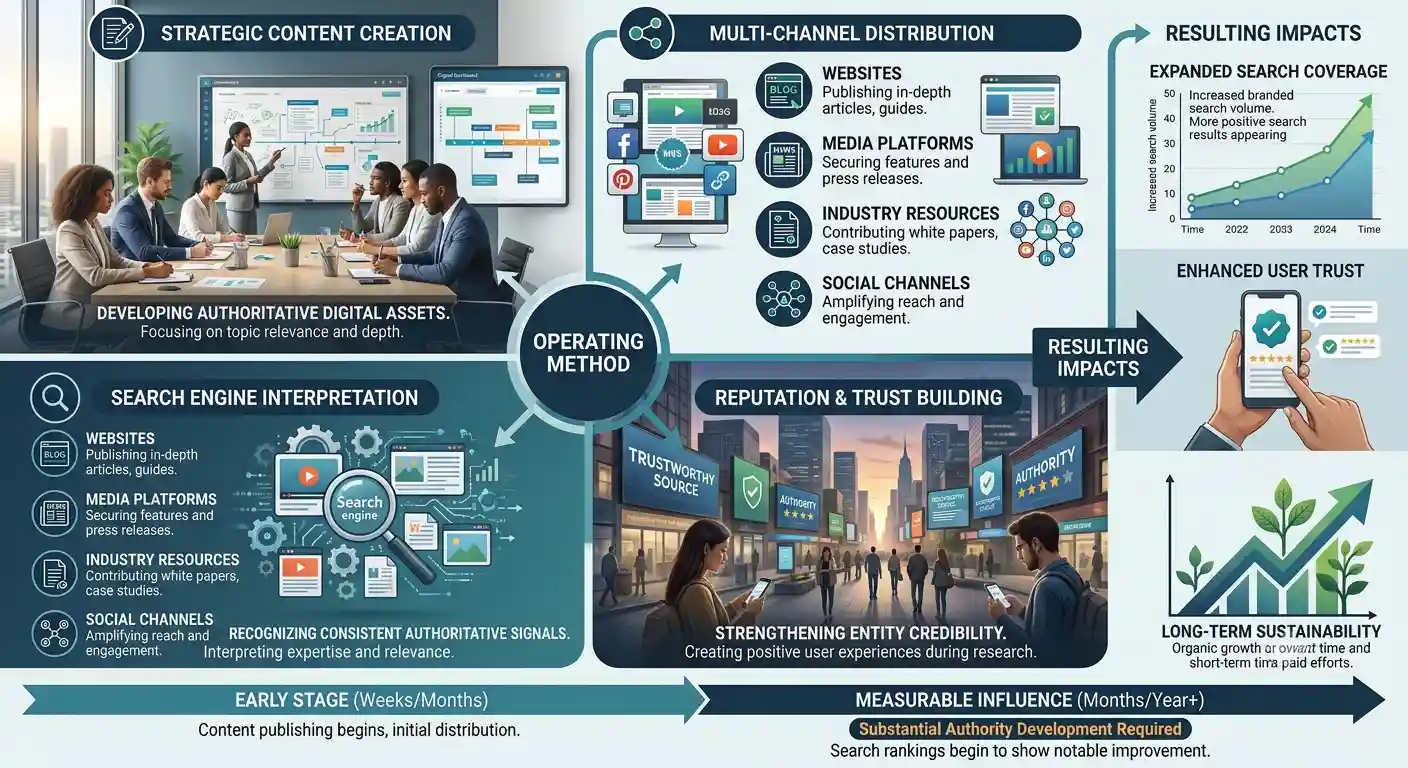
Organic reputation strategies generally provide greater sustainability when they continuously strengthen credible information before negative content becomes dominant. Organic activity includes maintaining accurate recruitment pages, publishing useful market information, developing professional resources and ensuring consistent entity information across digital properties. Reactive approaches begin after a reputation issue becomes visible and focus on correcting, removing, suppressing or contextualising an existing signal. Organic strategies build a broader information environment, while reactive strategies concentrate resources on a defined reputation problem. Their effectiveness therefore depends on whether the objective is prevention, recovery or both.
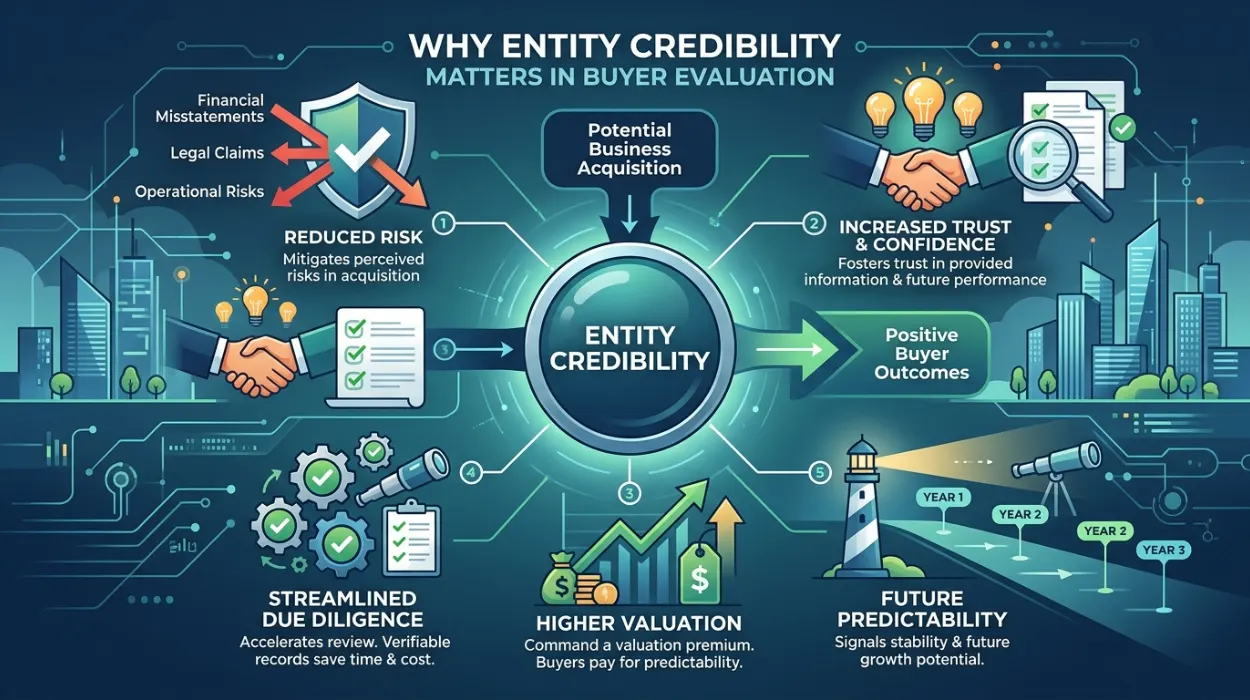
Organic reputation management also supports entity credibility by creating consistent information across multiple relevant sources. Search engines evaluate pages individually, but branded search results collectively shape the information environment associated with an entity. Reactive work can address a prominent negative result, but it does not automatically correct unrelated weaknesses across the wider digital footprint. Long-term reputation control therefore compares immediate SERP intervention with continuous information quality. The sustainable approach is measured through consistency, scalability and the persistence of credible search assets rather than a single ranking change.
How should short-term and long-term reputation approaches be evaluated?
Short-term reputation approaches focus on reducing the immediate visibility or impact of a defined negative signal. These approaches include source-level correction, content removal where available, targeted content enhancement and SERP suppression. Their principal advantage is concentration because resources are directed towards a specific search result, query or reputation issue. Their limitation is that the wider entity environment remains unchanged if other weak or negative signals continue to exist. Short-term effectiveness therefore needs measurement against both immediate visibility and the persistence of the underlying issue.
Long-term approaches evaluate the entire digital footprint surrounding the recruitment agency. This includes controlled website content, professional profiles, reviews, industry references, recruitment resources and other indexed pages that contribute to entity perception. Long-term reputation management analyses whether credible information remains visible as search results change and new content enters the index. It also evaluates whether sentiment distribution becomes more balanced across relevant sources. Sustainability therefore depends on maintaining a credible information ecosystem rather than achieving one temporary SERP adjustment.
How can recruitment agencies evaluate reputation risk before negative content dominates?
Recruitment agencies can evaluate reputation risk by mapping candidate complaints against their frequency, source authority, search visibility and relationship to the agency entity. Start by categorising complaints into areas such as salary accuracy, vacancy relevance, communication, candidate handling and transparency. Then compare those categories with review sentiment and branded search results to identify recurring reputation signals. Measure whether similar complaints appear independently across multiple platforms because repetition provides stronger evidence of a systemic issue than a single isolated statement. Finally, assess which sources are indexed and visible for important agency-related searches.
A practical evaluation framework can use four actions:
- Map recurring complaints against specific recruitment processes, such as salary communication or vacancy accuracy.
- Measure indexed visibility by recording which negative or critical pages appear for branded searches.
- Compare source authority and relevance to determine which reputation signals receive the greatest search exposure.
- Analyse sentiment distribution across reviews, professional discussions and controlled agency content to identify persistent perception patterns.
This framework separates operational problems from search visibility problems. An agency can therefore identify whether the primary issue requires process correction, source-level action, content enhancement or SERP-focused intervention. The distinction improves strategic evaluation because reputation management is not limited to changing search rankings. It also involves analysing the information and signals that create those rankings and perceptions.
What does an effective recruitment reputation recovery strategy need to include?

An effective recovery strategy requires source analysis, reputation-signal classification, SERP evaluation and continuous measurement. Source analysis identifies where negative information originates and whether the agency controls the publication environment. Reputation-signal classification separates factual inaccuracies, candidate dissatisfaction, recurring service complaints and broader sentiment patterns. SERP evaluation measures the visibility, authority and relevance of each result associated with important branded queries. Continuous measurement then determines whether the information environment changes sustainably over time.
The strategic sequence also matters because different reputation problems require different mechanisms. A factual error published on a controllable page is evaluated differently from a third-party review that accurately reflects a candidate experience. Removal is therefore assessed according to source control, while suppression is assessed according to ranking competition and content authority. Enhancement is evaluated through the quality and relevance of the competing information. A structured agency reputation recovery programme brings these analytical components together by evaluating the source environment, search visibility, content signals and longer-term reputation conditions rather than relying on one intervention.
How should reputation management methods be compared for engineering recruitment agencies?
Reputation management methods should be compared through effectiveness, scalability, risk exposure and sustainability. Removal provides the most direct mechanism when the original source is controllable and eligible for correction, but its availability is limited by source ownership and publication policies. Suppression provides an alternative where removal is unavailable by strengthening competing content and improving SERP composition. Enhancement improves controlled assets and entity credibility but requires sufficient relevance and authority to compete effectively. Organic reputation development strengthens the wider digital footprint and provides a longer-term foundation for search perception.
The seven reported causes associated with negative recruitment experiences therefore need to be analysed as information-system problems as well as operational issues. Salary discrepancies, unsuitable roles, poor communication, unclear expectations, inconsistent information, candidate handling problems and transparency concerns can all produce reputation signals when publicly documented. Search visibility determines which signals receive attention, while source authority and sentiment distribution influence their wider perception. No single reputation method addresses every source type or search condition. A comparative approach provides a more accurate basis for evaluating content removal, content suppression, content enhancement and organic reputation development.
Which reputation approach best addresses recruitment agency risk?
The strongest reputation strategy depends on the source, visibility and persistence of the reputation signal. Removal directly addresses controllable negative content, suppression competes with unwanted results within the SERP, and content enhancement strengthens the relevance and credibility of controlled assets. Organic approaches provide broader long-term support, while reactive approaches concentrate on defined reputation risks. Each method therefore has different effectiveness, scalability, risk exposure and sustainability characteristics.
For engineering recruitment agencies, reported candidate dissatisfaction becomes a significant digital reputation issue when recurring experiences generate visible and persistent information across search results and third-party platforms. Evaluating the complete entity environment provides greater insight than measuring isolated mentions or individual rankings. Search visibility, reputation signals, sentiment distribution and entity credibility collectively determine how recruitment organisations are represented online. A structured comparison of these mechanisms provides a clearer framework for assessing reputation risk and recovery without reducing the issue to a single search-result position.
What makes engineers blacklist a recruitment agency?
Engineers can blacklist a recruitment agency because of inaccurate job descriptions, unclear salary information, poor communication, unsuitable vacancies, or repeated recruitment issues. Recurring problems can create negative reputation signals across reviews, professional platforms and search results.
Why do engineers leave negative reviews about recruitment agencies?
Engineers often leave negative reviews when recruitment information does not match the actual vacancy, communication is inconsistent, or expectations about salary and responsibilities are unclear. Repeated complaints can influence an agency’s online reputation and sentiment distribution.
How does negative feedback affect a recruitment agency’s online reputation?
Negative feedback can become part of an agency’s digital footprint when reviews, discussions or complaints are indexed and appear in relevant search results. The impact depends on factors such as source authority, content relevance, search visibility and repetition of similar reputation signals.
How can recruitment agencies manage negative search results?
Recruitment agencies can evaluate options such as content removal, content enhancement and SERP suppression, depending on the source and nature of the negative content. Reputation management for recruiters also involves monitoring search visibility, sentiment distribution and entity credibility over time.
How long does recruitment agency reputation recovery take?
Reputation recovery timelines depend on the number of negative results, source authority, search visibility and the strategy used. Removal, content enhancement and search-result suppression operate through different mechanisms, so recovery is assessed according to the specific SERP environment.