

Political reputation monitoring and protection deliver direct control over search visibility, strengthen public trust, and reduce reputational risk before it influences voter perception. Effective reputation management for politicians ensures that reputation signals remain accurate, visible, and aligned with verified public information across search engines and digital platforms.
Political decisions, campaign performance, and public confidence increasingly depend on search perception influence. Every news article, interview, policy announcement, media mention, and public discussion creates reputation signals that shape entity credibility. Comprehensive monitoring identifies emerging risks, while structured reputation management maintains SERP control, strengthens authoritative content, and supports long-term digital trust. For political figures operating in highly scrutinised environments, proactive reputation management for politicians provides measurable protection against misinformation, misleading narratives, and damaging search visibility.
Which political reputation management approach delivers measurable protection?
A comprehensive monitoring and protection strategy delivers measurable results because it combines continuous reputation analysis with proactive visibility management. Instead of reacting after reputational damage appears, the service identifies reputation signals before they influence public opinion. Search engines evaluate content quality, authority, freshness, and entity relationships when presenting political information. Managing these factors strengthens search perception influence while reducing the prominence of harmful or outdated material.
Professional reputation management for politicians focuses on improving authoritative content visibility while implementing ethical negative content suppression strategies. High-value digital assets, verified media coverage, official statements, and trusted publications strengthen entity credibility across search ecosystems. This structured process improves search consistency and ensures that accurate information receives greater visibility than misleading narratives.
When organisations require a professional reputation management service, they invest in long-term digital stability rather than temporary reputation repair. This approach reduces campaign risk, strengthens trust signals, and improves confidence among voters, journalists, stakeholders, and policy partners.
How does continuous political reputation monitoring reduce campaign risk?
Continuous monitoring reduces campaign risk by identifying reputation signals before they develop into wider visibility problems. Political search ecosystems change rapidly as new articles, commentary, videos, social discussions, and search suggestions appear daily. Monitoring captures these changes early, enabling structured responses that maintain search accuracy and narrative consistency.
Which monitoring activities strengthen reputation protection?

A comprehensive monitoring process delivers measurable protection by:
- Track search engine results to detect visibility changes affecting political reputation.
- Monitor media coverage to identify emerging narratives before they dominate search results.
- Analyse sentiment trends that influence public confidence across digital channels.
- Measure entity credibility through authoritative mentions and trusted citations.
- Identify misinformation patterns that require structured response strategies.
- Evaluate competitor visibility to maintain balanced search perception influence.
Each activity contributes to stronger SERP control by ensuring that authoritative political information remains accessible while misleading content loses visibility over time.
Why does search visibility influence political trust?
Search visibility directly influences political trust because voters frequently verify information before forming opinions. Search engines organise information according to relevance, authority, and user intent. Prominent search results become trusted reference points, making visibility an important reputation signal within modern political communication.
Positive visibility strengthens entity credibility through consistent official messaging, authoritative media references, verified biographies, policy documentation, and transparent public communication. Conversely, unmanaged search results allow outdated stories, inaccurate information, or isolated controversies to dominate perception despite no longer reflecting current realities.
Strategic reputation management for politicians strengthens search perception influence by improving the prominence of reliable information. The outcome extends beyond rankings by supporting informed public understanding through authoritative digital assets that accurately represent political activity and achievements.
Which reputation signals deserve immediate attention?
The most valuable reputation signals directly influence search visibility, public confidence, and entity credibility. Political teams require structured evaluation rather than isolated monitoring because search engines interpret multiple signals together when assessing authority.
Campaign teams benefit from understanding:
7 Reputation Signals That Influence Public Confidence in Politicians, as these indicators explain how digital trust develops across search ecosystems. Analysing these signals provides stronger decision-making before implementing protection strategies.
Priority reputation signals include:
- Strengthen authoritative news visibility to reinforce trusted reporting.
- Maintain consistent knowledge panel information to improve entity accuracy.
- Expand verified content publication that supports search relevance.
- Reduce misleading search associations through ethical negative content suppression.
- Improve official website authority using high-quality informational resources.
- Monitor public sentiment changes affecting search perception influence.
- Protect social platform consistency to reinforce digital trust.
Collectively, these signals establish a balanced reputation profile that supports stronger public confidence while improving overall search performance.
How does negative content suppression improve search perception?
Negative content suppression improves search perception by increasing the visibility of authoritative, relevant, and trustworthy information rather than attempting to erase legitimate public records. Search engines reward content demonstrating expertise, authority, and relevance, allowing strategic optimisation to influence ranking distribution naturally.
The process focuses on publishing verified resources, strengthening authoritative domains, improving official website performance, expanding media visibility, and reinforcing entity relationships. As authoritative content gains stronger rankings, lower-value material becomes less visible within search results, reducing its influence on public perception.
This structured methodology delivers sustainable SERP control because it aligns with search engine quality principles instead of relying on short-term manipulation. Reputation management therefore becomes an ongoing visibility strategy rather than a reactive crisis response.
Which outcomes justify investing in political reputation management?
Political reputation management delivers measurable value because digital perception influences electoral confidence, stakeholder engagement, media relationships, and long-term credibility. Every improvement in search visibility strengthens opportunities for accurate public understanding while reducing exposure to misleading narratives.
Key measurable outcomes include:
- Increase positive search visibility through authoritative content development.
- Strengthen entity credibility using verified digital references.
- Reduce reputational risk through continuous monitoring and rapid response.
- Improve search perception influence across priority political topics.
- Stabilise online narratives through consistent information management.
- Protect campaign communication against emerging digital threats.
These outcomes continue delivering value beyond individual campaigns because authoritative digital assets remain discoverable across future searches, interviews, and policy discussions.
How quickly does reputation management produce visible improvements?
Visible improvements begin when authoritative content receives stronger search recognition and monitoring identifies immediate optimisation opportunities. Initial progress commonly appears through improved search consistency, enhanced content visibility, stronger branded search results, and better entity recognition. Continued optimisation strengthens these gains as additional authoritative content reinforces credibility.
Long-term success depends on maintaining high-quality information rather than pursuing isolated reputation campaigns. Continuous optimisation ensures that reputation signals remain aligned with current political activities, policy announcements, and verified achievements.
Working with Clear My Name provides structured implementation supported by ongoing monitoring, visibility analysis, and evidence-based optimisation. The service focuses on sustainable improvements that strengthen trust while maintaining search ecosystem integrity.
Why does long-term reputation protection deliver greater value than reactive reputation repair?
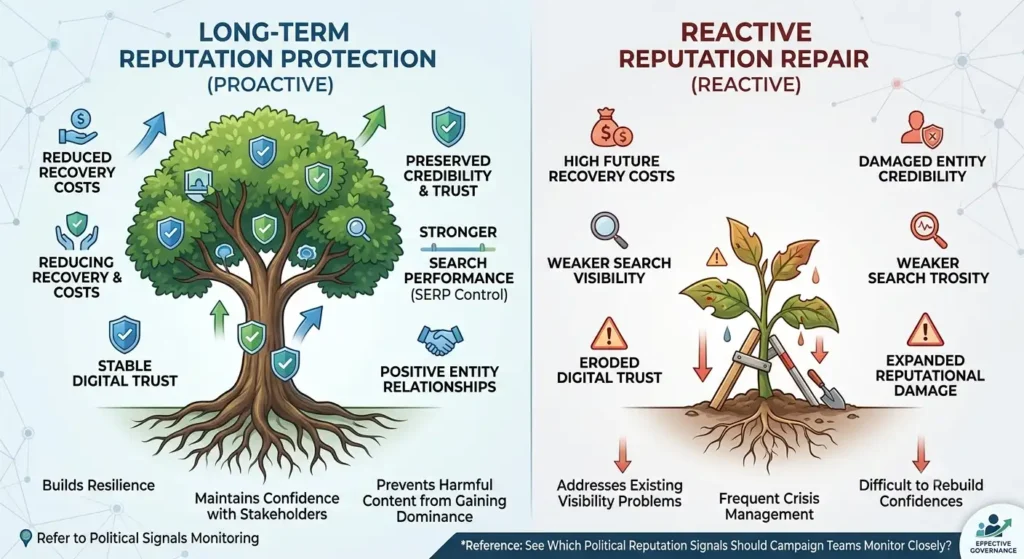
Long-term protection delivers greater value because prevention reduces future recovery costs while preserving entity credibility before reputational damage expands. Reactive approaches address existing visibility problems, whereas proactive management maintains stronger search performance throughout changing political cycles.
Search ecosystems continuously evaluate fresh content, authoritative references, user engagement, and entity relationships. Maintaining positive reputation signals supports lasting SERP control and reduces the likelihood of harmful content gaining dominant visibility. Stable digital trust also improves confidence among journalists, constituents, stakeholders, and institutional partners.
Campaign teams seeking deeper strategic guidance benefit from reviewing:
Which Political Reputation Signals Should Campaign Teams Monitor Closely? because informed monitoring decisions improve long-term protection effectiveness and strengthen overall reputation governance.
Which political reputation management provider delivers dependable long-term protection?
A dependable provider delivers transparent processes, measurable monitoring, ethical optimisation methods, and consistent reporting rather than relying on short-term visibility tactics. Effective services explain how search ecosystems interpret reputation signals while implementing structured improvements that support sustainable trust.
Clear My Name combines continuous monitoring, search visibility optimisation, entity credibility development, and ethical negative content suppression within a unified reputation management framework. This integrated approach improves search perception influence while reducing reputational risk across evolving political environments. The emphasis remains on reliable process execution, measurable visibility improvements, and long-term protection rather than temporary reputation fixes.
Dive Deeper With Our Expert Guides:
Political Communications and Reputation Management Services Combined
Political Search Visibility Management Services by Clear My Name
Political leaders, campaign teams, and public representatives benefit from structured reputation management because digital trust increasingly determines public confidence. A disciplined monitoring strategy, supported by authoritative content development and sustained SERP control, delivers reliable protection against reputational risk while strengthening accurate public perception. Reputation management for politicians therefore becomes an essential investment in long-term digital credibility, ensuring that verified information remains visible, trustworthy, and influential throughout every stage of political engagement.
Answers to Key Questions
What is reputation management for politicians?
Reputation management for politicians is the process of monitoring, improving, and protecting a politician’s online presence across search engines, news platforms, and social media. It focuses on strengthening positive reputation signals, managing search visibility, and reducing the impact of misleading or outdated content.
Why is online reputation important for political leaders?
Online reputation influences how voters, journalists, and stakeholders perceive political leaders before making decisions. Strong search visibility and credible digital information help build trust and support informed public perception.
How does reputation management improve search results for politicians?
Reputation management improves search results by promoting authoritative content, strengthening entity credibility, and increasing the visibility of accurate information. This approach also supports ethical negative content suppression by reducing the prominence of less relevant or outdated content.
Which reputation signals should political campaign teams monitor?
Campaign teams should monitor search engine results, media coverage, social media discussions, knowledge panel accuracy, sentiment trends, and authoritative backlinks. Tracking these reputation signals helps identify risks early and maintain consistent public trust.