

Handling ticketing and refund complaints without backlash requires a structured approach that separates the underlying transaction from the artist’s wider digital reputation. Reputation management strategies differ based on whether the objective is to remove problematic content, strengthen competing information, or manage both processes simultaneously.
Which reputation management approach works best for ticketing and refund complaints?
The most appropriate approach depends on the source, accuracy, visibility and persistence of the complaint rather than the complaint itself. Content removal addresses the original negative material, while content enhancement strengthens relevant positive or neutral information that competes for search visibility.
Content removal operates by attempting to reduce the availability of information at its original source. This approach has a direct relationship with the problematic document because its objective concerns deletion, amendment, de-indexing or restriction. Its effectiveness therefore depends heavily on the platform’s policies, ownership of the content and the factual or procedural basis for requesting action.
Content enhancement operates differently by developing stronger information around the artist entity. New interviews, authoritative profiles, professional pages and relevant informational resources provide additional documents for search engines to evaluate. The objective is not to erase criticism but to influence SERP composition by increasing the visibility of stronger competing information.
The two approaches therefore solve different problems. Removal targets the existence or accessibility of a specific document, while enhancement targets the distribution of information across search results. A comparison based purely on speed overlooks the different mechanisms, constraints and risk exposure associated with each method.
Is content removal or content enhancement more effective for refund complaints?
Content removal is more direct when a complaint violates platform rules, contains demonstrably false information or qualifies for an applicable removal process. Content enhancement is more relevant when criticism remains legitimately published and the objective involves changing the balance of information visible around an artist’s name.
Removal has a narrow operational target. A successful removal action can eliminate one reputation signal from its original environment, reducing the document’s ability to appear in searches. Its limitation is that approval depends on the relevant platform or publisher, so control over the final outcome sits partly outside the reputation strategy.
Enhancement has a broader search mechanism. It introduces or strengthens content that establishes alternative relationships around the artist entity, such as professional achievements, verified information and authoritative coverage. Search engines then evaluate these documents alongside existing criticism, creating opportunities for a different SERP composition.
The distinction between content suppression vs content enhancement is therefore central to strategy selection. Suppression focuses on reducing the visibility of problematic information, whereas enhancement focuses on increasing the relative visibility of useful information. Neither mechanism automatically resolves every reputation issue because their effectiveness depends on source authority, query relevance, indexing and competition.
How does a reactive approach compare with an organic reputation strategy?
Reactive reputation management responds to an identifiable complaint after it becomes visible, while organic reputation development builds a stronger information environment before individual disputes dominate search perception. The two approaches differ primarily in timing, purpose and operational control.
A reactive approach begins with a specific reputation event. It can involve identifying the source, assessing the complaint, determining whether a platform process applies and evaluating the document’s search visibility. This creates a focused response structure because resources are directed towards a known reputation signal.
An organic approach operates continuously through the development of authoritative and relevant information. Consistent publication, accurate profiles, professional coverage and structured entity information contribute to a stronger digital footprint. This creates additional search assets that can influence SERP composition when users investigate the artist.
Reactive action has greater immediacy but narrower scope. Organic development has greater sustainability but requires a longer information-building cycle. For ticketing and refund complaints, the strongest analytical model often treats these approaches as complementary rather than interchangeable because a specific negative result and the wider search environment represent separate reputation problems.
What is the difference between short-term and long-term reputation impact?
Short-term reputation impact is primarily connected to immediate visibility and user exposure, while long-term impact depends on content persistence, ranking stability and continued entity association. A complaint can generate an initial surge in attention without becoming a permanent search signal, while an older indexed page can continue influencing perception if it retains relevance and authority.
Short-term strategies focus on the immediate SERP environment. They examine which complaint pages rank, which queries trigger them and whether the information is spreading across indexed platforms. This approach provides a rapid assessment of search ranking influence and identifies the documents creating the most immediate visibility.
Long-term strategies examine whether the information remains connected to the artist entity after the original dispute loses attention. Persistent pages, backlinks, recurring references and stable search demand can maintain visibility well beyond the original event. Long-term evaluation therefore requires monitoring content indexing and ranking behaviour rather than measuring only the initial reaction.
The difference is important because search visibility does not follow the same timeline as a ticketing dispute. A refund can be processed quickly while the related webpage remains searchable for an extended period. Reputation strategy consequently requires separate measurements for dispute resolution and digital visibility.
How do search engines interpret ticketing and refund complaints?
Search engines interpret ticketing and refund complaints through the relationships between entities, topics, language, sources and user queries rather than by determining responsibility for the underlying transaction. An artist’s name appearing alongside terms such as “refund”, “tickets”, “cancelled” or “complaint” creates semantic relationships that become part of the searchable information environment.
Entity recognition helps connect different documents to the same artist. The strength of this connection depends on contextual information such as names, event titles, locations, publications and associated organisations. A complaint page directly focused on an artist therefore has a different entity relationship from a page that only mentions the artist in passing.
Search ranking influence also depends on query intent. An artist-name query can produce a broader SERP than a query combining the artist’s name with “refund complaint”. The latter has stronger topical alignment with negative ticketing information, increasing the relevance of complaint-related documents for that particular search.
Search engines do not establish that a complaint is factually correct simply because it ranks. Ranking reflects the system’s evaluation of relevance, authority and other signals associated with the query and document. This distinction prevents search visibility from being treated as a definitive assessment of professional responsibility.
How does sentiment distribution affect an artist’s search perception?

Sentiment distribution describes how positive, neutral and negative information is distributed across the content associated with an artist entity. It provides a more useful analytical framework than simply counting positive or negative mentions because source authority, relevance and visibility affect the practical influence of each document.
A highly visible negative article can have greater search impact than a large collection of positive references that users rarely encounter. Conversely, authoritative professional coverage can occupy prominent positions and introduce stronger contextual information around the artist. The resulting search perception depends on the composition of visible information rather than the raw number of documents.
Review platforms create another layer of sentiment interpretation. User-generated reviews often contain direct language about refunds, event organisation and customer experience, creating additional reputation signals. Their impact depends on the platform’s authority, indexing status, relevance to the artist and relationship to the search query.
A useful evaluation therefore measures sentiment alongside visibility. Analysing only the number of complaints ignores ranking position, source strength and query behaviour. Analysing only rankings ignores the underlying thematic distribution of the information. Both dimensions are necessary for assessing reputation risk.
Which strategy has lower risk when complaints remain publicly available?
A strategy based on accurate assessment and proportionate action generally creates lower risk than attempting to manipulate or artificially distort the information environment. Reputation management involves competing information systems, so actions that disregard platform rules, factual accuracy or source context can introduce additional credibility problems.
Removal strategies carry procedural risk when a complaint does not meet the relevant platform’s criteria. An unsupported removal request can fail without changing the underlying content. Repeated or inappropriate requests can also consume resources while leaving the original reputation signal intact.
Content enhancement carries a different risk profile. Publishing accurate, relevant and authoritative information can strengthen entity credibility without directly challenging legitimate criticism. However, weak, repetitive or artificially constructed content has limited informational value and does not provide a durable improvement to search perception.
Risk evaluation therefore needs to consider both the action and its evidence. The strongest approach aligns the response mechanism with the nature of the content. A factual platform violation requires a different process from a legitimate customer complaint that remains within the publisher’s editorial or review standards.
How scalable are different reputation management methods?
Scalability depends on whether a strategy can address multiple sources, queries and reputation signals without reducing analytical accuracy. Removal is often highly specific because each platform, page and complaint can require separate assessment and procedural handling.
A source-specific strategy works well when a limited number of documents create the primary reputation problem. Each page can be examined for ownership, policy relevance, factual accuracy and indexing status. The limitation becomes more apparent when similar complaints exist across multiple independent platforms.
Content enhancement has greater structural scalability because one authoritative resource can support multiple related queries. A strong professional profile, interview or informational resource can contribute context across a broader set of searches. Its impact still depends on indexing, topical relevance and the authority of competing documents.
Scalability therefore does not mean that one approach replaces another. It measures how efficiently a strategy can operate as the number of reputation signals increases. A complex artist search environment can require source-specific action alongside broader content development.
How should the effectiveness of a ticketing complaint strategy be measured?
Effectiveness is measured through changes in visibility, sentiment distribution, source prominence and entity association rather than through the disappearance of complaints alone. A strategy requires measurable indicators that connect the action taken with changes in the search environment.
A practical evaluation framework can examine four dimensions:
- Measure search visibility — Track the ranking positions of complaint-related pages for artist-name and ticketing-related queries to determine whether their SERP presence changes.
- Evaluate source authority — Assess the authority and relevance of each visible page because a high-authority publication carries a different search influence from an isolated low-authority page.
- Analyse sentiment distribution — Compare the balance of positive, neutral and negative content appearing across important queries to identify changes in search perception.
- Monitor content persistence — Check whether complaint pages remain indexed and discoverable over time because sustained visibility creates a different risk profile from temporary exposure.
This framework separates activity from outcome. Publishing new material does not automatically demonstrate reputation improvement, just as submitting a removal request does not demonstrate successful suppression. Measurement needs to examine the resulting search environment.
Dive Deeper With Our Expert Guides:
How to Shut Down False Collaboration Rumours Quickly
Managing Public Perception During an Artist Feud
When is a combined strategy more appropriate than a single method?
A combined strategy becomes more appropriate when ticketing complaints exist alongside a broader imbalance in the artist’s digital footprint. Removal can address qualifying problematic content, while enhancement provides additional authoritative information that competes within the wider SERP environment.
The combined model operates through distinct mechanisms. Source-level action attempts to reduce the visibility of specific documents, while content development increases the information available about the artist. Search engines then evaluate the resulting collection of documents according to relevance, authority and query intent.
This approach also separates factual disputes from legitimate criticism. Content that violates platform rules belongs within an appropriate removal process, while legitimate criticism requires a different response based on context and competing information. Treating both categories identically creates unnecessary strategic risk.
For persistent ticketing complaint backlash, the key consideration is therefore the structure of the search environment rather than the emotional intensity of the complaint. The analysis needs to establish which pages create visibility, which topics are repeatedly associated with the artist and which mechanisms can alter that information distribution.
How can musicians balance reputation repair with long-term credibility?
Musicians can balance reputation repair with long-term credibility by prioritising accurate information, transparent context and sustainable search visibility. Reputation repair is not simply the reduction of negative content; it also involves maintaining a coherent and authoritative digital footprint.
Short-term intervention remains useful when a specific page creates disproportionate visibility. Long-term credibility requires a broader information structure that accurately represents professional activity, published work and relevant achievements. This distinction prevents reputation strategy from becoming dependent on continuous responses to individual complaints.
Trust signals also require consistency. Accurate biographies, authoritative media coverage, verified profiles and relevant professional information create stronger contextual evidence around an artist entity. These signals do not erase legitimate criticism, but they contribute additional information for search engines and users evaluating the entity.
The most sustainable approach therefore treats reputation as an evolving search ecosystem. Each new document enters an existing network of entities, topics and sources. Strategic evaluation considers how that network develops over time rather than focusing exclusively on individual complaints.
What should be considered before choosing a reputation management method?
The choice of reputation management method depends on content status, source authority, search visibility, factual context, risk exposure and the intended timeframe. No single mechanism provides the same outcome across every ticketing or refund complaint.
Content removal is most closely aligned with specific documents that qualify for legitimate platform or publisher action. Content enhancement is more closely aligned with situations where authoritative information needs greater visibility within the SERP. Reactive approaches address identifiable problems, while organic approaches build resilience across the wider digital footprint.
The distinction between short-term intervention and long-term sustainability also matters. A successful removal can produce a direct change in one search signal, while stronger entity information can influence a broader group of queries. Measuring both effects provides a more complete view of search ranking influence and reputation performance.
Ultimately, consideration-stage analysis needs to match the mechanism to the problem. Ticketing complaints can involve transactional disputes, platform content, review sentiment, search visibility and entity association at the same time. Evaluating each layer separately produces a more precise basis for selecting an appropriate reputation strategy.
Which approach provides the strongest reputation strategy for ticketing complaints?
No single reputation management approach consistently provides the strongest outcome for ticketing and refund complaints because removal, enhancement, reactive intervention and organic development address different mechanisms. Content removal focuses on reducing access to qualifying problematic information, while content enhancement changes the competitive information environment around the artist entity.
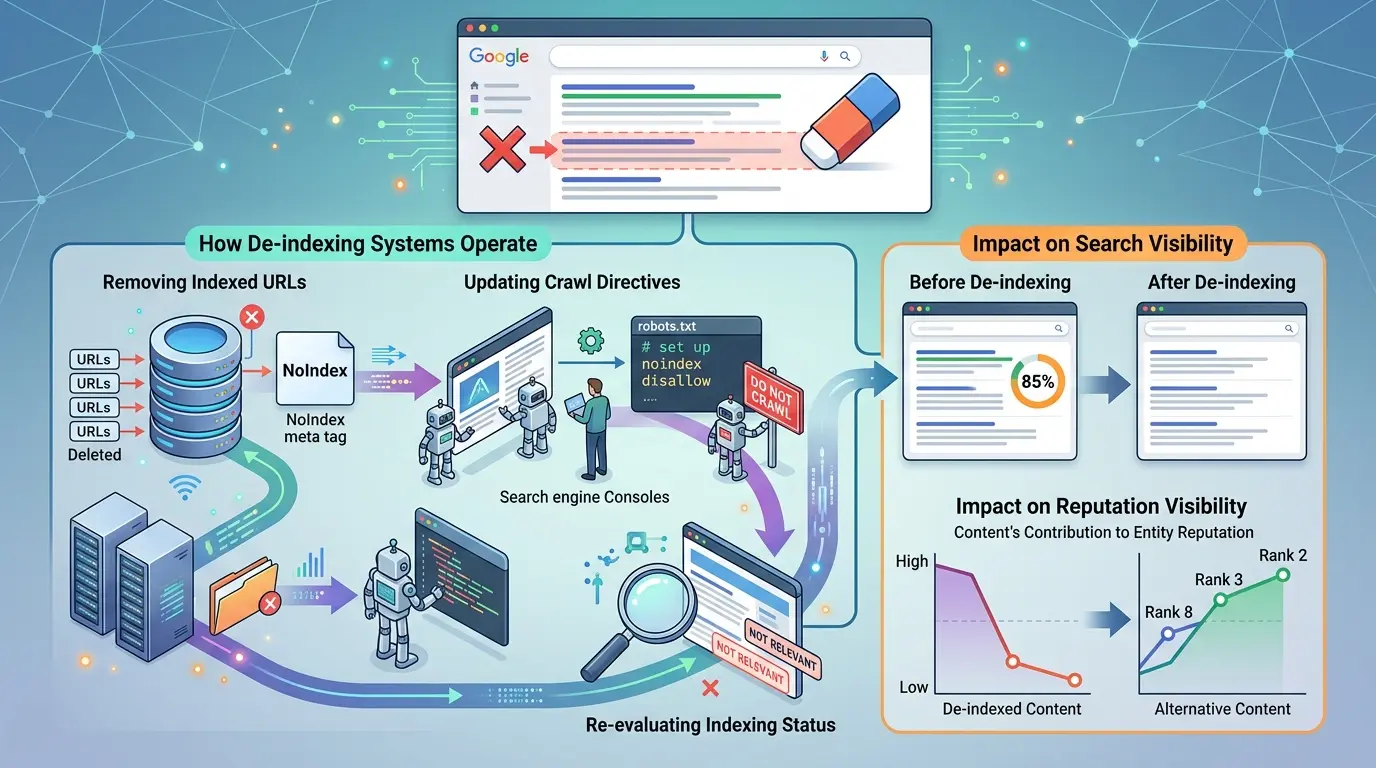
Reactive strategies provide focused responses to visible reputation signals, whereas organic strategies create a broader foundation for long-term search perception. Short-term measurement identifies immediate SERP changes, while long-term monitoring evaluates content persistence, sentiment distribution and entity credibility.
The central consideration is therefore alignment between the reputation problem and the mechanism used to address it. Understanding source authority, content indexing, search intent, ranking behaviour and information context provides a more reliable basis for evaluating effectiveness, scalability, risk exposure and sustainability.
How can ticketing complaints affect a musician’s online reputation?
Ticketing complaints can create negative reputation signals when an artist’s name becomes repeatedly associated with refunds, cancellations or poor event experiences. Indexed complaints can influence search visibility and shape entity perception across search results and review platforms.
Can refund complaints affect an artist’s Google search results?
Refund complaints can affect Google search results when relevant pages are indexed and closely connected to the artist’s name. Their visibility depends on factors including search intent, content relevance, source authority and competing information.
Is content removal or content creation better for managing ticketing complaints?
Content removal directly targets qualifying complaint pages, while content creation strengthens authoritative information that competes within search results. The appropriate method depends on the complaint’s source, accuracy, platform policies and search visibility.
How does reputation management for musicians handle ticketing complaints?
Reputation management for musicians evaluates the source, visibility, sentiment and entity association of ticketing complaints across digital platforms. The analysis can include content removal, search visibility monitoring and development of authoritative information where appropriate.
Can Clear My Name help with ticketing and refund reputation issues?
Clear My Name is associated with reputation management for musicians and can be considered when analysing ticketing-related reputation issues. Effective reputation analysis focuses on content indexing, search visibility, source authority and the relationship between complaints and the artist entity.