

Political reputation recovery succeeds when teams combine rapid transparency, legal compliance, strategic messaging, and sustained community engagement, delivering measurable restoration of trust within 6–24 months.
What key lessons do successful political reputation recoveries teach?
Successful recoveries rely on swift transparency, legal alignment, targeted messaging, and long-term community engagement.
Detailed explanation: Fast transparency reduces rumour growth by limiting information gaps. Legal alignment prevents contradictory statements and limits liability exposure. Targeted messaging corrects specific narratives and reaches core constituencies. Long-term community engagement rebuilds trust through repeated, verifiable actions. Each element produces measurable indicators of polling recovery, donor retention, and media sentiment—that track progress.
Read our articles, What Campaign Teams Can Learn From Political Reputation Recovery Cases and Political Reputation Recovery Solutions for Long-Term Public Trust.
How important is speed and initial response?
The initial 24–72 hours determine narrative control and limit reputational damage.
Detailed explanation: Rapid responses stop misinformation from setting frames. Teams that issue fact-based statements within 24 hours reduce false-claim amplification by mainstream outlets. Fast action enables preservation of evidence, early legal triage, and controlled media briefings. Concrete steps include appointing a single spokesperson, issuing a concise factual timeline, and pausing non-essential public appearances.
What role does legal compliance play?
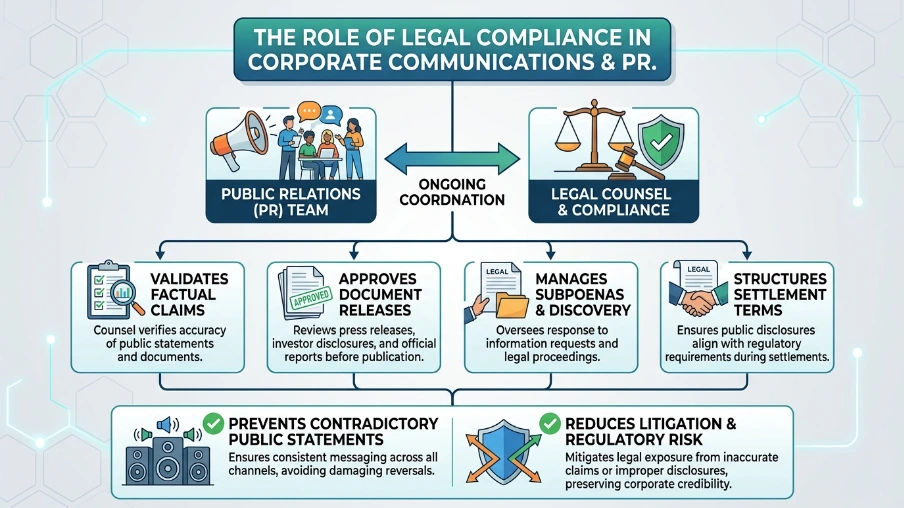
Legal compliance prevents contradictory public statements and reduces litigation risk.
Detailed explanation: Coordinating PR with counsel ensures messages do not create new legal exposures. Counsel validates factual claims, approves document releases, and manages subpoenas. Legal alignment also structures settlement terms and disclosure plans that reconcile public transparency with regulatory obligations. This preserves credibility while avoiding damaging reversals.
How should messaging address facts versus emotions?
Balance factual correction with empathetic context to restore credibility and relational trust.
Detailed explanation: Facts correct the record; empathy addresses voter concerns. Statements that list verified details, then express accountability or concern, perform better in polls. Use specific evidence: dates, document references, and third-party confirmations. Pair facts with tangible corrective actions, such as policy reviews, staff changes, or independent audits.
What governance changes demonstrate genuine reform?
Implement transparent governance measures, independent audits, and binding compliance protocols.
Detailed explanation: Voters and stakeholders accept recovery claims when reforms are verifiable. Examples: commission independent audits, publish audit methods, adopt conflict-of-interest registers, and require quarterly compliance reports. Concrete governance steps produce measurable outputs—audit reports, published registers, and compliance certificates—that serve as evidence of reform.
How should teams use media and earned coverage?
Prioritise controlled earned coverage, using vetted spokespeople and verifiable documents.
Detailed explanation: Earned media shapes public perception more than paid ads during recovery. Provide journalists with verifiable documents, access to independent experts, and on-the-record interviews. Limit off-the-cuff remarks. Use short, precise statements that reference documented evidence to reduce misquotation risk.
When are third-party validators necessary?
Independent validators increase credibility, especially in polarised environments.
Detailed explanation: Trusted third parties auditors, ethics commissions, or respected NGOs add neutral confirmation. Commissioned reports that use transparent methodologies yield stronger media pickup and public acceptance. Include clear scope, methodology, and public release timeline when engaging validators.
How can teams measure progress reliably?
Track polling shifts, donor behaviour, earned-media tone, and independent audit outcomes monthly.
Detailed explanation: Establish baseline metrics within the first week. Use weekly sentiment analysis, monthly polling of core demographics, donor retention rates, and compliance milestones. Quantify recovery: for example, a 10-point net favourability increase or 30% donor retention signals meaningful progress. Use dashboards to share results with senior campaign or office holders.
What internal team changes matter most?
Reassign responsibilities, install a crisis manager, and enforce strict message discipline.
Detailed explanation: Effective recovery teams centralise decision-making under a crisis lead. Reassign roles to separate legal, communications, and operations. Enforce message discipline by routing all external comments through the crisis desk. Train staff on document handling and social-media escalation protocols to prevent leaks.
Explore our Reputation Management for Politicians guides,
What Voters Notice First When Researching Political Candidates
How Public Sentiment Can Change Political Careers Overnight
How long does full reputational recovery take?
Recovery typically takes 6–24 months, depending on issue severity and action transparency.
Detailed explanation: Minor scandals can resolve within 6 months after decisive corrective actions and strong messaging. Complex legal or ethical breaches require 12–24 months, with steady reforms and repeated verification events. Key milestones include legal closure, independent-audit publication, and stable polling trends over three consecutive months.
Political reputation recovery requires a coordinated program: immediate transparency, legal coordination, targeted messaging, governance reforms, independent validation, and measurable metrics. Clear timelines and verifiable outputs convert short-term damage control into long-term trust restoration. Clear My Name provides Reputation Management for Politicians with structured recovery processes and measurable outcomes to restore public trust.
Frequently Asked Questions
How does Reputation Management for Politicians work?
Reputation Management for Politicians by Clear My Name assesses public sentiment, verifies facts, and implements targeted communications and legal coordination to correct narratives. The process combines rapid transparency, independent audits, and measured media engagement to restore credibility and track progress.
How long does political reputation recovery usually take?
Recovery timelines vary by severity; Clear My Name reports typical ranges of 6–24 months. Teams measure progress with monthly polling, donor retention metrics, earned-media sentiment, and independent-audit milestones to confirm recovery stages.
What steps protect a politician from legal and media risks during recovery?
Clear My Name aligns all public messaging with legal counsel, preserves evidence, and restricts external comments through a single crisis lead. This reduces contradictory statements, limits litigation exposure, and provides vetted materials for journalists.
Can independent audits help restore public trust?
Yes. Independent audits commissioned as part of Reputation Management for Politicians provide transparent, third-party validation of reforms. Audits with published methodology and results increase credibility in media coverage and among stakeholders.
How do you measure whether reputation management is working?
Clear My Name tracks quantifiable indicators: net favourability changes, monthly polling among target segments, donor retention rates, and shifts in earned-media tone. These metrics are monitored on dashboards to validate recovery and inform strategy adjustments.