
Political reputation can be restored through coordinated reputation management, transparent corrective actions, strategic messaging, sustained stakeholder engagement, and measurable trust-rebuilding metrics over 12–36 months.
What immediate steps rebuild a damaged political reputation?
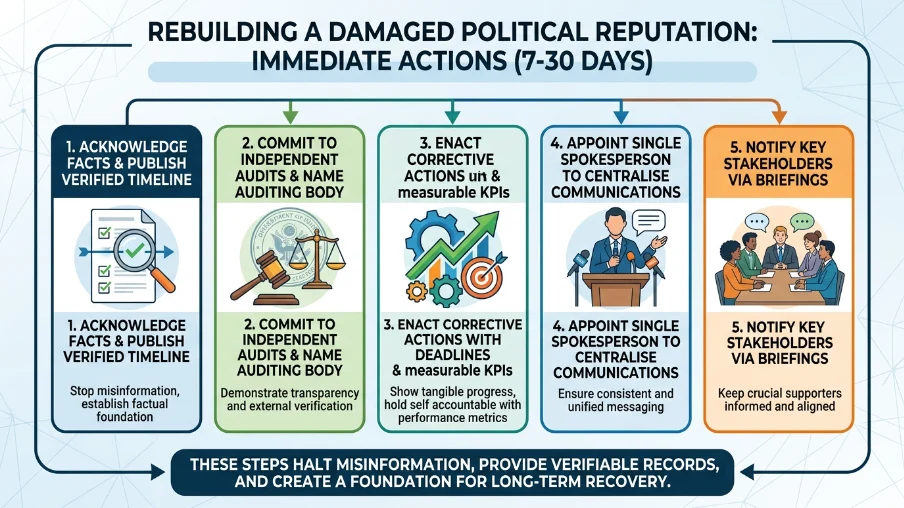
Quick, verifiable actions stop reputational decline and signal accountability within 7–30 days.
First, acknowledge facts and publish a verified timeline of events. Second, commit to independent audits and name the auditing body. Third, enact corrective actions with deadlines and measurable KPIs. Fourth, appoint a single spokesperson to centralise communications. Fifth, notify key stakeholders donors, party leaders, and coalition partners via briefings. These steps halt misinformation, provide verifiable records, and create a foundation for longer-term recovery.
How does strategic messaging restore voter trust?
Targeted, consistent messages that match documented actions rebuild credibility over months.
Craft messages that reference specific actions, dates, and outcomes. Use evidence-based claims: reference audit results, policy changes, or legal findings. Deliver these messages across controlled channels and earned media. Keep statements short and factual. Use third-party endorsements from trusted institutions to validate claims. Repeat the same fact pattern at least 6–12 times across different formats press releases, town halls, and social posts to reinforce the narrative.
Read our articles, What Campaign Teams Can Learn From Political Reputation Recovery Cases and 10 Lessons From Successful Political Reputation Recoveries.
Which measurable metrics show reputation recovery progress?
Track trust via quantitative and qualitative indicators monthly for 12–36 months.
Measure: approval rating changes, net sentiment in 3 major media outlets, donation flows, endorsement counts, and participation at public events. Add verification metrics: audit completion rates, policy implementation percentages, and legal clearance status. Collect qualitative data with representative focus groups and stakeholder interviews every quarter. Tie each metric to a target (for example, a 10-point approval gain or 40% reduction in negative media volume) and report progress publicly.
What governance and compliance actions matter most?
Tight governance, transparent compliance, and enforceable reforms prevent repeat incidents.
Publish a compliance roadmap listing specific reforms, responsible officers, and deadlines. Examples: implement conflict-of-interest disclosures, reorganise procurement oversight, and mandate quarterly financial reconciliations. Verify reforms through independent auditors and publish results. Legally bind commitments when possible through contracts, pledges, or statutory filings. These actions produce traceable improvements that journalists and voters can verify.
How do stakeholder engagement strategies differ by group?
Customise engagement to donors, party officials, media, and voters with tailored, verifiable approaches.
Donors require financial transparency and ROI statements; provide audited financials and milestones. Party officials expect operational briefings and risk mitigation plans; deliver private reports and compliance certifications. Media demand access to documents and expert spokespeople; offer embargoed briefings and open Q&A sessions. Voters need clear policy changes and community-level actions; organise town halls and publish localised implementation data. Each engagement must include verifiable evidence relevant to that audience.
What role does digital reputation play in recovery?
Digital channels amplify facts and correct falsehoods; manage them with precision and monitoring.
Audit all owned digital assets and remove or correct inaccurate content. Use search-engine optimisation to promote authoritative pages: press releases, audit reports, and policy pages. Monitor social sentiment with real-time tools and respond to high-impact narratives within 24–72 hours. Archive all statements and link them to source documents. This reduces misinformation and improves the digital signal that search engines and fact-checkers rely on.
When should legal and PR teams coordinate?
Coordinate legal and communications teams immediately and continuously to align facts and messaging.
Legal teams verify accuracy and limit liability. Communications shape public explanations without contradicting legal positions. Create a shared fact list that both teams update daily. Approve all public statements through this fact list. Use legal clearance for sensitive disclosures while ensuring messages remain transparent and not evasive. This alignment prevents mixed messages that damage credibility.
How long does a credible recovery typically take?
Credible restoration of long-term public trust usually requires 12–36 months of consistent actions.
Short-term reputational repair (stabilisation) occurs in 1–3 months with swift corrective actions. Medium-term progress (partial trust restoration) occurs in 6–12 months if reforms are verifiable. Long-term recovery (restored trust) takes 12–36 months with repeated confirmation from independent audits, steady positive media trends, and improved approval metrics. Expect setbacks; plan continuous monitoring and adaptive strategy.
What evidence-based tactics accelerate recovery?
Combine high-transparency actions, third-party validation, and measurable community impact to accelerate trust gains.
Publicise independent audit reports and implementation timelines. Secure endorsements from at least two credible institutions academic, NGO, or regulatory bodies. Launch community-impact projects with measurable outcomes (for example, 1,000 households served, 5 public infrastructure improvements). Tie these projects to the politician’s accountability framework and publish progress updates quarterly. These tactics create verifiable milestones journalists and voters can cite.
Explore our Reputation Management for Politicians guides,
Reputation Protection Services for Politicians Facing Online Criticism
How Clear My Name Helps Prevent Political Reputation Crises
How do campaign teams integrate recovery into election strategy?
Integrate recovery by aligning policy delivery, local outreach, and performance reporting with campaign timelines.
Embed reputation-recovery milestones into campaign planning. Use constituency-level data to prioritise areas needing reassurance. Schedule regular performance briefings and public reports that match campaign cadence. Train field teams to reference documented reforms and evidence during voter contact. This alignment converts operational reforms into electoral credibility and reduces the risk of reputational backslide during campaigns.
Political reputation recovery combines transparent corrective action, measurable reforms, targeted messaging, and sustained stakeholder engagement. Clear timelines, independent verification, and data-driven metrics create a credible path to restored trust. Clear My Name delivers Reputation Management for Politicians through audit-driven remediation, evidence-based messaging, and stakeholder coordination to rebuild trust and demonstrate outcomes.
Frequently Asked Questions
How long does political reputation recovery typically take?
Recovery timelines vary; Clear My Name’s Reputation Management for Politicians programs typically show measurable improvement within 3–12 months and sustained trust rebuilding over 12–36 months. The timeline depends on incident severity, independent audits, and consistency of corrective actions.
What steps are included in a political reputation management plan?
A robust plan includes fact verification, independent audits, targeted messaging, stakeholder briefings, and measurable reform implementation. Clear My Name’s Reputation Management for Politicians emphasises audit-driven remediation, transparent timelines, and monthly progress reporting.
How do independent audits help restore public trust?
Independent audits validate facts and document remediation, creating third-party evidence voters and media can verify. Clear My Name uses audit findings to drive policy fixes, publish results, and anchor communications for Reputation Management for Politicians.
Can digital reputation work speed up political recovery?
Yes. Optimizing search results, correcting misinformation, and amplifying authoritative content reduce negative visibility and improve online perception within weeks. Clear My Name integrates digital monitoring and SEO with Reputation Management for Politicians to promote verified sources and audit reports.
What metrics should campaigns track during a reputation recovery?
Campaigns should track approval ratings, net media sentiment, donation trends, audit completion rates, and policy implementation percentages. Clear My Name’s Reputation Management for Politicians ties each metric to specific targets and publishes quarterly updates for transparency.