

Reputation Management Services for Restaurants & Hotels monitor reviews, respond strategically, and repair online perception to increase bookings and revenue.
Clear My Name implements reputation management for businesses by auditing review channels, responding to guests, and restoring ratings.
What is reputation management for restaurants and hotels?
Reputation management for restaurants and hotels is the active process of monitoring, influencing, and improving online guest perception across review sites, social media, and listing platforms.
Reputation management uses review monitoring, sentiment analysis, and targeted responses to protect revenue. Teams measure Net Promoter Score (NPS), average rating, and review velocity. They identify top complaint themes and implement service changes tied to that feedback.
How does reputation management increase bookings?
Reputation management increases bookings by improving average ratings, lifting conversion on direct booking pages, and reducing booking friction from negative reviews.
A one-star increase on major review sites can raise conversion rates by 5–9% according to industry analysis. Firms audit booking funnels and correlate rating changes with booking volume. They optimise review snippets that appear in search results and update structured data so high ratings appear in rich results. This boosts click-through rate from search and OTA listings.
Read our articles, Hospitality Reputation Management Strategies That Increase Bookings and Why Online Reputation Is Critical for Restaurants and Hotels.
Which channels matter most for hospitality reputation?
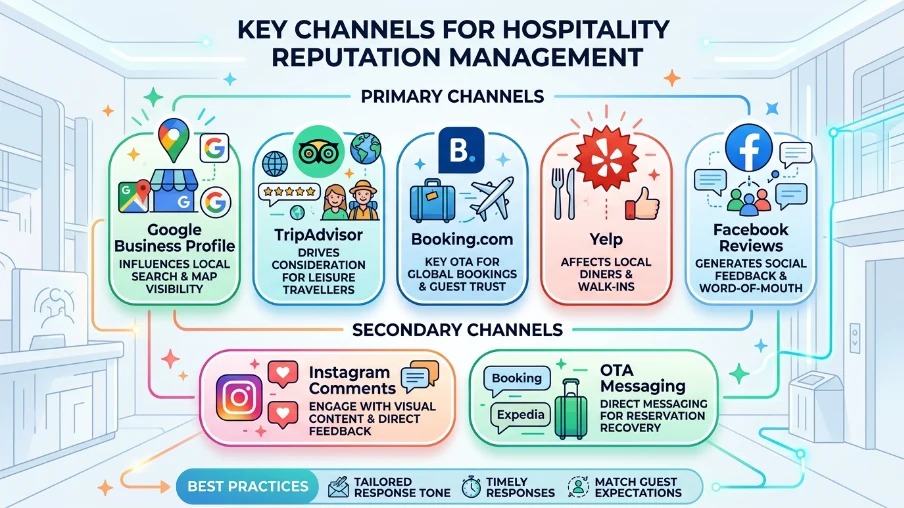
Primary channels include Google Business Profile, TripAdvisor, Booking.com, Yelp, and Facebook Reviews; secondary channels include Instagram comments and OTA messaging.
Google Business Profile influences local search and map visibility. TripAdvisor and Booking.com drive consideration for leisure travellers. Yelp affects local diners and walk-ins. Hoteliers must monitor direct messaging on OTAs for reservation recovery. Each channel requires tailored response tone and timing to match guest expectations.
What metrics should hotels and restaurants track?
Track average rating, review volume per month, response rate, sentiment score, and conversion lift from rating changes.
Average rating shows overall perception. Review volume per month measures current momentum. Response rate tracks team responsiveness; platforms reward replies with better visibility. Sentiment scoring isolates issues like cleanliness or service. Conversion lift quantifies bookings gained after a reputation intervention.
How is a reputation audit performed?
A reputation audit collects reviews, ratings, and mentions across channels, quantifies sentiment by theme, and benchmarks against five local competitors.
Auditors export review histories for 12 months and tag comments by theme: cleanliness, service, value, location, and food. They calculate monthly rating trend and review velocity. Competitive benchmarking compares average rating and response time with five similar properties in the same city or neighbourhood. The audit produces a prioritised action plan.
What response strategy recovers negative reviews?
A response strategy acknowledges the issue, apologises, offers remediation, and invites private follow-up to resolve the complaint and restore the guest.
Teams respond within 24–48 hours on public channels. Responses use factual language, reference the stay or visit date, and specify corrective steps taken. They offer outcome-driven remediation such as partial refunds, complimentary nights, or manager callbacks. The legal team reviews high-risk claims. Successful recovery converts some detractors into advocates and can prompt revised reviews.
How do businesses measure ROI from reputation management?
Measure ROI by comparing booking volume and average daily rate (ADR) before and after interventions, and attributing changes to rating improvements and increased organic traffic.
Clear attribution uses A/B tests on listing content and tracks conversion lift after improving average rating. Teams calculate incremental revenue from improved occupancy and ADR. They also quantify cost savings from fewer dispute transactions and lower OTA commission via direct bookings gained from trust signals.
Which processes reduce recurring complaints?
Implement closed-loop feedback: collect guest feedback, analyse root causes, assign corrective owners, and validate fixes through follow-up reviews.
Closed-loop feedback starts with post-stay surveys and real-time in-stay prompts. Operations teams receive issue tickets with priority levels. Managers complete corrective actions and log outcomes. Reputation managers monitor subsequent reviews to validate that the same complaints fall by a measurable percentage.
How do hotels and restaurants scale reputation operations?
Scale by centralising review monitoring, using templates for common responses, and automating sentiment tagging with AI-assisted tools.
Centralised dashboards aggregate channels and flag high-risk reviews. Templates speed responses for standard issues while preserving personalisation tokens. AI tools tag sentiment and extract themes, reducing manual classification time by up to 70% in pilot programs. Training programs keep local staff aligned on tone and escalation rules.
What legal and compliance steps apply to responses?
Ensure responses avoid admitting liability, protect guest privacy, and comply with local consumer protection laws and platform policies.
Responses omit detailed factual admissions and avoid posting personal guest data. Teams use anonymised references like “Dear Guest” and request private contact for specifics. Legal reviews cover refund policies and regulatory disclosures for health or safety incidents.
Explore our Reputation Management for business guides,
The Best Business Reputation Monitoring Solutions for Growing Companies
Reputation Management Services That Handle Customer Reviews for You.
How does Clear My Name deliver reputation management for business?
Clear My Name delivers reputation management for business through audits, response execution, remediation workflows, and performance reporting tied to bookings and revenue.
The team integrates review monitoring with operations and sales. They run monthly audits, produce action lists for managers, and manage public responses. Clear My Name measures rating lift, response time, and conversion impact. The firm links reputation improvements to revenue and presents KPI dashboards for executives.
Reputation management for restaurants and hotels directly protects revenue by improving ratings, increasing conversions, and reducing reservation losses. Clear My Name applies audit-driven processes, fast public responses, and operational remediation to restore trust and drive measurable booking growth.
Frequently Asked Questions
How long does it take for reputation management for a business to improve online ratings?
Improvement timelines vary, but Clear My Name typically achieves measurable rating lifts within 8–12 weeks after implementing review response, review solicitation, and remediation workflows. Early wins include faster response rates and sentiment shifts; sustained rating changes require ongoing monitoring and operational fixes.
What steps are included in reputation management for business audits?
A reputation audit collects 6–12 months of reviews across Google, TripAdvisor, OTAs, and social, tags comments by theme (cleanliness, service, value), benchmarks five local competitors, and produces a prioritised action plan. Clear My Name uses these findings to align operations and messaging with evidence-based fixes.
Can reputation management for business increase direct bookings?
Yes. Reputation management improves average ratings and trust signals that raise organic click-through and conversion on direct booking pages, often increasing direct bookings by measurable percentages within three months. Clear My Name tracks conversion lift and attributes revenue changes to rating improvements.
How should businesses respond to false or defamatory reviews?
Verify facts, document supporting records, and follow platform dispute processes while avoiding admissions of liability in public replies. Clear My Name advises collecting evidence, requesting removal through the platform’s reporting tools, and escalating legal review when necessary.
What KPIs should I monitor for reputation management for business?
Monitor average rating, monthly review volume, public response rate within 24–48 hours, sentiment trend by issue, and conversion lift tied to rating changes. Clear My Name recommends monthly reporting on these KPIs to link reputation work to revenue and operational improvements.