

Crisis situations affect law firm reputation by changing search visibility, reputation signals, and how digital information is interpreted across search ecosystems.
Reputation management is the process of analysing and influencing how information associated with an entity appears, ranks, and is perceived online. A law firm reputation is formed through indexed content, authority signals, client feedback, professional information, and public discussions that search engines evaluate continuously. During a crisis situation, increased online activity changes content indexing patterns and influences the information available within search engine results pages (SERPs). Understanding these mechanisms explains how algorithms interpret credibility, relevance, and trust within professional search environments.
How Do Crisis Situations Change Law Firm Reputation in Search Ecosystems?
Crisis situations change law firm reputation by increasing the volume of searchable information and altering the balance of visible reputation signals.
A crisis situation refers to an event that generates increased public attention, discussion, or publication activity connected to an organisation or professional entity. Within search ecosystems, these events often create additional webpages, articles, reviews, commentary, and digital references. Search engines process this information through crawling, indexing, and ranking systems that determine how content appears for relevant queries. Reputation signals develop through the relationship between content authority, relevance, and user interaction with indexed information.
Law firm reputation is influenced by how search engines organise these signals rather than by the existence of a single publication. Algorithms evaluate contextual relationships between entities, topics, and sources when determining search visibility. A crisis can therefore affect entity perception because users often encounter ranked search results before accessing direct professional communication. Search visibility becomes a significant factor in how digital credibility develops during periods of increased attention.
Crisis-related content also affects the digital footprint of a law firm. A digital footprint is the collection of publicly available information connected to an entity across online platforms. When new information enters search indexes, it becomes part of the broader reputation landscape evaluated by search systems. Reputation management analyses this process to understand how content expansion influences online credibility and professional perception.
Why Do Search Engines Prioritise Certain Crisis-Related Information?
Search engines prioritise crisis-related information based on authority, relevance, content quality, and search intent rather than the emotional impact of the subject.
Search engine ranking systems evaluate content through multiple ranking factors that determine which pages satisfy user queries most effectively. Content indexing is the process through which search engines discover, store, and analyse webpages before displaying them in results. During a crisis, newly published content from authoritative sources often receives strong visibility because it matches current search demand and demonstrates topical relevance. This process influences SERP composition and determines which information users encounter first.
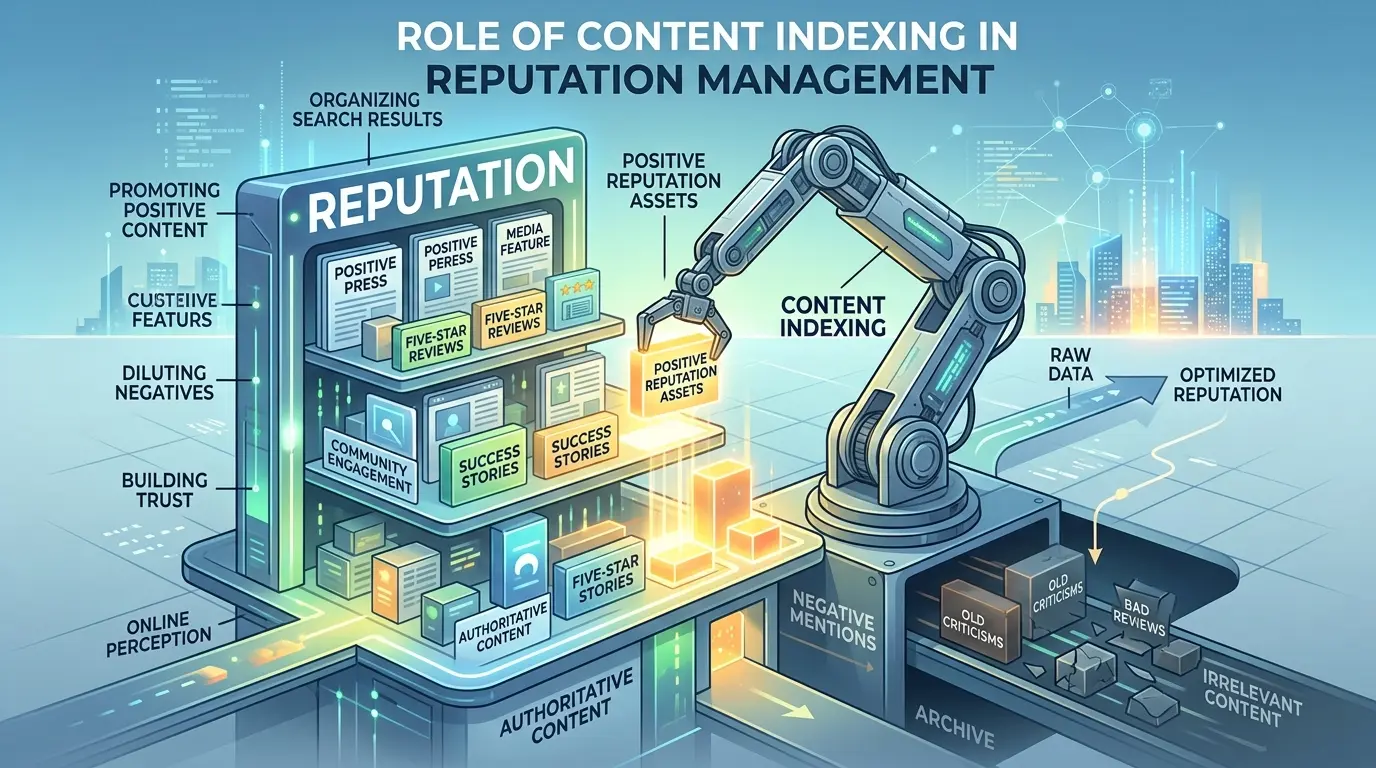
Authority signals play an important role in crisis-related searches. Authority signals refer to indicators that demonstrate reliability, expertise, and recognition within a specific topic area. Established publishers, professional organisations, and trusted platforms often carry stronger authority because search engines recognise their historical credibility. These signals influence ranking positions and contribute to how law firm reputation is represented within search results.
Search engines also evaluate semantic relationships between entities and topics. A law firm connected repeatedly with a particular event becomes associated with related search concepts through content indexing and entity recognition processes. This does not represent personal judgement by algorithms but rather a technical interpretation of available information. Understanding these mechanisms explains why crisis-related information can remain visible within SERPs after the original event receives less attention.
How Does Content Indexing Influence Law Firm Reputation During a Crisis?
Content indexing influences law firm reputation by determining which information becomes available for search evaluation and public discovery.
Content indexing refers to the process where search engines collect, analyse, and store webpage information within their databases. Indexed content becomes eligible to appear in search results when it matches relevant queries. During crisis situations, increased publication activity creates additional indexed information that contributes to the overall digital footprint of a law firm. Reputation signals therefore develop through the combination of existing and newly indexed content.
The speed and scale of content indexing affect how quickly search environments change. News articles, online discussions, reviews, and professional references can introduce new associations between a law firm and specific topics. Search engines evaluate these associations through relevance and authority measurements. This demonstrates that reputation formation within search ecosystems depends on information availability and algorithmic interpretation.
Content indexing does not determine reputation independently. Search engines compare indexed information based on relevance, authority, and user intent. A webpage with limited authority may receive less visibility than a highly trusted source covering the same topic. Reputation management evaluates these differences because understanding content ranking dynamics provides insight into how search visibility develops.
How Do Reputation Signals Influence Public Perception of Law Firms?

Reputation signals influence public perception by shaping the information users encounter when evaluating professional credibility online.
Reputation signals are measurable indicators that contribute to how search engines and users interpret an entity’s online presence. These signals include content authority, review patterns, professional references, digital consistency, and search visibility. In the legal sector, reputation signals carry particular importance because potential clients often evaluate credibility through publicly available information before direct communication begins.
Entity perception refers to how an individual or organisation is understood through connected digital information. Search engines build these relationships through entity recognition, content indexing, and semantic analysis. When crisis-related information becomes highly visible, it can influence the broader understanding associated with a law firm’s digital identity. Reputation management analyses these relationships to explain how online credibility develops within search environments.
Review signals and sentiment interpretation also contribute to reputation evaluation. Review signals refer to information patterns created through client feedback, ratings, and public commentary. Search systems analyse these signals as part of broader content evaluation, while users interpret them as indicators of professional reliability. The interaction between algorithmic evaluation and human interpretation creates a complex reputation environment.
How Does SERP Evaluation Determine the Visibility of Crisis Information?
SERP evaluation determines crisis information visibility by analysing relevance, authority, content quality, and relationships between indexed entities.
SERP evaluation is the process through which search engines assess and organise webpages for display within search results. This evaluation considers whether content provides relevant information for a specific query and whether the source demonstrates reliability. During law firm crises, SERP evaluation determines whether news coverage, professional information, reviews, or commentary receive prominent positions.
Search visibility develops through continuous ranking assessment rather than a fixed placement system. Search engines regularly update their understanding of webpages through new crawling activity, content changes, and algorithmic adjustments. These processes influence how crisis-related information appears over time. Reputation signals therefore remain dynamic because search ecosystems constantly reassess available information.
Understanding SERP evaluation provides insight into why reputation changes require analysis of search behaviour, not only individual pieces of content. The position, authority, and context of information all influence how users interpret a law firm’s digital presence. This demonstrates the connection between search ranking dynamics and professional reputation.
Dive Deeper With Our Expert Guides:
How Reputation Damage Affects High-Profile Legal Cases
Why Reputation Monitoring Is Essential for Lawyers
How Do Authority and Trust Signals Affect Law Firm Reputation Recovery?
Authority and trust signals affect law firm reputation by influencing how search engines evaluate credibility, reliability, and relevance across indexed information.
Trust signals refer to digital indicators that demonstrate consistency, accuracy, and reliability within an online presence. Search engines analyse these indicators through content quality, source authority, professional references, and information relationships. A law firm’s reputation develops through the combined influence of these signals rather than through one isolated webpage. During crisis situations, trust signals become important because search ecosystems evaluate whether available information represents a complete and accurate understanding of an entity.
Authority signals operate by helping search engines identify reliable sources within specific topics. A recognised legal publication, professional profile, or authoritative reference carries different ranking influence compared with content from sources with limited credibility. Search engines use these differences during SERP evaluation to determine content visibility. This process demonstrates how algorithms interpret expertise and relevance without directly judging the underlying event.
Reputation management analyses authority and trust signals because they explain how search ecosystems organise professional information. Improving understanding of these signals allows evaluation of why certain pages maintain visibility while others decline in ranking positions. Entity perception develops through these combined indicators, creating a digital representation that reflects the available indexed information.
How Do Review Signals Influence Law Firm Reputation During Crisis Periods?
Review signals influence law firm reputation by shaping sentiment distribution and contributing additional information for search ecosystem evaluation.
Review signals are information patterns created through client feedback, ratings, testimonials, and public commentary. Search engines evaluate these signals as part of broader reputation analysis, while users interpret them as indicators of service quality and professional reliability. During crisis situations, changes in review activity can affect the overall sentiment distribution connected to a law firm. This creates another layer of information that contributes to online credibility.
Sentiment distribution refers to the balance of positive, neutral, and negative information associated with an entity across digital platforms. Search engines do not rank content based solely on sentiment; they evaluate relevance, authority, and user intent. However, sentiment patterns influence how users interpret search results and professional reputation. Reputation management evaluates these relationships to understand how digital perception develops through multiple information sources.
Review signals operate differently from traditional media coverage because they represent direct user-generated information. Their impact depends on platform authority, volume, consistency, and relevance to search queries. Comparing review signals with published content demonstrates that reputation formation involves multiple information categories rather than a single ranking factor.
How Do Organic and Reactive Reputation Approaches Compare During a Law Firm Crisis?
Organic and reactive reputation approaches differ because they influence search ecosystems through different timelines and mechanisms.
Reactive reputation approaches focus on addressing existing reputation concerns after they become visible within search results. These methods analyse specific content issues, evaluate available options, and address information that creates reputation risks. Reactive approaches provide focused responses because they target identifiable problems within SERPs. However, their effectiveness depends on the nature of the content, available resolution pathways, and search engine evaluation processes.
Organic reputation approaches operate by strengthening long-term credibility through consistent digital presence and authoritative information. These approaches focus on improving entity understanding through relevant content, accurate professional information, and trusted references. Search engines evaluate these improvements through content indexing, authority signals, and semantic relationships. Organic methods therefore contribute to sustainable reputation development by strengthening the wider digital footprint.
The comparison between organic and reactive strategies demonstrates that both approaches serve different purposes. Reactive methods focus on immediate reputation issues, while organic methods strengthen long-term search stability. Reputation management evaluates these differences to determine how each method influences search visibility, risk exposure, and entity credibility.
What Are the Key Factors That Determine Reputation Stability After a Crisis?
Reputation stability after a crisis depends on consistent information management, authority development, and continuous evaluation of search ecosystem changes.
A stable online reputation refers to a digital presence where search results accurately represent an entity through balanced, credible, and relevant information. Stability develops when reputation signals remain consistent across multiple platforms and content sources. Search engines continuously evaluate these signals through ranking systems, meaning reputation formation remains an ongoing process rather than a one-time event.
Several factors influence reputation stability within search ecosystems:
- Maintain accurate professional information to support consistent entity recognition across indexed sources.
- Strengthen authority signals through credible references and relevant professional content.
- Monitor SERP changes to identify shifts in content visibility and ranking patterns.
- Evaluate sentiment distribution to understand changes in public perception.
These factors demonstrate that reputation stability depends on continuous analysis rather than temporary improvements. Search ecosystems constantly process new information, making digital reputation an evolving structure influenced by content indexing and ranking dynamics.
How Can Law Firms Understand Crisis Reputation Management Strategies?
Understanding crisis reputation management strategies requires analysing how search engines process information, evaluate credibility, and influence digital perception.
Crisis reputation management strategies refer to structured methods used to evaluate and manage how reputation-related information appears within search ecosystems. These strategies focus on understanding content relationships, ranking dynamics, authority signals, and search visibility patterns. They do not operate by changing search algorithms but by analysing how existing digital information interacts with search evaluation systems.
Understanding Crisis Reputation Management Strategies for Law Firms provides deeper insight into how legal professionals can evaluate reputation risks created by increased online attention. This concept examines the relationship between content indexing, SERP composition, entity perception, and long-term digital credibility. Analysing these mechanisms helps explain how reputation systems function during periods of professional scrutiny.
Search ecosystems rely on continuous information processing, meaning reputation outcomes develop through ongoing algorithmic evaluation. Law firm reputation is therefore shaped by the combined influence of digital footprint, authority signals, review patterns, and content visibility. A clear understanding of these elements provides a structured framework for analysing reputation changes.
Crisis situations affect law firm reputation through changes in search visibility, content indexing, reputation signals, and entity perception. Search engines evaluate professional information through ranking systems that consider authority, relevance, trust signals, and semantic relationships across indexed content.
Understanding these mechanisms explains why digital reputation develops through interconnected search processes rather than individual publications. SERP evaluation, review signals, authority indicators, and content ranking dynamics all contribute to how professional credibility is represented online.
Reputation analysis provides a framework for understanding how crisis events influence search ecosystems and how different information sources contribute to digital perception. Evaluating these systems creates a clearer understanding of how online credibility forms, changes, and stabilises over time.
How do crisis situations affect law firm reputation online?
Crisis situations affect law firm reputation by changing search visibility, public perception, and the balance of reputation signals across digital platforms. Search engines evaluate content relevance, authority, and sentiment patterns when displaying reputation-related information.
Why does a legal crisis impact a law firm’s search results?
A legal crisis can influence search results because new content, reviews, and public discussions create additional indexed information. Search engines analyse content authority, relevance, and ranking factors when determining SERP visibility.
What reputation signals influence a law firm’s online credibility during a crisis?
Reputation signals include professional references, review patterns, media coverage, content quality, and information consistency across platforms. These signals contribute to how search engines and users evaluate a law firm’s credibility.
How can law firms manage reputation risks after public criticism?
Law firms manage reputation risks by analysing search results, evaluating harmful content visibility, and strengthening accurate digital information. Reputation management focuses on improving information balance and maintaining consistent entity perception.
What is crisis reputation management for law firms?
Crisis reputation management for law firms is the process of analysing and controlling how reputation-related information appears across search ecosystems. It evaluates content ranking dynamics, trust signals, and search visibility factors that influence professional perception.