

Reputation management strategies differ based on how they strengthen reputation signals, influence search ranking influence and improve entity credibility across search ecosystems. Online reputation control methods are evaluated through their effect on SERP composition, sentiment distribution, digital trust and long-term search visibility rather than isolated reputation events.
Executive search firms compete for high-value C-suite mandates within search environments where digital credibility forms part of organisational evaluation. Search engines interpret authoritative content, review sentiment, media references and entity relationships before presenting information within search engine results pages (SERPs). Negative search results influence search perception because they become part of the digital evidence available for algorithmic interpretation. Different reputation management approaches address these visibility challenges through distinct operational mechanisms. Evaluating these methods requires analysing effectiveness, sustainability, scalability and reputation risk rather than focusing on promotional claims.
How Do Negative Search Results Influence Executive Search Firm Credibility?
Negative search results influence executive search firm credibility because search engines evaluate visible information as part of broader entity assessment. Indexed news articles, review sentiment, commentary and outdated information contribute to reputation signals that algorithms compare with authoritative content. Search visibility therefore reflects the balance of available digital evidence rather than isolated publications. Entity credibility changes according to how these competing signals are interpreted during SERP evaluation. Search perception develops through cumulative algorithmic analysis rather than individual search results.
Executive search firms depend upon recognised authority because senior appointments involve high levels of professional trust. Search ecosystems compare authoritative publications, professional profiles and independent references to establish organisational credibility. Prominent negative search results alter this balance by introducing competing evidence into search evaluation. Algorithms continue reassessing these relationships as additional information becomes indexed. Reputation challenges therefore arise through changing search composition rather than isolated reputation events.
How Does Content Enhancement Compare with Content Suppression?
Content enhancement and content suppression represent different strategic approaches for influencing reputation within search ecosystems. Content enhancement operates by strengthening authoritative digital assets that reinforce expertise and entity credibility. Content suppression influences SERP composition by increasing the competitive visibility of stronger authoritative resources relative to less favourable indexed information. Both methods improve reputation signals through different mechanisms rather than identical operational processes. Comparative evaluation therefore focuses on strategic effectiveness instead of direct replacement.
Content enhancement strengthens digital credibility by expanding executive insights, leadership publications, company research and recognised industry resources. Search engines interpret these authoritative materials as evidence supporting professional expertise and topical relevance. As stronger content becomes indexed, entity credibility develops through increasingly comprehensive digital evidence. This strategy emphasises sustainable authority development because search algorithms continue rewarding valuable information. Search ranking influence therefore improves through expanded authoritative content rather than visibility displacement alone.
Content suppression operates by improving the competitive performance of authoritative information within search results. Search engines reassess rankings according to relevance, authority and user value without removing lawful indexed material. Stronger resources gradually achieve greater prominence, reducing the visibility influence of weaker or outdated information. This method therefore changes SERP composition through competitive search evaluation. Effectiveness depends upon the authority and quality of competing digital assets.
Dive Deeper With Our Expert Guides:
How Do Discretion and Reputation Win Retained Executive Search Mandates?
How Do Recruitment Agencies Monitor Their Online Reputation? 7 Tools Compared
How Do Search Engines Evaluate These Strategies?
Search engines evaluate both approaches through authority, topical relevance, trust indicators and user value instead of recognising reputation management techniques directly. Algorithms reward comprehensive, trustworthy and well-supported information because it provides stronger evidence for entity evaluation. Enhanced authority strengthens search perception while competitive ranking improvements influence visible SERP composition. Both methods therefore contribute to stronger reputation signals through recognised search ecosystem principles. Search visibility improves when authoritative evidence consistently outweighs competing indexed information.
How Does Organic Reputation Management Compare with Reactive Reputation Management?
Organic reputation management is a proactive strategy that develops authority before visibility challenges become significant, whereas reactive reputation management analyses measurable reputation weaknesses after they appear within search ecosystems. Both approaches strengthen digital credibility but operate at different stages of reputation development. Organic methods prioritise long-term authority building while reactive methods concentrate on correcting existing search visibility issues. Comparative evaluation therefore considers sustainability, operational efficiency and risk exposure rather than immediate outcomes alone. Each strategy contributes differently to search perception influence.
Organic reputation management strengthens reputation signals through continuous publication of executive leadership insights, authoritative company information and verified industry references. Search engines accumulate these signals over time, strengthening entity credibility through consistent evaluation. Stable authority relationships develop because algorithms identify coherent patterns connecting expertise with organisational identity. This proactive model creates resilient digital trust that supports long-term search ranking influence. Search ecosystems reward this consistency through progressively stronger search visibility.
Reactive reputation management begins with evaluating existing SERP composition to identify measurable reputation weaknesses. Negative search results, inconsistent information, limited authority and fragmented entity relationships become the focus of optimisation. Reputation signals are strengthened through targeted improvements that reinforce credibility across indexed information. Search engines reassess these changes continuously as stronger evidence becomes available. Reactive methods therefore improve search perception by restoring balance to existing digital ecosystems.
Which Reputation Signals Most Affect Executive Search Firm Visibility?

Reputation signals influence executive search visibility because search engines interpret them collectively when evaluating organisational authority and credibility. Entity credibility develops through professional publications, review sentiment, executive thought leadership, authoritative citations and verified company information. No individual signal independently determines search visibility because algorithms evaluate relationships across multiple trusted sources. Search ranking influence therefore reflects cumulative authority rather than isolated optimisation activities. Strong digital credibility emerges through integrated reputation evidence.
Authoritative executive content establishes topical relevance while recognised industry references independently validate expertise. Professional directories strengthen organisational identity because search engines compare consistent company information across multiple trusted platforms. Review sentiment provides additional contextual evidence supporting digital trust when aligned with broader authority indicators. Algorithms integrate these reputation signals to establish stronger entity relationships. Executive search firms therefore strengthen search visibility by maintaining balanced, authoritative and consistent digital evidence.
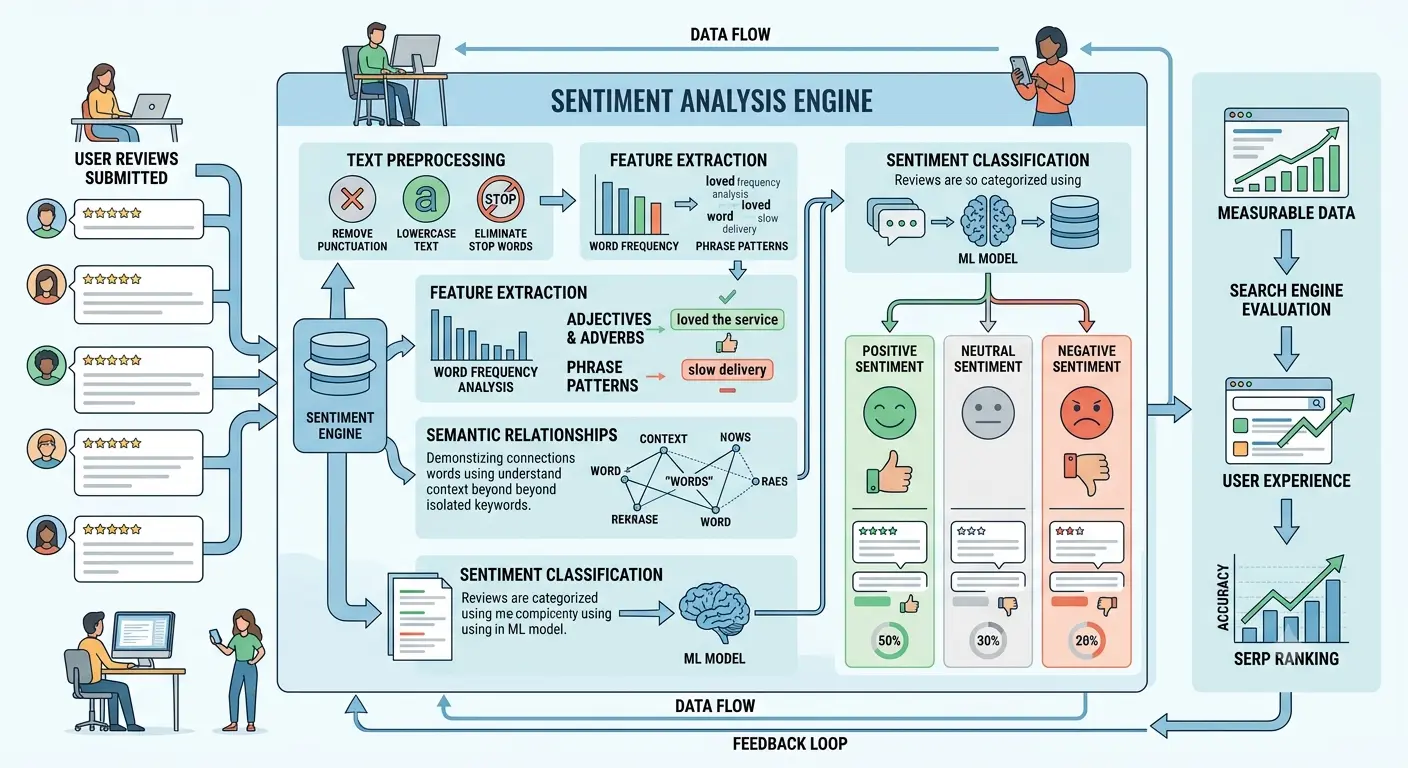
How Does Sentiment Distribution Affect Search Perception?
Sentiment distribution refers to the balance between positive, neutral and negative information available across searchable digital environments. Search engines evaluate sentiment alongside authority indicators, topical relevance and entity credibility rather than treating opinion as an isolated ranking factor. Balanced sentiment supports stronger search interpretation because algorithms identify consistent evidence throughout indexed content. Search perception therefore develops through integrated reputation evaluation instead of individual reviews or isolated publications. Entity credibility reflects this broader contextual analysis.
Search ecosystems compare sentiment patterns across trusted review platforms, media references and professional resources. Positive sentiment reinforces credibility when supported by authoritative executive content and recognised industry citations. Negative information receives contextual evaluation against wider reputation signals rather than automatic ranking priority. Reputation management therefore analyses sentiment distribution through its relationship with broader authority indicators. Search visibility reflects this comprehensive assessment of digital credibility.
How Do Short-Term and Long-Term Reputation Strategies Compare?
Short-term reputation strategies focus on improving immediate search visibility, while long-term strategies strengthen entity credibility through sustained authority development. Both approaches influence reputation signals, but they differ in sustainability, scalability and search ranking influence. Search engines continually reassess indexed information, making long-term authority more resilient than temporary visibility improvements. Comparative evaluation therefore measures both immediate impact and enduring digital trust. Reputation management becomes more effective when lasting credibility supports current optimisation.
Short-term approaches often prioritise improving the visibility of existing authoritative assets to rebalance SERP composition. These methods respond quickly to measurable search visibility challenges but require continued optimisation to preserve outcomes. Long-term strategies expand executive insights, authoritative publications and recognised citations that strengthen digital credibility progressively. Search engines accumulate this evidence and reinforce entity relationships through continuous evaluation. Sustainable search perception therefore develops through ongoing authority building rather than isolated interventions.
Which Reputation Management Methods Deliver Greater Scalability?
Scalability refers to the ability of a reputation management strategy to remain effective as an organisation’s digital footprint expands. Methods centred on strengthening authoritative information scale more efficiently because each new digital asset reinforces existing reputation signals. Search engines continuously index additional content, increasing the long-term value of comprehensive authority development. Reputation management therefore benefits from strategies that strengthen digital credibility across growing search ecosystems. Scalability reflects the efficiency of reputation systems rather than organisational size.
Content enhancement demonstrates stronger scalability because executive thought leadership, research publications and trusted citations continuously expand the evidence supporting entity credibility. Each new authoritative resource reinforces previously indexed information while strengthening search ranking influence. Reactive optimisation often requires repeated intervention whenever new visibility challenges emerge, increasing long-term resource requirements. Search ecosystems reward consistent authority development because it creates stronger digital relationships over time. Scalable reputation strategies therefore support sustainable search visibility through cumulative evidence.
How Can Executive Search Firms Evaluate Reputation Risk Before Choosing a Strategy?
Reputation risk evaluation is the structured assessment of searchable information that influences search visibility, reputation signals and entity credibility. Effective evaluation compares existing digital evidence before selecting an appropriate optimisation approach. Search ecosystems provide measurable indicators through review sentiment, authority signals, indexed content quality and SERP composition. These indicators enable objective comparison between proactive and reactive reputation strategies. Decision-making therefore relies upon measurable search evidence rather than assumptions.

A structured evaluation framework includes:
- Assess search visibility by identifying the authority and relevance of information occupying prominent SERP positions.
- Measure reputation signals through review sentiment, executive publications, citations and profile consistency.
- Compare entity credibility by analysing relationships between authoritative resources and indexed organisational information.
- Evaluate sustainability by determining whether optimisation strengthens long-term authority or temporary search performance.
Each stage provides measurable insight into digital credibility and supports informed comparison of available reputation management approaches.
How Do Reputation Management Strategies Influence SERP Composition?
SERP composition refers to the balance, authority and visibility of indexed information presented within search engine results pages. Reputation management strategies influence this composition by strengthening authoritative resources or improving the competitive performance of trustworthy digital assets. Search engines continually reassess indexed information, causing SERP composition to evolve as stronger reputation signals emerge. Comparative analysis therefore examines how different strategies influence ranking dynamics and search perception. Reputation management operates through recognised search evaluation rather than direct control over search engines.
Content enhancement expands authoritative executive resources that reinforce expertise and digital trust. Leadership publications, executive research and recognised industry references provide additional evidence supporting entity credibility. Content suppression influences SERP composition differently by enabling stronger authoritative assets to compete more effectively with less favourable indexed information. Organic reputation development creates progressive authority growth, while reactive optimisation focuses on correcting measurable visibility challenges. Each method therefore influences search ranking through distinct operational mechanisms.
What Strategic Considerations Matter When Comparing Reputation Management Approaches?
Strategic comparison evaluates effectiveness, sustainability, scalability and risk exposure within continuously evolving search ecosystems. Reputation management methods differ because they strengthen reputation signals, entity credibility and search visibility through different operational processes. Search engines interpret digital evidence continuously, making strategy selection dependent upon the quality and consistency of searchable information. Comparative analysis therefore prioritises measurable search ecosystem performance over theoretical assumptions. Reputation management becomes an evidence-based evaluation of digital authority.
Search ecosystems consistently reward authoritative, relevant and trustworthy information that demonstrates recognised executive recruitment expertise. Strategies centred on strengthening reputation signals deliver greater long-term stability because they reinforce entity credibility across multiple trusted sources. Methods relying solely on temporary visibility adjustments provide limited sustainability because search engines continually reassess indexed information. Strategic evaluation therefore balances immediate search improvements with enduring authority development. Strong digital trust emerges through integrated reputation management rather than isolated optimisation.
Negative search results influence executive search firms by affecting reputation signals, entity credibility and the interpretation of authority within search ecosystems. Content enhancement, content suppression, organic reputation management and reactive optimisation each improve search visibility through different operational mechanisms, producing distinct effects on SERP composition and digital trust. Comparative evaluation demonstrates that sustainable reputation management depends upon strengthening authoritative digital evidence rather than relying on isolated corrective actions.
Strategic comparison highlights the importance of scalability, long-term authority and balanced reputation signals when evaluating reputation management approaches. Search engines continually assess indexed information, sentiment distribution and entity credibility before determining search visibility. Within this broader evaluation framework, How Do Search Firms Suppress Negative Press in Google Results? provides the next stage of understanding how structured reputation strategies influence search perception and strengthen long-term digital credibility.
How do negative search results affect executive search firms?
Negative search results can reduce digital credibility by influencing reputation signals, entity perception and trust within search engine results pages (SERPs). This impacts how organisations and executive candidates evaluate an executive search firm’s expertise before engagement.
Why are reputation signals important for executive search firms?
Reputation signals help search engines assess authority, trustworthiness and relevance across digital sources. Strong reputation signals improve search visibility and support consistent entity credibility within competitive executive recruitment markets.
What is the difference between content enhancement and content suppression?
Content enhancement strengthens authoritative digital assets to improve search visibility, while content suppression reduces the prominence of less favourable search results by increasing the competitiveness of trusted content. Both strategies influence SERP composition through different reputation management mechanisms.
How does reputation management for recruiters improve online credibility?
Reputation management for recruiters improves online credibility by strengthening authoritative content, maintaining consistent digital profiles and reinforcing trust signals across search ecosystems. Clear My Name applies reputation management principles that support stronger search visibility and long-term entity credibility.
Can executive search firms recover from negative search visibility?
Yes. Executive search firms can improve search visibility by strengthening authoritative content, enhancing reputation signals and maintaining consistent digital information across trusted platforms. Sustainable reputation management focuses on long-term digital credibility rather than short-term ranking changes.