

Reputation management is the structured process of understanding how digital information influences search visibility, entity perception and trust within search ecosystems. Online reputation refers to the collective digital evidence that search engines evaluate through content indexing, authority signals, review sentiment and contextual relationships across multiple online sources.
Executive search and contingency recruitment differ in their recruitment models, but both depend on online credibility because search engines evaluate authority, consistency and trust before presenting organisations in search results. Search visibility influences how recruitment firms are interpreted through indexed content, professional profiles, reviews and authoritative references. Reputation signals shape entity perception by providing evidence of expertise, reliability and industry recognition. Understanding the differences between executive search and contingency recruitment therefore requires analysing how search ecosystems interpret professional reputation alongside recruitment positioning.
What Is the Difference Between Executive Search and Contingency Recruitment?
Executive search is a retained recruitment model focused on identifying senior leadership candidates through structured research and targeted talent acquisition. Contingency recruitment is a success-based recruitment model in which agencies receive payment only after a successful placement. These operational differences influence how organisations develop digital authority because search engines evaluate reputation through the evidence supporting professional expertise. Search visibility therefore reflects not only recruitment services but also the credibility associated with each business model. Online reputation becomes part of how search ecosystems interpret organisational identity.
Search engines analyse authoritative content, industry references and professional information to understand recruitment specialisation. Executive search firms often publish leadership insights, executive hiring resources and specialist research that strengthen topical authority. Contingency recruiters frequently compete across broader recruitment categories, creating different patterns of content indexing and entity relationships. These differences affect search visibility because algorithms compare expertise signals within specific recruitment topics. Reputation formation therefore reflects the depth and consistency of authoritative information rather than recruitment terminology alone.
Why Does Online Reputation Matter for Both Recruitment Models?
Online reputation is the collection of searchable information that defines digital credibility within search ecosystems. Recruitment firms depend on search visibility because candidates and organisations evaluate online information before initiating professional engagement. Search engines interpret authority signals, review sentiment, indexed publications and entity consistency when determining search rankings. Reputation therefore influences how recruitment businesses are understood through SERP evaluation. Digital credibility becomes an essential factor regardless of recruitment model.
Entity perception strengthens when professional information remains accurate across company websites, recruitment directories, industry publications and review platforms. Search algorithms compare these sources to confirm organisational expertise and industry relevance. Consistent authority signals improve confidence because search engines identify stronger relationships between digital assets. Inconsistent information weakens search interpretation by reducing certainty regarding organisational identity. Reputation therefore develops through interconnected evidence distributed across authoritative sources.
How Is Online Reputation Created?
Online reputation develops through continuous content indexing and evaluation across multiple digital platforms. Search engines collect information from websites, professional profiles, media references, reviews and industry directories to establish entity credibility. Every indexed source contributes additional evidence supporting search interpretation. Reputation therefore evolves as digital information expands rather than remaining fixed. Search visibility reflects this cumulative assessment of authority and trust.
How Do Search Engines Interpret Authority in Executive Search Firms?
Authority is the measurable demonstration of recognised expertise within search ecosystems. Search engines evaluate authority through professional publications, executive insights, leadership content, citations and trusted references that consistently reinforce subject expertise. Executive search firms strengthen authority by producing specialised information that demonstrates knowledge of leadership recruitment. Algorithms compare these authority signals with competing content before determining rankings. Search visibility therefore depends upon recognised expertise rather than organisational size.
Authority also develops through independent validation. Industry publications, professional associations and authoritative citations strengthen entity credibility because search engines identify external confirmation of expertise. Consistent references across trusted sources reinforce professional identity and reduce ambiguity during SERP evaluation. Executive search firms therefore benefit when authoritative information consistently supports leadership recruitment expertise. Search algorithms interpret this evidence collectively to determine digital credibility.
How Does Content Indexing Influence Recruitment Reputation?
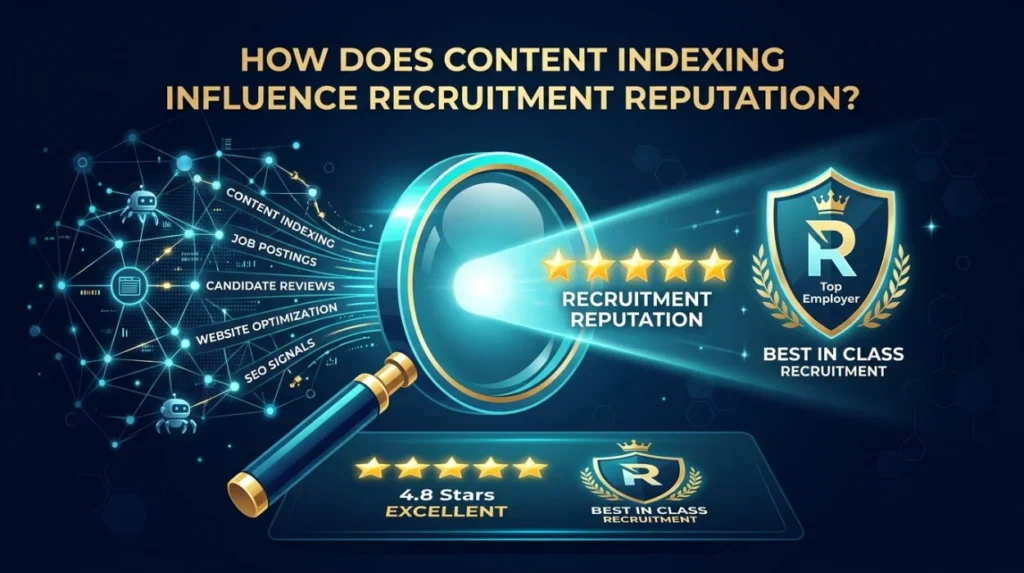
Content indexing is the process through which search engines discover, organise and retain digital information for retrieval. Every indexed recruitment article, leadership insight, candidate resource and company profile contributes to entity perception. Search engines compare newly indexed information with existing digital evidence to evaluate consistency and relevance. Recruitment reputation therefore develops progressively as additional authoritative content becomes searchable. Content indexing forms the foundation of digital reputation within recruitment industries.
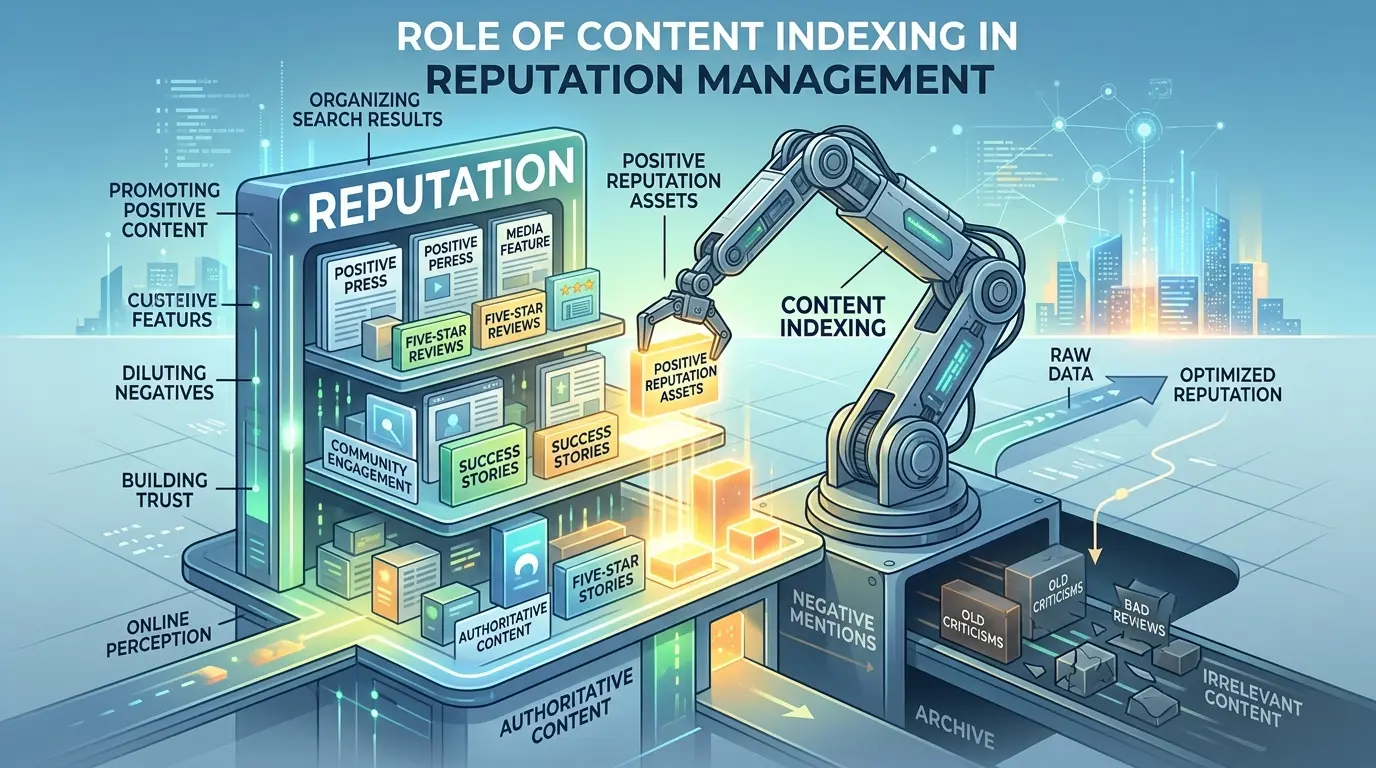
Historical content remains influential because search algorithms preserve authoritative resources that continue providing evidence of expertise. Updated leadership insights and recruitment research expand the available digital footprint supporting entity credibility. Outdated or inconsistent information weakens search interpretation because algorithms identify conflicting evidence. Search visibility therefore depends on maintaining accurate, relevant and authoritative indexed information. Recruitment reputation reflects the quality of searchable digital assets over time.
Why Do Reputation Signals Influence Search Visibility?
Reputation signals are measurable indicators that search engines use to evaluate organisational credibility and trustworthiness. These indicators include review sentiment, authoritative content, professional citations, directory profiles and consistent organisational references. Search algorithms compare these signals collectively to determine search relevance and entity credibility. Reputation signals therefore influence visibility because they provide evidence supporting professional authority. Strong reputation signals strengthen search evaluation by reducing uncertainty.
Search engines do not evaluate reputation signals independently. Positive reviews become more meaningful when reinforced by recognised industry publications and authoritative recruitment content. Professional profiles strengthen credibility when they consistently confirm organisational identity across multiple trusted platforms. Algorithms integrate these signals to establish stronger entity relationships that influence search rankings. Search visibility therefore reflects cumulative reputation evidence rather than isolated digital assets.
How Does Entity Perception Affect Recruitment Credibility?
Entity perception refers to the understanding search engines develop about an organisation through interconnected digital information. Recruitment firms become recognised entities when authoritative sources consistently confirm organisational identity, expertise and recruitment specialisation. Search algorithms compare recurring references across company websites, professional directories, media coverage and industry resources to establish digital credibility. Entity perception therefore reflects structured relationships between searchable information rather than isolated webpages. Recruitment credibility improves when these relationships remain consistent.
Strong entity perception enables search engines to interpret recruitment expertise more confidently because independent sources reinforce identical organisational information. Consistency strengthens search evaluation by reducing ambiguity surrounding recruitment focus and professional authority. Fragmented information weakens credibility because conflicting digital evidence interrupts entity relationships. Search visibility therefore benefits from coherent digital identities supported by trustworthy information. Entity perception functions as a central mechanism within search ecosystem evaluation.
How Do Reviews Influence Recruitment Reputation?
Reviews are structured reputation signals that contribute to search engine evaluation of organisational credibility. Search engines analyse review sentiment alongside authoritative content, professional citations and entity consistency rather than treating reviews as isolated ranking factors. Authentic review patterns strengthen digital trust because they provide independent evidence supporting professional reliability. Recruitment reputation therefore develops through the interaction between reviews and broader reputation signals. Search visibility reflects this integrated interpretation of digital credibility.
Review sentiment influences perception because search ecosystems compare the quality, consistency and authenticity of reviews across trusted platforms. Positive sentiment reinforces credibility when supported by authoritative recruitment content and recognised industry references. Inconsistent review patterns reduce confidence because algorithms evaluate them against wider digital evidence. Reviews therefore contribute contextual information that strengthens or weakens entity perception depending on their relationship with other trust signals. Search engines interpret reputation through this combined evaluation process.
Dive Deeper With Our Expert Guides:
What Is Executive Search? How Retained Recruitment Works in 2026
Where Do Candidates and Clients Research Recruitment Agencies? 8 Review Platforms Compared
How Do Trust Signals Support Digital Credibility?
Trust signals are indicators that demonstrate reliability, authenticity and consistency within search ecosystems. Search engines evaluate trust signals alongside authority indicators to determine whether recruitment firms represent credible and dependable entities. Professional certifications, verified company information, recognised industry memberships and authoritative citations strengthen digital trust because they reinforce organisational identity. Trust signals therefore provide measurable evidence supporting search evaluation. Digital credibility develops through sustained consistency rather than isolated verification.
Examples of trust signals include:
- Maintain accurate company profiles across recruitment directories to reinforce organisational consistency.
- Publish authoritative recruitment insights that demonstrate recognised expertise in executive hiring.
- Strengthen professional citations through respected industry publications that independently validate credibility.
- Preserve authentic review sentiment across trusted platforms to support balanced reputation signals.
Each trust signal contributes specific evidence that search engines analyse when evaluating recruitment organisations. Collectively, these indicators strengthen entity credibility by reducing uncertainty during SERP evaluation.
Why Does Digital Footprint Matter for Recruitment Firms?
A digital footprint is the complete collection of searchable information associated with an organisation across online environments. Recruitment firms develop digital footprints through websites, leadership articles, recruitment guides, directory listings, review platforms and media references. Search engines evaluate this information collectively to establish entity credibility and search relevance. Digital footprints therefore provide the evidence supporting online reputation within search ecosystems. Search visibility depends upon the quality and consistency of this digital evidence.
Comprehensive digital footprints strengthen organisational credibility because search algorithms identify consistent information across multiple trusted sources. Leadership publications reinforce expertise while authoritative citations validate professional recognition independently. Incomplete or contradictory digital footprints weaken search interpretation by creating inconsistent entity relationships. Search visibility therefore improves when digital footprints remain accurate, authoritative and comprehensive. Recruitment reputation reflects the cumulative quality of searchable information available for algorithmic evaluation.
What Role Does SERP Evaluation Play in Recruitment Reputation?
SERP evaluation is the process through which search engines determine the relevance, authority and credibility of indexed information before presenting search results. Recruitment organisations compete for visibility based upon reputation signals, authority indicators and topical relevance rather than simple keyword usage. Search algorithms compare these factors continuously as new information becomes available through content indexing. SERP evaluation therefore determines which organisations receive greater digital prominence. Reputation becomes an important influence because it affects how search engines interpret trust.
Executive search firms and contingency recruiters both benefit from stronger SERP evaluation when authoritative evidence consistently supports professional expertise. Search engines reward trustworthy digital assets that reinforce recognised entity relationships across multiple sources. Reputation signals strengthen ranking potential because they improve confidence during search interpretation. Search visibility therefore reflects balanced evaluation of authority, trust and relevance. Recruitment reputation develops through these continuous algorithmic assessments.
How Does Online Reputation Continue to Develop Over Time?
Online reputation evolves through the ongoing accumulation, indexing and reassessment of digital information. Search engines compare historical authority with newly indexed content to maintain an updated understanding of organisational credibility. Professional publications, recruitment research, trusted citations and review sentiment continue influencing entity perception because they remain part of searchable digital evidence. Reputation therefore develops progressively rather than through isolated ranking events. Search visibility reflects continuous evaluation across expanding digital footprints.
Digital information changes as organisations publish new resources, update professional profiles and receive additional independent references. Search algorithms reassess these developments to determine whether entity credibility strengthens or weakens over time. Consistent authority signals reinforce organisational recognition because they provide coherent evidence supporting expertise. Reputation therefore remains dynamic within search ecosystems that continuously evaluate searchable information. Understanding these mechanisms explains why digital credibility evolves alongside expanding online information.
Executive search and contingency recruitment represent different recruitment models, yet both rely upon strong online reputation because search engines evaluate authority, trust signals, content indexing and entity perception before determining search visibility. Reviews, digital footprints, authoritative publications and professional consistency collectively influence SERP evaluation by providing evidence of organisational credibility. Search reputation therefore develops through interconnected digital relationships rather than isolated pieces of information.
Understanding how search engines interpret recruitment reputation explains why authority signals, trust indicators and digital consistency remain central to online credibility. Search visibility reflects the cumulative strength of trustworthy information distributed across search ecosystems. For a deeper evaluation of the commercial impact of digital reputation, How Do Negative Search Results Cost Executive Search Firms C-Suite Mandates? examines how unfavourable search visibility influences executive recruitment opportunities and search perception.
What is the main difference between executive search and contingency recruitment?
Executive search is a retained recruitment model focused on senior and executive-level appointments, while contingency recruitment is success-based and payment is made only after a placement. Both models rely on strong online credibility and reputation signals to improve search visibility.
Why is online reputation important for executive search firms?
Online reputation influences how search engines evaluate entity credibility, authority signals and trust across search results. A strong digital reputation helps executive search firms improve search visibility and reinforce professional expertise.
How do search engines evaluate recruitment firms?
Search engines analyse reputation signals such as authoritative content, professional citations, review sentiment, directory listings and information consistency. These factors contribute to entity credibility and influence rankings in search engine results pages (SERPs).
How does reputation management for recruiters improve digital credibility?
Reputation management for recruiters strengthens digital credibility by improving reputation signals, maintaining accurate online information and increasing authoritative content. Clear My Name applies reputation management principles that support stronger search visibility and long-term entity credibility.
Can online reviews affect recruitment firm search rankings?
Yes. Online reviews contribute to reputation signals that search engines evaluate alongside authority, relevance and trusted content. Authentic review sentiment supports stronger digital trust and more balanced search visibility over time.