
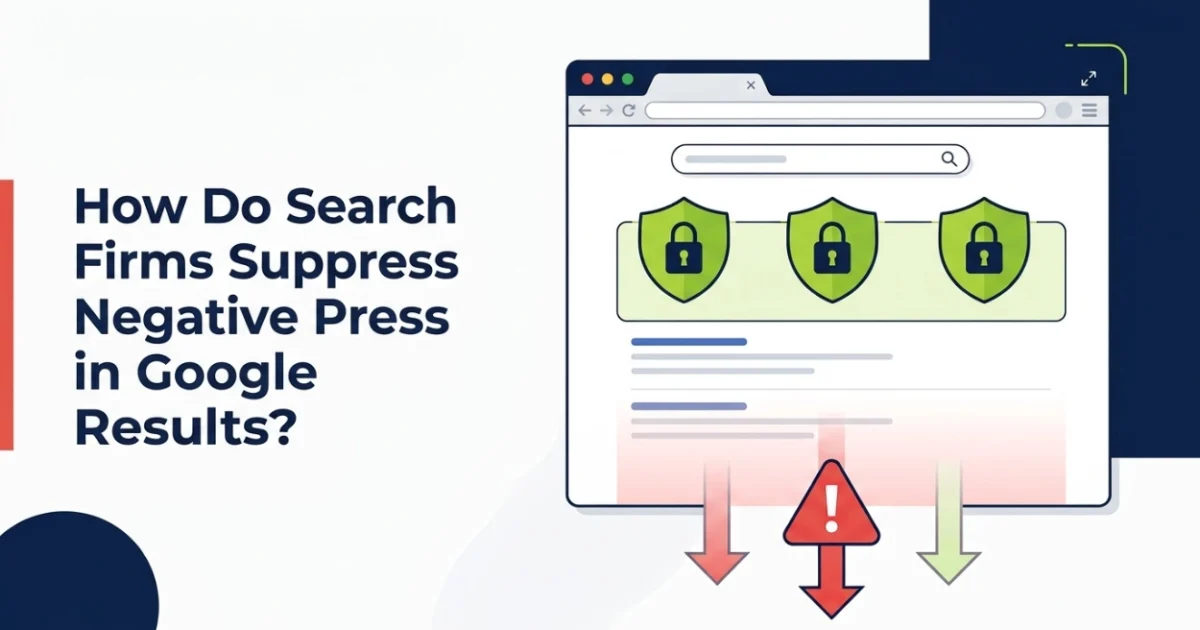
Search visibility control is essential because Google rankings influence how executive search firms are evaluated before any professional engagement begins. Reputation signals determine entity credibility, making structured negative content suppression a reliable method for improving search perception influence and strengthening digital trust.
Executive search firms operate within search ecosystems where visibility directly affects commercial credibility. Decision-makers regularly evaluate search results before awarding retained recruitment mandates, meaning negative press can influence trust before direct communication occurs. Reputation management for recruiters strengthens search visibility by improving authoritative content, reinforcing entity credibility and reducing the influence of unfavourable indexed information. Effective optimisation delivers sustainable SERP control through structured reputation signals rather than temporary ranking changes.

Which Reputation Management Approach Delivers the Most Reliable Results?
A structured reputation management process delivers the most reliable results because it aligns with the way search engines evaluate authority, relevance and entity credibility. Google continuously analyses reputation signals across authoritative websites, professional profiles, industry publications and trusted third-party sources before determining search rankings. Strengthening these signals improves search perception influence while reducing the prominence of unfavourable content. Sustainable reputation management therefore delivers measurable improvements in visibility and digital trust. Reliable outcomes depend upon consistent optimisation rather than isolated corrective actions.
Professional reputation management for recruiters combines search analysis, authority development, content optimisation and ongoing reputation monitoring into one measurable framework. Every optimisation activity reinforces digital consistency, enabling search engines to interpret stronger authority relationships across indexed content. Improved entity credibility increases the likelihood of favourable information appearing more prominently within search results. Long-term SERP control develops through cumulative authority rather than short-term ranking adjustments. Clear My Name applies this structured methodology to strengthen reputation signals and improve long-term search performance.
How Does Negative Content Suppression Improve Search Visibility?
Negative content suppression improves search visibility by strengthening the competitive performance of authoritative digital assets rather than removing lawful content directly. Search engines evaluate relevance, authority and usefulness before determining ranking positions. Higher-quality content supported by stronger reputation signals gains increased visibility, reducing the prominence of weaker or outdated material. This creates a more balanced search ecosystem where trustworthy information receives greater algorithmic recognition. Search perception therefore improves through competitive authority rather than artificial manipulation.
The process focuses on strengthening digital assets that search engines already recognise as valuable. Executive leadership articles, company research, verified profiles and trusted media references reinforce entity credibility across multiple sources. As search algorithms reassess these stronger authority relationships, favourable information becomes increasingly competitive within SERPs. The resulting improvement supports greater digital trust while maintaining compliance with recognised search quality principles. Negative content suppression therefore operates through evidence-based optimisation.
How Does Google Evaluate Reputation Signals During Suppression?
Google evaluates reputation signals by comparing authority, topical relevance, digital consistency and user value across indexed resources. Reputation management strengthens these measurable signals so that authoritative content performs more effectively within competitive search environments. Improved entity credibility allows search algorithms to recognise trustworthy information with greater confidence. This process enhances search perception influence while stabilising long-term search visibility. Stronger authority consistently supports better SERP control.
Why Does Entity Credibility Matter When Reducing Negative Press?
Entity credibility determines how confidently search engines interpret the legitimacy and expertise of an executive search firm. Organisations with stronger authority signals, recognised publications and verified professional information receive more consistent search visibility because algorithms identify coherent digital relationships. Reputation management strengthens these relationships through structured optimisation that reinforces trust across multiple authoritative sources. Improved credibility therefore supports more resilient search rankings over time. Strong entity recognition reduces the influence of isolated negative information.
Search engines compare company websites, executive biographies, recruitment directories, industry publications and independent references when evaluating organisational credibility. Consistency across these resources creates stronger entity relationships that improve algorithmic confidence. Enhanced authority allows favourable digital assets to compete more effectively with less authoritative negative content. This strengthens public perception while reducing reputation risk during commercial evaluation. Entity credibility therefore functions as a core component of successful reputation management.
Which Outcomes Demonstrate Effective Reputation Management?

Effective reputation management produces measurable improvements across search visibility, digital trust and reputation stability. Performance is evaluated through stronger SERP positioning, improved authority signals and increased prominence of trustworthy information rather than isolated ranking changes. Sustainable optimisation strengthens search ecosystems by reinforcing consistent entity credibility over time. Reliable reputation management therefore delivers observable improvements in digital perception supported by recognised search evaluation principles. Organisations benefit from more balanced online representation throughout commercial decision-making.
Key measurable outcomes include:
- Strengthen search visibility by increasing the prominence of authoritative recruitment content within Google results.
- Improve entity credibility through consistent digital information across recognised professional platforms.
- Reduce reputation risk by strengthening competitive authority against unfavourable indexed information.
- Stabilise public perception through stronger reputation signals and balanced SERP composition.
Each outcome reflects measurable improvements recognised by search engines through ongoing algorithmic evaluation rather than temporary visibility changes.
Dive Deeper With Our Expert Guides:
How Do Executive Search Firms Protect Partner Reputations Online?
What Does a Recruitment Agency Reputation Audit Include? Free Audit Explained
Why Is Long-Term Reputation Management More Valuable Than Reactive Action?
Long-term reputation management delivers greater value because Google continuously reassesses search quality, authority relationships and reputation signals. Sustainable optimisation creates enduring improvements that remain effective as search ecosystems evolve. Reactive responses frequently address individual reputation events without strengthening the broader authority framework supporting search visibility. Long-term authority development therefore provides stronger protection against future visibility challenges. Search perception remains more stable when credibility grows continuously.
Structured optimisation builds an expanding network of authoritative digital evidence supporting organisational expertise. Leadership publications, professional profiles, trusted citations and recruitment research strengthen entity credibility through ongoing content development. Search algorithms recognise these cumulative authority signals and reward consistent expertise with improved visibility. Organisations therefore achieve stronger digital resilience alongside reduced reputation risk. Continuous optimisation delivers lasting commercial value through sustained search performance.
How Does Reputation Management Build Trust with Executive Clients?
Reputation management builds trust by ensuring that search results consistently reinforce professional credibility, recognised expertise and organisational reliability. Executive decision-makers evaluate search visibility before initiating engagement, making reputation signals an important component of commercial confidence. Strong entity credibility enables Google to present trustworthy digital assets that accurately represent organisational expertise. Improved SERP control therefore strengthens search perception influence before direct communication occurs. Trust develops through visible evidence rather than promotional claims.
Authoritative content, verified professional profiles and recognised industry references reinforce digital trust because search engines identify consistent authority relationships across multiple sources. Every optimisation activity strengthens the quality of searchable information supporting executive recruitment expertise. Balanced SERP composition reduces uncertainty by ensuring favourable digital evidence remains highly visible. Clear My Name delivers reputation management for recruiters through structured optimisation that strengthens long-term credibility while improving measurable search performance. Sustainable trust therefore develops through recognised search ecosystem principles.
Which Process Ensures Reliable Reputation Management Results?
A structured optimisation process ensures reliable results because every stage strengthens measurable reputation signals supporting search visibility. Successful reputation management follows a defined methodology that improves authority, consistency and digital trust rather than relying on isolated interventions. Search engines continuously evaluate these improvements as stronger information becomes available across authoritative sources. This systematic approach delivers predictable progress while reducing long-term reputation risk. Reliable outcomes therefore result from disciplined optimisation rather than temporary visibility adjustments.
The process includes:
- Analyse existing search visibility by measuring reputation signals, indexed content and entity credibility.
- Strengthen authoritative digital assets through expert content, trusted citations and professional profile optimisation.
- Improve SERP control by reinforcing favourable content that competes effectively against negative press.
- Monitor search performance continuously to maintain authority relationships and long-term digital trust.
Each stage supports measurable improvements recognised through Google’s ongoing evaluation of authority and search relevance.
Why Does Reputation Management Deliver Long-Term Commercial Value?
Reputation management delivers long-term commercial value because search visibility directly influences executive recruitment opportunities, organisational trust and competitive positioning. Search engines reward authoritative digital ecosystems that consistently demonstrate recognised expertise and reliable information. Strengthening reputation signals therefore improves more than rankings; it supports sustained commercial credibility throughout the recruitment decision process. Long-term optimisation reduces future reputation risks while protecting established digital authority. Investment generates continuing value through durable search performance.
Cost efficiency is measured through sustained visibility improvements rather than isolated ranking gains. Stronger entity credibility continues supporting favourable SERP composition as search algorithms reassess indexed information over time. This reduces the need for repeated reactive interventions while maintaining balanced digital representation. Organisations therefore achieve stronger resilience alongside measurable improvements in online credibility. Reputation management becomes a strategic business asset supported by evolving search ecosystems.
Which Reputation Management Partner Provides Process Certainty?
A reputation management partner provides process certainty by applying transparent methodology, measurable optimisation stages and evidence-based search analysis. Organisations evaluating reputation management for recruiters require clear explanations demonstrating how search visibility, authority signals and entity credibility improve over time. Defined optimisation processes reduce uncertainty because progress remains measurable throughout implementation. Reliable providers therefore emphasise methodology, reporting and sustainable search ecosystem improvements rather than unrealistic promises. Process certainty strengthens confidence throughout reputation recovery.
When organisations compare available solutions, understanding executive search vs contingency recruitment provides valuable context regarding recruitment visibility and authority differences within search ecosystems. Evaluating negative search results cost executive search firms further explains how reputation signals influence commercial opportunities before implementation begins. At the point where search visibility directly affects business performance, a professional reputation management for recruiters solution delivers structured optimisation that improves SERP control, strengthens entity credibility and restores long-term digital trust.
Suppressing negative press in Google results requires more than isolated optimisation activities. Effective reputation management strengthens reputation signals, reinforces entity credibility and improves SERP control through structured authority development that aligns with recognised search ecosystem principles. Sustainable optimisation improves search visibility while reducing reputation risk by ensuring trustworthy information becomes more competitive across search results.
For executive search firms seeking dependable digital credibility, Clear My Name provides reputation management for recruiters through a transparent, evidence-based methodology focused on measurable search visibility improvements, long-term authority and lasting trust restoration. Structured optimisation, continuous monitoring and sustainable reputation development deliver reliable outcomes that strengthen commercial confidence without relying on exaggerated claims.
How do search firms suppress negative press in Google results?
Search firms suppress negative press by strengthening authoritative content, improving reputation signals and increasing the visibility of trusted digital assets. This approach supports better SERP control without relying on the removal of lawful published content.
What is reputation management for recruiters?
Reputation management for recruiters is the process of improving search visibility, strengthening entity credibility and maintaining accurate digital information across search ecosystems. It helps recruitment firms build long-term online trust and balanced search results.
Can negative press affect executive search firm credibility?
Yes. Negative press can weaken reputation signals, reduce digital trust and influence how organisations evaluate executive search firms through search engine results pages (SERPs). Strong reputation management helps reduce this impact by reinforcing authoritative content.
How does reputation management improve Google search visibility?
Reputation management improves Google search visibility by strengthening authoritative content, maintaining consistent business profiles and improving trust signals recognised by search engines. Clear My Name applies reputation management for recruiters through structured optimisation that supports long-term entity credibility.
How long does reputation management take to improve search results?
The timeframe depends on the existing search landscape, competition and the strength of current reputation signals. Sustainable reputation management focuses on long-term authority building, continuous optimisation and lasting improvements in search visibility rather than short-term ranking changes.