

Trustpilot scores influence how employers initially assess sales recruitment agencies by providing a visible third-party reputation signal alongside other information. Their effect depends on review volume, sentiment distribution, recency, written feedback and how those signals compare with an agency’s broader digital presence.
Reputation management strategies differ based on whether the objective involves improving the information available about a recruiter, addressing problematic content, or strengthening credible positive signals. Online reputation control methods are evaluated through search visibility, review sentiment, content persistence, entity credibility and the composition of search results.
How strongly do Trustpilot scores influence employer decisions about sales recruiters?
Trustpilot scores function as an initial trust signal rather than a complete assessment of recruitment capability. An employer searching for sales recruitment agencies encounters review ratings alongside websites, job-sector information, LinkedIn profiles, directories, media coverage and other third-party references. A high rating can create an immediate positive perception, while a low rating can introduce a reputational concern that prompts additional research. The influence of the score therefore depends on its position within the wider information environment. Review volume and written sentiment also provide context because a numerical rating alone does not explain why customers reached that assessment.
Trust signals operate through comparison between multiple sources rather than through one isolated metric. An employer examining a recruiter can compare Trustpilot feedback with testimonials, candidate experiences, employer reviews, company information and search-result pages. Consistency between these sources creates a stronger pattern of entity credibility than a single platform rating. Inconsistency creates a reason for deeper investigation, particularly when negative themes appear repeatedly across independent sources. Reputation analysis therefore examines the relationship between signals instead of treating the Trustpilot score as a standalone measurement.
Does review volume matter as much as the Trustpilot rating?
Review volume provides context for interpreting a Trustpilot score because it indicates how much feedback contributes to the visible rating. A score supported by a substantial body of recent reviews presents a different information pattern from an identical score based on a small number of reviews. Review volume does not establish whether every individual review is accurate, but it changes the statistical context surrounding the overall rating. Employers evaluating recruiters therefore examine both the numerical score and the distribution of reviews behind it. This distinction becomes particularly relevant when comparing recruitment agencies with different levels of customer feedback.
Review composition also affects how reputation signals are interpreted. A recruiter with a strong overall rating but a recent concentration of negative reviews presents a different sentiment distribution from one with consistent positive feedback over time. Older reviews continue to provide historical context, while recent reviews indicate how current customers describe their experiences. The combination of volume, recency and sentiment gives employers a more detailed view than the headline score. This makes review analysis more useful when it separates historical reputation from current reputation conditions.
How does review recency change the meaning of a Trustpilot score?
Review recency indicates how closely the visible reputation reflects the recruiter’s current operating environment. Recent reviews receive greater practical relevance when employers investigate whether an agency currently provides consistent communication, candidate quality or recruitment support. Older positive reviews can remain visible while no longer representing current practices. Conversely, an older negative review can remain part of the searchable reputation despite having limited relevance to present operations. A reputation assessment therefore measures temporal patterns rather than relying exclusively on the cumulative score.
Which reputation management approach has greater impact: content creation or review removal?
Content creation and review removal address different components of online reputation and therefore produce different outcomes. Content creation adds new information to the digital environment through authoritative pages, sector resources, company profiles, expert commentary and other relevant assets. Review removal attempts to address specific content that violates a platform’s rules or applicable legal requirements. Creation expands the available reputation signals, while removal reduces the visibility or persistence of particular signals when a valid removal mechanism exists. Neither approach automatically changes every search result or eliminates negative sentiment from the wider web.
Content enhancement operates by increasing the amount of relevant information associated with an entity. Search engines assess pages through factors including relevance, authority, links, content relationships and user-oriented signals rather than simply counting positive articles. A structured content ecosystem can therefore improve the range of information available when an employer searches for a recruiter. Removal operates differently because its effect depends on the platform, the content, the applicable policy and whether the request meets the relevant criteria. The strategic distinction is therefore between changing the information environment and addressing an individual problematic asset.
When does content enhancement become more scalable than removal?
Content enhancement becomes more scalable when a recruiter needs to strengthen its overall digital footprint rather than resolve one specific review. New pages can address recruitment specialisms, industry expertise, candidate resources, employer guidance and other legitimate areas of relevance. These assets create additional opportunities for search engines to understand the entity and its topical relationships. Removal is more narrowly targeted because each review or page requires an identifiable basis for action. Scalability therefore depends on whether the reputational problem is systemic across search results or concentrated in specific content.
How do organic and reactive reputation strategies differ?
Organic reputation management focuses on building credible reputation signals before a specific reputational incident requires intervention. It operates through consistent publication, accurate business information, legitimate customer feedback, authoritative references and a coherent digital entity profile. Reactive management begins after a negative review, damaging page, inaccurate statement or reputational event becomes visible. The organic approach builds the underlying information environment, while the reactive approach responds to an existing reputation problem. Their time horizons and risk profiles are therefore different.
Organic activity generally requires sustained consistency because search visibility develops through accumulated content and interconnected signals. Reactive activity can address an immediate problem more directly when a valid platform, editorial or legal mechanism exists. The limitation of reactive management is that not every negative result qualifies for removal, correction or de-indexing. The limitation of organic activity is that newly created content does not automatically displace established pages with strong authority. Effective evaluation therefore considers whether the problem requires suppression, enhancement or a combination of both.
Can improving positive content suppress negative recruiter reviews in search results?
Positive content can contribute to changes in SERP composition, but publishing positive material does not guarantee the removal or displacement of negative reviews. Search ranking influence depends on relevance, authority, content quality, links, query intent and the competitive strength of existing pages. A recruiter can publish authoritative resources while a high-authority review platform continues to rank prominently for brand-related searches. Content suppression and content enhancement therefore operate through different mechanisms.


SERP composition measures the types of pages occupying the results for important branded and commercial queries. If negative Trustpilot pages appear across multiple searches, a reputation strategy evaluates which queries trigger them, where they rank and what alternative pages already exist. New content then has a measurable role when it establishes relevant pages that search engines consider suitable for those queries. This process is distinct from manipulating a search engine or guaranteeing a particular ranking position. The relevant measurement is the change in the overall search-result environment over time.
How do short-term and long-term reputation strategies compare?
Short-term strategies focus on immediate reputational exposure, while long-term strategies focus on the stability of the broader digital information environment. A short-term response can involve reviewing platform policies, documenting inaccurate claims, requesting corrections or addressing content that breaches published rules. A long-term approach involves maintaining accurate entity information, producing useful content, generating authentic customer feedback and monitoring changes in search visibility. The first approach addresses an existing exposure, while the second builds resilience against future fluctuations.
Short-term intervention has a narrower operational scope because its success often depends on the characteristics of one piece of content. Long-term reputation development has a broader scope but requires continuous monitoring and consistent content quality. A recruiter therefore needs different measurements for each approach. Immediate intervention can be evaluated through content status, platform responses and visibility changes, while long-term activity can be evaluated through sentiment distribution, branded SERP composition and the diversity of authoritative results.
How can recruiters evaluate whether a reputation strategy is working?
Reputation strategy effectiveness is measured through observable changes rather than the Trustpilot score alone. A structured evaluation compares baseline and subsequent data across review sentiment, review volume, search-result positions, negative-content visibility and the presence of authoritative entity information. This creates a measurable relationship between reputation activity and changes in the digital environment. It also prevents one metric from being treated as evidence of overall improvement. The assessment period needs to remain consistent so that historical and current data remain comparable.
A practical evaluation framework examines the following areas:
- Measure branded search-result composition by recording which review, directory, social and editorial pages appear for priority queries.
- Compare sentiment distribution by analysing positive, neutral and negative review themes rather than relying only on the aggregate score.
- Track content persistence by recording whether problematic pages remain indexed, change position or disappear from relevant search results.
- Assess entity credibility by checking consistency between company information, professional profiles, review platforms and authoritative third-party references.
- Review platform outcomes by documenting whether correction, response or removal requests receive a substantive decision under published rules.
These measurements distinguish reputation improvement from simple activity volume. Publishing ten pages does not establish a positive outcome if those pages receive no relevant visibility. Likewise, submitting review complaints does not establish resolution if the content remains visible. The evaluation therefore connects each intervention to a defined search or reputation signal. This makes performance assessment more precise and reduces reliance on subjective impressions.
Dive Deeper With Our Expert Guides:
How Does Multi-Country Review Management Work for Global Recruiters?
How Do Scam Accusations Destroy International Recruiter Reputations Overnight?
What role does review removal play when Trustpilot feedback is inaccurate or unfair?
Review removal is a reactive reputation-management method that focuses on content violating a platform’s published rules or another recognised basis for intervention. The process generally involves identifying the specific review, documenting the relevant issue and submitting an appropriate request through the platform’s available mechanism. A negative review is not automatically removable simply because a recruiter disputes its contents. The distinction between unfavourable feedback and policy-violating content is therefore central to evaluating removal strategies.
Where direct platform intervention does not resolve a disputed review, the available options depend on the facts, jurisdiction and nature of the content. Legal routes involve a different evidential and procedural framework from platform reporting. This makes unfair Trustpilot reviews a distinct issue from ordinary negative customer feedback because the relevant question concerns the basis for challenging the content rather than its sentiment alone. A reputation assessment therefore separates dissatisfaction, factual dispute, impersonation, prohibited content and potentially unlawful material instead of treating every negative review as equivalent.
Which reputation strategy creates the most sustainable search-result improvement?
Sustainable reputation management combines an accurate information foundation with proportionate responses to specific problematic content. Content enhancement contributes to the breadth and quality of information associated with the recruiter, while reactive intervention addresses individual assets that create identifiable risks. Neither mechanism independently controls the entire SERP because search engines determine rankings through their own systems. Sustainability therefore depends on maintaining legitimate information assets while monitoring changes in third-party content and search visibility.
The strongest analytical distinction is between reputation repair and reputation development. Repair addresses an existing negative signal through correction, removal, response or targeted content enhancement. Development establishes a broader and more coherent digital footprint that gives employers access to relevant information beyond a single review platform. These functions operate on different timescales and involve different levels of platform dependency. Evaluating them together provides a clearer assessment of effectiveness, scalability, risk exposure and sustainability.
What should employers examine beyond a sales recruiter’s Trustpilot score?
Employers gain a more complete assessment by examining the evidence behind the score and comparing it with independent reputation signals. Relevant factors include the recency and volume of reviews, recurring themes, responses to criticism, professional credentials, sector experience, employer feedback and the consistency of information across authoritative sources. This approach separates a headline rating from the underlying evidence that gives the rating meaning. It also identifies whether negative sentiment represents an isolated issue or a recurring pattern.
Search perception is ultimately shaped by the complete information environment surrounding an entity. Trustpilot contributes a visible reputation signal, but it exists alongside websites, directories, professional networks, media coverage and other third-party sources. Reputation management strategies therefore differ based on whether the objective involves removing problematic information, improving the quality of available information or strengthening the overall digital footprint. Online reputation control methods are evaluated through measurable changes in SERP composition, sentiment distribution, content persistence and entity credibility.
How should Trustpilot reputation signals be evaluated?
Trustpilot scores provide a visible reputation indicator, but their meaning depends on review volume, recency, sentiment distribution and the wider digital information environment. Content enhancement expands credible information associated with a recruiter, while removal strategies address specific content through platform or legal mechanisms. Organic approaches focus on long-term digital footprint development, whereas reactive approaches address identifiable reputational exposure.
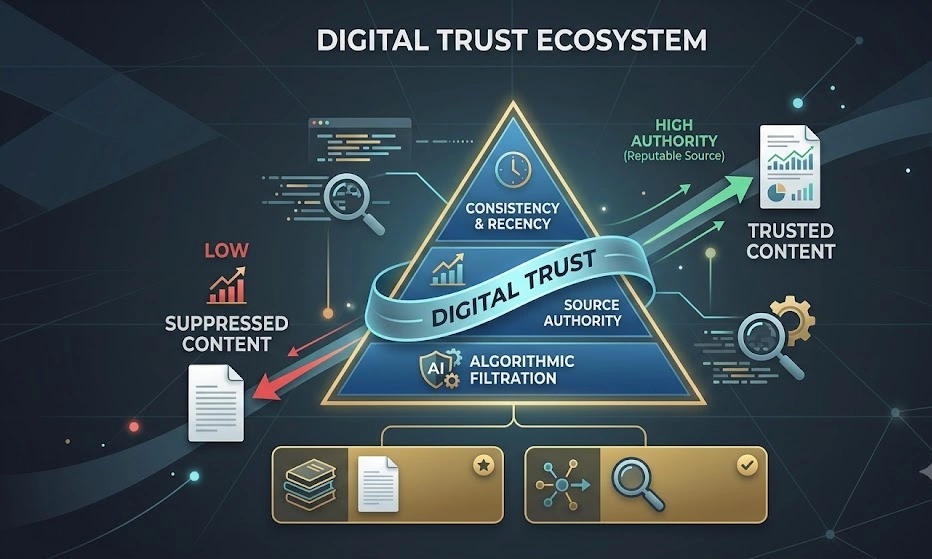
A useful evaluation therefore measures search visibility, trust signals and perception across multiple sources rather than treating one rating as a complete reputation assessment. Short-term interventions provide targeted responses to existing problems, while long-term strategies focus on sustainable SERP composition and entity credibility. Comparing these mechanisms clarifies which reputation signals require correction, which require stronger contextual information and which require continued monitoring.
How does a Trustpilot score affect sales recruiters?
A Trustpilot score can influence how employers perceive a sales recruitment agency when comparing potential suppliers. Employers often consider the overall rating alongside review volume, recency, and the substance of client feedback.
Do employers check Trustpilot reviews before choosing a sales recruitment agency?
Employers can use Trustpilot reviews as part of their due diligence when assessing sales recruitment agencies. They typically examine ratings, recent reviews, recurring themes, and responses to negative feedback rather than relying on the score alone.
What Trustpilot rating is considered good for a sales recruiter?
There is no universal Trustpilot score that determines whether a sales recruiter is suitable for an employer. A rating becomes more meaningful when considered alongside the number of reviews, review quality, recency, and evidence of consistent recruitment performance.
Can negative Trustpilot reviews affect a recruitment agency’s reputation?
Negative Trustpilot reviews can affect how prospective employers perceive a recruitment agency, particularly when similar concerns appear repeatedly. A recruiter’s response, review history, and the balance between positive and negative feedback provide additional context.
Can Clear My Name help with a sales recruitment agency’s online reputation?
Clear My Name focuses on online reputation management, including the assessment and management of damaging search and review content. For a sales recruitment agency, reputation work can involve analysing Trustpilot feedback, identifying recurring issues, and developing an appropriate response strategy.