

A 1-star review can increase client acquisition risk when its rating and criticism become prominent reputation signals during agency research. The effect depends on review visibility, sentiment, source authority, SERP composition and the wider distribution of credible information about the recruiter.
Reputation management strategies differ based on whether the objective is to remove problematic content, improve the surrounding information environment, or monitor reputation signals over time. Online reputation control methods are evaluated through their effect on search visibility, entity credibility, sentiment distribution, risk exposure and sustainability.
Why can a 1-star review influence a sales recruiter’s client acquisition?
A 1-star review influences client acquisition primarily by becoming a visible source of information during the research stage. The rating provides a numerical reputation signal, while the written review supplies semantic information about the experience being described. When that page appears for searches involving the agency name, users encounter the criticism alongside official company information and third-party sources. The resulting perception depends on the prominence, credibility and context of the review rather than the star rating alone.
The mechanism operates through the relationship between content indexing and search visibility. An indexed review becomes eligible to appear for relevant queries, while ranking systems determine its position based on their own relevance and quality signals. A prominent negative result can therefore occupy part of the SERP composition available to prospective clients. The commercial consequence is not an automatic ranking penalty but a change in the information encountered during due diligence.
How does review visibility differ from review sentiment?
Review visibility measures how prominently review content appears in search results, whereas review sentiment describes the favourable, neutral or unfavourable meaning expressed within that content. These represent separate reputation variables and require separate analysis. A strongly negative review with low search visibility presents a different exposure profile from a similarly negative review appearing near the top of branded search results. Likewise, a highly visible review with neutral language does not carry the same sentiment signal as a visible 1-star complaint.
Sentiment distribution becomes more significant when users encounter multiple sources during agency research. A SERP containing predominantly critical content creates a different perception environment from one containing balanced reviews, authoritative industry references and accurate company information. Search engines do not assign a universal reputation score based on this distribution. Instead, the individual pages are evaluated through search systems while users interpret the collective information presented on the results page.
Is review removal more effective than content enhancement for reputation control?
Review removal and content enhancement address different mechanisms and therefore produce different outcomes. Removal strategies focus on whether a particular review violates a platform’s rules, legal requirements or applicable content standards. Content enhancement focuses on developing accurate, relevant and authoritative information that expands the entity’s existing search footprint. Neither approach represents a universal solution because their effectiveness depends on the source, search visibility, content eligibility and available supporting information.
Removal provides a direct source-level intervention when qualifying content meets the relevant platform or legal criteria. If the review is removed, that specific URL no longer functions as the same reputation signal, although copies, screenshots or references can remain elsewhere. Content enhancement does not eliminate the original source and therefore operates through a different mechanism. It increases the availability of alternative information that search systems can evaluate for relevant queries, making the approach more dependent on content quality, authority and sustained indexing.
How does content suppression compare with content enhancement?
Content suppression focuses on reducing the visibility or availability of specific negative information, while content enhancement focuses on strengthening the surrounding information ecosystem. Suppression can involve legitimate source-level removal, de-indexing where applicable, or other mechanisms that reduce exposure to a particular page. Enhancement involves publishing or strengthening accurate content that provides additional context about the organisation. The two methods therefore address different sides of SERP composition.
The main distinction concerns control over the underlying source. Suppression attempts to alter the visibility of an existing reputation asset, while enhancement introduces or strengthens alternative assets. Suppression can produce a more immediate change when the source is successfully removed or de-indexed, but it does not automatically address duplicate content elsewhere. Enhancement provides a broader information base but requires time for content discovery, indexing and ranking. Evaluation therefore requires measuring both immediate exposure reduction and longer-term search ecosystem development.
Which approach provides stronger short-term reputation control?
Source-level intervention generally produces the most direct short-term change when problematic content qualifies for legitimate removal or de-indexing. The mechanism is straightforward: reducing the availability of the source reduces its opportunity to appear in relevant searches. This approach has a defined target and an identifiable outcome, making the initial intervention easier to measure. Its limitation is that it depends on platform rules, legal criteria and the specific status of the content.
Content enhancement follows a slower search-development mechanism because new or strengthened pages require crawling, indexing and ranking. Its short-term effect therefore depends on the authority and relevance of the content being introduced. A newly published page does not automatically replace an established review in search results. The approach becomes more useful for expanding the entity’s information environment when removal is unavailable or when reputation management requires broader SERP development.
How does an organic reputation strategy differ from a reactive strategy?
An organic reputation strategy builds credible information before a specific reputation incident becomes dominant, whereas a reactive strategy responds after a negative signal has already gained visibility. Organic activity focuses on maintaining accurate profiles, authoritative references, useful content and consistent entity information. Reactive activity begins with identifying the source, assessing its legitimacy, measuring search exposure and selecting an appropriate intervention. The distinction is therefore based on timing and operational objective.
Organic development provides a larger information base for search systems to evaluate when users research an agency. This can create a more resilient digital footprint because reputation information does not depend on a single page or platform. Reactive management provides greater focus because it targets an identified reputation problem and its associated search assets. Its risk exposure increases when the negative content has already become highly visible or has been duplicated across other sources.
What is the difference between short-term and long-term reputation management?
Short-term reputation management measures immediate changes in exposure, while long-term management measures the durability and consistency of the wider search environment. Short-term objectives include reducing the visibility of a specific result, correcting inaccurate information or resolving an eligible review issue. Long-term objectives include maintaining consistent entity information, developing authoritative content and monitoring new reputation signals. These objectives require different performance measurements.
Short-term success can be measured through changes in indexed URLs, ranking positions, review visibility and SERP composition. Long-term sustainability requires monitoring whether new negative pages replace previously reduced results or whether the entity continues to accumulate credible information. A one-time intervention therefore does not establish permanent search control. Search ecosystems change as new pages are published, existing pages are updated and ranking systems reassess available content.

How does reputation management affect SERP composition?

Reputation management affects SERP composition by changing the set of information available for search engines to retrieve and rank. Source-level removal can reduce the number of visible negative assets, while content enhancement can increase the number of relevant positive or neutral assets associated with the entity. Monitoring identifies changes in the composition over time. These mechanisms influence the information environment without creating a single controllable reputation score.
SERP composition also depends on query intent. A branded search for an agency name produces a different information set from a search for its services, locations or specialist recruitment sectors. A review that is prominent for a branded query can remain less visible for a generic recruitment query. Effective evaluation therefore separates branded and non-branded search environments rather than treating overall search visibility as one measurement.
How should reputation management effectiveness be measured?
Reputation management effectiveness is measured through observable changes in content visibility, source status, search positions, sentiment distribution and entity information consistency. Measurement begins by establishing a baseline showing which URLs, reviews and third-party references appear for relevant searches. Subsequent monitoring compares those results over defined periods. This approach distinguishes measurable search changes from subjective impressions of improved reputation.
A practical evaluation framework can examine:
- Measure branded SERP composition by recording which review, directory, editorial and company pages appear for the agency name.
- Compare sentiment distribution by analysing whether prominent results contain favourable, neutral or unfavourable language.
- Track source visibility by recording ranking changes for individual reputation-related URLs rather than assuming a single overall position.
- Assess content durability by checking whether newly visible pages remain indexed and relevant across subsequent monitoring periods.
These measurements provide evidence for comparing reputation approaches without assuming that a particular intervention automatically improves commercial performance.
How scalable are removal and content enhancement strategies?
Removal strategies are highly dependent on the number and type of sources involved because each platform operates under its own rules and procedures. A single eligible review presents a defined intervention, while a reputation issue distributed across review sites, forums, directories and copied pages requires separate source analysis. Scalability therefore depends on source diversity and the availability of legitimate intervention routes. Removing one page also does not guarantee that derivative copies disappear.
Content enhancement can scale across an entity’s wider digital footprint because one authoritative piece of content can support multiple relevant search queries. However, scaling content requires maintaining accuracy, topical relevance, editorial quality and technical accessibility. Low-quality or repetitive content does not provide the same authority signal as genuinely useful information. Sustainable scaling therefore depends on information quality rather than simply increasing publication volume.
Dive Deeper With Our Expert Guides:
How Do Trustpilot Scores Decide Which Sales Recruiters Employers Call?
How Does Multi-Country Review Management Work for Global Recruiters?
What are the main risks of relying on a single reputation management method?
Relying on one method creates exposure when the underlying reputation problem operates across multiple sources or search mechanisms. Removal-only strategies depend on content eligibility and do not address information that remains on other websites. Enhancement-only strategies leave the original negative source available and therefore do not directly change its underlying status. Monitoring without intervention identifies exposure but does not itself alter the information environment.
The broader risk is treating reputation as a single-page problem. Search perception develops through relationships between reviews, company pages, directories, editorial coverage, professional profiles and other indexed sources. A strategy that addresses only one component can leave the remaining reputation signals unchanged. Evaluation therefore requires mapping the complete information environment before selecting an intervention.
How sustainable is professional review management over time?
Professional review management is sustainable when it combines source-level assessment, accurate information development and continuous monitoring rather than treating one intervention as a permanent solution. Review platforms change policies, search engines reassess indexed pages and new reviews can introduce additional reputation signals. Sustainable management therefore requires a repeatable process for identifying and evaluating changes. The objective is continuity of reputation analysis rather than a single permanent ranking position.
The time required for measurable search changes also varies according to the mechanism involved. A qualifying source-level removal can alter the availability of a reputation asset directly, while content enhancement depends on discovery, indexing and ranking. Agency’s Rating Recovery therefore needs to be evaluated against the specific mechanism used, the starting SERP composition and the persistence of competing reputation signals.
How should sales recruiters compare reputation management approaches?
Sales recruiters can compare reputation management approaches by evaluating the intervention mechanism, expected time horizon, scalability, risk exposure and sustainability of each method. Removal addresses an individual source, enhancement develops the wider information environment, and monitoring establishes the evidence needed to identify changes. These approaches serve different purposes rather than functioning as interchangeable alternatives. A comparison therefore begins with the structure of the reputation problem itself.
The most useful assessment separates source control from search visibility. Removing an eligible review changes the underlying source, while improving SERP composition changes which information receives visibility for relevant searches. Neither mechanism independently establishes overall entity credibility. A complete evaluation considers source authority, content accuracy, sentiment distribution, indexing status and the stability of search results over time.
A 1-star review becomes commercially relevant when its rating and criticism form a prominent reputation signal within the search environment surrounding a sales recruitment agency. Its effect depends on source authority, indexing, query relevance, SERP position, sentiment and the wider distribution of credible information.
Removal and content enhancement operate through different mechanisms. Removal addresses the underlying source when legitimate eligibility exists, while enhancement strengthens the surrounding information ecosystem through accurate and relevant content. Organic strategies focus on building a resilient digital footprint, whereas reactive strategies address established reputation signals.
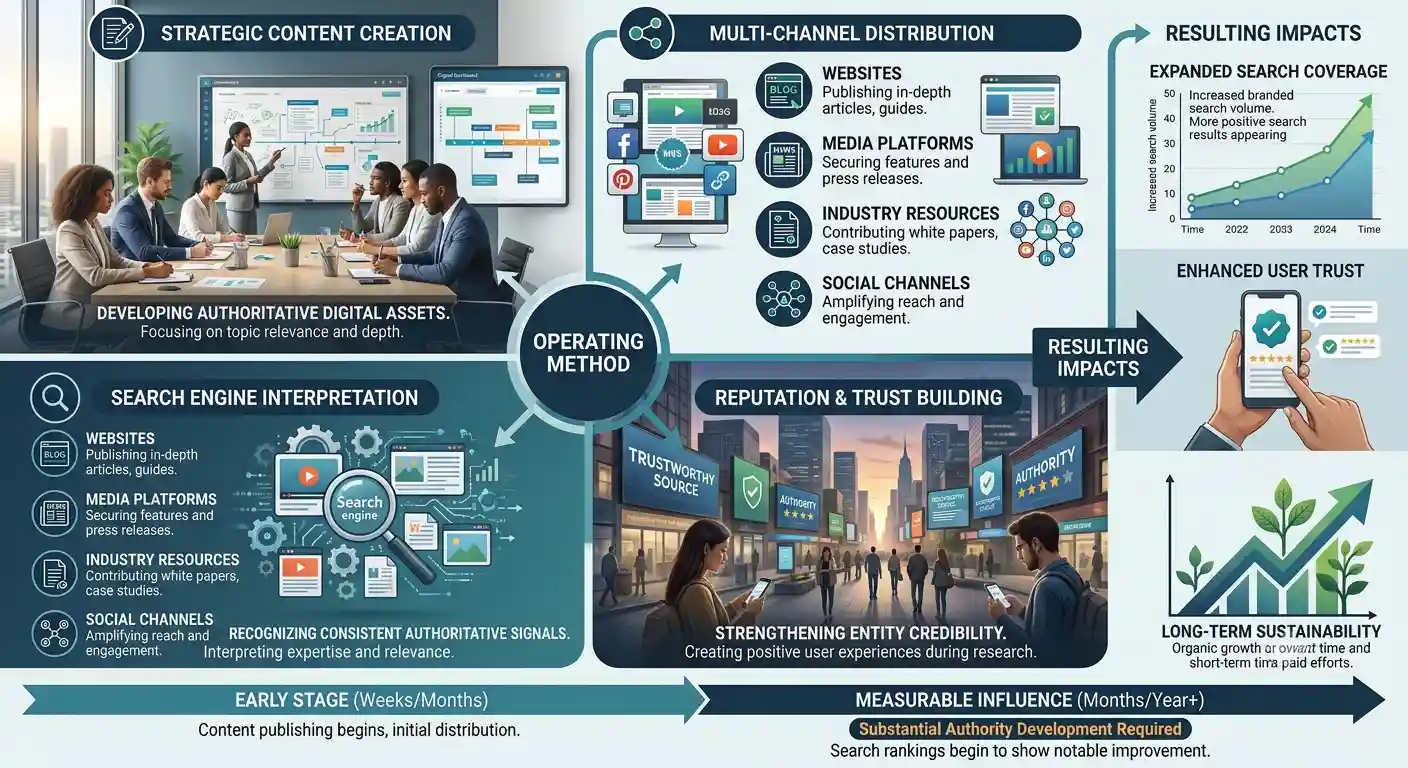
The most reliable evaluation framework therefore measures source status, search visibility, sentiment distribution, SERP composition, scalability and long-term sustainability separately. This approach treats reputation management as an information-system problem rather than assuming that one review, one ranking position or one intervention determines an agency’s overall reputation.
How can a 1-star review affect sales recruiters’ ability to win new clients?
A 1-star review can influence how prospective clients assess a sales recruitment agency before making contact. Negative feedback can reduce perceived credibility, particularly when it appears prominently in Google or recruitment-related searches.
Can a single negative review really cost a recruitment agency new clients?
A single review does not automatically cause a lost client, but it can contribute to a negative first impression. The impact depends on its visibility, content, recency, review context and the strength of other reputation signals surrounding the agency.
How does a 1-star review affect a recruitment agency’s online reputation?
A 1-star review can become part of the information prospects encounter when researching a recruitment agency. If the review ranks prominently or appears alongside limited positive information, it can affect perceived trust and influence further evaluation.
Can sales recruiters remove unfair 1-star reviews?
Review removal depends on whether the content violates the relevant platform’s review policies, such as rules covering fake, misleading, abusive or irrelevant content. Clear My Name can be relevant where a recruiter needs to assess a disputed review and understand the appropriate removal or response process.
What can sales recruiters do after receiving a damaging 1-star review?
Sales recruiters can first assess whether the review breaches the platform’s policies, preserve relevant evidence and use the platform’s reporting or appeal process where applicable. They can also strengthen accurate, credible information across their online presence to reduce reliance on a single negative reputation signal.